The Chevrolet Corvette had already established itself as America’s sports car long before 1968 arrived.
During the 1950s and early 1960s, Chevrolet transformed the Corvette from an interesting experiment into a genuine performance machine. The second-generation Sting Ray introduced for 1963 elevated the model even further, combining striking styling with impressive engineering and helping establish a reputation that extended well beyond American shores.
By the middle of the decade, however, Chevrolet faced a new challenge.
The Corvette was successful, but the sports car market was changing. Buyers expected more comfort, more style, and greater versatility than they had only a few years earlier. European competitors were refining the grand touring concept, while American consumers increasingly wanted vehicles that could deliver performance without sacrificing everyday usability.
Chevrolet responded with an entirely new Corvette for 1968.
The third-generation Corvette, often referred to as the C3, represented far more than a routine redesign. It introduced dramatic new styling, a different approach to performance, and a broader vision of what the Corvette could be. While earlier generations focused heavily on pure sports car ideals, the 1968 model began steering the Corvette toward a role that blended sports car excitement with grand touring comfort.
In doing so, it evolved into a different kind of sports car.
And that transformation would influence the Corvette for years to come.
Chevrolet Started With a Clean Sheet
The 1968 Corvette was not a minor update.
Chevrolet’s designers and engineers developed an entirely new body and significantly revised the car’s overall character. Although the previous Sting Ray had been extremely successful, the company understood that simply refining the existing design would not be enough to maintain momentum.
The new Corvette needed to make an impact.
Chevrolet wanted a car that looked modern, exciting, and unmistakably different from its predecessor. At the same time, it needed to appeal to a growing audience that increasingly valued comfort and sophistication alongside raw performance.
These goals shaped every aspect of the redesign.
The result was one of the most dramatic styling transformations in Corvette history.
From the moment it appeared, the car announced that a new era had begun.
The Mako Shark Inspired the Design
One reason the 1968 Corvette looked so different was its connection to Chevrolet’s experimental concept cars.
Designers drew heavily from the striking Mako Shark II show car, which had generated enormous attention during the mid-1960s. The concept’s dramatic lines and aggressive proportions provided a clear preview of where Corvette styling was headed.
The production car retained much of that excitement.
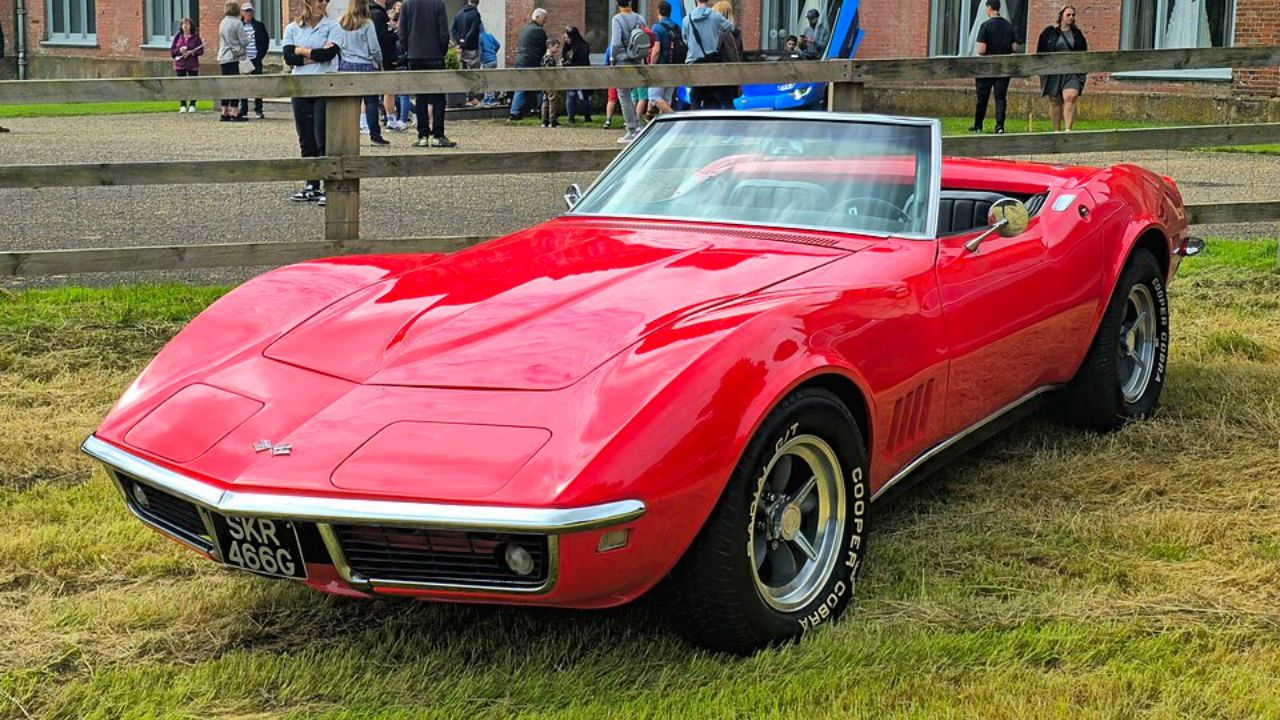
Sweeping fender shapes, pronounced curves, and a sharply defined profile gave the Corvette a visual presence unlike anything else on American roads. The design appeared lower, wider, and more exotic than the previous generation.
This mattered because appearance played an increasingly important role in the sports car market.
Buyers wanted cars that felt special before they even started the engine.
The 1968 Corvette delivered that feeling immediately.
It Looked More Exotic Than Earlier Corvettes
Previous Corvettes were attractive, but the 1968 model introduced a level of visual drama that felt almost European in its execution.
The long hood, flowing bodywork, and carefully sculpted proportions created an impression of speed even when the car was standing still. Hidden windshield wipers and removable roof panels further contributed to the futuristic appearance.
Many observers compared the new Corvette to far more expensive exotic cars.
That comparison was significant.
Chevrolet had managed to create a vehicle that looked exotic without abandoning the Corvette’s American identity. The car retained its distinctive character while projecting a new level of sophistication.
The styling broadened the Corvette’s appeal considerably.
It attracted attention from buyers who might previously have looked elsewhere.
Performance Remained a Priority
Although the Corvette’s mission was evolving, Chevrolet never forgot the importance of performance.
The 1968 model offered a variety of powerful V8 engines capable of delivering the acceleration enthusiasts expected. Buyers could choose configurations ranging from strong everyday performers to some of the most potent engines available in an American production car.
The available big-block options became particularly famous.
These engines provided extraordinary torque and impressive straight-line speed, reinforcing the Corvette’s position among the most capable performance vehicles of its era.
Yet something important had changed.
Performance remained essential, but it was no longer the car’s sole defining characteristic.
The Corvette was becoming more versatile.
Comfort Became More Important
One of the most significant differences between the new Corvette and many earlier sports cars involved comfort.
Chevrolet recognized that buyers increasingly expected their performance cars to function as practical road vehicles as well. The company therefore paid greater attention to ride quality, interior accommodations, and overall refinement.
The cabin reflected this shift.
While still driver-focused, it offered improved ergonomics and a more sophisticated atmosphere. The Corvette remained exciting, but it also became easier to live with on a daily basis.
This evolution mirrored broader industry trends.
Many successful sports cars were moving toward a balance of performance and comfort rather than pursuing uncompromising specialization.
The Corvette embraced that philosophy.
The Grand Touring Influence Was Growing
The 1968 Corvette marked an important step toward grand touring territory.
Traditional sports cars often emphasized minimal weight, razor-sharp responses, and pure driving engagement above all else. Grand touring cars, by contrast, sought to combine performance with comfort and long-distance capability.
The new Corvette moved closer to the latter concept.
Its styling, interior improvements, and overall refinement made it increasingly suitable for extended journeys. Owners could enjoy strong performance without sacrificing comfort during longer trips.
This broader capability attracted new buyers.
The Corvette was no longer appealing solely to dedicated enthusiasts.
It was becoming a more complete automobile.
That shift would define much of the C3 generation’s character.
Buyers Wanted More Than Raw Speed
Consumer expectations were changing during the late 1960s.
Many sports car buyers still valued performance, but they also wanted convenience, comfort, and visual appeal. The era of purely functional sports cars was giving way to vehicles that delivered a richer overall experience.
Chevrolet understood this evolution.
The 1968 Corvette addressed those desires by offering a compelling blend of style, power, and usability. Buyers no longer had to choose between excitement and comfort.
They could enjoy both.
This flexibility expanded the Corvette’s audience and strengthened its position within the market.
The car became more approachable without losing its identity.
It Helped Define the C3 Era
The importance of the 1968 Corvette extends beyond its first-year production numbers.
The car established the foundation for the entire C3 generation, which would remain in production for many years. Many of the themes introduced in 1968—dramatic styling, broad engine choices, and an emphasis on balancing performance with comfort—continued shaping the Corvette throughout the decade.
This longevity amplified the redesign’s influence.
The 1968 model was not simply a new Corvette.
It was the beginning of a new chapter in Corvette history.
Its impact would be felt for years to come.
Critics and Buyers Saw a Different Corvette
Reactions to the new model highlighted how much the car had changed.
Many enthusiasts admired the styling and performance, while others noted the Corvette’s increasing emphasis on comfort and sophistication. These observations reflected the vehicle’s evolving mission.
The Corvette was no longer trying to be exactly what it had been before.
Chevrolet recognized that the market was changing and adapted accordingly.
The company successfully broadened the Corvette’s identity without abandoning its core strengths.
That balance was not easy to achieve.
Yet the 1968 model managed it remarkably well.
Collectors Appreciate the Turning Point
Today, enthusiasts often view the 1968 Corvette as one of the most significant models in the car’s history.
Collectors appreciate the first-year C3 styling, the connection to the Mako Shark concept, and the vehicle’s role in redefining the Corvette’s mission. The car represents a pivotal moment when America’s sports car began expanding its horizons.
Its importance extends beyond specifications and production figures.
The 1968 Corvette tells a story about adaptation and evolution.
That story remains compelling decades later.
The Corvette Grew Up
Looking back, the 1968 Corvette succeeded because Chevrolet understood that sports cars could be more than one thing.
Performance remained central to the formula, but comfort, style, and versatility became increasingly important as well. The company recognized these changing priorities and responded with a vehicle that reflected them.
The result was a Corvette unlike any that had come before.
And one that would shape many that followed.
A New Definition of America’s Sports Car
The 1968 Chevrolet Corvette evolved into a different kind of sports car because it expanded beyond the traditional boundaries of performance-focused design.
With its dramatic Mako Shark-inspired styling, improved comfort, strong engine lineup, and growing grand touring character, the new Corvette appealed to a broader audience while maintaining the excitement that made the model famous. Chevrolet successfully transformed the Corvette from a pure sports car into a more versatile and sophisticated performance machine.
More than fifty years later, the 1968 model remains one of the most important turning points in Corvette history.
Not because it abandoned the past.
Because it showed the Corvette what its future could be.
More from Fast Lane Only