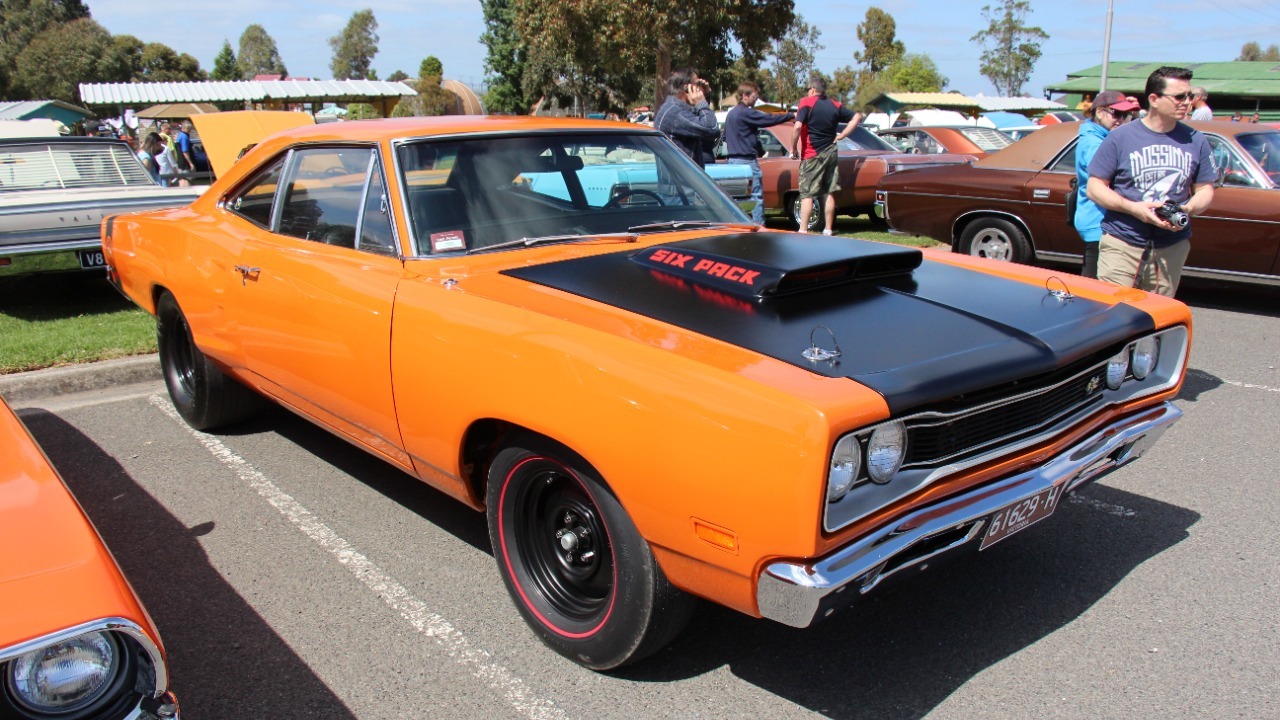
The muscle car era produced plenty of heroes.
Some became famous because they were the fastest cars on the street. Others earned their reputations through racing success, striking styling, or massive marketing campaigns. Names like the Plymouth Hemi ‘Cuda, Chevrolet Chevelle SS, and Pontiac GTO continue to dominate conversations about American performance more than half a century later.
Yet one of the smartest muscle car formulas of the era came from Dodge.
The 1969 Dodge Super Bee wasn’t designed to be luxurious. It wasn’t intended to be sophisticated. It didn’t try to blend performance with prestige or upscale features. Instead, Dodge focused on a simple idea: deliver as much speed as possible for the money.
That approach made the Super Bee one of the greatest performance bargains of the muscle car era.
While some competitors added increasingly expensive options and premium features, the Super Bee concentrated on what many enthusiasts wanted most. It offered powerful engines, aggressive styling, and impressive acceleration without forcing buyers to pay for unnecessary extras.
The result was a muscle car that delivered tremendous value.
More than fifty years later, that value-oriented philosophy remains one of the biggest reasons enthusiasts continue admiring the Super Bee.
Dodge Saw an Opportunity
The Super Bee existed because Dodge recognized a growing trend within the performance market.
By the late 1960s, muscle cars had become incredibly popular. Buyers across America wanted powerful V8 engines and exciting styling, but not everyone had the budget for higher-priced performance models loaded with optional equipment.
Dodge understood this audience.
The company realized there was room for a no-nonsense performance car that emphasized results rather than luxury. Instead of targeting buyers who wanted premium features, Dodge focused on enthusiasts who cared primarily about acceleration and power.
This strategy wasn’t entirely new.
Plymouth had already found success with the affordable Plymouth Road Runner, which proved that budget-friendly performance could attract significant attention.
Dodge decided to create its own interpretation of that formula.
The Coronet Provided the Foundation
Rather than developing an entirely new vehicle, Dodge used the existing Dodge Coronet as the Super Bee’s foundation.
This decision helped keep costs under control while providing a proven platform capable of handling substantial power. The Coronet already possessed the size and structure needed for muscle car duty, making it a logical choice for the project.
The strategy also simplified production.
By building upon an existing model, Dodge could focus resources on performance rather than extensive redevelopment. Buyers benefited because the savings helped keep prices competitive.
The Coronet’s straightforward nature aligned perfectly with the Super Bee’s mission.
The car wasn’t trying to reinvent anything.
It was trying to maximize value.
Performance Came First
From the beginning, the Super Bee prioritized performance above almost everything else.
Dodge understood that enthusiasts shopping in this segment wanted strong acceleration and exciting driving experiences. As a result, the company focused heavily on engine options and mechanical capability rather than luxury appointments.
This approach gave the car a clear identity.
Buyers knew exactly what they were getting. The Super Bee wasn’t pretending to be a luxury coupe or a sophisticated grand tourer. It was a muscle car in the purest sense of the term.
That honesty resonated with enthusiasts.
The vehicle delivered exactly what its marketing promised.
Nothing more.
Nothing less.
The Standard 383 Offered Serious Performance
One reason the Super Bee represented such a strong value was its standard engine.
Dodge equipped the car with a 383-cubic-inch V8 that delivered impressive performance right from the showroom floor. Buyers didn’t need to spend additional money on upgrades simply to obtain a respectable muscle car experience.
The 383 struck an excellent balance.
It provided strong horsepower and abundant torque while remaining more affordable than some larger engine options. For many owners, it offered all the performance they could reasonably use on public roads.
Importantly, the standard engine helped establish the Super Bee’s reputation.
Even entry-level examples felt genuinely quick.
That wasn’t always true of competing performance models.
Bigger Engines Were Available
Although the standard 383 satisfied many buyers, Dodge also offered more extreme options.
Enthusiasts seeking maximum performance could order increasingly powerful engines, including some of Chrysler’s most respected big-block powerplants. These options transformed the Super Bee from a strong value into a serious street machine.
The legendary 426 Hemi sat at the top of the hierarchy.
Its availability immediately elevated the Super Bee’s credibility among performance enthusiasts. Even if relatively few buyers selected the Hemi, knowing it existed strengthened the model’s image considerably.
The availability of these engines gave customers flexibility.
They could prioritize value, maximum performance, or something in between.
Few competitors offered such a compelling range of choices.
The Styling Matched the Mission
The Super Bee’s appearance reinforced its personality perfectly.
Unlike some performance cars that emphasized elegance or sophistication, the Super Bee embraced a more direct approach. Bold graphics, distinctive badging, and aggressive styling cues communicated the car’s intentions clearly.
The famous bee-themed branding played a major role.
The cartoon-inspired mascot added character while helping establish a memorable identity. The graphics were playful, but the performance credentials were very real.
Buyers appreciated the combination.
The Super Bee looked fun, approachable, and serious at the same time.
That balance helped it stand out in a crowded marketplace.
Luxury Wasn’t the Point
One of the most important reasons the Super Bee became such a strong value is what Dodge intentionally left out.
The company avoided loading the car with unnecessary luxury features that would increase costs and dilute its mission. Instead, resources were directed toward performance-oriented equipment and engine choices.
This approach kept pricing competitive.
Buyers weren’t paying for expensive trim packages, elaborate interiors, or prestige-oriented features they might not want. The focus remained squarely on delivering performance for the dollar.
The formula appealed particularly to younger enthusiasts.
Many customers wanted speed more than luxury.
The Super Bee gave them exactly that.
It Competed With More Expensive Cars
Because of its value-oriented design, the Super Bee often delivered performance comparable to cars costing significantly more.
This created one of the model’s biggest advantages.
Buyers could line up against competitors driving more expensive machinery and still feel confident about their chances. The Super Bee’s strong engine lineup and relatively light emphasis on luxury allowed it to punch above its weight in terms of performance.
Enthusiasts noticed.
The car earned a reputation as one of the smartest buys in the muscle car market.
People appreciated getting more speed for less money.
That reputation spread quickly.
It Captured the Spirit of the Era
The Super Bee succeeded because it embodied the core values of the muscle car movement.
At its heart, the muscle car phenomenon was about accessibility. Manufacturers discovered that ordinary buyers wanted extraordinary performance, and they responded by placing powerful engines into relatively affordable vehicles.
The Super Bee embraced this philosophy completely.
Rather than chasing prestige, it focused on democratizing performance. Dodge gave enthusiasts access to genuine muscle car capability without requiring an extravagant budget.
That mission aligned perfectly with the spirit of the era.
The car represented performance for the masses.
And people loved it.
Collectors Appreciate Its Honesty
Modern enthusiasts often admire the Super Bee for the same reasons buyers appreciated it in 1969.
The car feels authentic.
It doesn’t rely on luxury features or exclusivity to justify its existence. Instead, it succeeds through straightforward performance and a clear sense of purpose. Collectors recognize that honesty and value played major roles in the model’s original appeal.
Today, the Super Bee stands as a reminder that some of the best muscle cars were not necessarily the most expensive.
Sometimes the smartest formulas are also the simplest.
The Working-Class Muscle Car
Looking back, the Super Bee’s success seems almost inevitable.
Dodge identified a group of buyers who wanted maximum performance without unnecessary expense and built a vehicle specifically for them. The company resisted the temptation to complicate the formula and instead focused on delivering exactly what enthusiasts wanted.
That focus paid off.
The car developed a loyal following that continues to this day.
Performance Without the Premium Price
The 1969 Dodge Super Bee became one of muscle’s best values because it delivered impressive performance, strong engine options, memorable styling, and genuine muscle car credibility at a price many buyers could afford.
Built on a straightforward formula that prioritized speed over luxury, the Super Bee offered enthusiasts an opportunity to enjoy serious performance without paying for features they didn’t need. Whether equipped with the standard 383 or one of Chrysler’s legendary big-block options, the car provided tremendous excitement per dollar.
More than fifty years later, the Super Bee remains a symbol of what made the muscle car era so special.
Power was important.
Performance mattered.
But value could be just as exciting.
And few cars proved that better than the 1969 Super Bee.
More from Fast Lane Only