When enthusiasts think about Pontiac in the late 1960s, their minds usually go straight to performance.
The Pontiac GTO was rewriting the rules of the American performance market, the Firebird was establishing itself as a serious contender in the growing pony car segment, and Pontiac’s reputation for excitement was stronger than ever. The division had successfully positioned itself as General Motors’ performance-oriented brand, attracting buyers who wanted more than ordinary transportation.
Yet Pontiac’s lineup extended far beyond muscle cars.
Many customers still wanted large, comfortable automobiles capable of handling family duties, long road trips, and everyday driving. They appreciated Pontiac’s performance image, but they also valued spacious interiors, smooth ride quality, and upscale accommodations. These buyers weren’t necessarily interested in sacrificing comfort simply to gain a few extra horsepower.
The 1968 Pontiac Executive was designed for them.
Positioned between the more mainstream Catalina and the luxurious Bonneville, the Executive occupied a unique space within Pontiac’s lineup. It offered much of the comfort and refinement associated with full-size American cars while preserving enough performance and personality to feel distinctly Pontiac.
The result was a vehicle that quietly demonstrated an important truth.
Comfort and performance did not have to be opposites.
And the Executive proved it remarkably well.
Pontiac Was Expanding Its Identity
By the late 1960s, Pontiac had achieved something many manufacturers envied.
The division successfully cultivated a youthful and performance-oriented image while still selling a broad range of vehicles. Unlike brands that focused exclusively on one market segment, Pontiac managed to appeal to multiple audiences simultaneously.
This flexibility became one of its greatest strengths.
A buyer might visit a Pontiac dealership because of the excitement surrounding the GTO, then leave with a completely different model better suited to family needs. The brand’s performance reputation enhanced the appeal of its entire lineup.
The Executive benefited directly from this strategy.
Although it wasn’t marketed as a muscle car, it inherited many of the characteristics that made Pontiac products desirable. Buyers expected more personality from a Pontiac than they might from a comparable full-size car sold by another division.
The Executive delivered on that expectation.
The Full-Size Platform Offered Real Comfort
At its core, the Executive was a full-size automobile.
That distinction mattered because American buyers in 1968 still placed enormous value on space and comfort. Large cars dominated the market, and many consumers viewed generous dimensions as a sign of quality and prestige.
The Executive provided both.
Its spacious interior offered ample room for passengers, while the substantial body and long wheelbase contributed to a smooth and composed ride. Whether traveling across town or across several states, occupants enjoyed the kind of comfort that made long-distance driving enjoyable.
This refinement became one of the car’s defining characteristics.
The Executive excelled as a highway cruiser.
It delivered the relaxed experience many buyers wanted from a premium full-size automobile.
And it did so without feeling detached from the road.
Styling Reflected Pontiac’s Performance Influence
One reason the Executive stood apart from many competitors was its appearance.
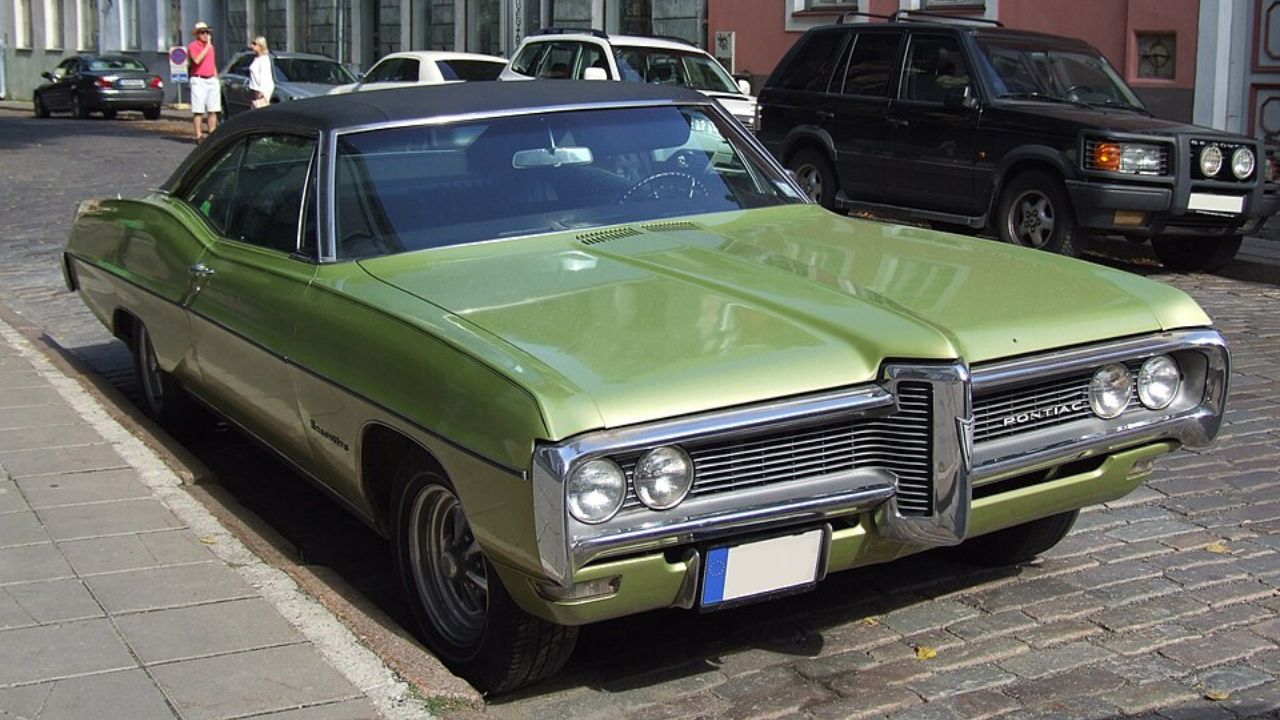
Even though it was a large family-oriented vehicle, Pontiac’s design language gave the car a more athletic character than some rival full-size models. The division’s signature styling themes helped create a sense of motion and confidence that aligned with its broader brand identity.
The result was subtle but important.
The Executive looked substantial and elegant, yet it avoided appearing overly formal or conservative. It carried itself with a sense of purpose that reflected Pontiac’s performance-oriented reputation.
Buyers noticed.
The car projected more personality than many traditional full-size sedans.
That distinction enhanced its appeal considerably.
Powerful Engine Choices Were Available
Another reason the Executive successfully blended comfort and performance was Pontiac’s engine lineup.
Buyers could choose from a range of V8 engines that delivered impressive capability for a vehicle of this size. These powerplants provided strong acceleration, confident passing performance, and effortless highway cruising.
The emphasis was not necessarily on raw speed.
Instead, Pontiac focused on providing abundant torque and smooth power delivery. Drivers enjoyed the confidence that came with knowing the car had plenty of power in reserve whenever needed.
This approach suited the Executive perfectly.
The vehicle felt relaxed during everyday driving but remained capable when circumstances demanded more.
That balance became one of its greatest strengths.
Highway Travel Was a Natural Strength
The Executive truly excelled on long journeys.
Its size, ride quality, and available V8 engines combined to create an outstanding highway car. Interstate travel, which was becoming increasingly common during the 1960s, highlighted many of the vehicle’s best qualities.
The car settled into a comfortable rhythm at cruising speeds.
Passengers enjoyed generous space, while drivers appreciated the combination of stability and effortless performance. Long trips that might feel tiring in smaller vehicles became far more enjoyable.
This capability reflected changing American lifestyles.
People were traveling farther than ever before, and vehicles that could handle those distances comfortably gained significant advantages.
The Executive was built for exactly that purpose.
Pontiac Didn’t Forget Driving Enjoyment
Many full-size cars of the era prioritized comfort to such an extent that driving enjoyment became secondary.
Pontiac generally took a different approach.
The division’s emphasis on performance influenced even its larger vehicles, encouraging engineers to maintain a degree of responsiveness and engagement. While the Executive was certainly not a sports car, it often felt more lively and confident than buyers expected from a full-size sedan.
This personality mattered.
Owners appreciated knowing that their comfortable family car still reflected Pontiac’s broader performance philosophy. The Executive retained enough character to remind drivers which brand had built it.
That connection strengthened its identity.
The car never felt generic.
It Occupied an Important Position in the Lineup
The Executive’s placement within Pontiac’s hierarchy also contributed to its success.
Situated between the Catalina and the Bonneville, it offered a compelling blend of value and luxury. Buyers received many premium features without necessarily stepping into the division’s most expensive models.
This positioning broadened the vehicle’s appeal.
Customers seeking additional comfort and refinement found the Executive attractive, while those unwilling to pay Bonneville prices appreciated the balance it offered.
The car filled an important niche.
Pontiac recognized that not every buyer fit neatly into traditional categories.
The Executive served those customers exceptionally well.
Families Appreciated Its Versatility
One reason the Executive often gets overlooked today is that it excelled at practical tasks rather than dramatic ones.
The car comfortably accommodated families, luggage, and everyday responsibilities while still providing the comfort and performance buyers desired. It handled a wide variety of situations with ease.
This versatility represented genuine value.
Owners did not need separate vehicles for comfort, travel, and daily transportation. The Executive could perform all of those roles effectively.
In many ways, that made it more useful than some flashier alternatives.
The car fit naturally into real life.
And buyers appreciated that.
It Reflected a Broader Automotive Trend
The Executive also represented a larger shift within the industry.
Manufacturers increasingly recognized that buyers wanted well-rounded vehicles capable of satisfying multiple needs simultaneously. Performance remained important, but so did comfort, convenience, and refinement.
The Executive embodied this philosophy.
It demonstrated that a car could offer respectable performance without sacrificing comfort and luxury. Rather than forcing buyers to choose between those qualities, Pontiac successfully combined them.
This approach would become increasingly common in the years ahead.
The Executive helped illustrate why.
Collectors Are Beginning to Notice
Today, enthusiasts are gradually rediscovering cars like the Executive.
While muscle cars continue dominating attention, many collectors now appreciate the broader story of American automotive history. Vehicles that successfully blended comfort, style, and performance are receiving renewed recognition.
The Executive deserves to be part of that conversation.
Its combination of full-size comfort and Pontiac character makes it a fascinating example of what the division was capable of during its peak years.
The car may not have generated the headlines of a GTO.
But it contributed to Pontiac’s success in its own way.
The Full-Size Pontiac That Did Both
Looking back, the 1968 Executive succeeded because it refused to specialize too narrowly.
It offered the space and comfort expected from a premium full-size car while preserving enough performance and personality to feel distinctly Pontiac. The vehicle addressed multiple priorities simultaneously, creating a balanced ownership experience that appealed to a broad audience.
That balance remains impressive today.
It wasn’t easy to achieve.
Yet the Executive managed it.
Comfort Without Compromise
The 1968 Pontiac Executive blended comfort and performance by combining a spacious full-size platform, smooth ride quality, powerful V8 engine options, and Pontiac’s trademark sense of personality into one cohesive package.
Rather than forcing buyers to choose between refinement and capability, the Executive delivered both. It excelled as a long-distance cruiser, provided generous accommodations for passengers, and retained enough performance character to reflect the brand’s reputation for excitement.
More than fifty years later, the Executive remains an excellent reminder that some of the most rewarding cars are not the loudest or fastest.
Sometimes they’re the ones that quietly do everything well.
And that’s exactly what the 1968 Pontiac Executive accomplished.
When enthusiasts think about Pontiac in the late 1960s, their minds usually go straight to performance.
The Pontiac GTO was rewriting the rules of the American performance market, the Firebird was establishing itself as a serious contender in the growing pony car segment, and Pontiac’s reputation for excitement was stronger than ever. The division had successfully positioned itself as General Motors’ performance-oriented brand, attracting buyers who wanted more than ordinary transportation.
Yet Pontiac’s lineup extended far beyond muscle cars.
Many customers still wanted large, comfortable automobiles capable of handling family duties, long road trips, and everyday driving. They appreciated Pontiac’s performance image, but they also valued spacious interiors, smooth ride quality, and upscale accommodations. These buyers weren’t necessarily interested in sacrificing comfort simply to gain a few extra horsepower.
The 1968 Pontiac Executive was designed for them.
Positioned between the more mainstream Catalina and the luxurious Bonneville, the Executive occupied a unique space within Pontiac’s lineup. It offered much of the comfort and refinement associated with full-size American cars while preserving enough performance and personality to feel distinctly Pontiac.
The result was a vehicle that quietly demonstrated an important truth.
Comfort and performance did not have to be opposites.
And the Executive proved it remarkably well.
Pontiac Was Expanding Its Identity
By the late 1960s, Pontiac had achieved something many manufacturers envied.
The division successfully cultivated a youthful and performance-oriented image while still selling a broad range of vehicles. Unlike brands that focused exclusively on one market segment, Pontiac managed to appeal to multiple audiences simultaneously.
This flexibility became one of its greatest strengths.
A buyer might visit a Pontiac dealership because of the excitement surrounding the GTO, then leave with a completely different model better suited to family needs. The brand’s performance reputation enhanced the appeal of its entire lineup.
The Executive benefited directly from this strategy.
Although it wasn’t marketed as a muscle car, it inherited many of the characteristics that made Pontiac products desirable. Buyers expected more personality from a Pontiac than they might from a comparable full-size car sold by another division.
The Executive delivered on that expectation.
The Full-Size Platform Offered Real Comfort
At its core, the Executive was a full-size automobile.
That distinction mattered because American buyers in 1968 still placed enormous value on space and comfort. Large cars dominated the market, and many consumers viewed generous dimensions as a sign of quality and prestige.
The Executive provided both.
Its spacious interior offered ample room for passengers, while the substantial body and long wheelbase contributed to a smooth and composed ride. Whether traveling across town or across several states, occupants enjoyed the kind of comfort that made long-distance driving enjoyable.
This refinement became one of the car’s defining characteristics.
The Executive excelled as a highway cruiser.
It delivered the relaxed experience many buyers wanted from a premium full-size automobile.
And it did so without feeling detached from the road.
Styling Reflected Pontiac’s Performance Influence
One reason the Executive stood apart from many competitors was its appearance.
Even though it was a large family-oriented vehicle, Pontiac’s design language gave the car a more athletic character than some rival full-size models. The division’s signature styling themes helped create a sense of motion and confidence that aligned with its broader brand identity.
The result was subtle but important.
The Executive looked substantial and elegant, yet it avoided appearing overly formal or conservative. It carried itself with a sense of purpose that reflected Pontiac’s performance-oriented reputation.
Buyers noticed.
The car projected more personality than many traditional full-size sedans.
That distinction enhanced its appeal considerably.
Powerful Engine Choices Were Available
Another reason the Executive successfully blended comfort and performance was Pontiac’s engine lineup.
Buyers could choose from a range of V8 engines that delivered impressive capability for a vehicle of this size. These powerplants provided strong acceleration, confident passing performance, and effortless highway cruising.
The emphasis was not necessarily on raw speed.
Instead, Pontiac focused on providing abundant torque and smooth power delivery. Drivers enjoyed the confidence that came with knowing the car had plenty of power in reserve whenever needed.
This approach suited the Executive perfectly.
The vehicle felt relaxed during everyday driving but remained capable when circumstances demanded more.
That balance became one of its greatest strengths.
Highway Travel Was a Natural Strength
The Executive truly excelled on long journeys.
Its size, ride quality, and available V8 engines combined to create an outstanding highway car. Interstate travel, which was becoming increasingly common during the 1960s, highlighted many of the vehicle’s best qualities.
The car settled into a comfortable rhythm at cruising speeds.
Passengers enjoyed generous space, while drivers appreciated the combination of stability and effortless performance. Long trips that might feel tiring in smaller vehicles became far more enjoyable.
This capability reflected changing American lifestyles.
People were traveling farther than ever before, and vehicles that could handle those distances comfortably gained significant advantages.
The Executive was built for exactly that purpose.
Pontiac Didn’t Forget Driving Enjoyment
Many full-size cars of the era prioritized comfort to such an extent that driving enjoyment became secondary.
Pontiac generally took a different approach.
The division’s emphasis on performance influenced even its larger vehicles, encouraging engineers to maintain a degree of responsiveness and engagement. While the Executive was certainly not a sports car, it often felt more lively and confident than buyers expected from a full-size sedan.
This personality mattered.
Owners appreciated knowing that their comfortable family car still reflected Pontiac’s broader performance philosophy. The Executive retained enough character to remind drivers which brand had built it.
That connection strengthened its identity.
The car never felt generic.
It Occupied an Important Position in the Lineup
The Executive’s placement within Pontiac’s hierarchy also contributed to its success.
Situated between the Catalina and the Bonneville, it offered a compelling blend of value and luxury. Buyers received many premium features without necessarily stepping into the division’s most expensive models.
This positioning broadened the vehicle’s appeal.
Customers seeking additional comfort and refinement found the Executive attractive, while those unwilling to pay Bonneville prices appreciated the balance it offered.
The car filled an important niche.
Pontiac recognized that not every buyer fit neatly into traditional categories.
The Executive served those customers exceptionally well.
Families Appreciated Its Versatility
One reason the Executive often gets overlooked today is that it excelled at practical tasks rather than dramatic ones.
The car comfortably accommodated families, luggage, and everyday responsibilities while still providing the comfort and performance buyers desired. It handled a wide variety of situations with ease.
This versatility represented genuine value.
Owners did not need separate vehicles for comfort, travel, and daily transportation. The Executive could perform all of those roles effectively.
In many ways, that made it more useful than some flashier alternatives.
The car fit naturally into real life.
And buyers appreciated that.
It Reflected a Broader Automotive Trend
The Executive also represented a larger shift within the industry.
Manufacturers increasingly recognized that buyers wanted well-rounded vehicles capable of satisfying multiple needs simultaneously. Performance remained important, but so did comfort, convenience, and refinement.
The Executive embodied this philosophy.
It demonstrated that a car could offer respectable performance without sacrificing comfort and luxury. Rather than forcing buyers to choose between those qualities, Pontiac successfully combined them.
This approach would become increasingly common in the years ahead.
The Executive helped illustrate why.
Collectors Are Beginning to Notice
Today, enthusiasts are gradually rediscovering cars like the Executive.
While muscle cars continue dominating attention, many collectors now appreciate the broader story of American automotive history. Vehicles that successfully blended comfort, style, and performance are receiving renewed recognition.
The Executive deserves to be part of that conversation.
Its combination of full-size comfort and Pontiac character makes it a fascinating example of what the division was capable of during its peak years.
The car may not have generated the headlines of a GTO.
But it contributed to Pontiac’s success in its own way.
The Full-Size Pontiac That Did Both
Looking back, the 1968 Executive succeeded because it refused to specialize too narrowly.
It offered the space and comfort expected from a premium full-size car while preserving enough performance and personality to feel distinctly Pontiac. The vehicle addressed multiple priorities simultaneously, creating a balanced ownership experience that appealed to a broad audience.
That balance remains impressive today.
It wasn’t easy to achieve.
Yet the Executive managed it.
Comfort Without Compromise
The 1968 Pontiac Executive blended comfort and performance by combining a spacious full-size platform, smooth ride quality, powerful V8 engine options, and Pontiac’s trademark sense of personality into one cohesive package.
Rather than forcing buyers to choose between refinement and capability, the Executive delivered both. It excelled as a long-distance cruiser, provided generous accommodations for passengers, and retained enough performance character to reflect the brand’s reputation for excitement.
More than fifty years later, the Executive remains an excellent reminder that some of the most rewarding cars are not the loudest or fastest.
Sometimes they’re the ones that quietly do everything well.
And that’s exactly what the 1968 Pontiac Executive accomplished.
More from Fast Lane Only