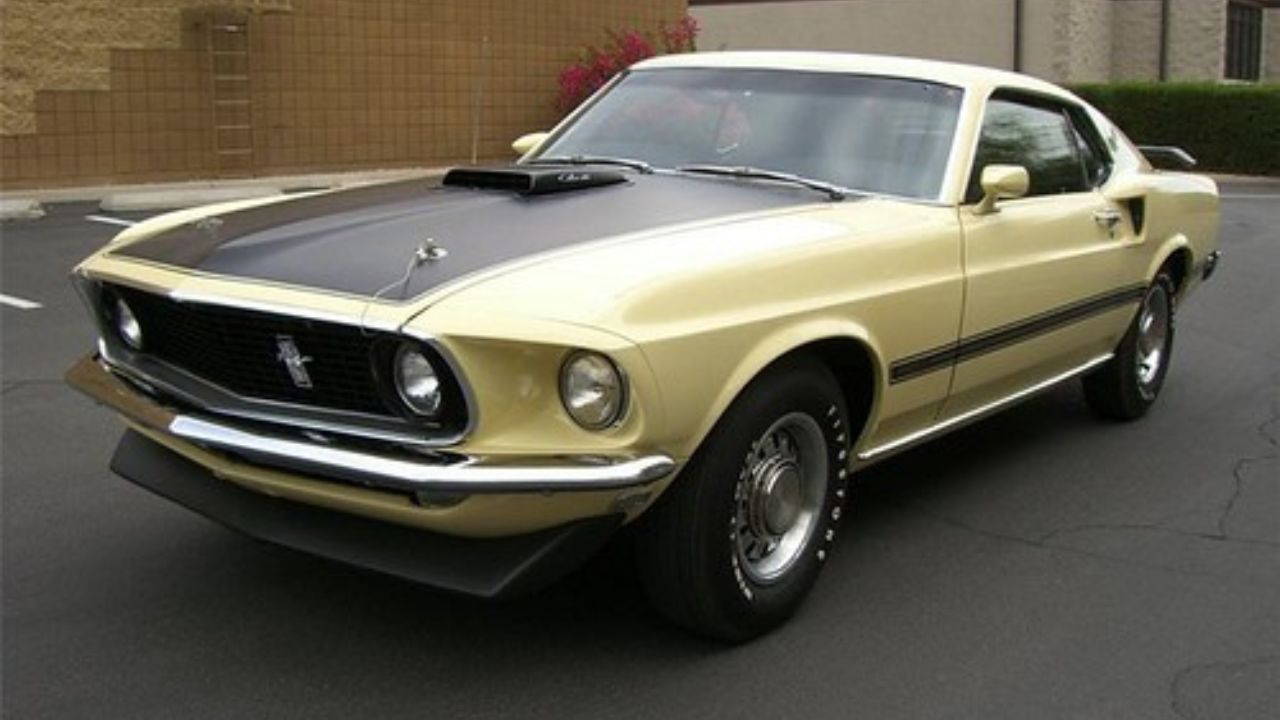
By the end of the 1960s, the Mustang was facing a challenge it had helped create.
When Ford introduced the original Ford Mustang in 1964, it essentially launched the pony car segment and sparked one of the biggest automotive success stories of the decade. Competitors rushed to develop their own sporty coupes, and the market soon became crowded with alternatives. Chevrolet had the Camaro, Pontiac offered the Firebird, Plymouth introduced the Barracuda, and Dodge entered the fight with the Challenger.
As competition intensified, Ford needed a way to keep the Mustang fresh and exciting.
The answer arrived in 1969 with the Mach 1.
The new model wasn’t simply another trim package. It combined aggressive styling, strong performance options, desirable equipment, and an image that perfectly matched the mood of the muscle car era. Buyers immediately understood what Ford was offering. The Mach 1 looked fast, sounded fast, and delivered the kind of performance enthusiasts wanted.
Almost overnight, it became one of the most popular Mustangs in the lineup.
More importantly, it helped redefine the Mustang’s identity at a time when the performance market was changing rapidly.
Ford Needed a New Performance Star
By 1969, Ford’s Mustang lineup had become increasingly complex.
Buyers could choose from a wide variety of engines, appearance packages, and special editions. While this variety gave customers plenty of options, it also created overlap within the lineup. Ford needed a model that clearly communicated performance while remaining accessible to a broad audience.
The company already offered specialty models such as the GT and the high-profile Boss variants. However, these cars occupied specific niches within the market. Ford wanted something that could appeal to everyday enthusiasts while still delivering serious muscle car credibility.
The Mach 1 filled that role perfectly.
It offered a combination of style, performance, and value that immediately resonated with customers.
The timing could not have been better.
The Name Captured the Era
One of the Mach 1’s greatest strengths was its identity.
The late 1960s were filled with fascination for speed, aviation, technology, and space exploration. The term “Mach 1” referred to the speed of sound, giving the car an immediate connection to performance and modernity.
Ford understood the power of branding.
The name sounded exciting before buyers even saw the vehicle. It suggested speed, innovation, and confidence—qualities that fit perfectly within the muscle car culture of the time.
The badge quickly became one of the most recognizable names in the Mustang lineup.
Unlike some model designations that relied on numbers or letters, Mach 1 carried a personality of its own.
That personality helped attract attention from the very beginning.
The Styling Made an Immediate Impression
Ford’s designers played a major role in the Mach 1’s success.
The car featured a distinctive appearance package that separated it from standard Mustangs. Matte-black hood treatments, hood scoops, competition-style hood pins, special striping, and unique badging gave the Mach 1 an unmistakable presence.
The styling was aggressive without becoming excessive.
Buyers wanted performance cars that looked exciting, and the Mach 1 delivered exactly that. Even when parked, the car projected energy and confidence. It looked like a machine built for speed.
Importantly, the design felt cohesive.
Rather than relying on a single dramatic feature, Ford created an entire visual package that worked together to establish the Mach 1’s identity.
The result was one of the best-looking Mustangs of the era.
Buyers Received More Than Just Looks
While the styling attracted attention, the Mach 1 succeeded because it offered substance as well.
Ford included a variety of desirable equipment as part of the package, making the car feel more special than a standard Mustang. Upgraded interiors, sport-oriented features, and performance enhancements gave buyers tangible benefits beyond appearance alone.
This approach increased the model’s value.
Customers appreciated receiving a comprehensive package rather than needing to add numerous options individually. The Mach 1 simplified the buying process while delivering a more complete performance experience.
Ford had effectively created a turnkey muscle car.
That convenience appealed to a wide audience.
Engine Choices Covered Every Performance Level
Another reason for the Mach 1’s rapid popularity was the breadth of available engine options.
Ford understood that not every buyer wanted the same level of performance. As a result, the Mach 1 could be ordered with a range of V8 engines, allowing customers to tailor the car to their needs and budget.
At the upper end of the lineup sat some of Ford’s most respected big-block engines, including the formidable 428 Cobra Jet. These powerplants transformed the Mach 1 into a serious performance machine capable of competing with virtually anything on American roads.
Buyers loved having choices.
Whether they wanted a stylish cruiser or a genuine muscle car, the Mach 1 could accommodate them.
That flexibility broadened its appeal significantly.
The 428 Cobra Jet Enhanced Its Reputation
Although multiple engines were available, the 428 Cobra Jet played a particularly important role in shaping the Mach 1’s image.
By 1969, the Cobra Jet had already earned a reputation as one of Ford’s most effective performance engines. Its combination of horsepower and torque delivered impressive acceleration in both street and drag-strip environments.
The availability of this engine immediately gave the Mach 1 credibility among enthusiasts.
Even buyers who selected less powerful engines appreciated knowing the model could be equipped with one of Ford’s best performance powerplants.
The Cobra Jet helped establish the Mach 1 as more than a styling package.
It was a legitimate muscle car.
That distinction mattered.
It Arrived as Buyers Wanted More Style
The Mach 1 also benefited from changing consumer preferences.
By the late 1960s, muscle car buyers increasingly valued image alongside performance. Horsepower remained important, but styling, exclusivity, and personality played growing roles in purchasing decisions.
Ford recognized this shift earlier than many competitors.
The Mach 1 delivered performance, but it also delivered an experience. Owners enjoyed the visual drama, distinctive branding, and sense of occasion that came with the package.
The car felt special.
That emotional connection proved just as important as acceleration figures.
Buyers weren’t simply purchasing transportation.
They were buying an identity.
It Replaced the Mustang GT
An often-overlooked factor in the Mach 1’s success is its relationship to the Mustang GT.
For 1969, Ford effectively positioned the Mach 1 as the primary performance Mustang, and demand quickly exceeded expectations. Buyers gravitated toward the new package, leading the Mach 1 to outperform the GT significantly in the marketplace.
This outcome demonstrated how accurately Ford had read consumer preferences.
The Mach 1 offered everything many buyers wanted in a performance Mustang. It combined visual excitement, strong engine choices, and desirable equipment into a single package.
The formula worked exceptionally well.
The model became a sales success almost immediately.
Racing Connections Added Credibility
Like many performance cars of the era, the Mach 1 benefited from Ford’s strong motorsports reputation.
The company remained deeply involved in racing, and buyers often associated showroom vehicles with competition success. While the Mach 1 was primarily a street car, it shared an image environment with Ford’s broader performance efforts.
That connection enhanced its appeal.
Enthusiasts appreciated the idea that the Mustang remained closely linked to performance and competition. The Mach 1 helped reinforce that perception at a time when rivalry among manufacturers was particularly intense.
Image mattered.
Ford understood how to cultivate it.
Collectors Still Appreciate the Formula
Today, the 1969 Mach 1 remains one of the most desirable classic Mustangs.
Collectors admire the styling, engine choices, and historical significance. The car represents a moment when Ford successfully balanced performance, value, and personality better than many competitors.
The Mach 1 also appeals because it captures the spirit of its era so effectively.
Everything from the name to the graphics reflects the optimism and excitement of the late 1960s performance market.
The package feels authentic.
That authenticity continues to resonate with enthusiasts.
The Mustang Buyers Wanted
Looking back, the Mach 1’s rapid success seems almost inevitable.
Ford introduced the model at exactly the right moment, combining aggressive styling, strong performance options, desirable features, and memorable branding into a package that addressed what buyers wanted most.
The company didn’t reinvent the Mustang.
Instead, it refined and focused the formula.
The result was a car that felt perfectly suited to its time.
A Performance Package That Hit the Mark
The 1969 Ford Mustang Mach 1 quickly became a buyer favorite because it delivered an ideal combination of performance, appearance, and value.
Its aggressive styling attracted attention, its engine options provided genuine muscle car capability, and its well-equipped package simplified the buying experience for enthusiasts. Ford successfully created a Mustang that looked exciting, drove well, and carried a memorable identity.
More than fifty years later, the Mach 1 remains one of the most celebrated versions of the Mustang ever produced.
Its popularity wasn’t accidental.
Ford simply understood exactly what buyers wanted—and delivered it at precisely the right moment.
More from Fast Lane Only