When people think about performance cars from the 1960s, their minds usually go straight to muscle cars.
The era produced some of the most famous names in automotive history. Cars like the Pontiac GTO, Chevrolet Chevelle SS, Plymouth Road Runner, and Oldsmobile 442 helped define a generation of American performance. Their formula was simple and effective: powerful V8 engines, midsize bodies, and aggressive styling aimed at buyers who wanted maximum speed for their money.
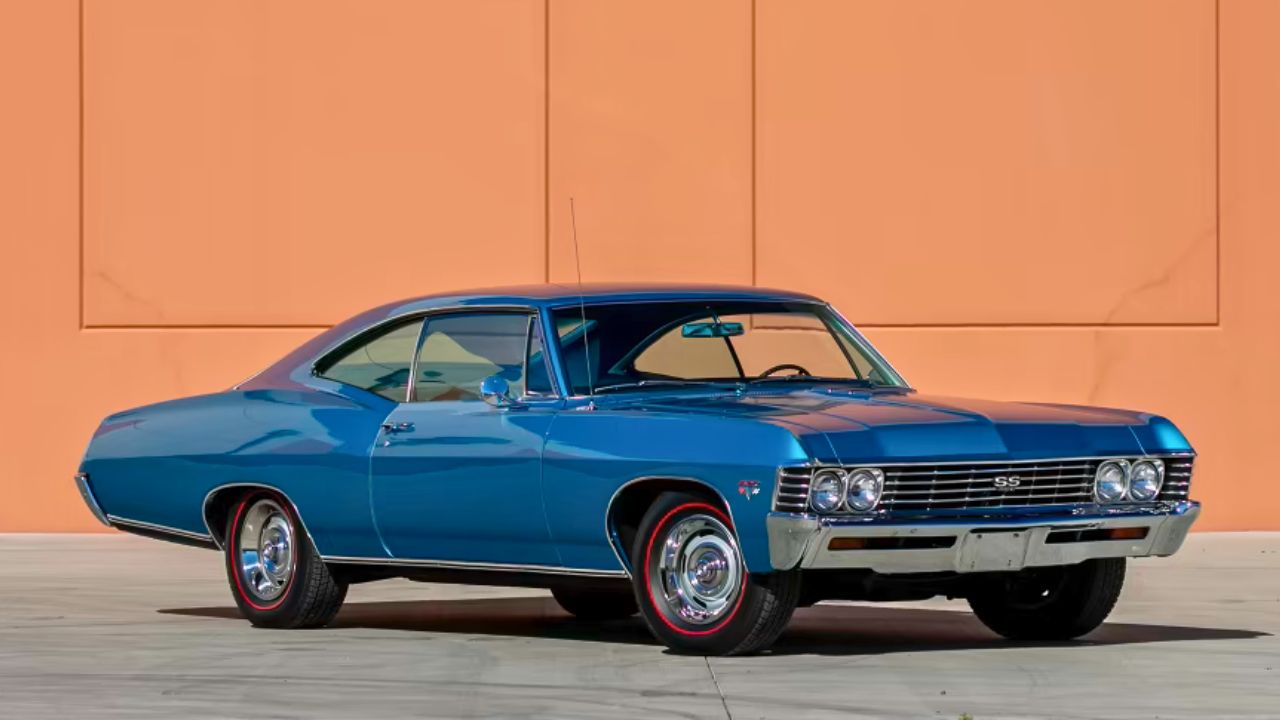
The 1967 Chevrolet Impala SS followed a different path.
While it certainly offered strong performance, Chevrolet never intended the Impala SS to compete directly with the growing army of midsize muscle cars. Instead, the company created something that blended power with comfort, size, and long-distance capability. The Impala SS appealed to buyers who wanted performance without giving up the space, refinement, and presence of a full-size automobile.
In many ways, it represented the final evolution of an earlier performance philosophy.
Before muscle cars dominated headlines, America’s fastest vehicles were often large coupes powered by big V8 engines. The Impala SS carried that tradition into the late 1960s, proving there was still a place for full-size performance even as the market increasingly focused on smaller and lighter machines.
That unique position is what makes the 1967 Impala SS so fascinating today.
The Performance Landscape Was Changing
By 1967, the muscle car movement had become impossible to ignore.
Manufacturers throughout Detroit were competing aggressively for performance buyers. The success of the GTO had demonstrated that consumers loved the idea of midsize cars equipped with large-displacement engines, and competitors rushed to create their own interpretations of the formula.
The advantages were obvious.
Smaller vehicles generally weighed less, which improved acceleration and performance. They were often less expensive than full-size cars and appealed strongly to younger buyers entering the market. For many enthusiasts, midsize muscle cars represented the future.
Chevrolet recognized this trend.
However, the company also understood that not every performance buyer wanted the same thing. Some customers still valued comfort, space, and highway cruising ability. The Impala SS existed for those buyers.
The Impala Was Already a Chevrolet Icon
Long before the muscle car era reached its peak, the Impala had become one of Chevrolet’s most successful and recognizable models.
Introduced in the late 1950s, the car quickly earned a reputation for style, comfort, and broad appeal. By the mid-1960s, the Impala was one of America’s best-selling automobiles, serving a wide variety of customers.
This popularity gave Chevrolet a strong foundation.
Rather than reinventing the Impala as a dedicated muscle car, the company chose to enhance its existing strengths. The SS package added performance credentials while preserving the qualities that had made the model successful in the first place.
The result was a performance car with a distinctly different personality.
The Impala SS wasn’t about compromise.
It was about balance.
The 1967 Redesign Modernized the Formula
One reason the 1967 Impala SS stands out today is its styling.
Chevrolet introduced a significantly redesigned body for 1967, moving toward cleaner lines and a more sophisticated appearance. Compared to some earlier full-size cars, the new Impala looked modern and refined while retaining the substantial presence buyers expected.
The proportions worked particularly well.
The long hood, flowing roofline, and carefully sculpted body panels gave the car an elegant appearance that aged remarkably well. The design communicated confidence rather than aggression.
For SS buyers, this was important.
The car looked special without relying on oversized graphics or flashy decorations. It projected performance through its proportions and stance rather than through visual excess.
That approach differentiated it from many contemporary muscle cars.
Big-Block Power Was Readily Available
Although the Impala SS emphasized comfort and refinement, Chevrolet made sure performance remained part of the equation.
Buyers could select from several V8 engines, including some of the company’s most respected big-block offerings. These engines transformed the large Chevrolet into a genuinely fast automobile capable of impressive acceleration and effortless highway performance.
The available 427-cubic-inch V8 became the star of the lineup.
Depending on configuration, the engine delivered substantial horsepower and abundant torque. The combination provided the kind of effortless performance that suited the Impala’s character perfectly.
This wasn’t a car that needed to prove itself at every stoplight.
Instead, it delivered power with confidence and ease.
That distinction became central to its appeal.
Torque Defined the Driving Experience
While horsepower figures often dominate conversations about classic performance cars, torque played an equally important role.
The Impala SS benefited enormously from the characteristics of Chevrolet’s big-block engines. Their generous torque output allowed the car to accelerate smoothly and effortlessly across a wide range of speeds.
This quality mattered especially in real-world driving.
Owners didn’t need to rev the engine aggressively to access meaningful performance. Whether merging onto a highway, passing slower traffic, or climbing steep grades, the Impala responded with authority.
The experience felt relaxed yet powerful.
Many buyers found this type of performance more satisfying than the high-strung character associated with some smaller muscle cars.
The Impala excelled because it made speed feel easy.
Comfort Remained a Priority
One of the biggest differences between the Impala SS and many muscle cars involved comfort.
Chevrolet never forgot that the Impala was fundamentally a full-size automobile. The spacious cabin, generous seating, and smooth ride quality remained important parts of the package.
This made the car exceptionally versatile.
Owners could enjoy strong performance without sacrificing long-distance comfort. Families appreciated the available space, while drivers enjoyed a vehicle capable of handling road trips with ease.
The combination appealed to buyers whose lives extended beyond weekend drag racing.
The Impala SS fit comfortably into everyday use.
That practicality helped broaden its audience.
Highway Cruising Was Its Natural Habitat
If many muscle cars excelled in short bursts of acceleration, the Impala SS truly came alive on the open road.
Its long wheelbase contributed to stability, while the powerful engines maintained speed effortlessly. The spacious interior reduced fatigue during extended journeys, making the car an outstanding long-distance cruiser.
This capability reflected a different interpretation of performance.
The Impala wasn’t necessarily designed to dominate quarter-mile competitions. Instead, it excelled at covering large distances quickly and comfortably.
For many owners, that was exactly what they wanted.
The car’s strengths aligned perfectly with the realities of American driving.
Buyers Wanted More Than Speed
Another reason the Impala SS became a different kind of performance car was its audience.
Many customers purchasing full-size Chevrolets were older and more established than the younger buyers often targeted by muscle car marketing campaigns. These customers appreciated performance but also valued refinement and practicality.
Chevrolet understood these priorities.
The Impala SS delivered excitement without requiring owners to sacrifice comfort or prestige. It appealed to professionals, families, and enthusiasts who wanted a broader set of capabilities than many muscle cars offered.
This wider appeal helped sustain demand for full-size performance even as market trends shifted.
The formula still worked.
The SS Badge Meant Something Different
By 1967, Chevrolet’s SS designation appeared on multiple models throughout the lineup.
However, the badge meant slightly different things depending on the vehicle.
On the Chevelle, SS often signaled a direct focus on muscle car performance. On the Impala, it represented a blend of performance and luxury. The package enhanced the car’s capabilities while preserving its full-size character.
This distinction mattered.
The Impala SS wasn’t trying to imitate a muscle car.
It was pursuing its own vision of performance.
That independent identity remains one of its most appealing qualities today.
Collectors Appreciate Its Uniqueness
Modern enthusiasts increasingly recognize the 1967 Impala SS as something special.
While muscle cars continue attracting enormous attention, collectors have developed a growing appreciation for vehicles that followed different paths. The Impala offers a unique driving experience and an important connection to an earlier era of American performance.
Its combination of styling, comfort, power, and historical significance makes it highly desirable.
The car stands apart from both traditional luxury vehicles and conventional muscle cars.
That uniqueness gives it lasting appeal.
A Different Definition of Performance
Looking back, the 1967 Chevrolet Impala SS succeeded because it refused to follow prevailing trends completely.
While the industry focused increasingly on midsize muscle cars, Chevrolet continued refining the idea of full-size performance. The company understood that speed could be delivered in multiple ways.
The Impala emphasized effortless power, long-distance comfort, and everyday usability.
It offered performance without demanding sacrifice.
The Full-Size Performance Car That Stayed Relevant
The 1967 Chevrolet Impala SS became a different kind of performance car because it balanced power, comfort, space, and refinement in a way few competitors could match.
Rather than chasing the muscle car formula directly, Chevrolet created a vehicle that excelled on highways, accommodated families, and delivered impressive acceleration whenever needed. Its big-block engines provided effortless torque, while its full-size platform ensured a comfortable and composed driving experience.
More than fifty years later, the Impala SS remains a reminder that performance isn’t defined by a single formula.
Sometimes the fastest way to travel isn’t in the smallest car.
Sometimes it’s in a big Chevrolet that can do everything well.
And that’s exactly what made the 1967 Impala SS different.
More from Fast Lane Only