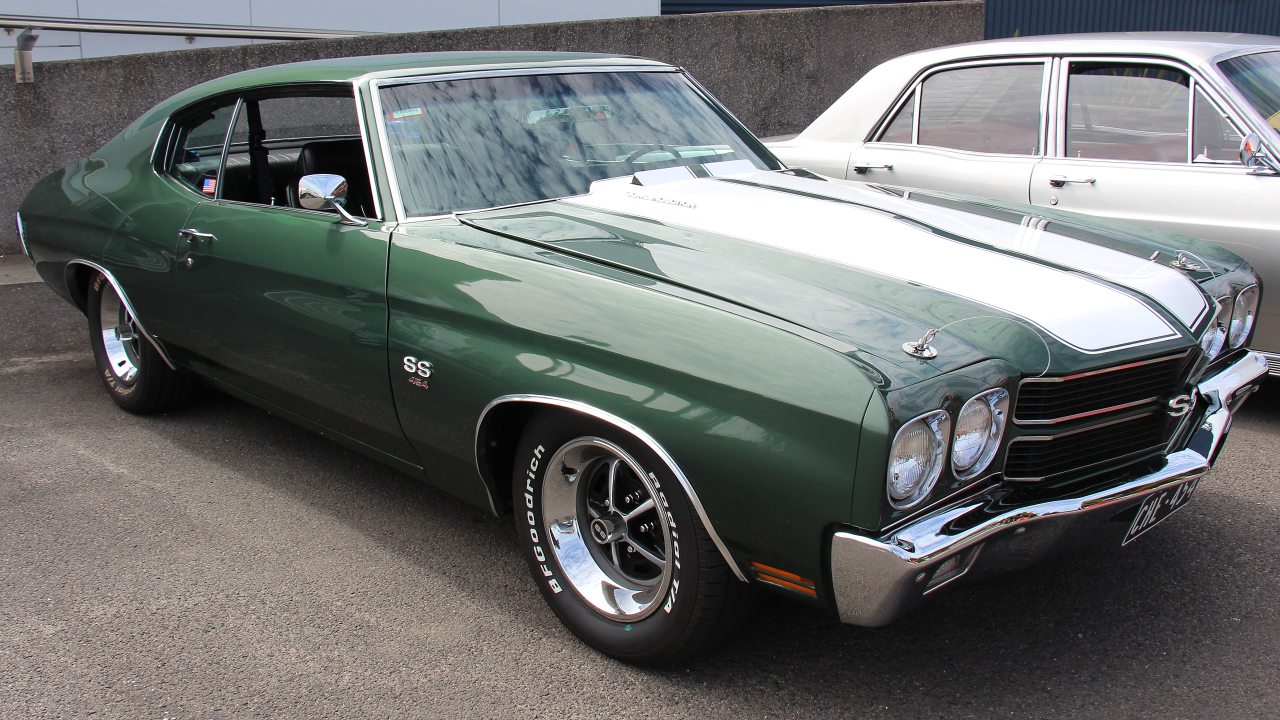
The 1970 Chevelle SS 454 did more than win stoplight races. It fused raw numbers, intimidating design, and cultural timing into a story that enthusiasts still repeat like folklore. At a moment when American performance was brushing against regulatory and insurance headwinds, Chevrolet’s big block coupe turned showroom horsepower into legend.
That legend rests on a simple idea: a midsize body wrapped around one of the most brutal factory V8s Detroit ever sold with a warranty. The combination of the SS 454 package and the LS6 engine created a car whose official specifications only hinted at its real capability, and whose silhouette still signals unfiltered muscle power decades later.
The rule change that opened the floodgates
For the 1970 model year, General Motors quietly removed its internal cap that had limited midsize cars to engines no larger than 400 cubic inches. For the Chevrolet division, that decision unlocked the possibility of dropping a 454 cubic inch big block into the Chevelle, a car that had already built a reputation as a street brawler. Reports on the period note that, once the 400 ceiling disappeared, General Motors and Chevrolet moved quickly to position the Chevelle SS as the brand’s primary showcase for big block performance.
Chevrolet responded by offering two Super Sport versions of the Chevelle, with the SS 454 sitting at the top of the hierarchy. The new package centered on a 454 cubic inch V8 and turned the midsize Chevrolet Chevelle into a flagship for American muscle. Contemporary descriptions emphasize that the Chevrolet Chevelle SS 454 occupied the center of American performance mythology, its very name becoming shorthand for big block excess and straight line speed.
LS6: the big block that bent the truth
The heart of the story is the LS6, a 454-cubic-inch V8 that pushed the boundaries of what a factory muscle car could claim. Officially, the LS6 was rated at 450 horsepower and 500 lb-ft of torque, figures that already placed it among the most powerful showroom engines of its era. Multiple accounts describe the LS6 as conservatively rated, with some observers suggesting that the real output crept closer to 500 horsepower, a suspicion reinforced by the car’s drag strip performance and the way it pulled at high rpm.
Technical summaries of the SS 454 list Horsepower at 450 hp at 5,600 rpm using the SAE gross standard, backed by an aggressive Compression ratio of 11.25:1. That combination of displacement, breathing, and Compression gave the Engine a ferocity that went beyond the brochure. Enthusiast reports describe how those in the know would smirk at the 450 figure printed on the air cleaner decal, regarding it as a polite understatement designed to keep insurance companies and regulators at bay rather than a precise measurement of the LS6’s potential.
Design that looked as fast as it was
Power alone did not turn the Chevelle SS 454 into folklore. Its aggressive styling made the performance impossible to ignore, even at idle. The 1970 redesign gave the car a wider, more planted stance, with a bold split grille, quad headlights, and muscular body lines that made the coupe look coiled and ready to launch. Descriptions of Its new shape emphasize how the sculpted fenders and pronounced rear haunches amplified the impression of brute force, while the signature dual racing stripes on many SS 454s turned the hood and decklid into visual declarations of intent.
Details specific to the SS package deepened that impression. The SS received a distinctive “power bulge” hood with functional cowl induction, using a vacuum actuated flap at the rear of the hood to feed cooler, denser air to the big block at speed. Functional hood pins and wide tires on 7 inch rims completed the visual message that this was not a standard Chevrolet Chevelle. Contemporary enthusiasts describe the Chevelle SS as looking “absolutely menacing” in traffic, a car whose stance and trim signaled that it could back up any challenge with genuine performance.
From street terror to drag strip benchmark
On the street and strip, the SS 454 LS6 quickly earned a reputation as a car to fear. Accounts of 1970 Chevelle SS 454 LS6 drag racing performance highlight how the combination of 450 horsepower and 500 lb-ft of torque translated into brutal launches and strong quarter mile times on period tires. With positraction rear axles widely specified and gearing tailored for acceleration, the Chevelle could put much of that torque to the pavement, turning the official numbers into real world dominance at local tracks and informal street contests.
Technical breakdowns of the LS6 note that it used Solid mechanical lifters rather than hydraulic ones, a choice that underscored its competition leaning character. Solid lifters required periodic adjustment and produced more valvetrain noise, but they allowed more precise control at high rpm and supported the LS6’s aggressive camshaft profile. Combined with the high Compression ratio and large port cylinder heads, this setup helped the engine pull hard to the 5,600 rpm Horsepower peak and beyond, reinforcing the sense that the 450 rating was a floor rather than a ceiling.
Insurance, scarcity, and the making of a legend
The same factors that made the Chevelle SS 454 so formidable also made it a target for insurers and regulators. Reports on the LS6 note that the 454-cubic-inch V8 under the cowl induction hood was officially rated at 450 horsepower in part to keep premiums from spiraling even higher. Enthusiast commentary suggests that manufacturers, including Chevrolet, had strong incentives to understate output as Advertised figures, especially as insurance companies began to scrutinize high performance models and adjust rates accordingly.
Production numbers added another layer to the mythology. Only about 4,500 LS6 Chevelles were built, a figure that has been widely cited in collector circles. That limited run, combined with the car’s reputation as an “American le”gend of the muscle era, has pushed surviving examples into the upper tier of collectible American performance cars. Descriptions of specific 1970 Chevrolet Chevelle SS LS6 examples emphasize that At the heart of these cars was the legendary 454, conservatively rated at 450 horsepower and 500 lb-ft of torque, and that this combination of rarity and capability has kept demand strong decades after the last one left the assembly line.
More from Fast Lane Only