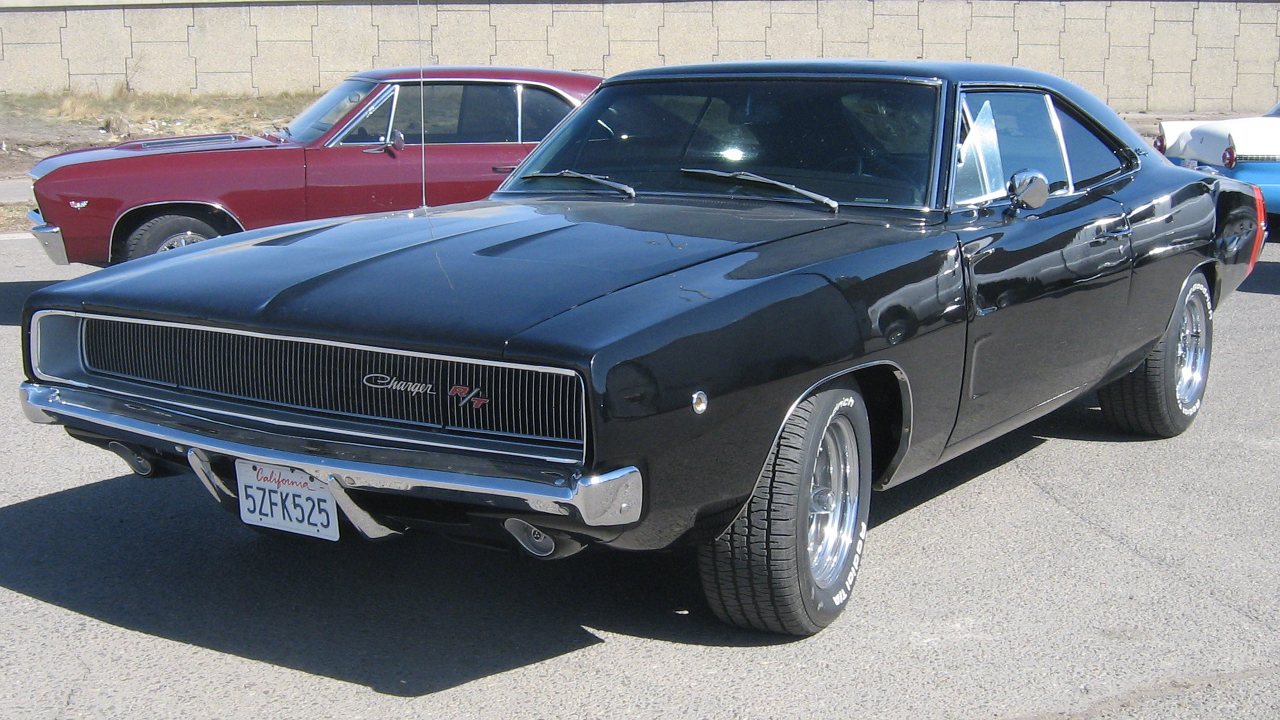
The 1968 Dodge Charger did not simply join the muscle car crowd, it altered what a street car could look and feel like when it rolled up to the curb. With a radical new shape, a menacing face, and powertrains that matched the attitude, it turned raw presence into a design brief that rivals still chase. More than half a century later, that single model year remains a reference point for how style, stance, and sound can command attention before the driver even touches the throttle.
A redesign that turned heads into witnesses
By 1968, Dodge needed the Charger to do more than compete on paper, it had to dominate visually in a market crowded with fast, loud machinery. The company responded with a complete redesign that gave the Dodge Charger a long, low profile, a sweeping fastback roofline, and a recessed grille with hidden headlights that looked almost predatory when they snapped open. Contemporary descriptions of the car emphasize how this bold new shape helped define the muscle car era, with the fastback and aggressive front end working together to create a silhouette that looked in motion even when parked.
The transformation was not subtle. The Charger adopted pronounced “Coke bottle” contours along its flanks, tightening at the doors before flaring over the rear wheels, which visually planted the car on its tires and made the body appear taut over the chassis. Enthusiasts still point to the 1968 Dodge Charger R/T as one of the most aggressive muscle cars of its time, crediting those sculpted sides, the hidden lamps, and the long decklid for a stance that felt more like a street weapon than a family coupe. That combination of fastback roof, recessed grille, and Coke bottle bodywork is now treated as a textbook example of how a redesign can instantly elevate a model from also-ran to icon.
Street presence as a design philosophy
What set the 1968 Dodge Charger apart was not only how it looked in photographs, but how it occupied real space on real streets. Owners and restorers describe the car as a “muscle car masterpiece” with a “street-dominating presence,” language that underlines how its proportions and detailing were engineered to project power before any performance figures entered the conversation. The long hood, short rear deck, and broad shoulders gave the impression of coiled strength, while the full-width taillight panel and recessed rear window made the car seem wider and lower than it actually was.
That sense of presence has proven durable. Modern builds that start from a bare 1968 Dodge Charger shell and are rebuilt with contemporary components still lean heavily on the original body lines and stance, because those elements remain instantly recognizable and visually intimidating. Social media posts that celebrate these restorations often highlight the menacing grille, the sweeping roof, and the way the car seems to own the lane around it, reinforcing the idea that the 1968 design did more than follow trends. It codified a visual language of dominance that later muscle cars, and even modern performance sedans, continue to echo.
Power to match the attitude
Presence without performance would have turned the Charger into a hollow statement, and Dodge was careful to avoid that trap. Under the hood, the 1968 lineup ranged from strong big-block V8s to the fearsome Dodge Hemi Charger R/T, which enthusiasts regard as a legendary American muscle car for its combination of raw power and unmistakable style. The Hemi variant in particular is frequently singled out as a high point of 1960s American performance cars, pairing the aggressive exterior with an engine bay that justified every visual threat the bodywork made.
Descriptions of the 1968 Dodge Charger R/T often lean on phrases like “pure American menace carved into steel,” a telling choice of words that fuses mechanical capability with aesthetic aggression. The long fastback roofline, hidden headlights, and Coke bottle sides did not simply frame the engine, they advertised it, turning each stoplight into a kind of informal stage. In that sense, the powertrains were part of the car’s visual identity, ensuring that the sound and acceleration lived up to the expectations set by the stance and sheet metal.
From sales gamble to Unprecedented Success
The market response to the 1968 redesign shows how thoroughly the Charger’s new persona resonated with buyers. The Charger was redesigned for 1968, and 35,000 units were slated for production. The demand was high, and 96,100 Chargers were produced, a leap that transformed the model from a niche fastback into a volume success. Analysts who have revisited that year describe The Charger’s performance as an Unprecedented Success, noting that sales surged from roughly 16,000 units in 1967 to figures that dwarfed internal expectations once the new body hit showrooms.
This commercial breakout mattered because it validated the idea that bold, even polarizing design could be a profit engine rather than a liability. The Charger’s double diamond shaped grille, muscular haunches, and fastback profile did not chase conservative tastes, yet they drew in buyers who wanted a car that looked as assertive as it drove. That outcome encouraged Dodge and its rivals to treat visual drama as a core part of the muscle car formula, not a risky flourish, and it helped set benchmarks for how future performance models would balance practicality with presence.
A legacy that still rules the boulevard
More than five decades after the first 1968 Dodge Charger rolled off the line, its influence is visible in both culture and metal. Enthusiast communities routinely refer to the model as “The King of the Streets,” a phrase that captures how thoroughly it has come to symbolize the idea of a dominant road car. Modern commentary describes the 1968 Dodge Charger R/T as “pure American menace” and celebrates its long roofline, hidden headlights, and Coke bottle curves as enduring hallmarks of American performance design. Even in an era of complex aerodynamics and digital dashboards, the simple, sculpted aggression of the 1968 body still reads as authoritative.
That staying power is reinforced every time a restored or restomod Charger appears at a meet or in a video clip and instantly draws a crowd. Builders who integrate modern suspension, brakes, and engines into original 1968 shells rarely alter the core proportions, because the car’s identity is inseparable from its stance and surface language. The Charger’s combination of Unprecedented Success in period and lasting cultural reverence has turned that single model year into a touchstone for what “street presence” really means: a car that commands attention from every angle, backs it up with genuine performance, and continues to shape expectations long after its production run ended.
More from Fast Lane Only