By 1970, the muscle car market had become a battlefield not only for horsepower, but also for attention.
Every manufacturer was trying to stand out in crowded showrooms. Powerful engines were no longer enough to guarantee success. Buyers had dozens of performance options available, and many cars offered similar acceleration, comparable engine choices, and competitive pricing. To attract customers, automakers increasingly turned to styling, graphics, colors, and distinctive visual identities.
Few embraced that strategy more completely than Pontiac.
The 1970 Pontiac GTO Judge arrived during the peak of the muscle car era and immediately demanded attention. It was loud, colorful, aggressive, and impossible to ignore. While many rivals relied on subtle performance cues or restrained design elements, the Judge seemed determined to announce its presence from a block away.
Yet the car’s styling wasn’t simply about attracting stares.
Pontiac understood that muscle cars had become cultural symbols. Buyers wanted vehicles that reflected personality and individuality as much as performance. The Judge tapped directly into that desire, creating one of the most recognizable and visually distinctive muscle cars ever produced.
More than fifty years later, it remains a perfect example of how styling could become just as important as horsepower.
The GTO Already Had a Strong Reputation
Before the Judge ever appeared, the GTO had already established itself as one of America’s most influential performance cars.
Introduced in 1964, the Pontiac GTO helped define the muscle car formula by combining a powerful V8 engine with a midsize platform and an accessible price. The concept proved enormously successful and inspired competitors throughout Detroit to develop similar vehicles.
By the late 1960s, however, the market had changed.
The GTO was no longer the only muscle car attracting attention. New rivals appeared almost every year, and Pontiac faced increasing pressure to keep its flagship performance model fresh and exciting.
The company needed something dramatic.
The Judge became that answer.
The Judge Was Originally Created as a Value Performance Model
Ironically, the Judge wasn’t initially conceived as a flashy styling exercise.
Pontiac developed the package partly in response to the success of affordable muscle cars like the Plymouth Road Runner. The goal was to create a performance-oriented GTO variant that emphasized excitement and value.
However, as development progressed, Pontiac realized the package offered an opportunity to create something much bigger.
The company embraced a bold personality that extended far beyond engine specifications.
The Judge would become a statement car.
Its appearance would be every bit as important as its performance credentials.
That decision fundamentally shaped the car’s identity.
The Name Set the Tone
Even the Judge’s name suggested that Pontiac was willing to take risks.
Rather than using a technical designation or traditional performance title, the company borrowed inspiration from popular culture. The name reflected a playful attitude that distinguished the car from many competitors.
The choice immediately communicated that the Judge wasn’t intended to be conservative.
It was designed to be noticed.
The unusual name also complemented Pontiac’s broader marketing strategy, which increasingly targeted younger buyers interested in individuality and self-expression.
The Judge’s personality began with its badge.
Everything else followed naturally.
Bright Colors Became Part of the Formula
One of the most effective ways Pontiac differentiated the Judge was through color.
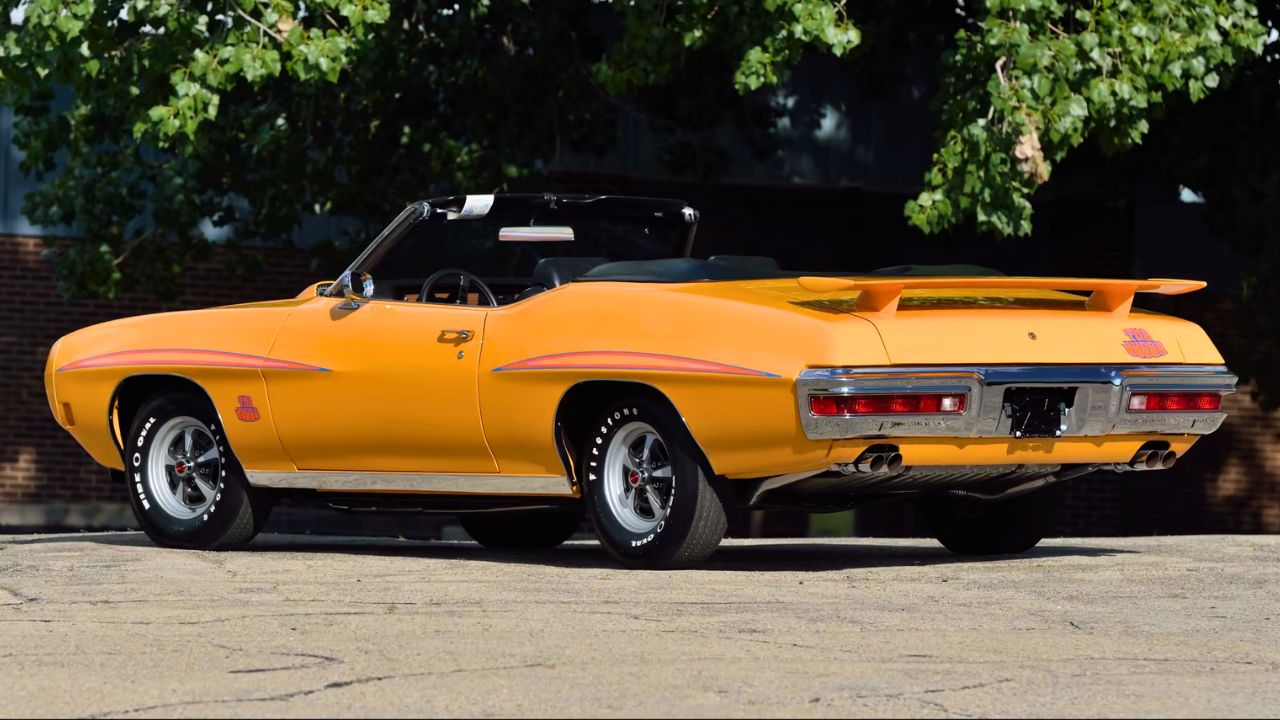
While many muscle cars were available in eye-catching shades, Pontiac fully embraced the trend. Colors such as Orbit Orange, Cardinal Red, and Atoll Blue transformed the Judge into a rolling advertisement for the muscle car lifestyle.
These colors weren’t subtle.
That was precisely the point.
The Judge was intended to stand apart from ordinary transportation and even from many competing performance cars. Bright paint amplified the car’s visual impact and helped establish a memorable identity.
Owners who selected these colors weren’t interested in blending into traffic.
Neither was Pontiac.
The Graphics Were Impossible to Miss
Perhaps the most famous styling feature of the 1970 Judge was its graphics package.
Large, sweeping side stripes ran along the body, incorporating vibrant colors and distinctive shapes that immediately separated the Judge from standard GTO models. The graphics transformed the car’s appearance and gave it a sense of movement even when parked.
At a time when some manufacturers still relied on relatively modest badging, Pontiac pushed much further.
The Judge embraced visual drama.
The graphics became one of the car’s defining characteristics and remain among the most recognizable muscle car design elements ever created.
They helped turn the Judge into an automotive icon.
The Rear Spoiler Added Both Style and Presence
Another key element of the Judge’s appearance was its rear spoiler.
Although spoilers were becoming increasingly common on performance cars by 1970, Pontiac’s design contributed significantly to the Judge’s aggressive personality.
The spoiler visually lengthened the rear of the car and reinforced its performance-oriented image.
Whether or not most owners ever benefited from any aerodynamic effect was largely irrelevant.
The spoiler looked fast.
In the muscle car era, appearance mattered.
Pontiac understood that buyers often responded emotionally to styling cues, and the spoiler helped create exactly the right impression.
It completed the package.
The Endura Front End Already Looked Aggressive
The Judge benefited from one of Pontiac’s most successful design innovations.
The GTO’s Endura front bumper provided a body-colored appearance that looked modern and integrated compared with the chrome-heavy front ends found on many competitors. The design gave the car a cleaner and more aggressive face.
When combined with the Judge’s graphics, spoiler, and vivid paint colors, the front end became even more effective.
The car looked purposeful from every angle.
Unlike some styling trends that quickly appear dated, the Endura nose has aged remarkably well.
It remains one of the most admired features of the era.
Pontiac Understood the Importance of Image
By 1970, performance alone was no longer enough.
Most major manufacturers offered engines capable of producing impressive acceleration. As a result, image became increasingly important in showroom competition.
Pontiac recognized this reality earlier than many rivals.
The company understood that buyers wanted more than horsepower figures. They wanted a car that reflected their personality and attracted attention.
The Judge delivered exactly that.
Its styling gave owners something to talk about before the engine even started. The car became an extension of personal identity, which was a powerful selling point.
The strategy worked remarkably well.
The Judge Looked Different From Its Rivals
What truly separated the Judge from many competitors was its willingness to embrace excess.
Cars such as the Chevrolet Chevelle SS and Ford Torino Cobra often relied on muscular shapes and relatively restrained visual cues. The Judge took a more theatrical approach.
Pontiac intentionally pushed boundaries.
The colors were brighter.
The graphics were larger.
The personality was louder.
This willingness to stand apart helped ensure that the Judge remained memorable long after production ended.
People remembered it because they couldn’t ignore it.
Performance Supported the Styling
Of course, the Judge’s appearance would have meant little if the car failed to deliver performance.
Fortunately, Pontiac ensured that wasn’t a problem.
Available engines included the respected Ram Air III and the formidable Ram Air IV, both of which provided serious muscle car capability. The Judge backed up its styling with genuine performance credentials.
This combination proved crucial.
The car wasn’t simply a fashion statement.
It was a legitimate muscle car that happened to look spectacular.
The styling attracted attention, while the performance earned respect.
Together, they created a powerful formula.
Collectors Celebrate Its Boldness
Today, the Judge’s visual confidence is one of the primary reasons collectors admire it.
Many muscle cars from the era offered strong performance. Far fewer possessed a visual identity as distinctive as the Judge.
Collectors appreciate the fact that Pontiac was willing to take risks.
The colors, stripes, spoiler, and overall attitude create a package that remains unmistakable decades later.
The qualities that once seemed excessive have become part of the car’s enduring appeal.
Time has been very kind to the Judge.
The Muscle Car That Refused to Be Subtle
Looking back, the 1970 Pontiac GTO Judge represented a turning point in muscle car styling.
Pontiac recognized that performance cars had become cultural symbols as much as transportation devices. Buyers wanted excitement, personality, and individuality. The Judge delivered all three in abundance.
Rather than following industry conventions, Pontiac pushed further.
The company embraced color, graphics, and visual drama in a way few rivals were willing to match.
The Car That Made a Statement
The 1970 Pontiac GTO Judge pushed styling further than most rivals because Pontiac understood that attention had become a valuable commodity during the muscle car era.
With its bright colors, bold graphics, rear spoiler, and unmistakable personality, the Judge transformed the GTO into one of the most visually distinctive performance cars ever built.
Its styling wasn’t an afterthought.
It was a central part of the car’s identity.
More than fifty years later, enthusiasts still recognize a Judge almost instantly. That lasting recognition is proof that Pontiac’s gamble succeeded.
The Judge didn’t merely participate in the muscle car wars.
It made sure everyone noticed it.
More from Fast Lane Only