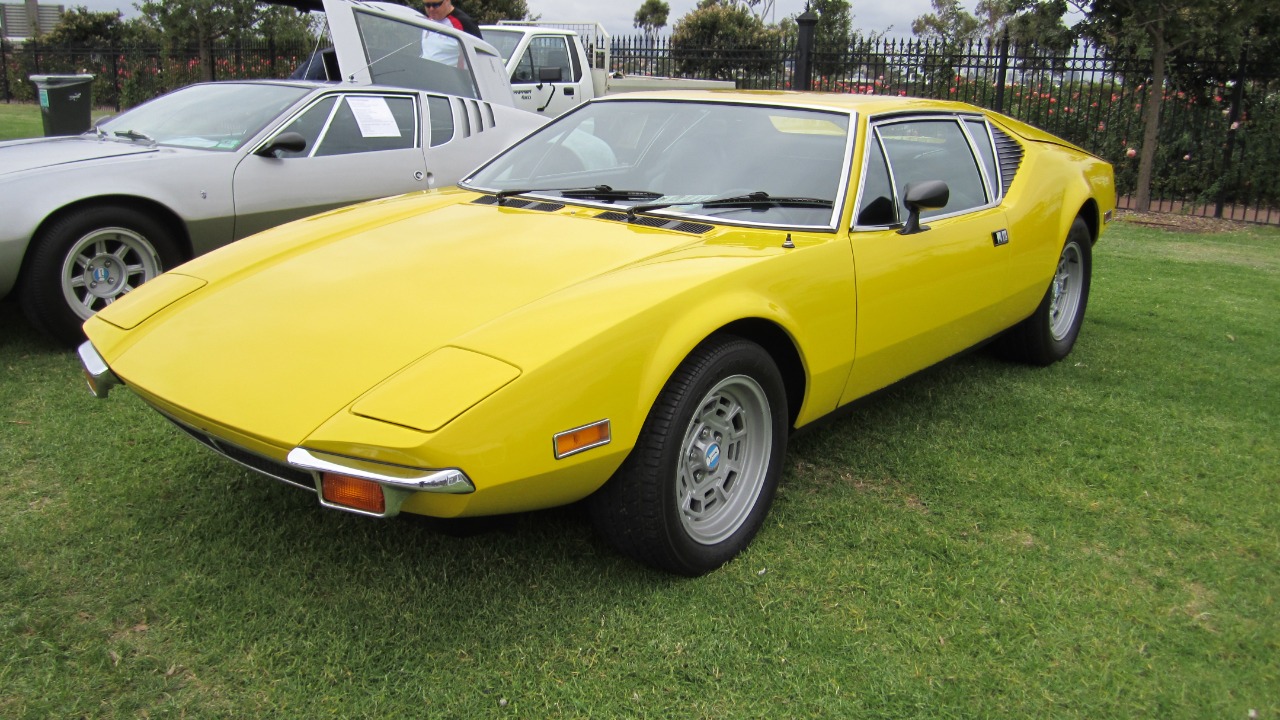
The De Tomaso Pantera, a striking blend of Italian design and American muscle, emerged in 1971 as a result of an unexpected partnership between De Tomaso and Ford. This unique collaboration brought this iconic sports car to life, leaving a lasting mark on the automotive industry and establishing a legacy that continues to captivate car enthusiasts today.
Origins of the De Tomaso Pantera
Alejandro De Tomaso, an Argentine-Italian businessman and racing driver, had a vision for a new kind of sports car that would combine the best of both Italian flair and American power. His goal was to create a vehicle that could stand toe-to-toe with European rivals while remaining accessible to American drivers. The Pantera was born out of this ambition, with its design heavily influenced by the sleek lines and aggressive stance typical of Italian sports cars.
The partnership with Ford emerged when De Tomaso sought a powerful engine to complement his design. Ford was looking to expand its performance vehicle offerings, especially with the growing interest in sports cars in the American market. This collaboration was a strategic move for both parties, allowing De Tomaso to gain access to the engineering prowess and financial backing of Ford, while Ford could leverage the exotic appeal of the Pantera to attract a new customer base.
The Pantera’s design was revolutionary for its time. It featured a distinctive mid-engine layout, which not only enhanced its aesthetics but also provided superior handling. The car’s low profile and wide stance made it an instant head-turner, setting it apart from other vehicles on the road in the early 1970s.
Engineering and Performance
The engineering behind the Pantera was a key element of its appeal. The mid-engine configuration allowed for better weight distribution, significantly improving the vehicle’s handling and performance. This layout was relatively rare for sports cars of the time, making the Pantera a standout in its class.
At the heart of the Pantera was the formidable Ford 351 Cleveland V8 engine, which delivered impressive power and performance. With outputs exceeding 300 horsepower, the Pantera could accelerate from 0 to 60 mph in just over 5 seconds, a remarkable feat for a car of its era. In comparison, contemporaries like the Chevrolet Corvette and Porsche 911 offered great performance but lacked the Pantera’s unique combination of design and muscle.
On the road, the Pantera distinguished itself with its raw power and spirited handling. Its performance metrics made it a serious contender against other muscle cars, and it quickly garnered a reputation as a thrilling driver’s car. The combination of Italian styling and American engineering created a unique driving experience that enthusiasts still rave about today.
Marketing and Sales Strategy
Ford’s marketing strategy for the Pantera was as innovative as the car itself. The company promoted it as a high-performance vehicle that was not just for the elite but accessible to a broader audience of American drivers. This positioning was crucial, especially as the muscle car market was expanding and consumers were looking for vehicles that combined performance with style.
Sales figures reflect the success of this approach. Between 1971 and 1992, Ford and De Tomaso produced approximately 7,260 units of the Pantera, as detailed in various production history records. This number is impressive given the niche market it occupied. The Pantera’s presence helped elevate Ford’s brand, showcasing its ability to compete in the high-performance segment against established European manufacturers.
The Pantera was advertised in various automotive publications and at auto shows, where it drew considerable attention. Its partnership with Ford allowed De Tomaso to benefit from the extensive dealer network and marketing resources that Ford could provide, ensuring that the Pantera reached a wide audience.
Cultural Impact and Legacy
The Pantera’s influence on automotive culture in the 1970s and beyond cannot be overstated. Its unique design and performance capabilities made it a symbol of freedom and rebellion during a time of social change. The car appeared in multiple films and television shows, further cementing its status in popular culture. Notably, it was featured in the 1974 movie “The Getaway,” which introduced the car to a wider audience and contributed to its allure.
Today, the Pantera is considered a collector’s item, with enthusiasts actively seeking out well-maintained models. The car’s rarity and distinctive characteristics have made it a sought-after piece of automotive history. As car culture evolves, the Pantera continues to captivate new generations, serving as a testament to the innovative spirit of its creators.
Many fans and collectors gather to celebrate the Pantera at events and car shows, where they share stories and experiences related to this remarkable vehicle. The car’s ongoing appeal is a reflection of its timeless design and the unique partnership that brought it to life. For those interested in diving deeper into its history, resources such as Pantera production history provide additional insights into its legacy.
The Enduring Legacy of the Pantera
Reflecting on the Pantera’s journey, it’s clear that this car represents an iconic moment in automotive history. The collaboration between Ford and De Tomaso was groundbreaking, paving the way for future partnerships in the automotive industry. Their ability to blend different cultural elements into a single product created a vehicle that appealed to a wide audience while maintaining its performance roots.
The Pantera’s legacy is not just about its performance or design; it is also about the innovative spirit it embodies. It serves as an example of how partnerships can lead to extraordinary outcomes in the automotive world. As we look to the future, the Pantera remains a reminder of the possibilities that arise when different approaches come together to create something truly special.
For anyone interested in exploring the Pantera further, articles and discussions on platforms like MotorWeek and various automotive forums capture the enthusiasm surrounding this legendary sports car, ensuring that its story continues to inspire.
More from Fast Lane Only
- Unboxing the WWII Jeep in a Crate
- 15 rare Chevys collectors are quietly buying
- 10 underrated V8s still worth hunting down
- Police notice this before you even roll window down
*Research for this article included AI assistance, with all final content reviewed by human editors.