It started like one of those totally ordinary errands: a slow roll through a parking lot, a quick turn toward an open spot, and then—what’s this? The steering wheel suddenly felt like it gained fifty pounds. No warning light fireworks, no dramatic bang, just that immediate “something’s not right” heaviness that makes your shoulders tense up.
By the time the minivan coasted to a stop, the problem wasn’t subtle anymore. A faint smell of hot rubber hung in the air, and under the hood things were clearly not having a good day. The culprit turned out to be a shredded serpentine belt, and it didn’t leave quietly—it took the water pump along for the ride.
A parking-lot problem that didn’t feel like a parking-lot problem
Parking lots are where you expect shopping carts, mysterious dents, and the occasional misplaced cone—not a sudden steering workout. But modern power steering is usually “power” only as long as a belt is spinning the right components. When that belt fails, the wheel can instantly get heavy, especially at low speeds when you’re turning the most.
What made this one tricky is how quickly it happened. One moment everything felt normal, the next it was like trying to steer a boat with a spatula. That abrupt change is often the giveaway that something belt-driven just stopped being belt-driven.
The serpentine belt: one belt, lots of jobs
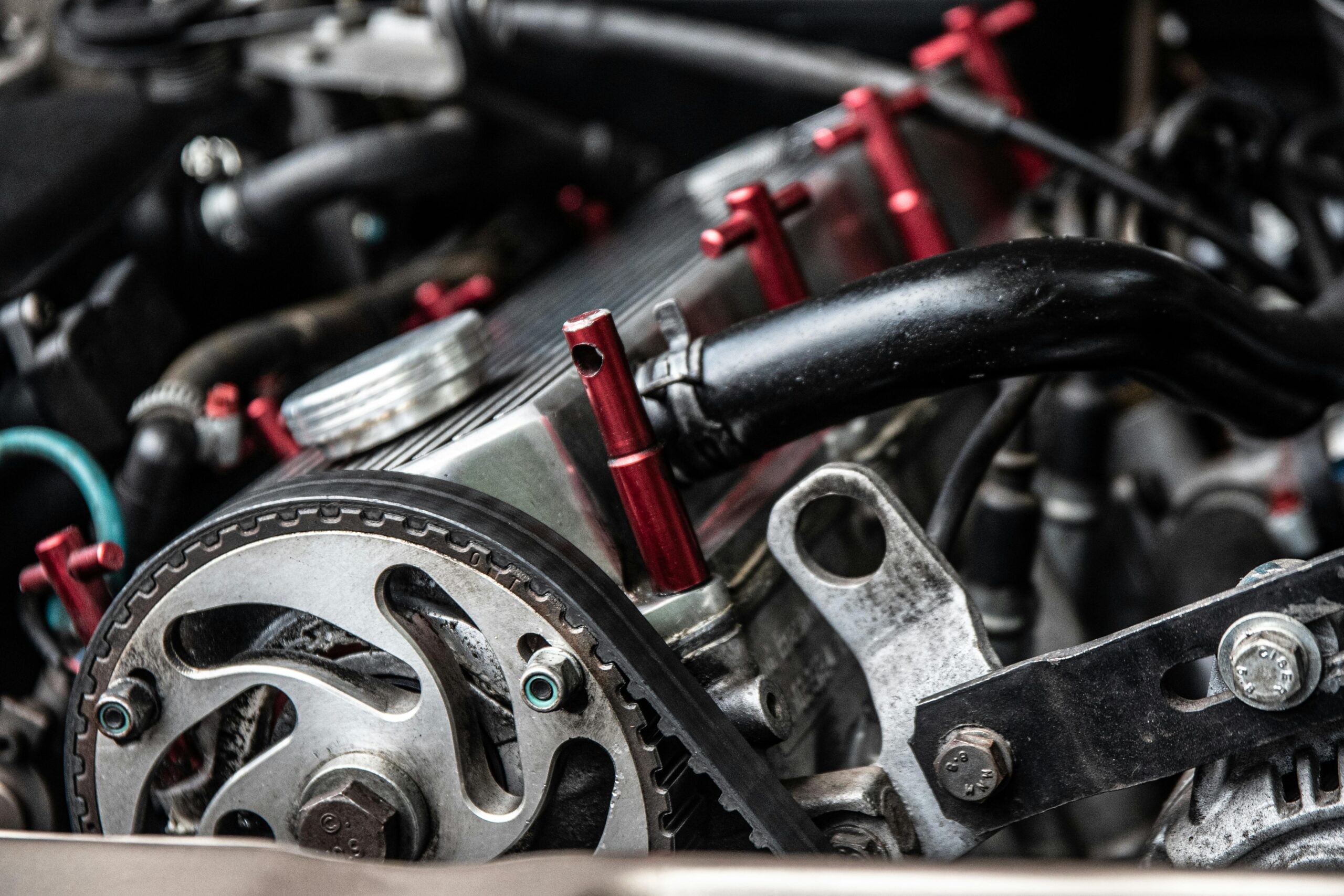
If you’ve heard the term “serpentine belt” and pictured a harmless rubber loop minding its own business, you’re not wrong—until it isn’t. This single belt typically drives several critical accessories: the alternator (for charging), the power steering pump (on many vehicles), and often the air conditioning compressor. On a lot of engines, it also drives the water pump, which keeps coolant circulating.
So when it snaps or shreds, it’s not just one system that quits. It can be a cascading “not today” moment for multiple parts at once. And it tends to announce itself in a few classic ways: steering gets heavy, the battery light may come on, the temperature gauge may start creeping up, and you might hear slapping or squealing if the belt is half-alive and flailing.
Why the steering went heavy so fast
The heavy steering was the first obvious clue because parking-lot speeds demand the most assist. If the vehicle uses a belt-driven hydraulic power steering pump, the pump needs that belt spinning to build pressure. With no pressure, you can still steer, but it’s manual steering in a vehicle that wasn’t designed to feel light without help.
Some newer vehicles use electric power steering, which wouldn’t be affected the same way. But many minivans on the road still rely on the belt-driven setup, and when the belt fails, the change is instant. It’s the automotive version of trying to drink a milkshake and realizing the straw has a hole.
How a shredded belt can take out a water pump
In this case, the belt didn’t just break cleanly—it shredded. When belts shred, their strands can whip around the engine bay, get tangled, or jam between pulleys. If the water pump pulley gets involved, things can go from “maintenance item” to “tow truck” pretty quickly.
There are a couple common ways the water pump ends up as collateral damage. Sometimes the pump’s bearing starts failing first, the pulley begins to wobble, and that wobble chews the belt until it comes apart. Other times the belt fails due to age or contamination, and the flailing belt or sudden load changes finish off a water pump that was already near the edge.
What the driver noticed—and what they didn’t
The weird part is that the earliest symptoms aren’t always loud. A belt can develop tiny cracks, glaze over, or start slipping just a little, and the only clue might be a brief squeal on cold starts. If that squeal has been happening “for a while,” that’s often your car politely asking for attention before it starts shouting.
Once the belt let go, though, the minivan gave clearer signals. The steering got heavy, and the engine bay smelled hot and rubbery. Depending on the exact layout, the battery light might’ve popped on too, because the alternator stops charging when the belt stops spinning.
Why overheating becomes the next big threat
The water pump is the heart of the cooling system, pushing coolant through the engine and radiator. If it stops turning, coolant circulation slows or stops, and engine temperature can climb fast. That’s why a belt failure isn’t something you “just drive home carefully” if the water pump is belt-driven.
Overheating can cause warped cylinder heads, blown head gaskets, and a repair bill that makes you wish you’d bought a bicycle. Even a short drive can be risky if the temperature gauge starts rising. If the belt is gone and the water pump isn’t spinning, the safest move is usually to shut it down and arrange a tow.
What technicians typically check after a belt failure
When a serpentine belt shreds, a good inspection is more than just installing a new belt and calling it a day. Technicians typically spin each pulley by hand to check for rough bearings, wobble, or binding. They’ll also look closely at the belt tensioner and idler pulleys, because a weak tensioner can let a belt slip, overheat, and fail early.
If the water pump is suspect, they’ll check for coolant seepage from the weep hole, play in the shaft, or grinding when the pulley turns. On some engines, replacing the water pump can be straightforward; on others, it’s tucked away and takes more labor. Either way, replacing a failing pump now is usually cheaper than gambling on it with a brand-new belt.
Little warning signs that are easy to ignore
This kind of breakdown often has a few “breadcrumbs” leading up to it. A chirp when the A/C kicks on, a squeal on damp mornings, or a slight burning smell after a long drive can all point to belt slip. Coolant spots under the front of the engine, especially near the passenger side on some layouts, can hint at a water pump starting to leak.
Another clue is a belt that looks shiny rather than matte, or one with visible cracks across the ribs. Most people don’t inspect belts for fun on a Saturday, which is fair. But even a quick glance during an oil change can catch issues early.
What to do if your steering suddenly gets heavy
If the steering abruptly feels heavy, treat it like a safety issue first, not a mystery to solve while rolling. Slow down, give yourself extra room, and aim for a safe stop. If you can do it safely, turn off the engine and pop the hood to see if the belt is still present and intact.
If the belt is shredded or missing, don’t keep driving and hope for the best—especially if that belt also runs the water pump. Getting towed may feel annoying, but it’s usually the cheapest option compared to overheating damage. And if the temperature gauge is climbing, shutting the engine off quickly can save you from a very expensive lesson.
The takeaway for anyone driving an aging daily hauler
Minivans are champions of everyday life: school runs, groceries, road trips, and the occasional mystery sticky spot in the back seat. But they’re still machines with wear items, and belts and water pumps are right in that “eventually” category. The good news is that replacing a belt, tensioner, and a questionable water pump on schedule is predictable and manageable.
The not-so-good news is that when a belt fails at the wrong moment, it can feel dramatic even at five miles per hour in a parking lot. Still, the symptoms are pretty consistent, and knowing what they mean helps you make the right call fast. If your steering ever goes heavy out of nowhere, it’s not your imagination—your engine is probably trying to get your attention.
More from Fast Lane Only
- Unboxing the WWII Jeep in a Crate
- 15 rare Chevys collectors are quietly buying
- 10 underrated V8s still worth hunting down
- Police notice this before you even roll window down
*Research for this article included AI assistance, with all final content reviewed by human editors.