For most American performance cars, the early 1970s marked the beginning of a difficult period. Rising insurance costs, tightening emissions regulations, and changing fuel concerns forced automakers to reduce compression ratios and detune engines that had defined the muscle car era. Horsepower ratings began falling across the industry, and many enthusiasts feared the golden age of performance was coming to an end.
Yet amid this decline, the 1973 Pontiac Firebird Trans Am accomplished something unusual. While many rivals were becoming slower and less exciting, Pontiac managed to improve the Trans Am’s real-world performance. It was a rare bright spot during an era when horsepower numbers seemed to be heading in only one direction.
The 1973 Trans Am demonstrated that smart engineering and a focus on drivability could sometimes matter more than impressive numbers printed in a brochure.
The Muscle Car Landscape Was Changing
The horsepower race that defined the late 1960s could not continue forever. Federal emissions standards became increasingly strict, forcing manufacturers to redesign engines to produce fewer pollutants. At the same time, insurance companies began charging steep premiums for high-performance vehicles, making muscle cars more expensive to own.
Another major change arrived in 1972 when the industry switched from reporting gross horsepower ratings to net horsepower ratings. Gross ratings measured engines under ideal laboratory conditions, while net ratings reflected power as installed in production vehicles with accessories and emissions equipment attached.
As a result, horsepower figures appeared to drop dramatically almost overnight.
Many buyers assumed performance had disappeared entirely.
Pontiac Refused to Give Up
Unlike some competitors that quickly shifted focus away from performance, Pontiac remained committed to building enthusiast-oriented vehicles.
The Firebird Trans Am continued to serve as the brand’s flagship performance model. Engineers worked carefully to preserve acceleration and driving excitement despite growing regulatory challenges.
Rather than simply chasing peak horsepower figures, Pontiac focused on creating engines that delivered strong torque and usable power throughout the rev range.
This strategy would prove especially important for the 1973 model year.
The 455 V8 Became the Star
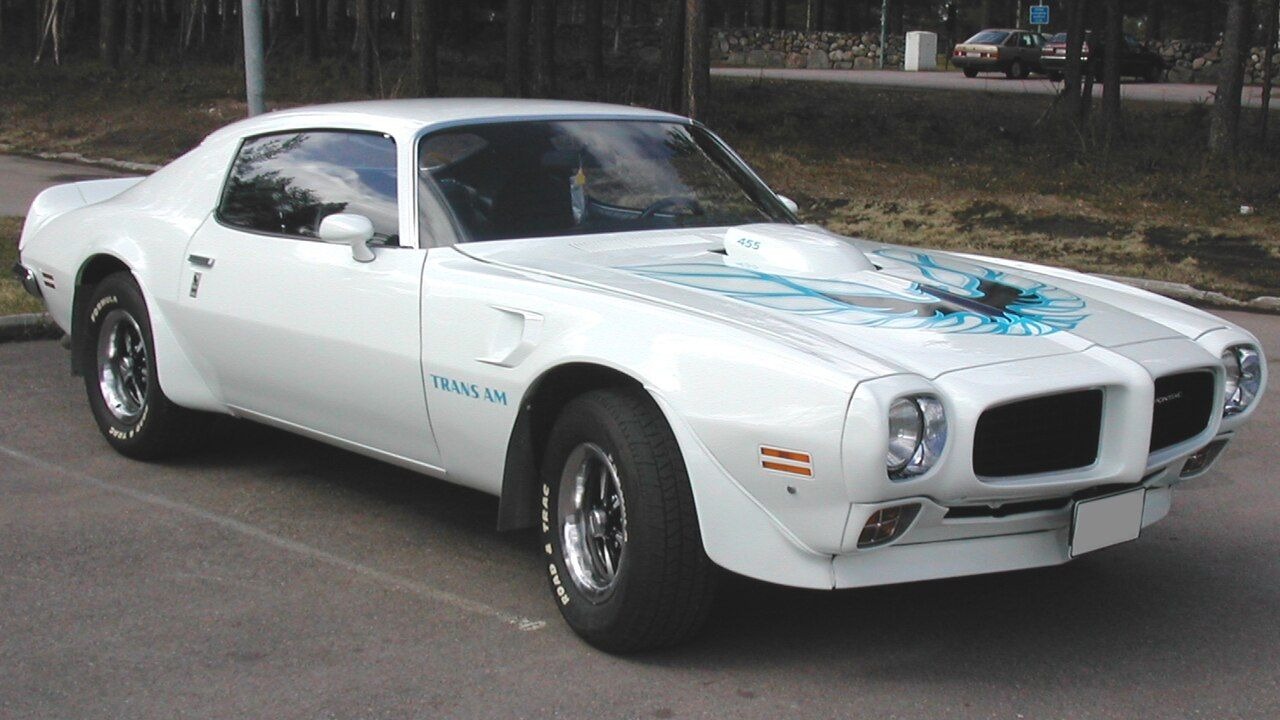
The centerpiece of the 1973 Trans Am was Pontiac’s 455 cubic-inch V8.
Although official horsepower ratings looked modest compared to the headline-grabbing figures of the late 1960s, the large-displacement engine produced abundant torque. This low-end pulling power made the car feel exceptionally strong in everyday driving situations.
Buyers could choose the standard 455 or opt for the Super Duty 455, one of the most legendary engines of the entire muscle car era.
The Super Duty engine featured reinforced internal components, improved cylinder heads, a unique camshaft, and numerous performance upgrades designed to maximize durability and output.
It was far more than a typical emissions-era V8.
The Arrival of the Super Duty 455
The introduction of the Super Duty 455 transformed the Trans Am’s reputation.
Officially rated at 290 net horsepower and 390 pound-feet of torque, the engine’s published figures failed to tell the whole story. Many enthusiasts and historians believe Pontiac intentionally underrated the engine, partly due to insurance concerns and corporate politics.
Road tests conducted during the period revealed performance levels that rivaled or exceeded many earlier muscle cars with significantly higher advertised horsepower ratings.
The Super Duty-equipped Trans Am could accelerate with surprising authority, reminding enthusiasts that genuine performance still existed despite changing regulations.
Better Engineering Improved Real-World Performance
Horsepower figures tell only part of the performance story.
Pontiac engineers paid close attention to gearing, suspension tuning, and overall vehicle balance. The Trans Am’s handling capabilities continued to improve, making it a more complete performance package than many traditional muscle cars.
The car’s upgraded suspension, wide tires, and responsive steering helped drivers use available power more effectively. Instead of focusing exclusively on straight-line acceleration, Pontiac delivered a vehicle that performed confidently on winding roads as well.
This broader performance philosophy helped distinguish the Trans Am from many competitors.
A New Hood Added Functionality
One of the most recognizable features of the 1973 Trans Am was its dramatic shaker hood scoop.
Mounted directly to the engine, the scoop protruded through an opening in the hood and visibly moved as the engine vibrated. Beyond its aggressive appearance, the shaker scoop provided functional benefits by directing cooler outside air toward the engine.
The feature reinforced the Trans Am’s performance image at a time when many muscle cars were losing both power and personality.
It became one of the model’s defining characteristics.
Standing Out During Difficult Times
The 1973 Trans Am arrived just before the oil crisis would further reshape the automotive industry. Within a few years, many performance cars would disappear entirely or become shadows of their former selves.
Pontiac’s willingness to continue investing in performance allowed the Trans Am to stand out during a period of uncertainty. Enthusiasts searching for genuine excitement increasingly viewed the car as one of the last authentic muscle machines available from Detroit.
Its reputation only grew stronger as competing models faded from the market.
A Lasting Legacy
Today, the 1973 Firebird Trans Am occupies a special place in muscle car history. It represents a bridge between the high-horsepower era of the late 1960s and the more challenging years that followed.
The Super Duty 455 models are particularly prized by collectors, often regarded as some of the finest American performance cars of the 1970s. Their combination of rarity, engineering excellence, and historical significance continues to drive strong demand.
More importantly, the 1973 Trans Am proved that performance could survive even when the industry seemed determined to move in another direction.
Conclusion
The 1973 Pontiac Firebird Trans Am gained performance during the horsepower era’s decline by focusing on real-world capability rather than headline numbers. Through the use of the powerful 455 V8, the legendary Super Duty engine package, and continuous improvements in handling and drivability, Pontiac created a car that remained genuinely exciting at a time when many competitors were retreating from performance.
More than fifty years later, the 1973 Trans Am stands as proof that innovation and determination can keep the spirit of the muscle car alive, even during the industry’s most challenging transitions.
More from Fast Lane Only