Some cars succeed because of great engineering.
Others succeed because of memorable styling, powerful engines, or effective marketing. Occasionally, a vehicle benefits from something equally important but far less controllable: timing. It enters the market at precisely the moment when consumer tastes, industry trends, and manufacturer ambitions align perfectly.
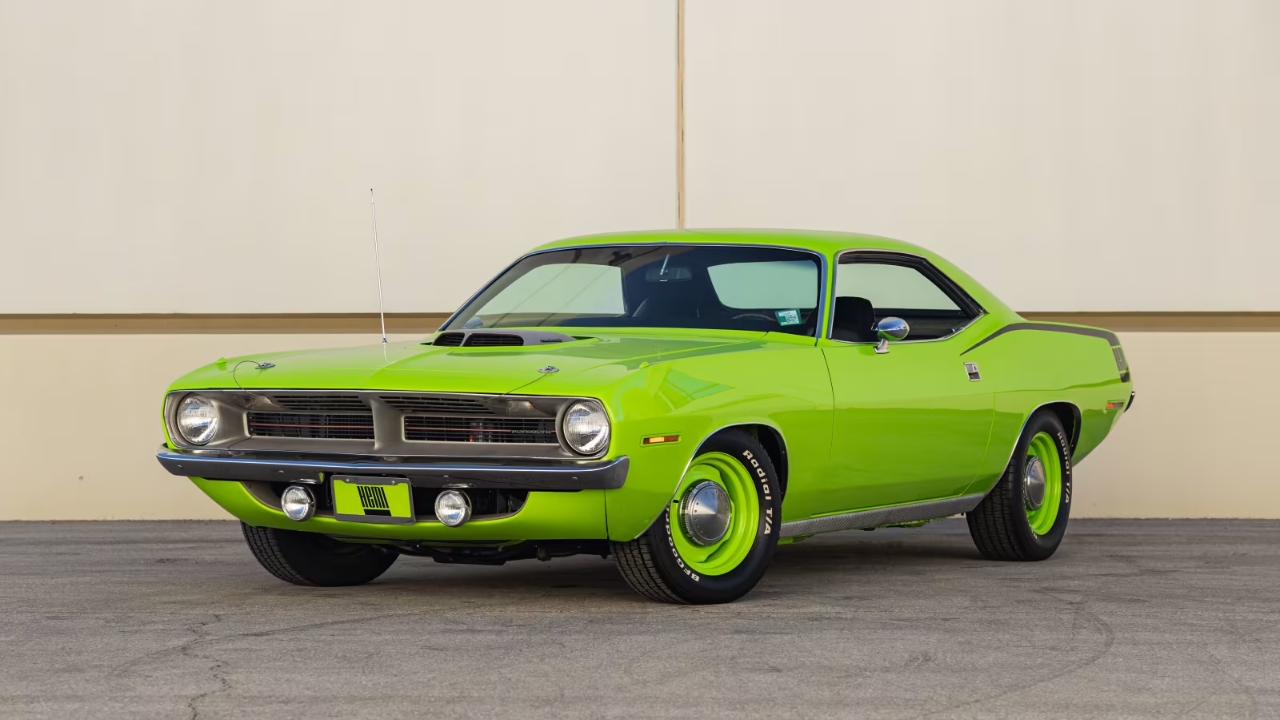
The 1970 Plymouth ’Cuda was one of those cars.
Although the Barracuda had existed since 1964, it often lived in the shadow of competitors such as the Ford Mustang and Chevrolet Camaro. Plymouth’s pony car had loyal fans and respectable performance credentials, but it rarely commanded the same level of attention as some of its rivals.
Everything changed for 1970.
Plymouth completely redesigned the Barracuda, creating a vehicle that finally possessed the styling, performance options, and personality needed to compete at the highest level of the muscle car market. The company also introduced the ’Cuda as a distinct high-performance model, separating it from standard Barracudas and giving it an identity all its own.
Most importantly, the car arrived during the final peak of the muscle car era.
For one brief moment, buyers could still order massive V8 engines, bold styling packages, and uncompromising performance directly from the factory. Within only a few years, changing regulations, insurance costs, and market priorities would begin reshaping the industry.
The 1970 ’Cuda arrived just before that window started closing.
That timing helped make it legendary.
Plymouth Needed Something More Competitive
By the late 1960s, Plymouth understood that its existing Barracuda needed a fresh start.
The original car had been introduced before the Mustang and technically helped establish the pony car segment. Despite that early arrival, however, the Barracuda never achieved the same commercial success as Ford’s breakthrough model. Competitors continued gaining momentum, and Plymouth needed a vehicle capable of generating excitement on a larger scale.
The answer was an entirely new platform.
Rather than continuing to modify the existing design, Chrysler engineers and designers developed a larger and more aggressive E-body architecture. This platform would underpin both the Plymouth Barracuda and the Dodge Challenger, allowing both brands to compete more effectively in the growing performance market.
The redesign represented a major investment.
Plymouth intended to make the most of it.
The New Styling Was Exactly What Buyers Wanted
One of the biggest reasons the 1970 ’Cuda arrived at the right moment was its appearance.
By 1970, muscle car buyers expected more than basic transportation with a large engine. Styling had become a crucial part of the ownership experience. Cars needed to project performance visually, even when standing still.
The redesigned Barracuda delivered exactly that.
Its broad stance, aggressive front end, pronounced fender shapes, and muscular proportions gave it a commanding presence. The body looked lower, wider, and more purposeful than earlier versions. Designers successfully created a car that appeared powerful before anyone heard the engine start.
The timing was perfect because consumer preferences had shifted toward bold visual statements.
The ’Cuda fit that trend perfectly.
Plymouth Created a Separate Performance Identity
Another important change involved branding.
Rather than simply offering performance versions of the Barracuda, Plymouth established the ’Cuda as a distinct model within the lineup. This decision helped clarify the vehicle’s mission and made it easier for enthusiasts to identify the most serious performance variants.
The new identity carried weight.
The name sounded aggressive, memorable, and uniquely tied to the car’s personality. Plymouth understood that performance cars increasingly relied on image as well as engineering. Buyers wanted vehicles with strong identities and recognizable reputations.
The ’Cuda delivered both.
Its name quickly became synonymous with high-performance Mopar muscle.
That recognition remains strong today.
The Engine Lineup Was Extraordinary
The 1970 model year represented one of the greatest periods in American performance history, and the ’Cuda benefited enormously from that environment.
Plymouth offered an impressive range of engines that allowed buyers to tailor the car to their preferences. Even the smaller V8 options delivered respectable performance, while larger engines transformed the car into a genuine street machine.
The lineup included some of Chrysler’s most respected powerplants, giving buyers access to remarkable levels of performance directly from the showroom floor.
This variety broadened the car’s appeal.
Whether someone wanted a stylish cruiser or a serious drag-strip contender, the ’Cuda could accommodate the request.
Few competitors offered such a compelling range of choices.
The Hemi Was Still Available
No discussion of the 1970 ’Cuda is complete without mentioning the legendary 426 Hemi.
By 1970, the Hemi had already established itself as one of the most respected performance engines in America. Its racing success and street credibility made it the ultimate engine choice for enthusiasts seeking maximum performance.
The availability of the Hemi elevated the entire ’Cuda lineup.
Even buyers who never ordered one appreciated knowing that Plymouth’s flagship performance model could be equipped with one of the most feared engines of the era. The Hemi gave the car instant credibility among enthusiasts and racers alike.
Importantly, 1970 represented one of the last opportunities to purchase such an engine in a relatively unrestricted performance environment.
That timing matters today.
Muscle Cars Had Reached Their Peak
The broader industry context is what makes the 1970 ’Cuda so significant.
By 1970, the horsepower wars were approaching their high-water mark. Manufacturers competed aggressively for performance supremacy, introducing increasingly powerful engines and more specialized muscle car models.
Consumers embraced the trend enthusiastically.
Dealerships offered an astonishing variety of high-performance vehicles, and buyers could still prioritize horsepower without worrying excessively about emissions restrictions or fuel economy concerns.
The ’Cuda emerged during this peak period.
It benefited from years of accumulated engineering knowledge and a marketplace that still celebrated performance above almost everything else.
The car arrived when the industry was operating with maximum confidence.
The Market Was About to Change
What makes the timing especially remarkable is how quickly conditions shifted afterward.
Within only a few years, rising insurance premiums began discouraging buyers from selecting high-performance models. Federal emissions regulations forced manufacturers to rethink engine designs and compression ratios. Fuel prices and changing consumer priorities also influenced purchasing decisions.
The traditional muscle car formula became increasingly difficult to sustain.
As a result, the 1970 ’Cuda now appears as one of the final expressions of the classic muscle car philosophy. It arrived before compromise became unavoidable.
That perspective enhances its historical significance.
The car represents a moment that could not last forever.
Buyers Recognized Something Special
Even when new, the 1970 ’Cuda attracted considerable attention.
Enthusiasts appreciated the styling, performance options, and overall presence. The car finally gave Plymouth a pony car capable of competing directly with the segment’s biggest names.
Owners often spoke about the vehicle’s unique character.
Unlike some competitors that emphasized refinement, the ’Cuda embraced a more aggressive personality. It felt muscular, confident, and distinctly Mopar in its execution.
That individuality helped it stand apart.
The car wasn’t merely following industry trends.
It was helping define them.
Collectors View It as a High Point
Today, the 1970 ’Cuda ranks among the most sought-after American performance cars.
Collectors recognize it as a vehicle that arrived at the perfect intersection of design, engineering, and historical timing. Its combination of styling, available engines, and cultural significance makes it one of the most desirable muscle cars ever produced.
Values reflect that reputation.
Particularly desirable engine combinations command enormous attention, but even more modest versions benefit from the model’s overall prestige.
The car’s standing has only grown with time.
Enthusiasts increasingly appreciate just how special the moment was.
The Right Car at the Right Time
Looking back, the 1970 ’Cuda succeeded because multiple factors aligned simultaneously.
Plymouth finally delivered a design capable of competing with the segment’s best. The company created a memorable identity, offered extraordinary engine choices, and launched the car while the muscle car market remained at full strength.
Any one of those factors would have helped.
Together, they created something exceptional.
A Perfect Snapshot of the Muscle Car Era
The 1970 Plymouth ’Cuda arrived at exactly the right moment because it appeared when the muscle car movement had reached its peak but before the forces that would eventually reshape the industry had fully taken effect.
Its aggressive styling, powerful engine lineup, and unmistakable identity gave Plymouth a genuine performance icon at precisely the time enthusiasts wanted such a car most. Within a few years, many of the conditions that made the ’Cuda possible would begin disappearing.
The car therefore represents more than a successful model.
It represents a moment.
A moment when Detroit’s confidence was at its highest, horsepower still ruled the marketplace, and buyers could order some of the most exciting performance cars ever built.
The 1970 ’Cuda captured that moment perfectly.
That’s why its legacy remains so strong today.
More from Fast Lane Only