The 1991 BMW 850i arrived as a rolling thesis on how far grand touring could be pushed, prioritizing technology, refinement, and presence over simple speed. It was not a sharpened evolution of BMW’s earlier coupes so much as a clean-sheet attempt to build a futuristic express for drivers who wanted to cross continents in silence and style. In chasing that ambition, the 850i captured the excess of its era and exposed the limits of what buyers were willing to tolerate in the name of progress.
From agile 6-Series to indulgent 8-Series
BMW did not intend the first 8-Series to replace the beloved 6-Series, and that decision explains much of the 850i’s character. Where the older coupe had been compact, relatively light, and overtly sporty, the new car was conceived as a different class of machine, a low and wide grand tourer with a focus on comfort and long-distance pace rather than back-road agility. Contemporary analysis of the E31 platform makes clear that the 8-Series was never meant as a direct continuation of the 6-Series formula, and that philosophical break is central to understanding why the 850i felt so different from BMW’s earlier coupes.
That repositioning pushed the 850i into a rarefied space, both in price and intent. Instead of chasing nimble rivals, BMW aimed at the kind of buyer who might also consider a contemporary Ferrari or a high-end Mercedes coupe, someone who valued image and refinement as much as lap times. Later commentary has framed the 8-Series as a case study in technological overreach, but even those critiques acknowledge that the car was powerful and sophisticated in a way that set it apart from the more straightforward 6-Series it sat alongside in enthusiasts’ memories, a distinction underscored in detailed retrospectives on the original Series.
Designing a modernist wedge for the autobahn
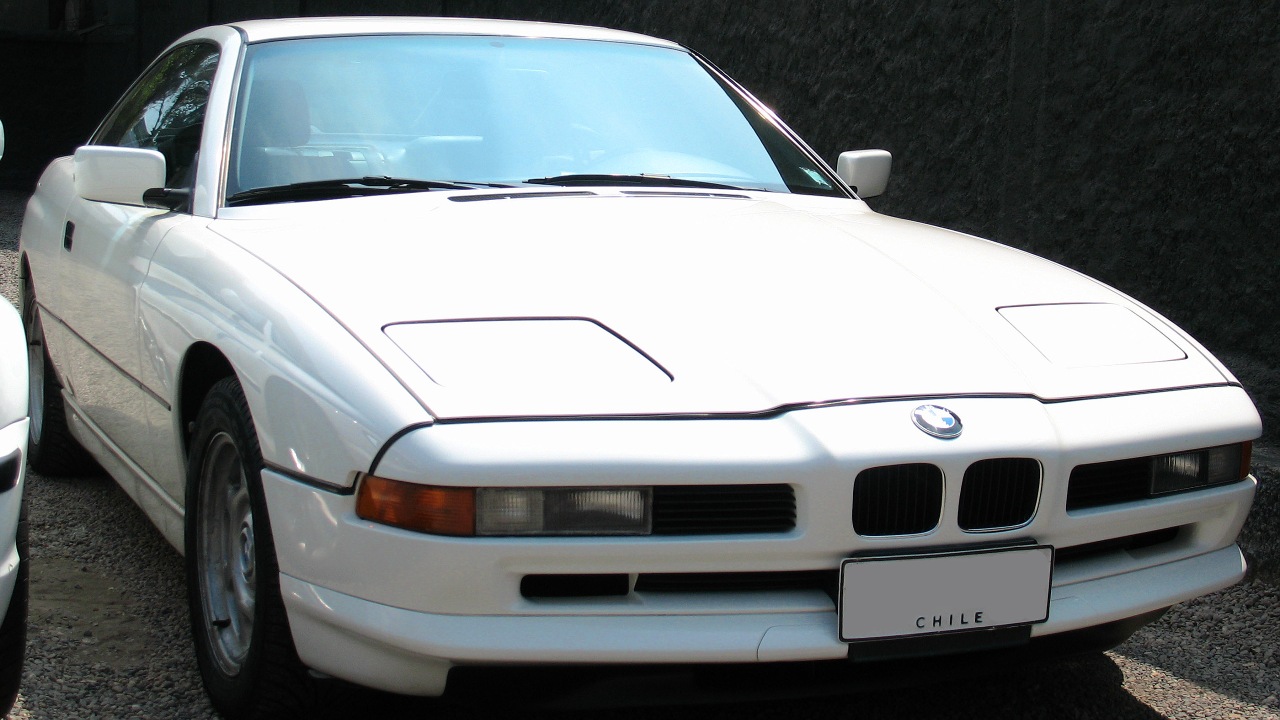
Visually, the 1991 BMW 850i signaled its break from the past before the engine ever turned over. The car’s low nose, long hood, and pillarless profile created a sleek wedge that looked more like a concept car than a traditional BMW coupe. That was no accident. The 8-Series was Designed by Klaus Kapitza, and later design analysis has described it as a striking modernist shape that still reads as contemporary decades after its launch. The pop-up headlights, dramatically tapered greenhouse, and clean surfacing all contributed to a look that prioritized aerodynamic efficiency and visual drama over the more upright, conservative lines of earlier BMW coupes.
That design was not just about aesthetics, it was also a packaging statement. The wide stance and low roofline emphasized stability at speed and made clear that this was a car intended to devour autobahn miles in comfort. Commentators who have revisited the E31 note that the 8-Series introduced several styling and engineering firsts for BMW, reinforcing its role as a technology flagship rather than a simple evolution of existing models. In that sense, the 850i’s shape was a physical expression of the brand’s ambition to move into a more luxurious, avant-garde corner of the grand touring market, a point underscored in design-focused coverage of the original 8-Series Series.
V12 power and the price of excess
Under the hood, the 850i’s 5.0 liter V12 was the clearest symbol of its grand touring excess. At a time when most performance cars relied on six or eight cylinders, BMW chose a twelve, prioritizing smoothness and effortless torque over raw aggression. Later enthusiasts have framed the 1991 BMW 850i as BMW’s answer to the Ferrari 348, a car for the executive who wanted exotic-cylinder-count bragging rights without sacrificing daily usability. Adjusted for inflation, one detailed retrospective pegged the 850i’s cost at $186,000 in 2018 dollars, a figure that underlines just how far upmarket BMW was pushing with this model.
That price bought more than just an engine. The 850i was packed with advanced electronics and comfort features that were rare in early 1990s coupes, from complex stability systems to luxury appointments that aligned it with high-end sedans rather than traditional sports cars. Some later assessments have argued that this level of complexity tipped into overkill, with the E31 cited as an example of how too much technology can alienate buyers who simply want a fast, engaging car. Yet even those critiques concede that the 850i delivered a unique blend of refinement and performance, a combination that made it a compelling, if costly, alternative to more focused sports cars from BMW and rivals like Ferrari.
Grand touring first, performance second
For all its cylinders and price, the 850i was not built to dominate racetracks. Its mission was to be a rapid, comfortable long-distance machine, and that priority shaped everything from its suspension tuning to its interior layout. Later coverage of surviving cars has emphasized that the 850i was not primarily about straight-line performance. Instead, it was designed to be quick but also quiet, stable, and comfortable at high speed, the kind of car that could cross a country in a day without leaving its occupants tired.
That focus on refinement meant the 850i sometimes felt detached compared with lighter, more communicative sports cars of its era. Modern write-ups of the model highlight that it was built for buyers who valued features like a hushed cabin, advanced safety systems, and a sense of isolation from the road, all of which the BMW 850i delivered. In that light, the car’s relative lack of track focus was not a flaw so much as a deliberate tradeoff, one that aligned with its role as a flagship grand tourer rather than a pure sports coupe.
The shadow of the secret M8
The 850i’s reputation has also been shaped by a car that almost no one could buy, the secret M8 that BMW developed on the same E31 platform. That prototype, which used a highly tuned V12, has been described in later coverage as the only V12 powered M-car ever created, a one-off that pushed the 8-Series concept to its extreme. Commentary on the hidden project notes that had the E31 been ugly it probably would not have been singled out as an embarrassment to all who rode in it, a pointed way of saying that some critics saw the car’s combination of weight and complexity as a mismatch for its performance potential, even as they acknowledged its visual drama in detailed discussions of the E31.
The existence of that M8 prototype casts the standard 850i in a different light. It suggests that BMW’s engineers saw far more dynamic potential in the platform than the production car ultimately delivered, but that the company chose to prioritize luxury and technological showcase over building a full-bore performance flagship. Later enthusiasts have seized on the M8 story as evidence that the 8-Series could have been something wilder, yet the fact that the prototype remained secret for years reinforces how committed BMW was to the 850i’s original mission as a sophisticated grand tourer. In that sense, the M8 is less a missed opportunity than a reminder of how deliberately the production car chased comfort and excess rather than outright speed.
Icon or overreach in hindsight
Looking back, the 1991 BMW 850i sits at an interesting crossroads between admiration and skepticism. Some enthusiasts celebrate it as a 1990s icon, a car that captured the optimism of its era with bold design, a V12 engine, and a willingness to experiment with advanced electronics. Others see it as a cautionary tale about technological overreach, pointing to its complexity and weight as reasons it never fully connected with the driving purists who had loved earlier BMW coupes. Detailed retrospectives on the original 8-Series Series capture that split verdict, weighing its status as a design landmark against its reputation for being more impressive on paper than on a twisty road.
From my perspective, that tension is exactly what makes the 850i compelling today. It represents a moment when BMW was willing to chase grand touring excess to its logical conclusion, building a car that prioritized comfort, image, and innovation even at the risk of alienating some traditionalists. The 850i may not have been the sharpest tool in BMW’s shed, and the secret M8 hints at a more ferocious path not taken, but as a statement of intent it remains one of the brand’s most fascinating experiments. In an era when many performance cars feel carefully optimized to hit familiar benchmarks, the original 8-Series stands out as a reminder that ambition, even when imperfectly realized, can produce something genuinely memorable.
More from Fast Lane Only: