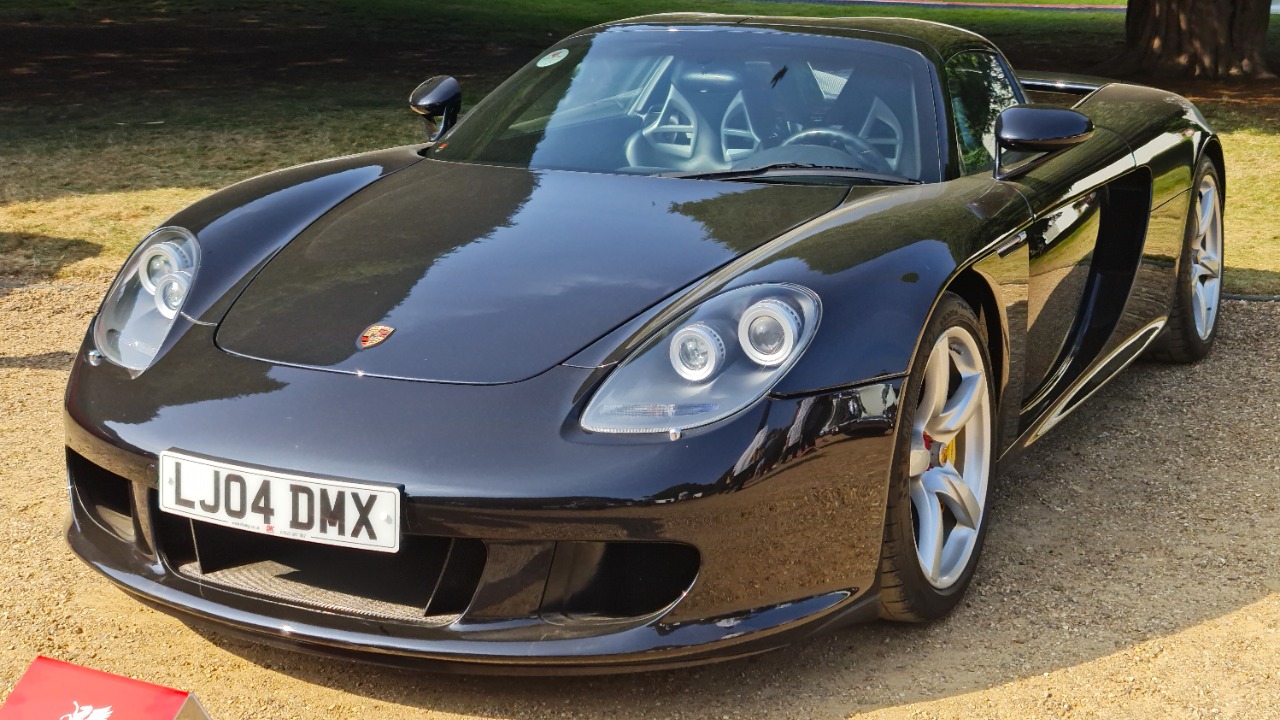
The 2004 Porsche Carrera GT arrived at a moment when supercars were starting to hide behind electronics, yet it chose the opposite path, staying brutally mechanical and demanding. Instead of chasing easy speed, it doubled down on a raw connection between driver and machine that still feels shocking in an era of touchscreens and drive modes. I want to unpack how that happened, and why this car’s purity was not an accident but the result of a series of very deliberate, very old-school choices.
From Canceled Prototype to Road‑Legal Throwback
For me, the key to understanding the Carrera GT’s character is its origin story, which starts not with a marketing brief but with a race car that never got to race. The V10 at its core came from a shelved LMP2000 project, a prototype built for top-level endurance racing that was halted before it could take the start at Le Mans. When the road car finally emerged, it carried that same competition heart, a 5.7 liter engine that was never meant to be polite or quiet, and that heritage set the tone for everything that followed in the production model.
That racing DNA is why the car feels more like a converted prototype than a softened grand tourer, and why it has the reputation of being “the last real one” among analog supercars. The way Born From a Canceled Le Mans Dream describes The Carrera GT’s roots makes it clear that this was never intended to be a comfortable flagship, it was a road car built around a race-bred engine, a carbon chassis, and a philosophy that prioritized feedback over forgiveness.
Built Like a Race Car, Not a Luxury Product
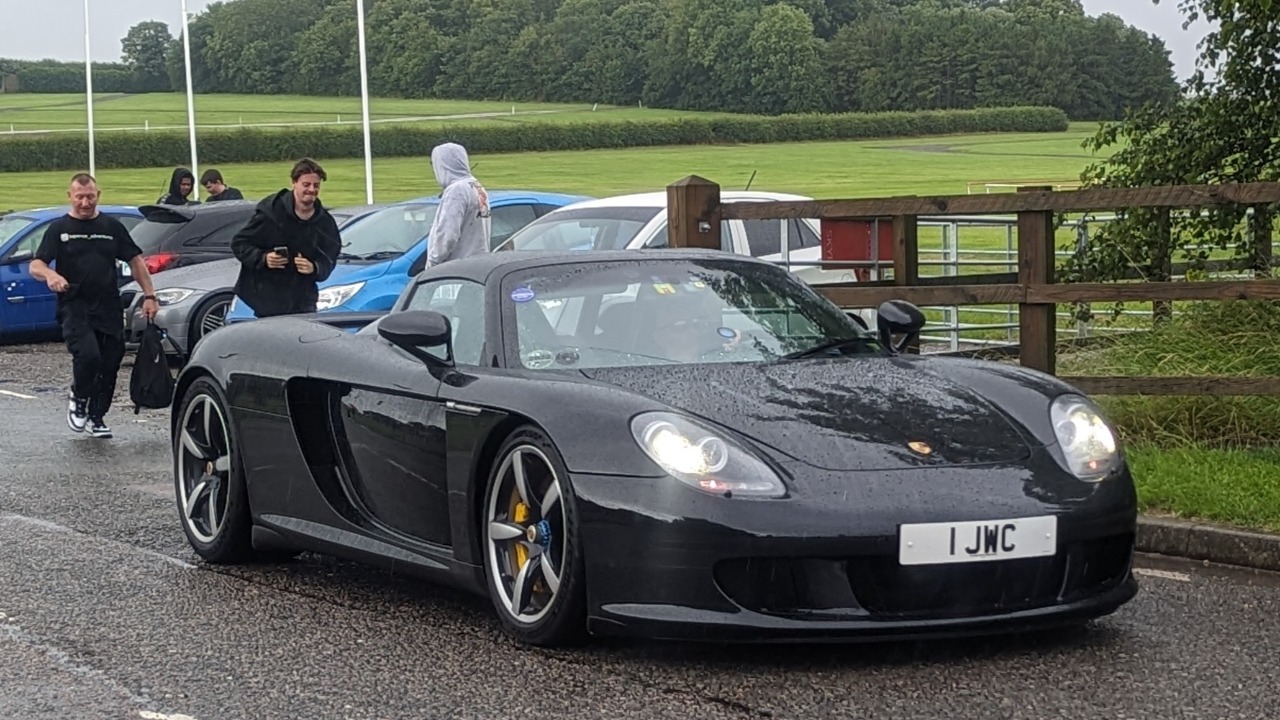
When I look at how the Carrera GT was constructed, the purity shows up in the details that most buyers never see. The Porsche Carrera GT was not assembled in the traditional Zuffenhausen home of the brand, but instead in Porsche’s newly opened Leipzig facility, a site that was set up to handle low-volume, high-tech projects. The car used a carbon fiber monocoque and subframes, a layout straight from the paddock, and the engineers kept the curb weight to about 3,042 pounds, a figure that would be impressive for a compact sedan, let alone a V10 supercar.
That lightness was not just a spec sheet boast, it was the foundation for the way the car responded to every input, from steering to braking to throttle. Powered by a 5.7 liter engine and paired with a manual gearbox, the Carrera GT delivered spectacular performance, with 0 to 100 km/h acceleration that felt as immediate as the numbers suggested, and a price that reflected its exotic construction at around €452,690 when new. The way those figures are laid out in the detailed history of The Porsche Carrera GT underlines how little compromise there was in the way this car was engineered.
A Manual Gearbox in a World Turning Automatic
By the early 2000s, most supercar makers were already pivoting to automated manuals and paddle shifters, but Porsche went the other way with the Carrera GT. The car used a six speed manual transmission with a famously small clutch, and that choice instantly raised the difficulty level for anyone who wanted to drive it quickly. Instead of smoothing over driver mistakes, the gearbox and clutch combination demanded precision, and that is a big part of why the car has a reputation for being both rewarding and unforgiving.
Owners who have lived with the car for years describe that learning curve in vivid terms. One driver, Having spent about 15 years with a Carrera GT and taking it to the track numerous times, talks about how the car is amazing but also how the tires and instant throttle response can catch out anyone who is not fully focused. Listening to that experience in a long term video review of Having owned one reinforces my sense that the manual gearbox was not a nostalgic flourish, it was a deliberate decision to keep the driver at the center of the process, for better and for worse.
Performance Without a Safety Net
On paper, the Carrera GT’s performance numbers put it firmly in the top tier of its era, but what really sets it apart is how little electronic help it offers. The Porsche Carrera GT delivered towering power and speed, yet it did so without the kind of stability control and layered drive modes that define modern supercars. That absence of a digital safety net is why so many enthusiasts talk about the car with a mix of awe and respect, and why it is often described as a machine that will punish overconfidence.
Looking at a full technical overview of the Porsche Carrera GT, I am struck by how the focus stays on mechanical grip, suspension geometry, and weight distribution rather than software. When it arrived as a production car in 2003, the Carrera GT was instantly hailed as an era defining supercar, and Almost every retrospective now ranks it among the best supercar ever made precisely because it asks the driver to manage all that performance directly. That sentiment comes through clearly in a later profile that notes how When it arrived, the car was seen as a benchmark, not just for speed but for the intensity of the driving experience.
A Legend Built on Sound, Fear and Respect
Even among people who have never driven one, the Carrera GT has taken on a kind of mythic status, and a lot of that comes down to how it feels and sounds from the driver’s seat. Fans talk about the V10’s howl in almost musical terms, and one comment about a Jay Leno feature jokes that they just put an album out just of this thing going through the gears, and that someone could play it on a CD while driving something else. That kind of reaction, captured in a discussion of 2004 Porsche Carrera GT, shows how the car’s noise and drama have become part of its cultural footprint, not just its spec sheet.
At the same time, the car’s difficulty has become part of its legend in enthusiast circles. In one Comments Section that tries to ELI5 why the Porsche Carrera GT is so revered, users bounce from jokes about a Viper Truck and whether that is the SRT10 RAM to serious points about how the car is often hailed as the best car of its era because it is so demanding. That mix of reverence and nervous humor in the Really curious thread captures how the car inspires both desire and caution, a balance that very few modern supercars manage because their electronics filter out so much of the risk.
Why Its Purity Still Matters
Two decades on, I think the Carrera GT’s greatest achievement is that it still feels like a statement about what driving can be when a manufacturer refuses to dilute the experience. Porsche set a driving monument with the Carrera GT, and that monument is as much about philosophy as it is about lap times, because the car’s history and the way it was engineered remain unique even in the brand’s own lineup. The way one deep dive notes that Porsche set a driving monument with the Carrera GT underlines how intentional that purity was, not just a happy accident of timing.
When I compare it with the brand’s later halo cars, the contrast is stark. The Carrera GT, or simply Carrera GT as some owners like to call it, does not try to flatter you, it expects you to rise to its level, and that is why it still commands such respect among people who care about driving above all else. Jan profiles that look back at the car’s arrival often emphasize how, When it arrived, it was already seen as a future classic, and Almost every serious enthusiast I talk to still puts it on a short list of the best driver’s cars ever built. In that sense, the 2004 Porsche Carrera GT stayed brutally pure not by accident, but because every decision, from its prototype roots to its manual gearbox and lack of electronic crutches, was made in service of a single idea: the driver should feel everything.
More from Fast Lane Only: