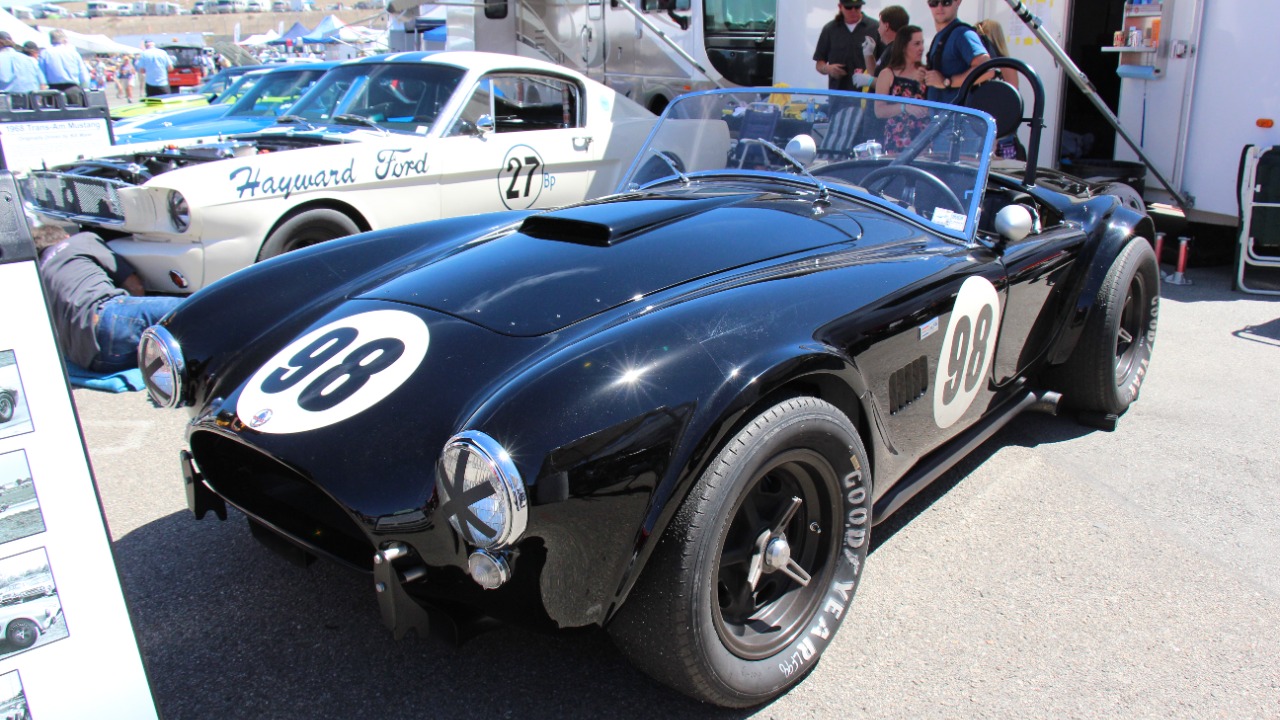
The 1963 Shelby Cobra did not just arrive in Europe, it detonated there. In a paddock full of elegant grand tourers and meticulous engineering, this blunt American‑British hybrid suddenly reset expectations about how small, light and brutally fast a sports car could be, and it forced the continent’s racing aristocracy to take notice.
What terrified Europe was not only the Cobra’s raw speed, but the way it upended the established order. A car born from Carroll Shelby’s restless imagination, shaped by British chassis know‑how and American V‑8 muscle, began humiliating local heroes on their own circuits and pushed European builders to rethink everything from aerodynamics to power‑to‑weight ratios.
The unlikely recipe that shocked the paddock
When I picture the 1963 Shelby Cobra rolling into a European pit lane for the first time, I see a car that looked almost too simple to be dangerous. Under the skin, though, the formula was radical for its time: a lightweight British roadster shell wrapped around a big American V‑8, tuned by Carroll Shelby to deliver explosive acceleration that traditional grand tourers simply could not match. For rivals used to heavier, more refined machines, the idea that this compact, almost minimalist car could run with the best was unsettling from the moment it fired up.
The shock was amplified by how quickly Shelby’s creations built a reputation for speed. Enthusiasts were already hearing that for more than 40 years Carol Shelby’s cars had been burning up asphalt on race tracks around the world, and the Cobra fit that lineage perfectly. The mix of a short wheelbase, low curb weight and a thundering V‑8 meant the car could leap out of corners and devour straights in a way that felt closer to a race prototype than a road‑legal sports car, which made European teams suddenly question whether their own, more delicate machinery had fallen behind the curve.
Carroll Shelby’s transatlantic ambition
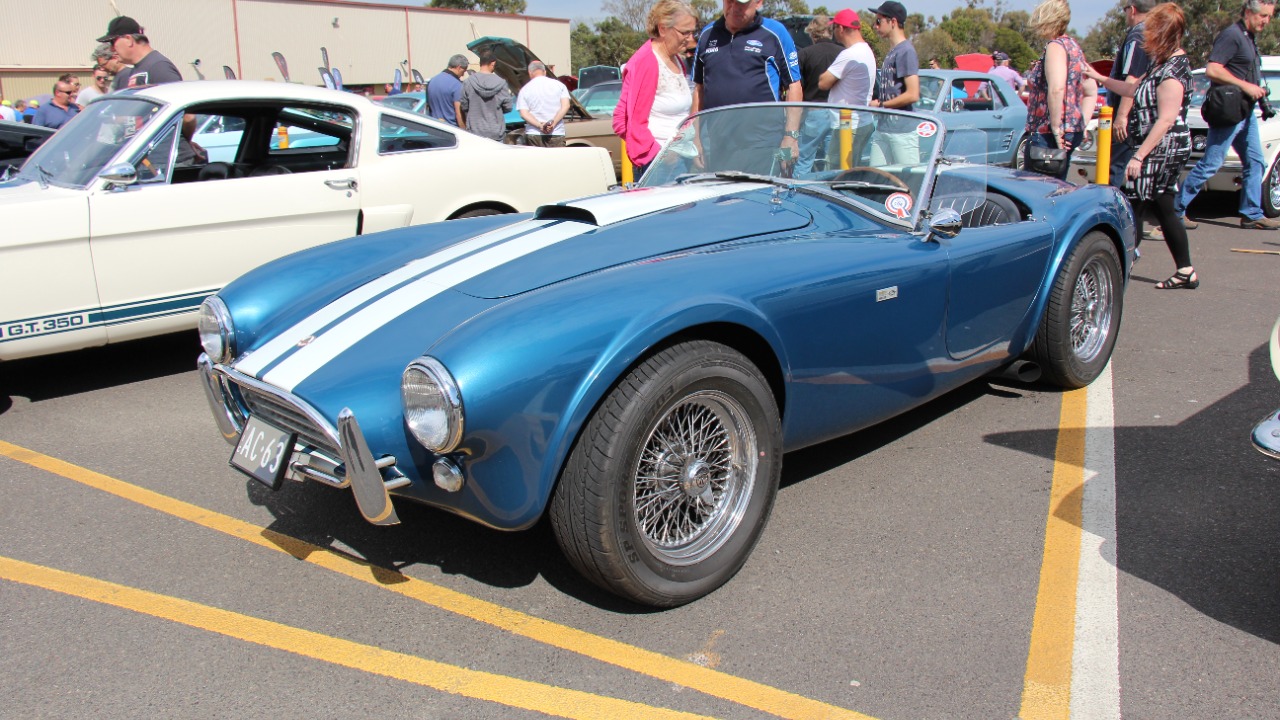
What really rattled Europe was that the Cobra was not an accident, it was the product of Carroll Shelby’s very specific ambition. After he had already proven in American racing that his cars could dominate Corvettes, Shelby set his sights on Ferrari and the wider World Championship stage. The 1963 Cobra was his spearhead, a way to show that an American‑powered machine could not just participate in European racing, but beat the continent’s most sophisticated marques at their own endurance and GT games.
That intent gave the car an edge that European rivals could feel. Shelby was not content to sell a few fast roadsters; he wanted to topple the established hierarchy that included the reigning World Champion Ferrari 250 GTOs, and the Cobra was engineered with that target in mind. When a car arrives backed by that kind of clear, aggressive mission, and it starts putting pressure on the lap charts, it is no surprise that European teams quickly moved from curiosity to concern.
From blunt instrument to aerodynamic weapon
As I trace the Cobra’s evolution, the moment it truly began to terrify Europe was when brute force met serious aerodynamics. The early open‑top cars were already quick, but at high‑speed European circuits they were fighting the air as much as their rivals. Carroll Shelby understood that to win long‑distance GT races he needed a slipperier shape, which is why The Shelby Cobra Daytona Coupe exists at all: he wanted an aerodynamic Cobra that could reach higher top speeds and stay there for hours.
The resulting Cobra Daytona Coupe turned the car from a loud nuisance into a strategic threat. By reshaping the body, Shelby’s team unlocked the top‑end performance needed to chase titles like the International Championship for GT cars, and suddenly European manufacturers saw an American‑backed program that understood both power and airflow. When a car that had started life as a raw roadster evolved into the sleek Shelby Cobra Daytona that could silence Ferrari in World Championship competition, the message was clear: this was no longer a novelty, it was a fully developed weapon aimed straight at Europe’s pride.
Numbers that made rivals nervous
On paper, the Cobra’s performance figures were enough to unsettle any European engineer, and those numbers translated brutally on track. The car’s combination of low mass and big‑block torque meant it could sprint from 0 to 60 m in a time that felt almost unreal for the mid‑1960s, and later developments showed just how far that formula could go. Reports on The Cobra describe versions so powerful yet light that they could hit 0 to 60 m in just 4 seconds and blast from 0 to 100 in 10.3 seconds, performance that stayed unmatched for years and set a benchmark European GT cars struggled to reach.
Even in its earlier 1963 guise, the Cobra’s raw acceleration and top speed were blistering for the 1960s, and that is before counting the variety Shelby created. Enthusiast accounts note that Among the production runs were three different versions of the Cobra, each pushing the envelope in its own way. When You looked at those variants lined up in a European paddock, you were not just seeing a single fast car, you were seeing a whole family of escalating threats that could be tailored to different tracks and series, which made the Cobra program feel even more formidable.
Culture clash and a lasting European hangover
Beyond lap times, what unnerved Europe was the cultural contrast the Cobra represented. The car arrived as a brash outsider, a loud V‑8 in a world that often prized refinement and pedigree, yet it quickly attracted high‑profile admirers who validated its performance credentials. Period accounts show Shelby with his Cobra and movie star buyer, Steve McQueen, and they also note how Shelby was invited by Ford to be part of the Lotus Ford effort at Indianapolis. That kind of crossover, from Hollywood garages to European circuits and American single‑seaters, reinforced the idea that “Shelby means performance,” and it made the Cobra feel less like a curiosity and more like the spearhead of a broader performance movement.
Over time, the car’s impact lingered in Europe long after the original 1963 models left the grid. Enthusiasts still talk about Shelby’s Cobra and its connection to figures like Steve McQueen, and they remember how the partnership between Cobra and Ford helped reshape expectations for what a GT car could be. When I look back at that era, I see a continent that was forced to adapt, from embracing more aggressive power‑to‑weight strategies to taking aerodynamics as seriously as Shelby did with the Cobra and Lotus Ford projects. In a world now full of high‑rise apartment buildings and sanitized modern sports cars, the memory of that raw, unapologetic Cobra still carries a faint echo of the fear it once inspired in Europe’s most storied pit lanes.
More from Fast Lane Only: