The Ford Galaxie 500XL 427 arrived at a turning point in American performance, when full-size family cars were suddenly expected to dominate stock car tracks and stoplight sprints alike. The combination of a big-body Galaxie, a competition-bred 427, and a more upscale 500XL trim created one of the most focused factory muscle packages of the early 1960s, and it still shapes collector values today. I want to trace how and when Ford introduced this package, how it fit into the broader Galaxie story, and what current pricing data suggests about its place in the market now.
How the Galaxie evolved into a performance flagship
Ford did not set out to build a pure race car when it launched The Galaxie line, but the model quickly became a cornerstone of the company’s full-size strategy and a natural platform for power. Reporting on Ford Galaxie History describes how The Galaxie served an important role in the broader Blue Oval portfolio, giving Ford a large, comfortable car that could be dressed up for family duty or tuned for competition. That dual mission set the stage for the later 500 and 500XL trims, which layered more style and equipment on top of a chassis that engineers were already pushing toward higher speeds. The Galaxie’s evolution into a performance flagship was not an accident, it was a response to the growing pressure of stock car racing and the emerging muscle car era.
By the early 1960s, Ford was using The Galaxie as a showcase for its most ambitious V-8 programs, and the 500XL badge signaled a more premium, driver-focused specification. The 500 designation itself appears in valuation data for a 1963 Ford Galaxie 500 XL, which highlights the model as a distinct step up from base Galaxies. That same history piece on Ford Galaxie History notes how the Galaxie helped Ford compete in a crowded full-size field, and once the horsepower race intensified, the car’s size and stability made it an ideal candidate for the company’s most aggressive engines. The 500XL 427 would emerge from this context as a car that could carry a family during the week and still look at home in the NASCAR garage.
When Ford introduced the 427 into the Galaxie 500XL
The key turning point for the Galaxie 500XL came when Ford decided to drop its new 427 cubic inch V-8 into the big car in order to satisfy racing rules and seize an advantage on high-speed ovals. Detailed reporting on a rare 1963 Galaxie 500 XL R-Code 427 notes that Ford’s new 427 was purpose-built for competition and was Introduced in 1963 to take advantage of NASCAR’s new 7.0-liter displacement limit. That same analysis explains that the engine was engineered specifically for war in stock car racing, which meant the Galaxie 500XL 427 was born as a homologation tool rather than a simple showroom special. In other words, the introduction of the 427 into the Galaxie 500XL was timed directly to NASCAR’s rulebook and the need to get a 7.0-liter engine into customer hands.
Additional detail from a period-focused account of the 1963½ Galaxie 500 427 reinforces that timing and shows how Ford rolled the engine out across the Galaxie range. At the start of 1963, Ford offered the Galaxie with a square roofline and then added a more aerodynamic fastback profile midyear, often referred to as the 1963½ cars. In R-code form, the Thunderbird 427 High Performance V-8 produced 425 HP thanks to dual Holley 4-barrel carburetors, and that same engine was installed in Galaxie 500 and 500XL models to create the 427-powered flagships. The report, dated May 21, 2025, underscores that this Thunderbird 427 High Performance package was not a mild street tune but a near-race specification that happened to be available in a full-size Ford. When I look at those details together, the introduction of the Galaxie 500XL 427 comes into focus as a deliberate 1963 move to align Ford’s showroom with its NASCAR ambitions.
The 1963½ Galaxie 500XL 427 and the birth of a street legend
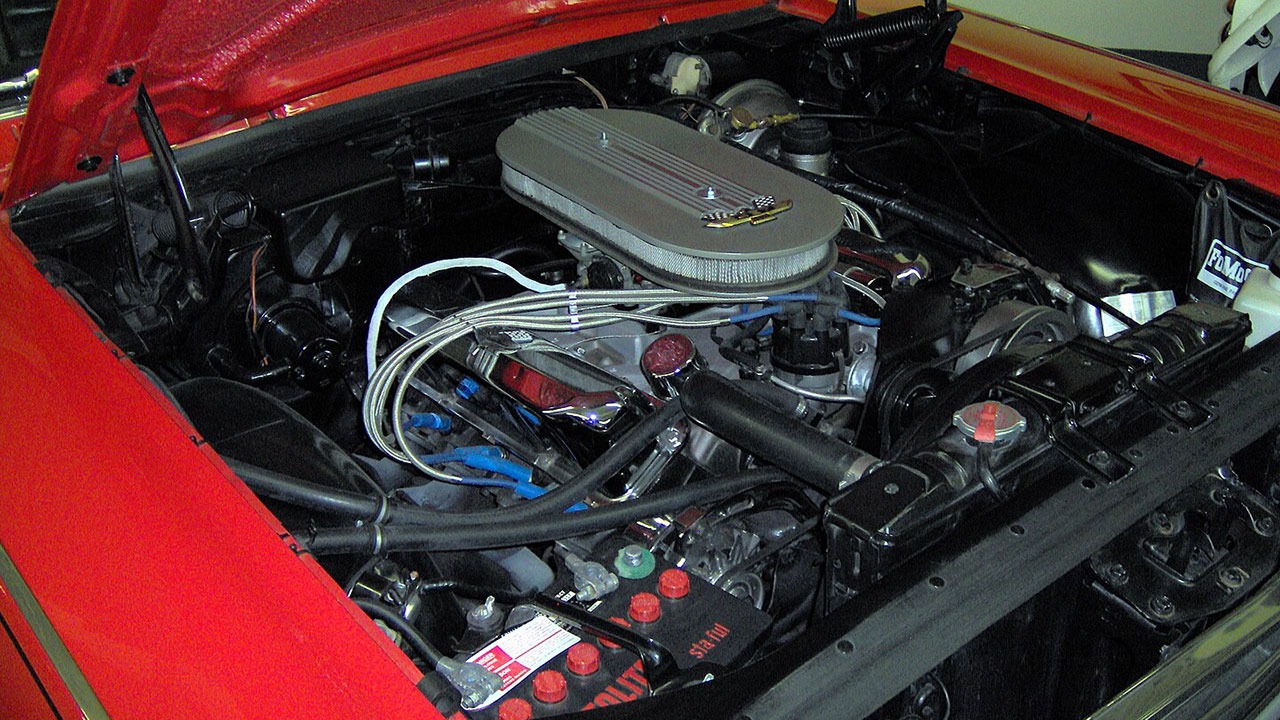
Once the 427 was in place, the midyear 1963½ Galaxie 500XL 427 quickly became one of the most serious performance cars on American roads, even if its full-size body disguised some of its intent. The R-code cars used the Thunderbird 427 High Performance V-8 with dual Holley carburetors, a combination that delivered that quoted 425 HP and a level of torque that pushed the big Galaxie into genuine muscle territory. The 500XL trim added bucket seats and a more upscale interior, which meant buyers could enjoy both comfort and brutal acceleration in the same package. In period, that blend of civility and raw power helped the 500XL 427 stand apart from stripped-down drag specials.
On the track, the impact of these 427-powered Galaxies was immediate. A detailed feature on a rare 1963 Galaxie 500 XL R-Code 427 notes that Tiny Lund scored a major win with one of these cars, with Fred Lorenzen following in second, and that Ford’s 427-powered entries used that success to announce themselves as serious NASCAR contenders. The same Aug 28, 2025 report explains that Ford’s new 427 was designed specifically to exploit NASCAR’s displacement rules, and that both its official horsepower and torque ratings were conservative compared with real-world output. When I connect those racing results with the street-spec 500XL 427, it is clear that the car’s legend was built as much on its competition pedigree as on its showroom numbers, and that dual identity still drives collector interest today.
How the Galaxie 500XL 427 fits into broader Galaxie values
To understand current pricing for the Galaxie 500XL 427, I start by looking at how the broader 1963 Ford Galaxie 500 XL market is valued, then consider how the rare R-code 427 cars sit above that baseline. Valuation tools for the 1963 Ford Galaxie 500 XL list a 2dr Fastback with an 8-cyl. 260cid/164hp 2bbl at $16,200, which provides a reference point for a relatively modest V-8 in the same body style. That figure, tied to a non-427 car, shows how an ordinary 500 XL Fastback remains accessible compared with more exotic muscle machines. It also underscores how much of the value ladder is driven by engine and specification, since the body and basic trim are similar to the high-performance versions.