The late 1970s should have been the end of the Camaro story. Muscle cars were out of fashion, fuel prices were up, and regulations were squeezing the life out of big-displacement performance. Yet the Camaro not only survived that era, it quietly turned into a sales workhorse and a cultural fixture that refused to fade, even as its own maker later tried to walk away from it.
To understand how the late-’70s Camaro hung on, I look at it less as a single model and more as a stubborn idea. It was a car that kept adapting just enough to stay relevant, leaning on style, image, and a changing definition of performance to bridge the gap between the glory days of early muscle and the retro revival that would not arrive until decades later.
The early promise that set the stakes
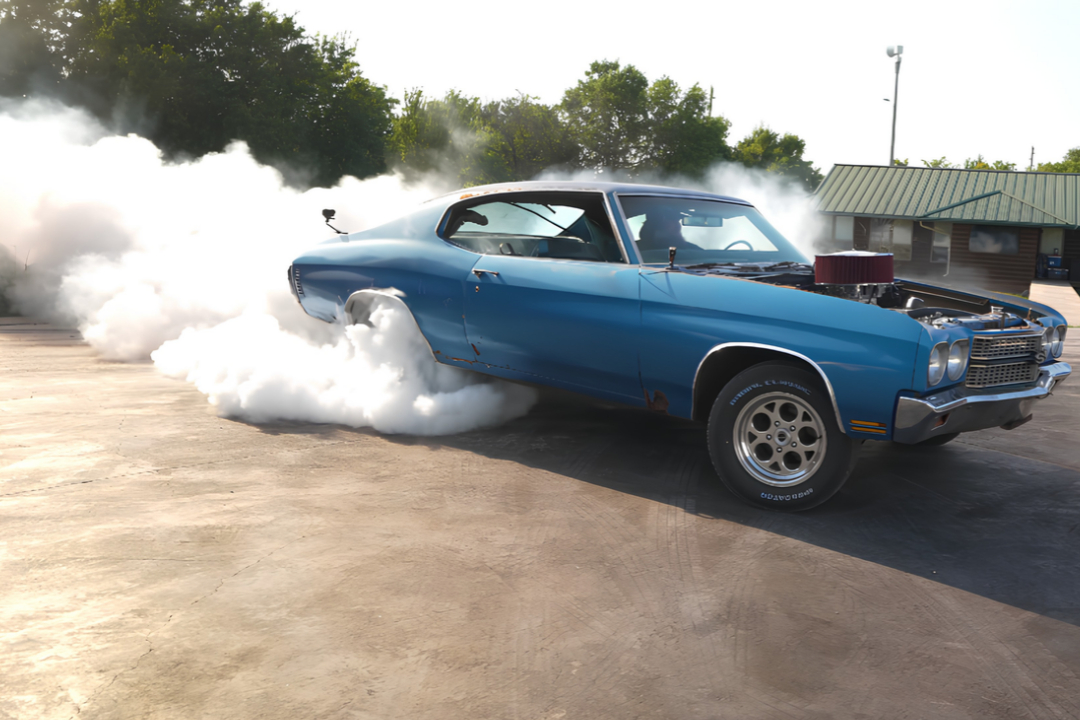
Long before the malaise years, the Camaro arrived with expectations that were almost unfair. The 1970 redesign sharpened the car into something lower, wider, and more European in its proportions, and enthusiasts like Michael Noti later argued that the 1970 Camaro was so complete a package that it felt like the obvious standard by which other pony cars should be judged. That early second-generation car set a benchmark for balance, combining real performance with a level of refinement that made it more than just a straight-line bruiser.
Because that 1970 car landed with such authority, the stakes for what followed were unusually high. When I look at the late-’70s models, I see them constantly measured against that ideal, even as the world around them changed. The Camaro had been born into a horsepower war, but by the time the decade was winding down, it was fighting a very different battle: staying desirable when the rules, the fuel, and the buyers’ priorities had all shifted.
How a changing market reshaped the Camaro

By the middle of the decade, the Camaro was no longer just a youth-market toy, it was a key part of how Chevy navigated a tougher landscape. The brand was trying to juggle size, image, and efficiency, and reports from the period note that Still, Chevy relied on a mix of power and growing fuel economy to stay competitive. The Camaro slotted neatly into that strategy, offering just enough performance to feel special while sharing components and engineering with more sensible siblings.
In that context, the late-’70s Camaro became less of a pure muscle car and more of a halo coupe that helped sell the idea of Chevy as both fun and practical. It was not the quickest thing on the road anymore, but it carried a look and a name that still mattered. I see that as the first way the car refused to disappear: it accepted a new role as a stylish, attainable aspirational object in a market that was suddenly obsessed with miles per gallon and monthly payments.
1979: The sales peak in an unlikely package
The irony of the Camaro’s story is that one of its biggest commercial wins came at a time when purists were least impressed. By 1979, the car had gained weight, sprouted spoilers and stripes, and lost much of the raw edge that defined its early years. Yet that same year, the 1979 Chevrolet Camaro became a standout in the showroom, with enthusiasts later recalling how even in what some considered its least attractive color, it turned into the best-selling Camaro of its second generation. One commenter, (Re)Tiredoldmechanic, looked back and wondered whether Chevy had a “sales bank” like Chry, a nod to just how many of these cars seemed to be everywhere.
That surge tells me something important about why the Camaro endured. The late-’70s car might not have been the cleanest design or the quickest on paper, but it hit a sweet spot for buyers who wanted a bold shape, a familiar badge, and a sense of performance that fit within new realities. The fact that people like Tiredoldmechanic are still dissecting how Chevy moved so many of them suggests that the car’s presence on American streets in that period was impossible to ignore, even if the spec sheet no longer scared anyone.
The Z28 and performance on life support
If the base Camaro of the late 1970s was about image and accessibility, the Z28 was about keeping the performance flame alive when it was barely flickering. The 1979 Camaro Z28 arrived at a moment when American muscle was described as gasping for air, with Emissions rules and fuel prices choking the big power numbers that had defined the segment. Yet the Z28 still managed to project a sense of purpose, with its graphics, functional scoops, and tuned V8 signaling that the idea of a driver’s Camaro had not been completely abandoned.
I see that car as a kind of bridge between eras. It was not a return to the wild days of the early 1970s, but it refused to let the Camaro become purely cosmetic. In a landscape where American performance was being redefined, the Z28 showed that there was still room for a car that looked and felt like a muscle machine, even if the numbers were modest by earlier standards. That stubbornness helped keep the Camaro’s performance reputation alive long enough for later generations to build on it.
Discontinuation, retro rivals, and a name that would not stay buried
For all that resilience, the Camaro did eventually hit a wall. GM discontinued the Camaro for several years, stepping away from a nameplate that had once been central to its identity. What stands out to me is that the company only brought the car back after the retro-Mustang took off, a sequence that enthusiasts like Michael Noti have pointed out when discussing how GM responded to Ford’s success. In that telling, the Camaro’s return was less a bold new idea and more a realization that the market still had room for a familiar rival once the Mustang proved the appetite was there.
That gap in production, and the way the comeback was triggered by the Mustang’s revival, underlines just how persistent the Camaro’s image had been since those late-’70s years. Even when the car was gone from showrooms, the memory of it as a long-hood, rear-drive coupe with attitude never really left. The fact that GM felt compelled to revive it after the retro-Mustang surge suggests that the Camaro’s refusal to disappear was not just about continuous production, it was about a cultural footprint that outlasted the car’s own corporate support.
Why the late-’70s cars still matter
When I look back at the late-’70s Camaro now, I do not see a compromised footnote, I see the hinge on which the whole story swings. Those cars proved that the Camaro could survive outside the narrow window of peak muscle, adapting to new rules and new expectations without losing the basic formula of a bold, front-engine, rear-drive coupe. They kept the name visible in driveways and parking lots at a time when it could easily have faded, and they preserved just enough performance credibility through models like the Z28 to make a future revival feel authentic rather than nostalgic cosplay.
That is how the late-’70s Camaro refused to disappear: not through headline-grabbing horsepower or flawless design, but through persistence. It sold in big numbers even when critics winced at the colors, it carried Chevy’s mix of size, power, and improving efficiency into a tougher era, and it left such a strong imprint that GM eventually had to bring it back after watching the retro-Mustang reignite the segment. For all the jokes about vinyl stripes and smog-era engines, those cars quietly did the hardest job of all, they kept the Camaro idea alive long enough for everyone to miss it when it was gone.