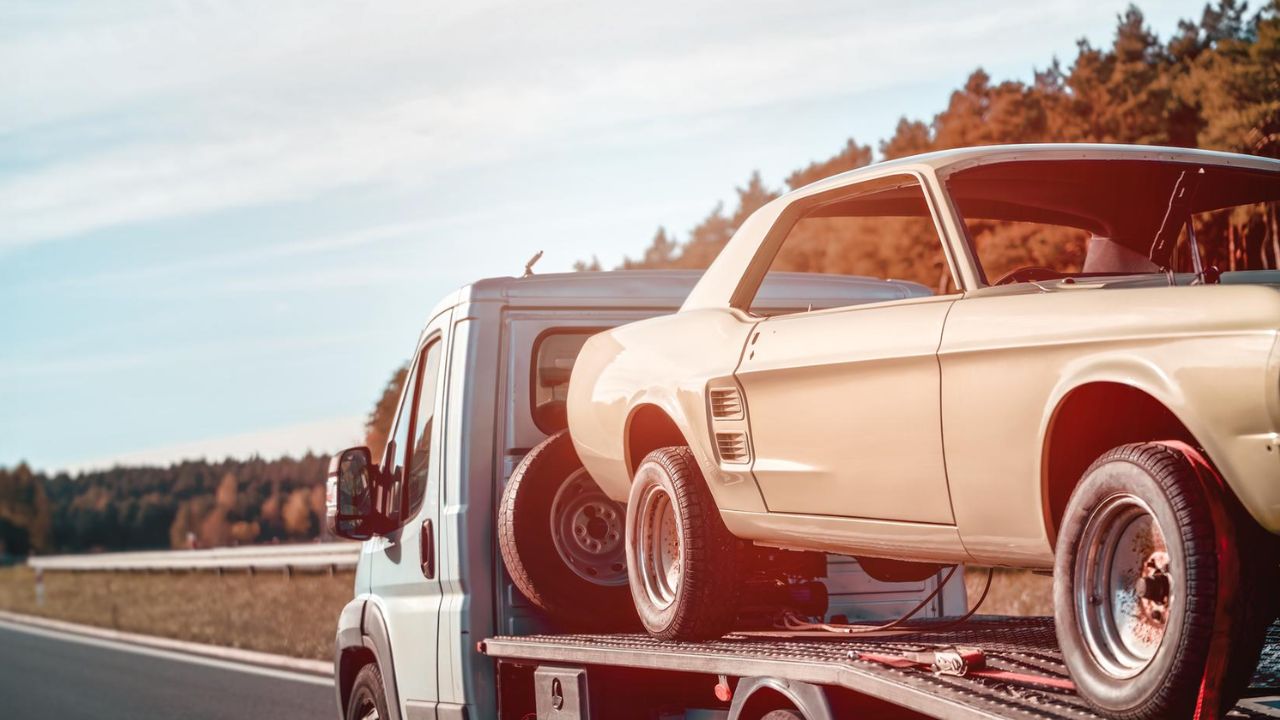
It was supposed to be the kind of errand that barely counts as leaving the driveway. A “quick drive,” a little fresh air for a freshly restored 1965 Ford Mustang, maybe a loop around the neighborhood to hear that V8 sing. Instead, the car came home on a flatbed, and the person who took it out came back with a shrug and no story.
In classic small-drama fashion, the biggest shock wasn’t even the tow truck. It was the silence. No “You won’t believe what happened,” no “I’m so sorry,” not even a basic, “It started making a noise.” Just a restored muscle car sitting strapped down like a patient arriving at the ER, and a household instantly filled with questions.
A “Quick Drive” That Turned Into a Tow
According to people familiar with the situation, the Mustang had recently been brought back from years of wear into something close to show-ready. New paint, refreshed interior, careful mechanical work—the kind of project that eats weekends, budgets, and patience, but ends with a car you can’t stop looking at. It was also, notably, the wife’s car, the one she’d poured time and money into and talked about like it was a family member.
So when the husband offered—or decided—to take it out briefly, it didn’t sound outrageous on its face. Lots of classic car owners do short shakedown drives after restoration, partly for fun and partly to catch issues before they become expensive surprises. The problem was what happened next: the Mustang didn’t return under its own power, and the person behind the wheel didn’t provide a reason why.
The Flatbed Arrives, and So Do the Theories
Neighbors reportedly noticed the flatbed first, because a Mustang on a tow truck is the kind of thing that makes people pause mid-dog-walk. Restored classics don’t usually ride home that way unless something went sideways. When it rolled into the driveway, the mood shifted fast—from confusion to worry to that very specific kind of irritation that comes from loving something someone else may have broken.
Without an explanation, the story vacuum filled itself. Maybe it overheated. Maybe it stalled and wouldn’t restart. Maybe there was an unfortunate encounter with a curb, a pothole, or someone else’s bumper. People also floated the awkward possibility that the “quick drive” wasn’t actually quick, and the tow was a way to end the day without answering too many questions.
Why Restored Classics Can Fail in Boring (and Sudden) Ways
Here’s the part that’s easy to forget when a car looks perfect: restoration isn’t the same as time travel. Even after a full refresh, older cars can be temperamental, especially on their first few real outings. A brand-new cooling system can still have an air pocket. Fresh fuel lines can still find a weak fitting. A shiny ignition setup can still have one bad connection that chooses the worst moment to quit.
On a ’65 Mustang, a “no explanation” tow could come from something as simple as vapor lock, a loose battery cable, or a fuel pump giving up. It could also be a dead alternator leaving the car to run on battery until it didn’t. None of those issues are glamorous, but they’re common—and they can make a car feel like it went from hero to hostage in about thirty seconds.
The Silence Is What Makes It Feel Worse
Mechanical problems are frustrating, but they’re at least honest. A broken belt is a broken belt. What stings in situations like this is the missing story, because silence reads like avoidance, and avoidance reads like guilt—even if it’s not.
People close to the couple described the wife as more stunned than anything at first. The car wasn’t just transportation; it was a project, a point of pride, and a symbol of hard work paying off. When something you’ve nurtured comes back damaged—or potentially damaged—you don’t just want the repair bill. You want the truth.
What a Flatbed Homecoming Usually Means
Tow trucks don’t automatically mean catastrophic failure. Plenty of owners choose a flatbed the moment a classic starts acting weird, because limping it home can turn a small issue into a big one. If the husband made the call quickly, it could actually suggest caution: better to tow than to overheat, grind, or seize something expensive.
But the lack of details keeps it murky. A careful person typically arrives with at least a basic recap—where it happened, what the car did, whether there was smoke, whether the engine shut off or the brakes felt wrong. When none of that comes out, it naturally raises eyebrows, even if the actual mechanical issue turns out to be minor.
The Questions a Shop Will Ask (That Everyone Else Is Thinking)
If the Mustang ends up at a trusted mechanic or restoration shop, the first thing they’ll want is a timeline. How long was it driven? Did it reach operating temperature? Any warning lights, gauges spiking, smells, or sudden noises? Even small clues—like “it died at a stop sign” versus “it died at 50 mph”—can narrow the problem fast.
And if the driver doesn’t know, that’s still information. “I’m not sure” is better than “nothing happened,” because cars don’t usually require a flatbed for no reason. The shop will likely check fluids, scan for any add-on electronic ignition issues, test charging voltage, inspect fuel delivery, and look for obvious leaks or broken belts.
A Relationship Stress Test on Four Tires
Classic cars have a funny way of becoming relationship mirrors. If communication is good, a breakdown becomes a team problem: annoying, but solvable. If communication is shaky, a breakdown becomes a courtroom, with the car sitting there like evidence.
In this case, the restored Mustang isn’t just a car—it’s a boundary. It’s her pride and joy, taken out without a clear accounting of what happened, returned in a way that screams “something went wrong,” and paired with a silence that’s hard to interpret generously. Even if the fix is simple, rebuilding trust can take longer than rebuilding a carburetor.
What Happens Next Depends on One Thing: The Story
People close to the couple say the immediate goal is figuring out what the Mustang needs, not assigning blame. That said, the emotional math is tough when the person responsible won’t share what went down. It’s hard to be calm about diagnostics when you’re still stuck on the basic mystery of how a “quick drive” turned into a flatbed ride.
For now, the Mustang sits as both a gorgeous restoration and an unanswered question. Maybe the tow was the smartest move made all day. Maybe it was covering for a mistake. Either way, everyone’s waiting for the same thing: an explanation that matches the size of the problem parked in the driveway.
More from Fast Lane Only
- Unboxing the WWII Jeep in a Crate
- 15 rare Chevys collectors are quietly buying
- 10 underrated V8s still worth hunting down
- Police notice this before you even roll window down
*Research for this article included AI assistance, with all final content reviewed by human editors.