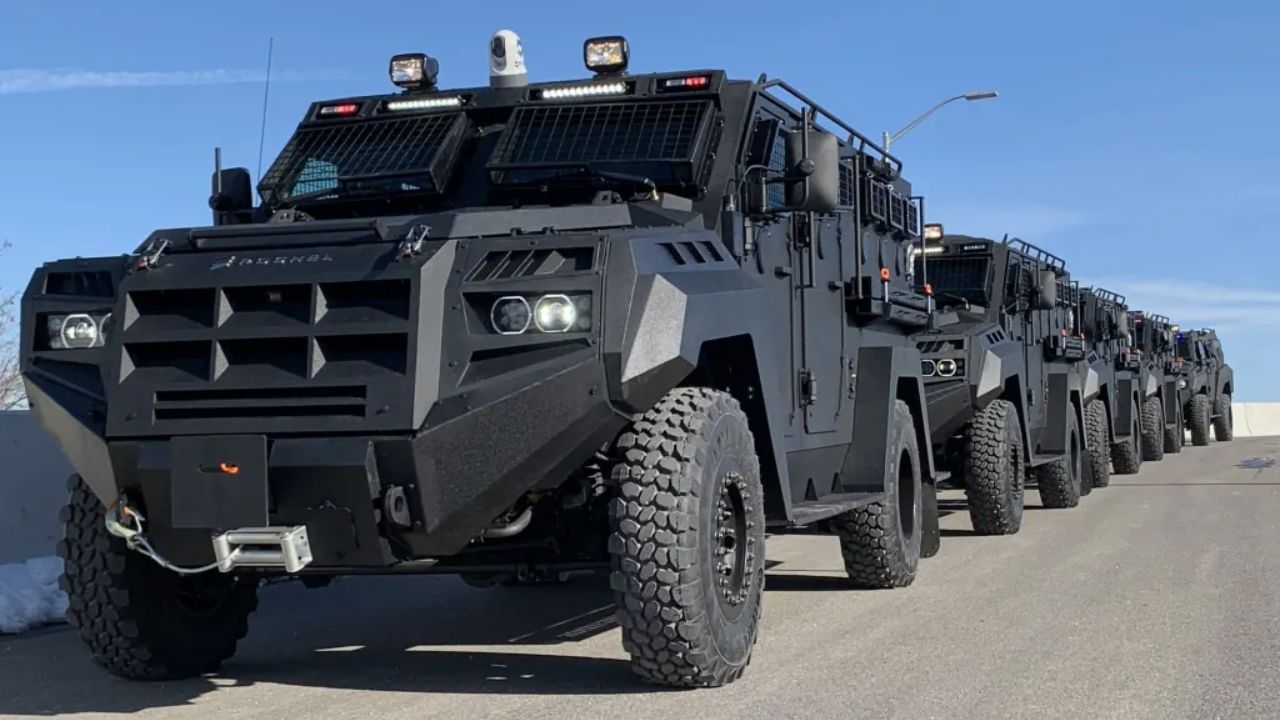
U.S. Immigration and Customs Enforcement is moving ahead with a fleet of armored trucks sourced through a Canadian defense company, even as President Donald Trump promotes an “America First” economic agenda built on favoring domestic production. The vehicle deal has ignited a cross-border political fight, raised questions about how trade rules are being interpreted, and exposed the gap between campaign-style slogans and the realities of federal procurement.
At stake is more than a line item in a law enforcement budget. The purchase has become a test of whether the administration’s trade rhetoric meaningfully constrains agencies like Immigration and Customs Enforcement, or whether those agencies can rely on technicalities and globalized supply chains to argue that foreign-linked contracts still fit within an America-centric policy frame.
ICE’s armored truck deal collides with “America First” rhetoric
The core tension is straightforward: the Trump administration is championing an “America First Trade Policy,” while Immigration and Customs Enforcement is buying armored vehicles tied to a Canadian supplier. On Trump’s first day back in office, he rolled out that trade policy as “a critical component” of protecting the nation’s workers and businesses, a pledge that signaled tighter scrutiny of foreign-made goods and a preference for U.S. manufacturing. Against that backdrop, a contract that routes millions of dollars through a Canadian defense firm looks, at minimum, politically awkward.
Reporting shows that ICE has approved a major purchase of 20 Canadian-made armored vehicles from Roshel, a company described as Canadian, for use by Immigration and Customs Enforcement in the United States. Separate automotive industry coverage indicates that the Trump administration has ordered a larger batch of 45 armored vehicles from Roshel, suggesting that the total fleet could be significantly bigger than the initial 20-truck figure. The fact that these vehicles are being marketed as Canadian-made, and that Roshel is identified as a Canadian defense firm, sits uneasily beside a White House message that federal agencies should be steering contracts toward clearly domestic producers.
Roshel’s cross-border footprint and ICE’s “made in U.S.” defense
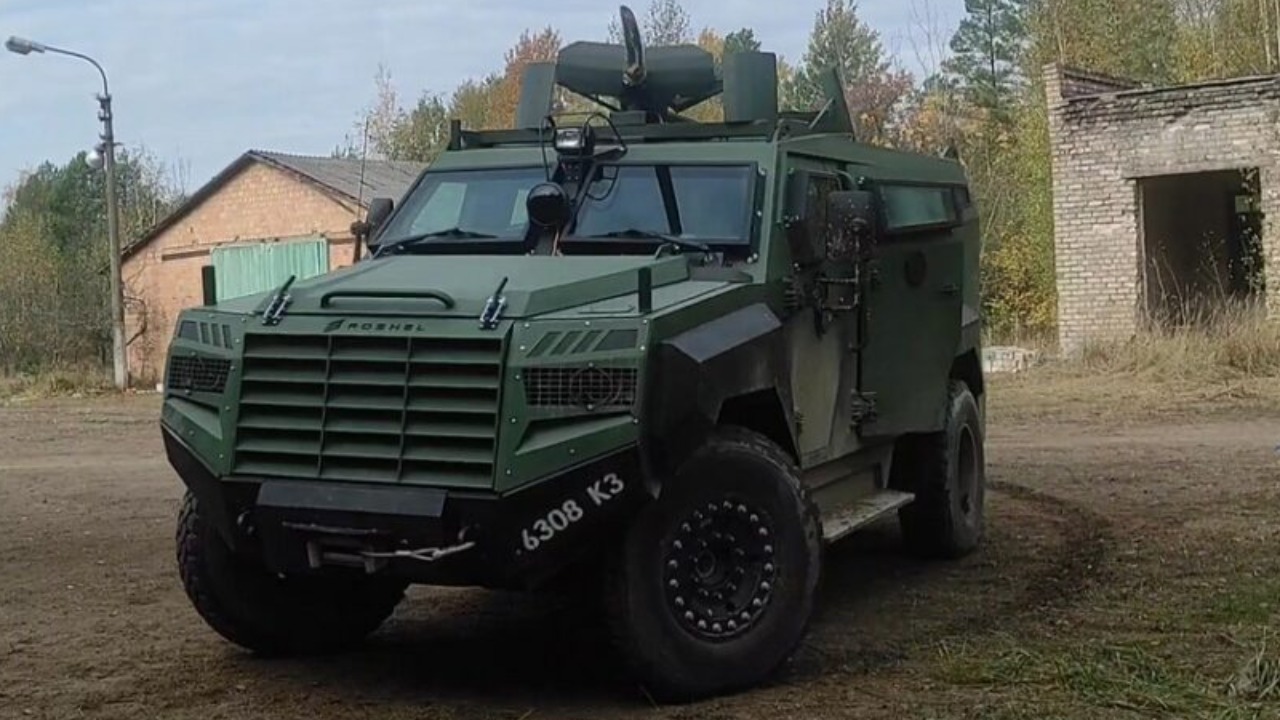
Faced with criticism that it is undermining the administration’s economic nationalism, Immigration and Customs Enforcement has leaned heavily on the fine print of Roshel’s manufacturing footprint. The agency has said that the armored vehicles it is purchasing from the Canadian firm are produced in the United States, and that the deal complies with domestic content rules and trade provisions. Roshel, for its part, has emphasized that while it is a Canadian company, it operates several manufacturing plants in Ontario and opened a facility in Michigan in 2024, a detail that gives ICE a basis to argue that the trucks rolling into its fleet are, in fact, American-built.
Officials have also stressed that the transaction does not require special export permits from Ottawa, underscoring that the vehicles are being produced on U.S. soil even though the corporate parent is Canadian. In public messaging, ICE and Immigration and Customs Enforcement have framed the contract as consistent with trade rules that allow foreign-owned firms to qualify as domestic suppliers when they manufacture inside the United States. That argument may satisfy lawyers and trade specialists, but it does little to blunt the optics of a high-profile law enforcement agency cutting a multimillion-dollar check to a Canadian-branded defense company while the president talks about reshoring production.
Human rights backlash and Canadian political blowback
The controversy is not confined to trade semantics. ICE is already “awash in controversy and allegations of human rights abuses,” as one report put it, and that record is shaping how the vehicle deal is perceived on both sides of the border. Immigration and Customs Enforcement has faced widespread allegations of mistreatment of migrants and asylum seekers, and critics argue that equipping the agency with new armored trucks risks further militarizing its operations rather than addressing underlying accountability concerns. The optics of a department with that reputation expanding its armored fleet are especially fraught at a moment when immigration enforcement tactics are under intense scrutiny.
In Canada, the backlash has been sharp and explicitly political. Canadian legislators and advocates have called for a halt to the armored vehicle sale, questioning whether Canada should be associated with bolstering an agency accused of human rights violations. One prominent critic asked, “Are we prepared to stand up to Mr. Trump and the illegality of what he’s doing and say that Canada still is a voice for” human rights, directly challenging both Trump and the Canadian government’s willingness to confront him. The fact that thousands of the same armored vehicles have been deployed to Ukraine for use in its war against Russian aggression only heightens the stakes, since it underscores that these are not mere patrol trucks but platforms designed for conflict zones.
Social media scrutiny and the optics of foreign-made hardware
The ICE vehicle deal has also been amplified by social media, where the contrast between “America First” rhetoric and Canadian-linked hardware is easy to distill into a viral image or caption. A widely shared post highlighting that Immigration and Customs Enforcement had approved a major purchase of 20 Canadian-made armored vehicles from a Canadian manufacturer drew 4,434 likes, a metric that signals how quickly the story jumped from niche policy circles into broader public debate. The framing in that post, which emphasized that U.S. immigration authorities were turning to Canadian-made equipment, crystallized the sense that the administration’s trade messaging and procurement choices were out of sync.
Automotive and political commentators have seized on the same theme, pointing out that the Trump administration’s order of 45 armored vehicles from Roshel sits awkwardly beside the president’s own “America First Trade Policy” branding. The fact that the vehicles are associated with a Canadian defense firm, even if some are assembled in Michigan, makes for a simple and potent narrative: a government that talks about putting American workers first is still relying on foreign-linked suppliers for high-profile law enforcement hardware. That narrative has been reinforced by coverage that highlights the Canadian identity of Roshel and the Canadian roots of the armored vehicle design, even as ICE insists that the specific units it is buying are produced in the United States.
ICE’s growing armored fleet and the broader militarization debate
Beyond the cross-border politics, the deal fits into a longer-running trend of Immigration and Customs Enforcement investing heavily in tactical vehicles and gear. Government contracts made public and reviewed by The Washington Post show that ICE has already spent more than $2.4 m on “tricked-out” trucks, with one analysis pegging the total at $2.4 in specialized vehicle spending. Those contracts, which cover heavily modified pickups and SUVs, have been justified internally as tools to boost recruitment and modernize the fleet, but critics argue they do little to make the country safer while contributing to the perception of a militarized immigration force.
The Roshel order, whether counted as 20 or 45 armored vehicles depending on which tranche is referenced, deepens that militarization trajectory. The vehicles are described as armored trucks with B7 ballistic protection, a level of armor typically associated with war zones and high-risk security operations. When thousands of similar vehicles are already in service in Ukraine’s fight against Russian aggression, seeing the same platforms in U.S. immigration enforcement convoys raises understandable questions about mission creep. For communities that already view ICE with suspicion, the arrival of new armored trucks sourced through a Canadian defense firm will likely be read less as a technical procurement detail and more as a statement about how the agency sees its role inside the United States.