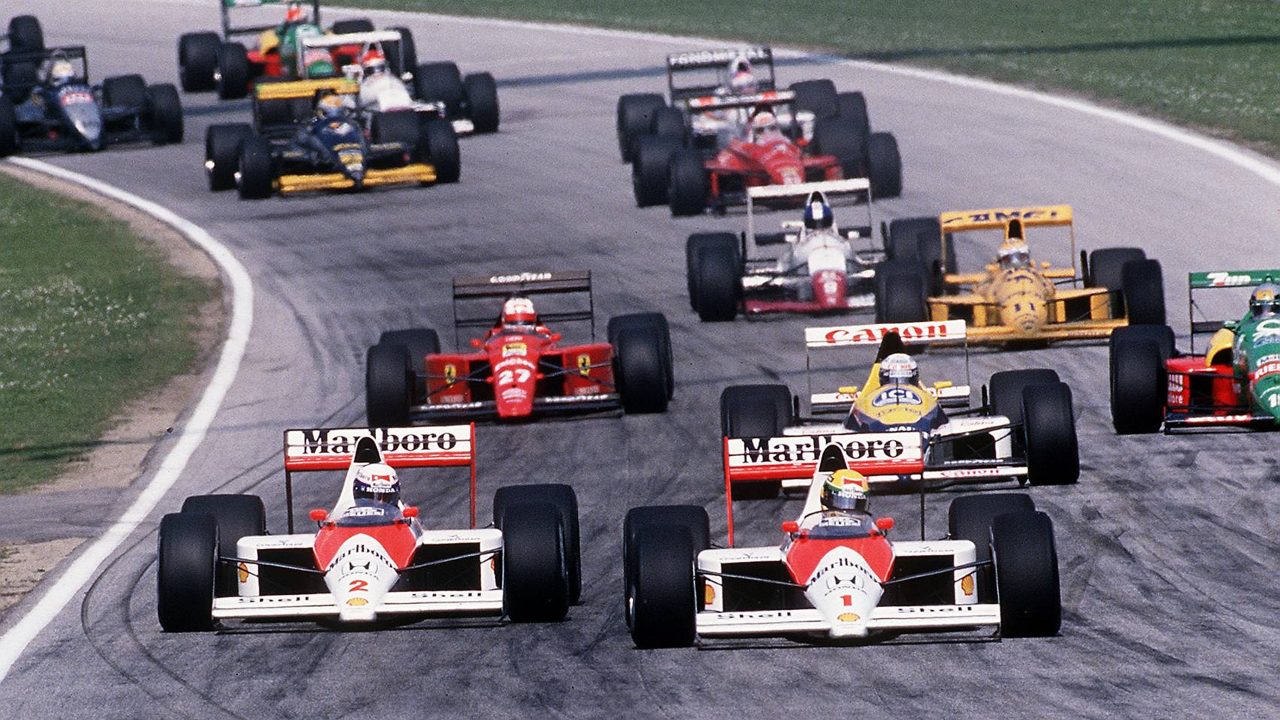
The Imola circuit is tearing up and rebuilding large parts of its infrastructure in a bid to stay relevant in a Formula One era defined by packed calendars and fierce competition for dates. Grandstands, paddock buildings and even the surrounding road network are being rethought, as local leaders refuse to accept that the loss of the Emilia-Romagna Grand Prix is the final word on the venue’s future. The scale of the makeover underlines a simple reality: Imola is betting that if it looks and works like a modern F1 hub, the championship will eventually have to take notice.
A classic circuit squeezed off the calendar
Imola’s current upheaval only makes sense when set against how abruptly it was pushed aside. After returning to the schedule as the Emilia-Romagna Grand Prix, the circuit was dropped when Formula One confirmed a future calendar that instead highlighted a new Spanish Grand Prix in Madrid on a semi-permanent layout. That decision reflected a broader shift toward street-style venues in major capitals and left Imola, a permanent track with deep history but limited commercial upside, on the outside looking in.
Local officials did not treat the removal as a closed case. When Formula One unveiled the calendar that excluded Imola, the mayor and regional leaders issued a joint statement insisting that the decision was “not the final word” on the Grand Prix and pledging to keep working for a return. Subsequent reporting that Imola could reappear on the Formula 1 calendar in 2027 reinforced that message, with sources close to the talks stressing that discussions with Formula executives were ongoing and that the circuit had been encouraged not to give up hope.
The scale and substance of Imola’s facelift
The response on the ground has been to treat the lost race as a catalyst rather than a eulogy. The Imola circuit is now in the middle of a significant makeover aimed at transforming both the sporting facilities and the way fans and teams move through the venue. Plans include an expanded paddock area, upgraded garages and hospitality structures, and a reworked pit complex designed to meet the expectations of a modern Formula 1 operation. The racetrack itself is set to be extended, a notable step for a layout that has long been considered one of the more compact and technical circuits on the calendar.
Crucially, the project stretches beyond the guardrails. Authorities are redesigning traffic flow around the circuit, including new access roads and changes to nearby bridges, with the goal of easing congestion that has historically plagued major events. One plan highlighted in recent reporting involves adding a dedicated bicycle lane on a key bridge to separate pedestrian and vehicle movements and improve safety. The overall package is being framed as a “huge overhaul” of The Imola, a term that captures both the physical scale of the works and the political determination behind them.
Local politics and the economics of hope
Imola’s renovation is as much a political project as it is an engineering one. The circuit sits at the heart of a region that has invested heavily in motorsport as a pillar of tourism and international branding, and the loss of the Emilia-Romagna Grand Prix was met with open condemnation from local leaders. The mayor of Imola and regional figures argued that the race delivered tangible economic benefits, from hotel occupancy to restaurant trade, and that dropping it in favor of the Spanish Grand Prix in Madrid ignored those gains. Their joint statement after the calendar announcement was less a protest than a promise to voters that they would fight to restore the event.
That political pressure helps explain why the current works go far beyond minimal compliance upgrades. By committing to a comprehensive facelift, the region can present the investment as a long-term development strategy rather than a speculative gamble on a single race contract. Even if Formula One does not immediately return, the improved infrastructure is expected to attract other international series and large-scale events, spreading the financial risk. At the same time, the possibility, flagged in reports that Imola could be back in 2027, gives local officials a concrete target to justify the spending and maintain public support.
How Imola is trying to match Formula One’s new priorities
From my perspective, the most striking aspect of Imola’s plan is how closely it mirrors the priorities that Formula One has been signaling in recent years. The championship has made it clear that venues must offer not only a challenging track but also strong logistics, high-capacity hospitality and a compelling fan experience. By extending the racetrack, enlarging the paddock and modernizing garages, Imola is attempting to show that it can host the current generation of cars and teams without compromise. The focus on traffic management and access routes speaks directly to concerns that have dogged older European circuits, which often struggle to move tens of thousands of spectators efficiently.
There is also an environmental and mobility angle that aligns with broader trends. The decision to incorporate a bicycle lane on a bridge near the circuit, for example, fits with efforts across Europe to encourage alternative transport modes on major event weekends. While such details may seem minor compared with a new pit building, they send a signal that Imola is willing to adapt to contemporary expectations around sustainability and urban integration. In a calendar where new venues in cities like Madrid are marketed as lifestyle destinations as much as sporting arenas, that kind of holistic thinking could prove important.
A realistic path back, or a romantic long shot
The open question is whether all this work will be enough to secure a new deal. Reports suggesting that Imola could return to Formula 1 in 2027 indicate that the circuit is at least part of the conversation as the championship looks ahead to the next cycle of contracts. The fact that sources close to the negotiations have urged the track “not to give up hope” suggests that Formula executives see value in keeping a foothold in traditional European venues, even as they expand into new markets. Imola’s history, from its role in the Emilia-Romagna Grand Prix to its earlier eras on the calendar, gives it a narrative weight that newer circuits cannot easily replicate.
Yet the structural pressures that pushed Imola off the schedule have not disappeared. Formula One continues to juggle interest from a growing list of host cities, each offering lucrative deals and political backing, and there is a hard limit to how many races can fit into a season. The addition of the Spanish Grand Prix in Madrid illustrates how attractive urban projects can displace more rural or small-town venues. For Imola, the massive makeover is therefore both a statement of intent and a calculated risk: an attempt to prove that a classic circuit, updated for modern demands, still deserves a place in a championship that is constantly reinventing itself. On the evidence of the works now under way, the people behind The Imola are determined that the story of their track in Formula 1 is not yet finished.
More from Fast Lane Only