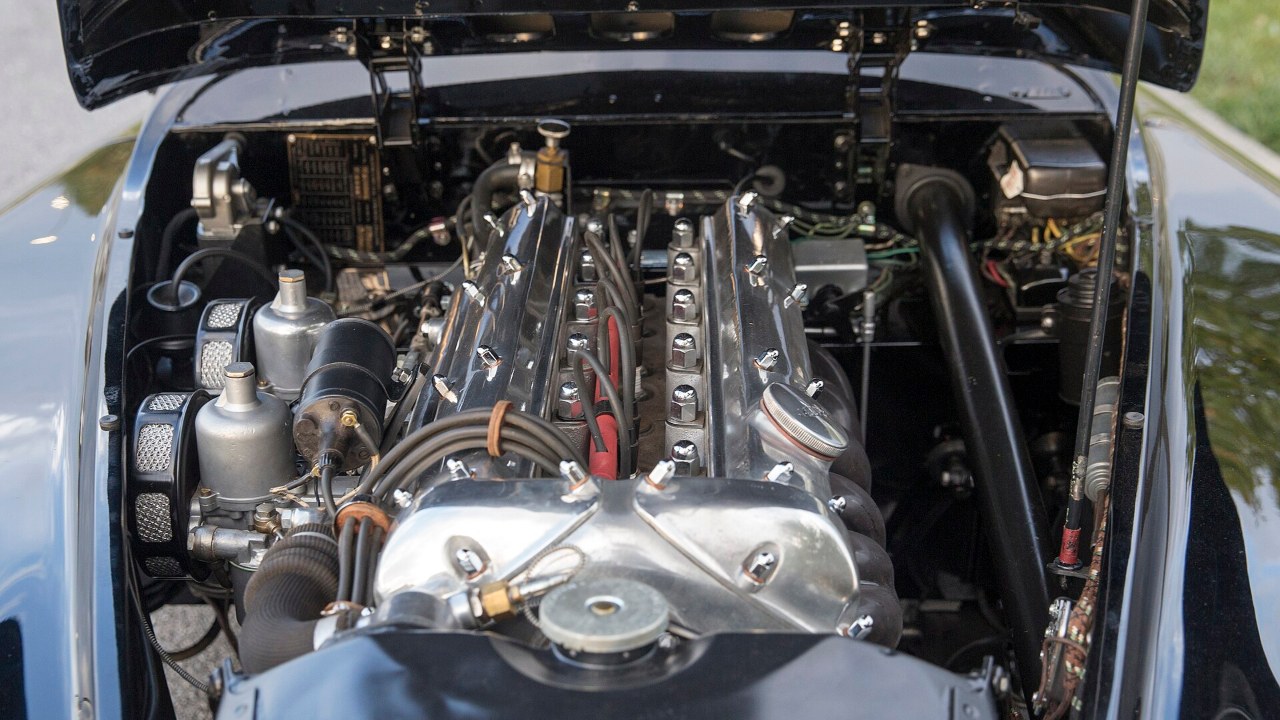
The Jaguar XK engine made its debut in the 1948 XK120 and powered its last new car in October 1992. That span covers 44 years for one basic twin-cam straight six. These eight milestones show how the engine changed size and job along the way.
Over that time, the XK ran in sizes from 2.4 litres to 4.2 litres. It moved from a sports car into sedans and, finally, a Daimler limousine. Each step below carries a figure from the source linked in it.
1. 1948 XK120: the Jaguar XK engine arrives at 3.4 litres
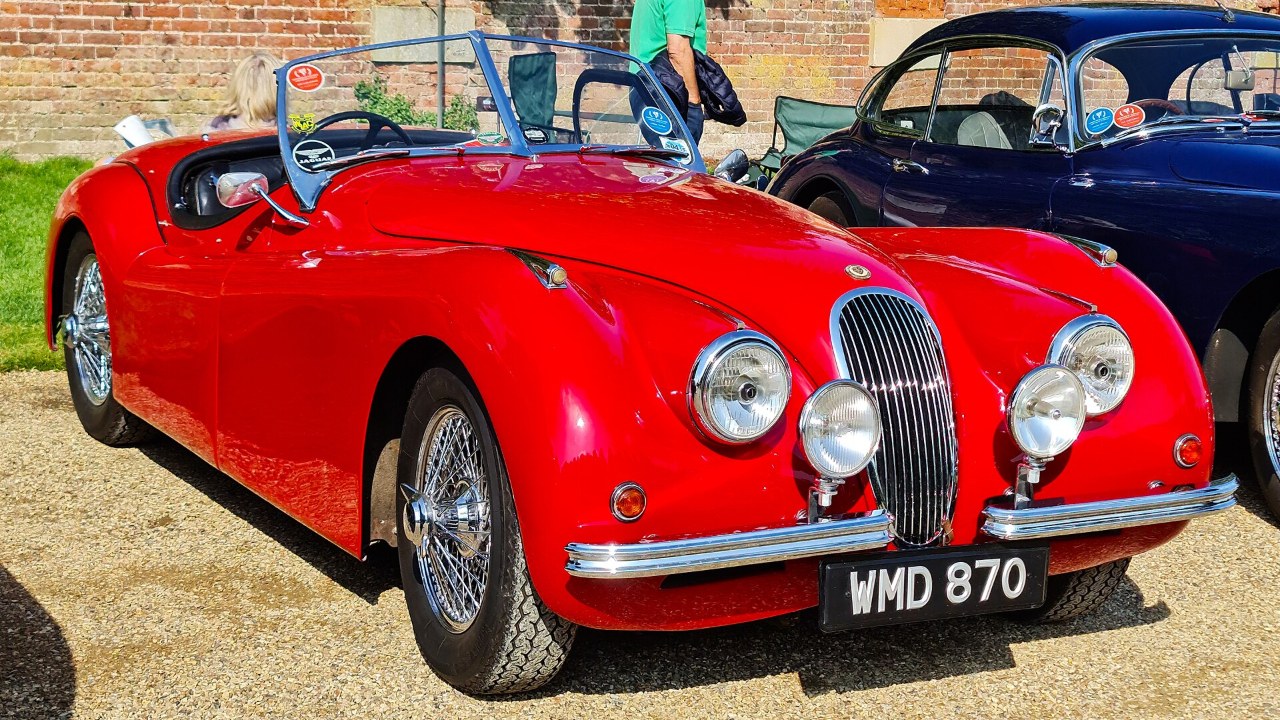
The six took shape during World War II. The team included Walter Hassan, Claude Bailey and William Heynes, who worked on it while on fire watch at the Coventry factory. Then, at the 1948 Earls Court Motor Show in London, Jaguar put it in a new two-seat roadster called the XK120.
According to Hagerty, the first Jaguar XK engine displaced 3,441cc, with an 83 mm bore and a 106 mm stroke. It also made 160 hp at 5,000 rpm and 195 lb-ft at 2,500 rpm. Its head was aluminum instead of iron, which trimmed roughly 70 pounds. Also, the 120 in the car’s name was code for its top speed.
2. 1951 Jaguar Mark VII: the 3.4 goes into a sedan

Next, the engine moved into a big sedan. In 1951, the Mark VII four-door sedan arrived with 150- and 160-hp versions of the 3.4-litre engine.
The same year, the engine also won at Le Mans in the XK120C, Hagerty notes. Inside, large valves sat in a domed, or hemispherical, combustion chamber. Meanwhile, a two-stage chain drive turned the overhead cams, starting with one chain from the crank nose, Hagerty explains.
3. 1956 Jaguar 2.4: the smallest XK
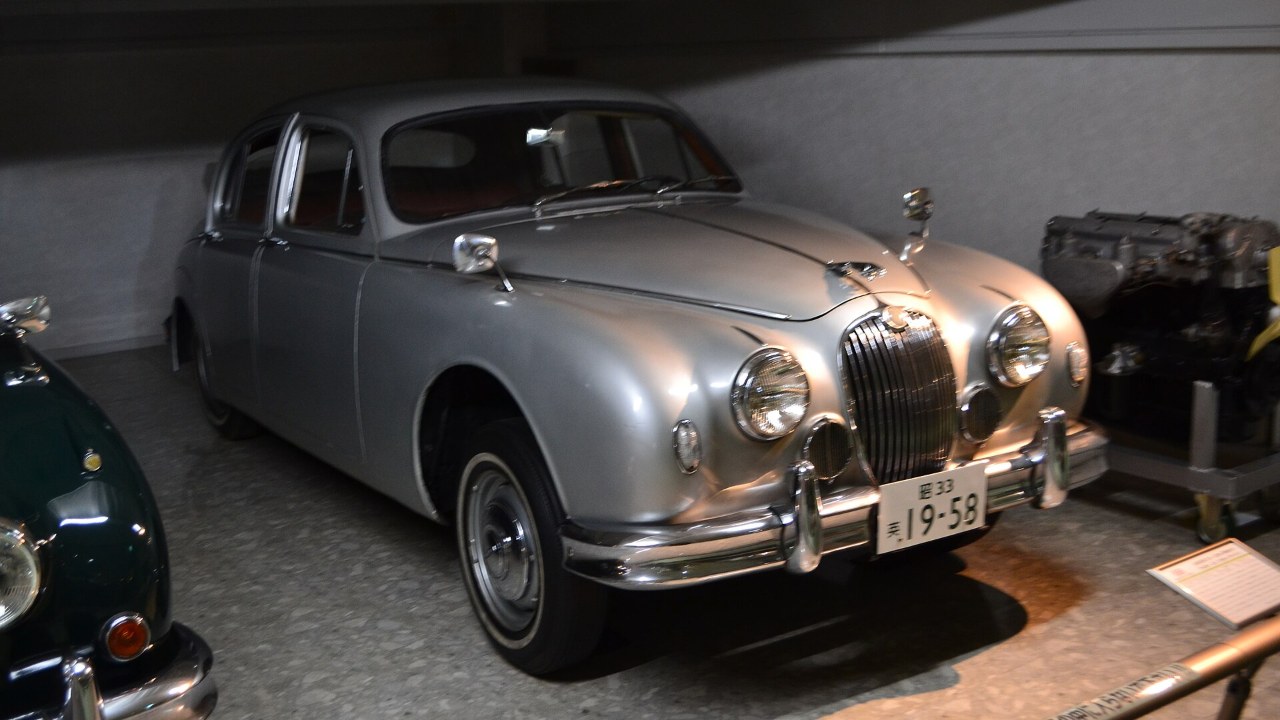
To extend its range downward, Jaguar shrank the engine. In 1956, a smaller XK arrived in a less expensive model called the 2.4. For that job, this version had a shorter stroke and a lower deck height.
The result displaced 2,483cc and made 112 hp at 5,750 rpm, according to Hagerty. It was the smallest XK in the engine’s production range. In other words, the same basic design now covered an entry sedan as well as a sports car.
4. 1959 Jaguar Mark IX and E-Type: the 3.8
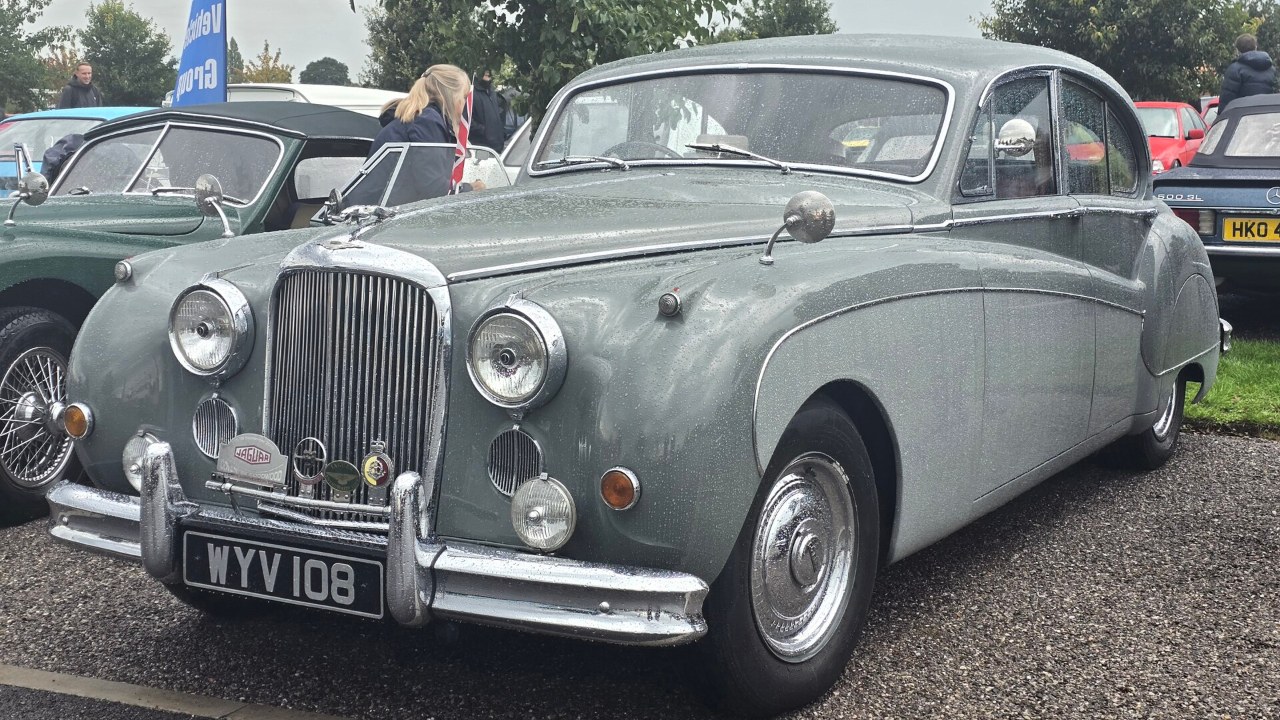
For 1959, the Mark IX sedan got a 3,781cc six. Its bore was 4 mm larger than the 3.4’s, so output rose to 220 hp.
In the sports cars, the 3.8 came in three forms, Hagerty says. The 220-hp version used two SU carburetors. By contrast, the 250- and 265-hp versions had higher compression and three side-draft carbs. In the E-Type, the triple-carb 3.8 delivered 265 hp at 5,500 rpm, according to Hagerty.
5. 1965 Jaguar 4.2-litre XK
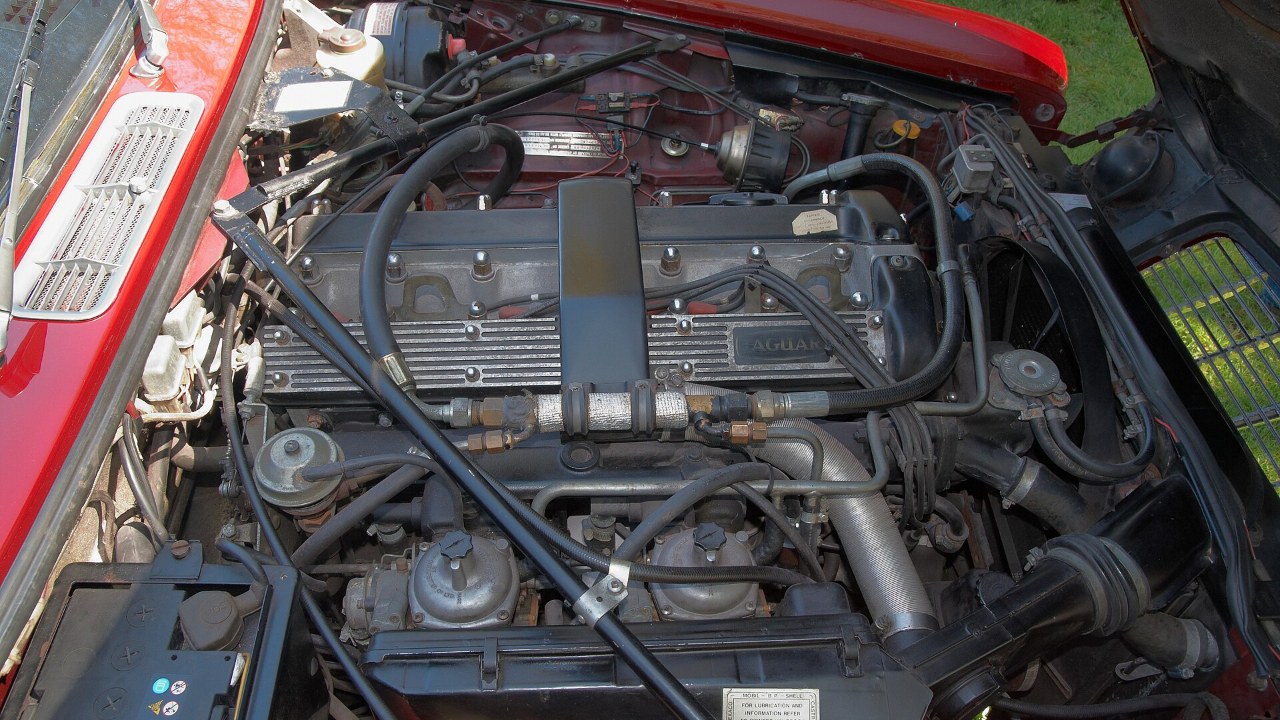
For 1965, Jaguar designed a new block. It shuffled the cylinder spacing to make room for a larger bore. As a result, the bore grew from 87.0 mm to 92.1 mm.
That raised displacement to 4,235cc, the largest XK, according to Hagerty. However, peak output stayed the same as the 3.8, at 265 hp. The gain came in displacement, and this 4.2 went on to power the XK’s later sedans and its final car.
6. 1968 Jaguar XJ6: the 2.8-litre XK
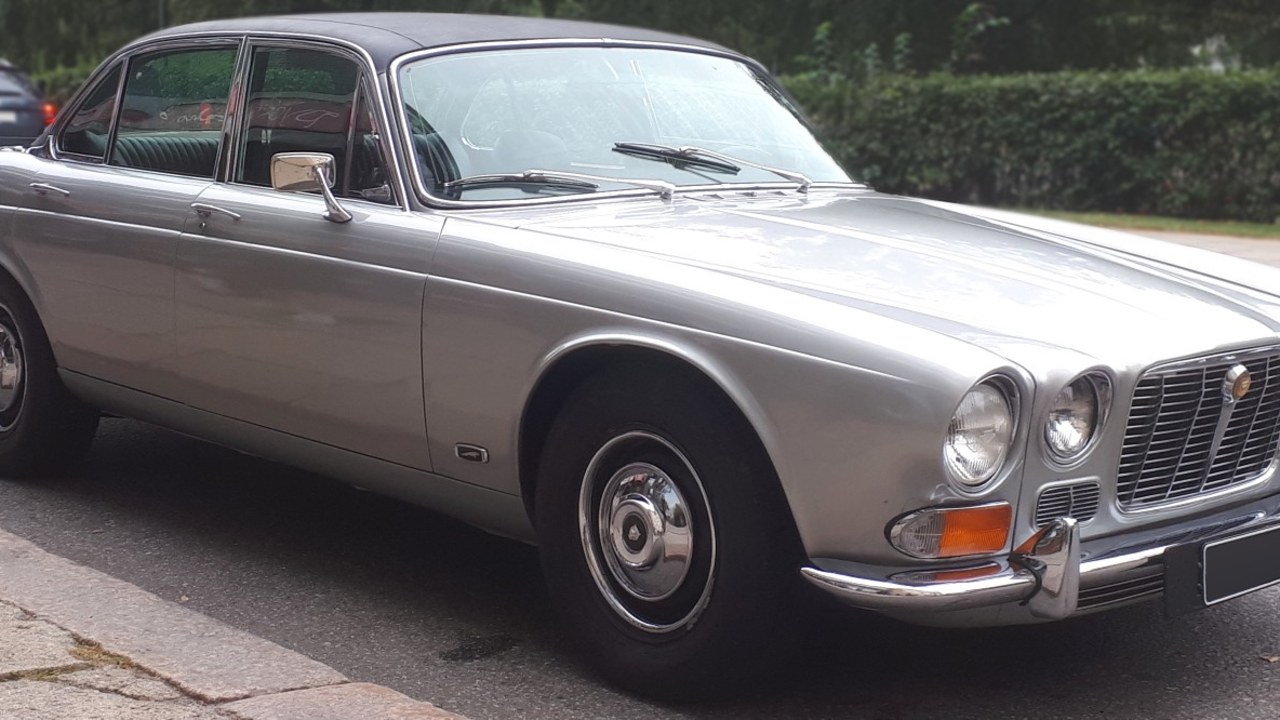
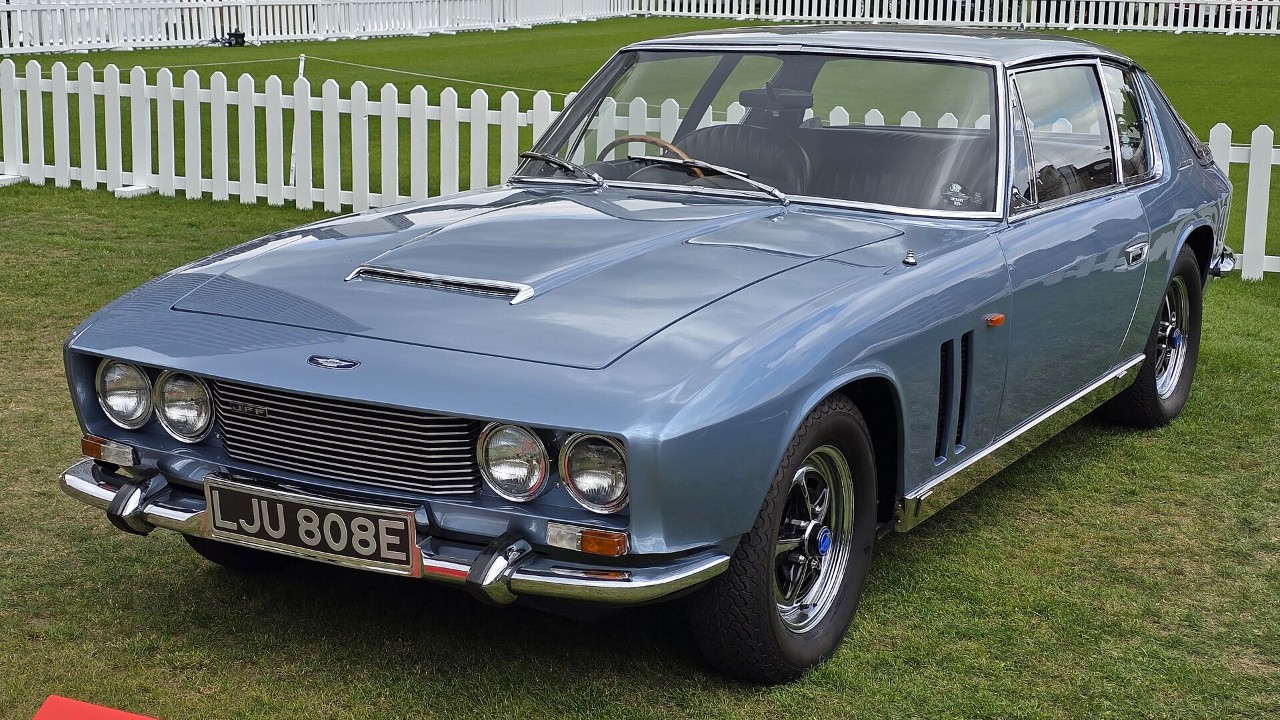
Jaguar launched the XJ6 in September 1968. At first, buyers could choose a 2.8-litre or 4.2-litre XK engine. Sir William Lyons wanted “a saloon with the handling of an E-Type.”
At launch, the 4.2 car cost £2,258 and reached 124 mph, according to Jaguar. The smaller engine had a rougher time. AROnline lists burning valve seats, carbon on the pistons and blown pistons among owners’ complaints. Jaguar then dropped the 2.8 from the UK market in October 1972.
7. 1975 Jaguar XJ6 3.4: a new 3.4-litre XK
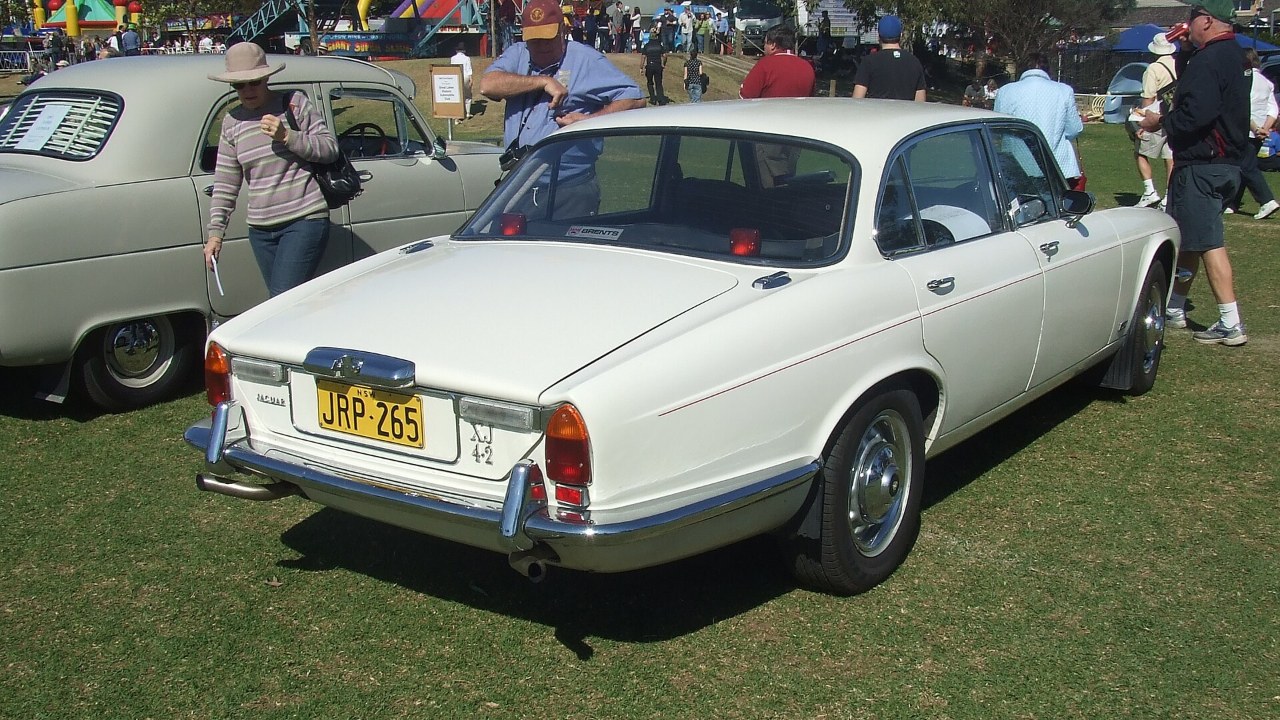
The 3.4 name came back in 1975. That year, the XJ6 3.4 arrived as a substitute. However, it came only as a standalone model, with no Standard version offered to the public, AROnline notes.
These smaller XJ6 engines stayed mostly outside the U.S. In fact, XJ6s not imported to the United States offered 2.8- and 3.4-litre versions from the late 1960s through the mid-1980s, Hagerty says. Meanwhile, the XK kept powering XJ6 sedans, Hagerty adds.
8. 1992 Daimler DS420: the last XK-engined car
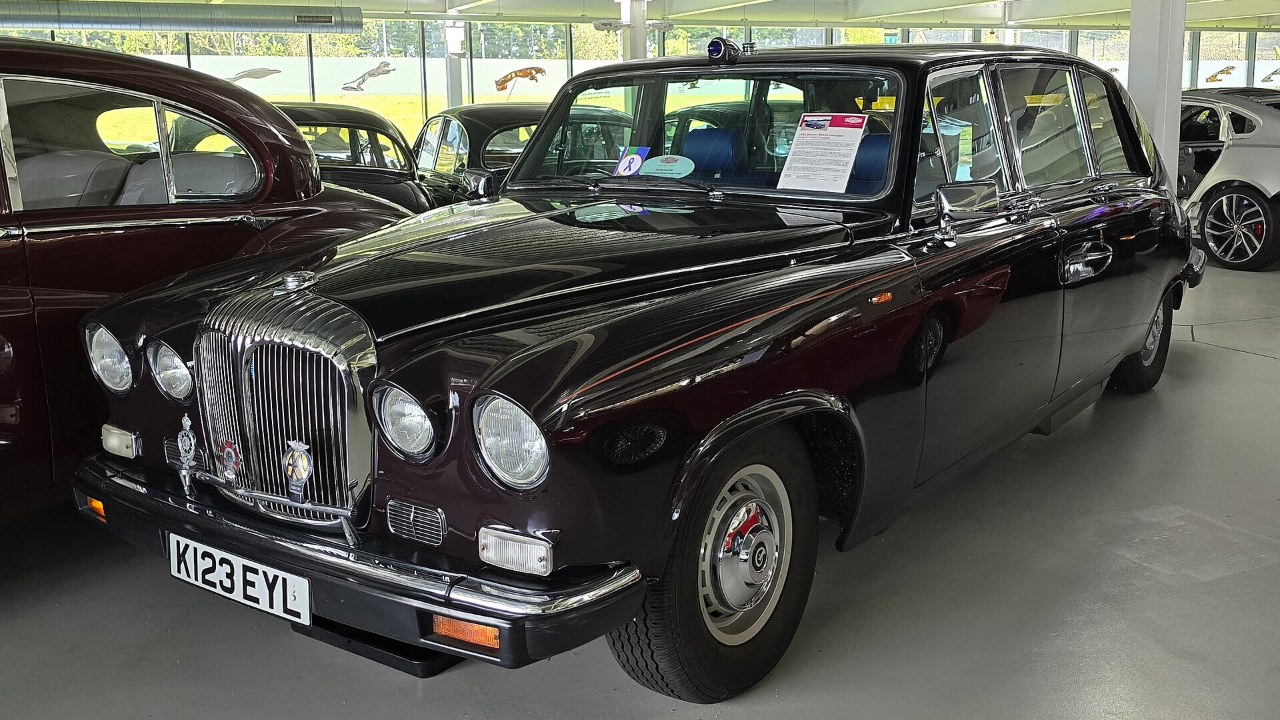
The final car with an XK engine was a Daimler DS420 limousine. Signatures cover its rear seat panel, and one note reads, “Oct 20 1992 – This is the very last.” Under the hood, still, was the XK in 4.2-litre form.
Jaguar Heritage calls it the last car to use the 44-year-old XK design. The DS420 itself launched in 1968 and ran for 24 years, with just over 5,000 cars and chassis built. Across all sizes, Hagerty puts XK engine output at nearly 700,000. Today, the Jaguar Daimler Heritage Trust owns that last limousine.
More from Fast Lane Only
- Unboxing the WWII Jeep in a Crate
- 15 rare Chevys collectors are quietly buying
- 10 underrated V8s still worth hunting down
- Police notice this before you even roll window down
This article was created with the help of AI and was reviewed and edited by Fast Lane Only editors before publication.