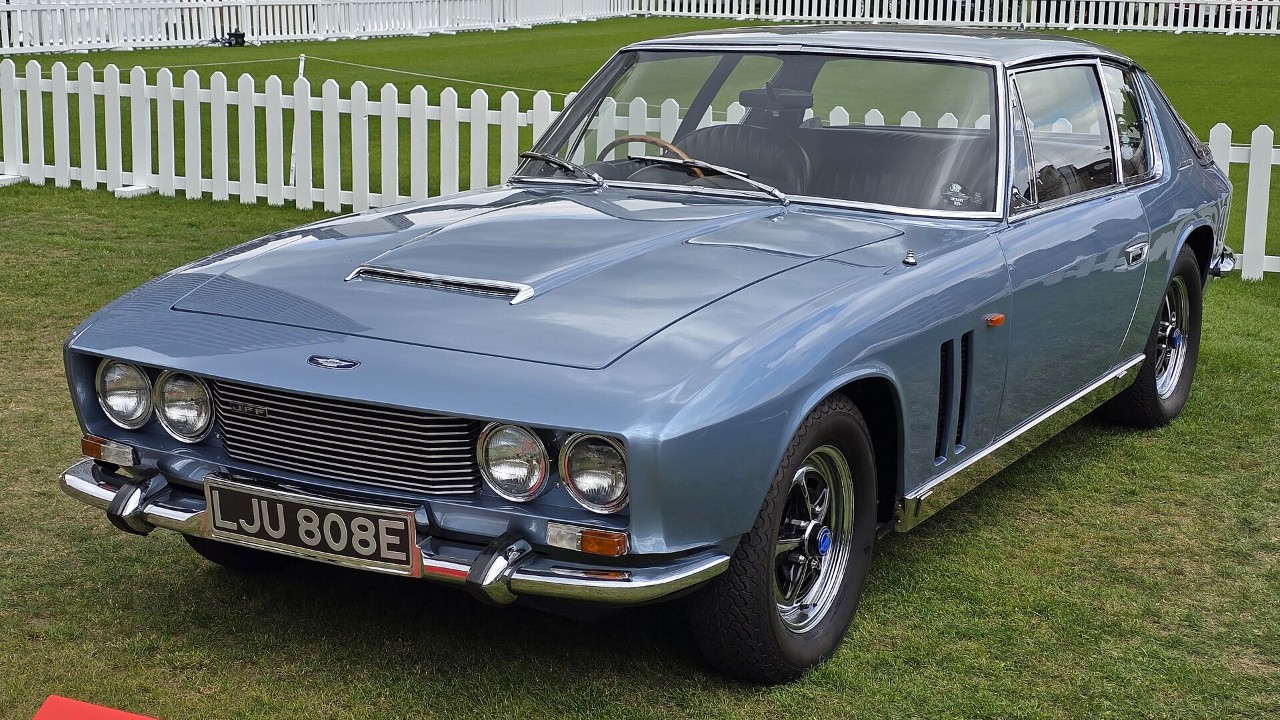
The Jensen FF was a British grand tourer that combined four-wheel drive with anti-lock brakes. Jensen Motors built it in West Bromwich, England, from 1966 to 1971. Only about 320 left the factory, and every one carried both systems.
The letters FF stand for Ferguson Formula. That name comes from Ferguson Research, the company behind the car’s four-wheel-drive system. The brakes, meanwhile, used a Dunlop Maxaret anti-lock unit first developed for aircraft.
Under its Italian-designed steel body sat a big American V8. As a result, one car mixed English assembly, Detroit power and Ferguson’s drivetrain engineering.
Where the Jensen FF came from
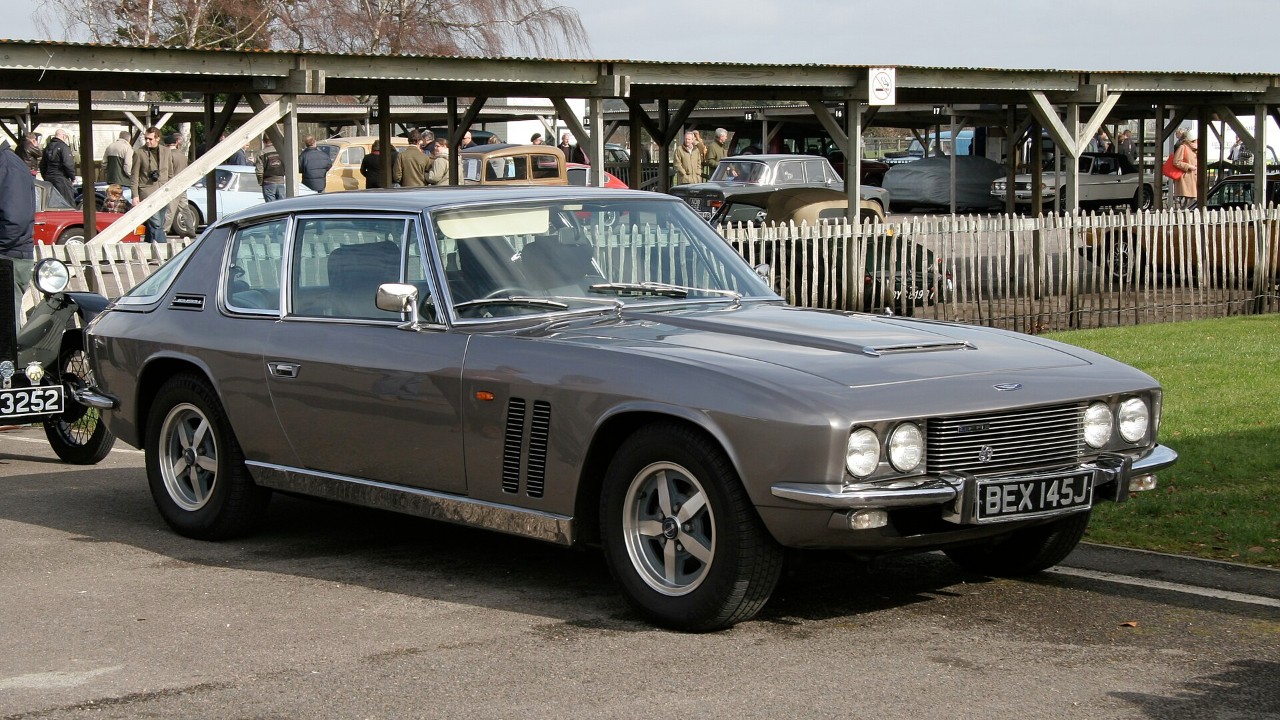
Harry Ferguson Research and Jensen signed a written agreement in 1964 that paved the way for the car, according to Garage Dreams. The same history notes that Tony Rolt had worked with Harry Ferguson and Freddie Dixon on all-wheel-drive prototypes for racing and road use. Ferguson had also built a 1961 Formula 1 car on the same principle, which Stirling Moss and Graham Hill raced, as Zwischengas recounts.
A red CV8 FF prototype appeared at the 1965 London Motor Show. Then the production FF Mk I made its debut on October 11, 1966, according to Lancaster Insurance’s history of the model. Supply problems had pushed production back from its planned start in early 1966.
How the four-wheel drive worked
The FF sent 37% of its torque to the front wheels and 63% to the rear. Both Garage Dreams and Lancaster give that split. Garage Dreams adds that a limited-slip differential worked with it, while Motor Sport describes a chain-drive transfer to the front driveshaft and hypoid drives at each end.
Power came from a 6.3-litre Chrysler V8 rated at 325 bhp, according to Motor Sport and Garage Dreams. A three-speed TorqueFlite automatic handled the shifting. Motor Sport’s factfile lists 0–60 mph in 8.1 seconds.
The hardware also forced a compromise. The off-center engine and the front driveshaft intruded into the passenger side of the cabin. For that reason, left-hand drive was impossible and the FF came in right-hand drive only, Garage Dreams explains.
Was it the first four-wheel-drive car? The careful answer is narrower. The Jensen FF reference entry calls it “the first non all-terrain production car equipped with four-wheel drive,” citing Robson’s A to Z British Cars. Zwischengas, by comparison, describes it as the first passenger car with four-wheel drive based on the Ferguson system.
Anti-lock brakes from the aviation world
The FF’s other trick was Dunlop Maxaret anti-skid braking. Lancaster notes that Dunlop originally developed the system for aviation. In fact, before the FF, only aircraft, lorries and racing cars had used Maxaret, according to the reference entry. The Iconic Auctioneers catalog says the same, and adds that Jensen considered the technology essential for road cars.
By modern standards, it was crude. Garage Dreams says the Maxaret pulsed the brakes three times a second, against about 20 times a second for modern systems. Still, it let a driver brake hard on a slippery road without locking the wheels. Lancaster also quotes Autocar’s verdict on the handling: “Steering the Jensen FF into a corner is uncanny”.
A bigger frame than the Interceptor’s
The FF shared its basic look with the Jensen Interceptor, and Zwischengas notes that it used the Interceptor’s body. Underneath, though, the frame changed. Its tubes measured 5 inches in diameter, against 4 inches on the Interceptor, Zwischengas says.
Motor Sport adds that the frame tubes sat farther outboard, because the four-wheel-drive transmission tunnel was wider. Jensen also mounted the engine back against the firewall. That gave the FF nearly 50/50 weight distribution, according to Garage Dreams.
What the Jensen FF cost
All that hardware made the FF expensive. Lancaster puts the launch price at £5,339 19s 9d, or £1,597 more than an Interceptor. Both Garage Dreams and the reference entry put the premium at roughly 30%. Garage Dreams also says the high price, above rivals as well as the Interceptor, contributed to poor sales.
The FF looked much like the Interceptor, but the extra drivetrain made it heavier. Motor Sport says the FF was 3 mph slower than its sibling for that reason. Its factfile gives a top speed of 130 mph. Jensen also tried bigger engines. For example, a 1968 experimental FF carried a 7-litre Hemi V8, though Jensen never put it into production.
How many Jensen FFs were built
Sources agree on roughly 320 cars, with small differences. The Jensen Owners Club estimates 320 to 330, according to the reference entry. Zwischengas heads one chapter “Only 318 FF built.” Meanwhile, Garage Dreams and Lancaster both give about 320. Of those, Iconic Auctioneers says 195 were Series 1 cars, identified by a 119 chassis prefix.
The run included three series. A Series II facelift arrived in 1969, Lancaster notes. Finally, Jensen built just 15 Series III cars on leftover frames, Garage Dreams says. According to Lancaster, the 320-car total ended in December 1971, with those 15 last-of-the-line Series III cars closing out the run.
More from Fast Lane Only
- Unboxing the WWII Jeep in a Crate
- 15 rare Chevys collectors are quietly buying
- 10 underrated V8s still worth hunting down
- Police notice this before you even roll window down
This article was created with the help of AI and was reviewed and edited by Fast Lane Only editors before publication.