Jeep once held out the prospect of a truly affordable electric model for American drivers, a compact Jeep EV targeted at about $25,000 that would bring battery power into the financial reach of mainstream buyers. Instead of that mass‑market runabout materializing, the brand’s first high‑profile electric push in the United States has arrived at the opposite end of the price spectrum, with the 2026 Recon positioned as a premium off‑road flagship. The result is a widening gap between what was signaled to cost‑conscious shoppers and what is actually rolling into showrooms, even though the original $25,000 idea has not been formally canceled and remains unverified based on available sources.
From $25,000 promise to premium reality
I see the tension in Jeep’s strategy starting with the way Stellantis executives framed their ambitions for a low‑cost Jeep EV in the United States. The Stellantis CEO publicly described a Jeep EV priced around $25,000 as coming to the U.S. “very soon,” presenting it as a key step in making electric vehicles attainable for more drivers and explicitly tying that figure to a broader push by Automakers to use cheaper electric cars to drive up sales. That same message was echoed in other coverage that highlighted how Offering a new Jeep EV at $25,000 had become a kind of benchmark in the industry conversation, with the Stellantis CEO and others treating that price point as both a marketing hook and a strategic necessity in a market where affordability is increasingly central.
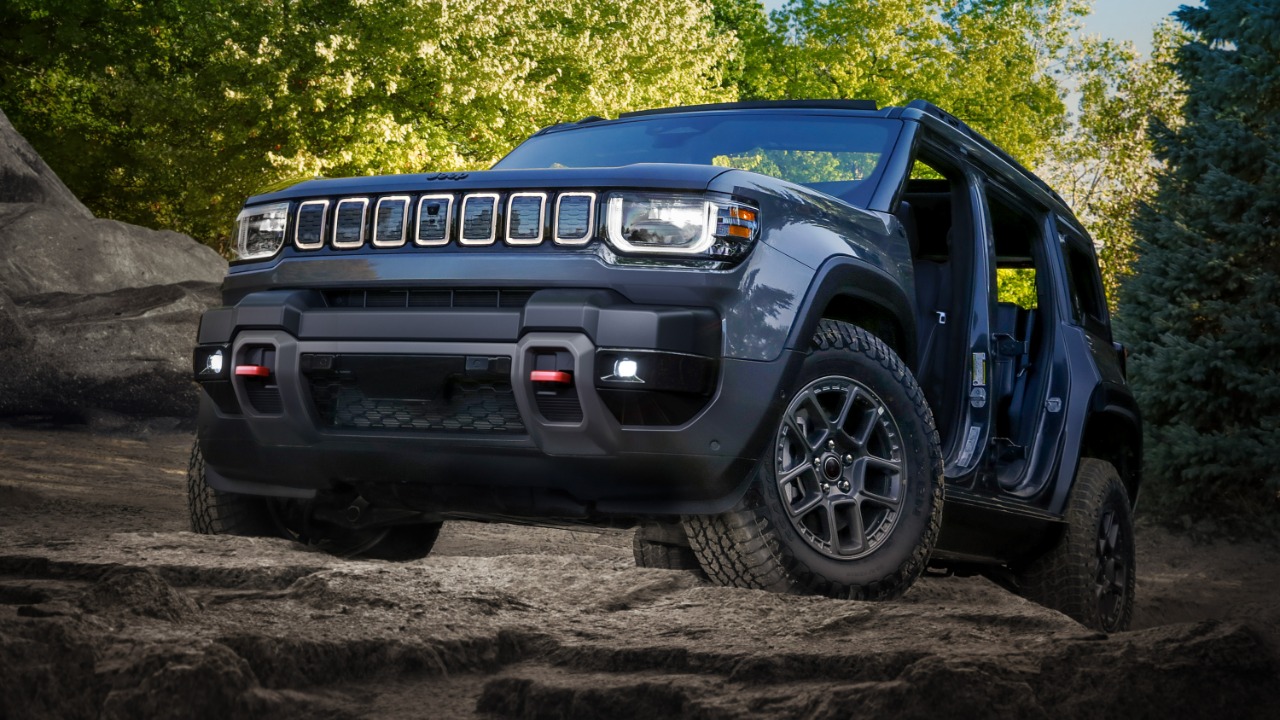
Yet as I look at what Jeep is actually preparing to sell, the reality is very different from that early affordability pitch. The company’s first major electric SUV launch in the U.S. is the Recon, a model that Jeep itself presents as a fully electric utility vehicle with removable doors, removable rear‑quarter glass and a removable swing gate, designed to evoke the open‑air experience of a Wrangler while running on battery power. Official materials show the Recon with an MSRP that climbs into premium territory, and separate reporting on the 2026 Recon EV notes that it is Priced starting at around $65,000, with the Recon positioned as a premium alternative to gas‑powered icons, a Recon EV that leans into off‑road performance rather than budget accessibility. That is a far cry from the $25,000 Jeep EV that was supposed to be “very soon,” and it is why I view the affordable model as effectively sidelined for now, even if no one at Stellantis has formally said it is dead.
What the Recon tells us about Jeep’s EV priorities
When I examine the Recon itself, I see a product that clarifies Jeep’s near‑term priorities in the electric space, and they are not centered on bargain pricing. The Recon is marketed as the only fully electric utility vehicle designed with removable doors and other open‑air features, a clear attempt to translate the Wrangler’s lifestyle appeal into a battery‑electric format. Official descriptions emphasize capability and uniqueness, not cost, and the as‑shown MSRP of the Recon underscores that Jeep is comfortable treating this as a halo product for enthusiasts rather than a volume play for budget‑constrained households. In that light, the Recon looks less like a stepping stone to a $25,000 Jeep EV and more like a statement that the brand wants to prove it can build a serious electric off‑roader first.
Independent reporting reinforces that impression by detailing how The Recon is priced at a roughly $14,000 premium over an entry‑level 2025 Wrangler plug‑in hybrid electric vehicle, with a quoted starting figure near $65,000 and a range estimate just under 300 miles. That kind of pricing plants the Recon squarely in the premium SUV segment, alongside rivals like the Rivian R1S and other upscale electric off‑roaders, rather than in the compact crossover space where a $25,000 Jeep EV would logically live. Even in enthusiast discussions, I see comments that treat the Recon as a high‑dollar toy, with one Facebook user, Channing Ramos Stellantis, joking that Stellantis could make an ink pen unreliable and expressing skepticism about a roughly $65k price tag for what is supposed to be a family and around town vehicle. Those reactions suggest that Jeep’s first big EV move is being read as aspirational and expensive, not as the democratizing step that a $25,000 model would have represented.
Stellantis pulls back on U.S. electrification
To understand why the affordable Jeep EV has not appeared, I have to place it within Stellantis’ broader recalibration of its American electrification plans. Reporting on the company’s recent U.S. investment strategy makes clear that Stellantis has scaled back its electrification plans for the U.S. market, explicitly deciding to delay or trim parts of its electric lineup as it reassessed its product strategy. That reassessment has involved shifting some focus back toward hybrids and internal combustion models, and it has meant that EVs take a backseat in a $13 billion U.S. investment plan that once looked more aggressively electric. In that environment, a low‑margin $25,000 Jeep EV aimed at cost‑sensitive buyers becomes harder to justify than a high‑margin Recon that can command luxury‑SUV pricing.
The internal logic is even clearer when I consider how important Jeep is within Stellantis. Analysts describe Jeep, along with Stellantis US, as one of the jewels in Stellantis’ crown of money making divisions, and they stress that a move into EVs really matters for the group’s long‑term competitiveness. That combination of pressure and profitability can push decision‑makers toward safer bets, and a premium Recon that leans on Jeep’s off‑road heritage is a safer financial proposition than a brand‑new compact Jeep EV that must hit $25,000 while still delivering acceptable range and capability. The fact that Stellantis has not provided fresh, concrete details about timing, specifications, or a nameplate for the promised $25,000 Jeep EV, beyond the earlier statements about a Jeep EV coming “very soon,” reinforces my view that the project is at best delayed and at worst deprioritized, even if its formal status is unverified based on available sources.
Affordability, incentives, and the missing mass‑market Jeep
From a consumer perspective, the absence of a concrete $25,000 Jeep EV matters because it leaves a hole in the market that incentives alone cannot fill. Jeep does highlight that Qualified lessees of a Jeep Brand 4xe plug‑in hybrid or battery electric vehicle may qualify for up to a $7,500 incentive through leasing structures, and broader EV leasing guides point shoppers toward regional pricing variations and state‑specific incentives that can further reduce monthly payments. Those tools can soften the blow of a high sticker price, and they are particularly relevant for models like the Wagoneer S, which Jeep positions as a luxury EV that leans more toward the Grand Cherokee end of the spectrum than toward entry‑level crossovers. Yet even with a $7,500 incentive, a Recon that starts around $65,000 remains out of reach for the very buyers who were supposed to benefit from a $25,000 Jeep EV.
Other automakers’ experiences show why that gap is problematic. Analysts have noted that Offering a new EV around $25,000 has become a kind of holy grail for companies like Tesla, with extensive debate over whether it makes sense for Musk to proceed with a $25,000 Model 2 or to focus on other projects instead. The Autopian’s discussion of The Sad Reason Why Musk Might Kill The $25,000 Car, framed around Given the known timing of when Musk hoped to deliver the Model 2, illustrates how even EV leaders struggle to make the economics of a truly low‑cost electric car work. At the same time, some legacy manufacturers are retreating from ambitious EV bets altogether, as seen in reports that Ford has scrapped the fully electric F‑150 Lightning in response to mounting losses and falling demand for that particular configuration of Lightning. Against that backdrop, Jeep’s pivot toward premium EVs and away from a clearly defined $25,000 Jeep EV leaves American buyers with fewer realistic paths into electric ownership at a price that resembles a conventional compact SUV.
Infrastructure, expectations, and what comes next
More from Fast Lane Only