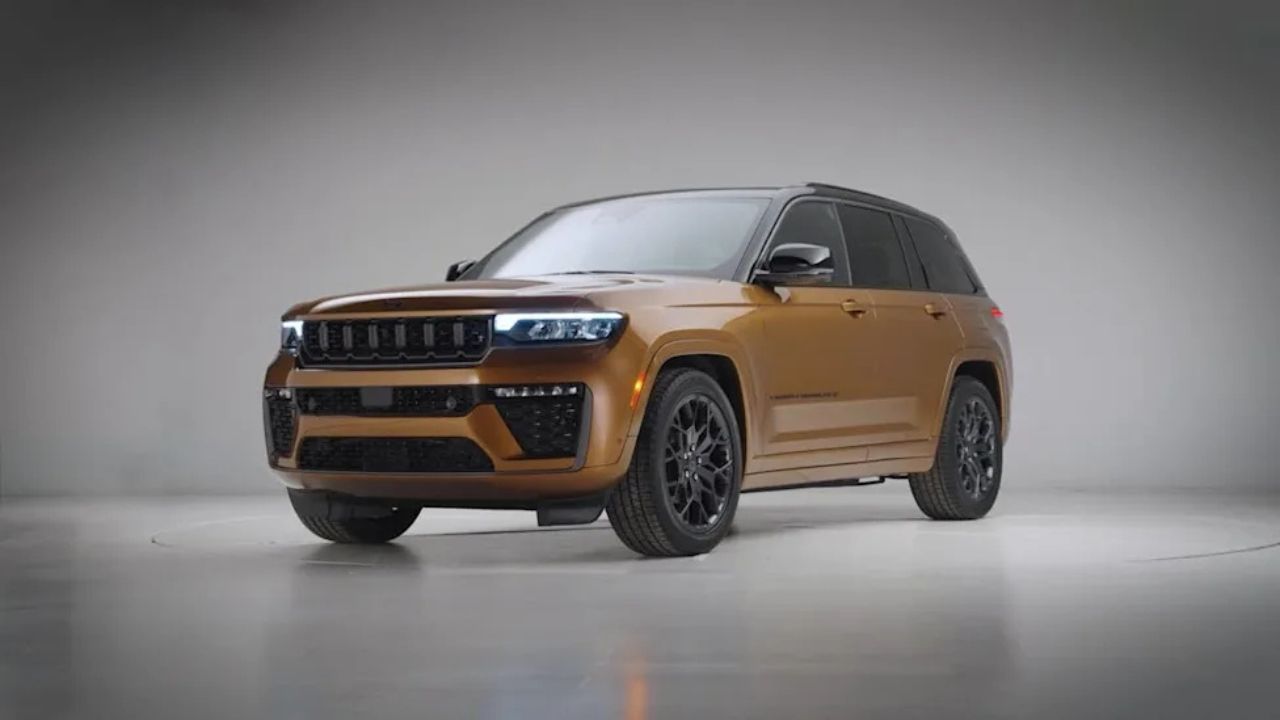
Jeep has confirmed that the Grand Cherokee Trailhawk is coming back, ending months of speculation about the future of its most off-road-focused midsize SUV trim. The return will not be immediate, however, with Jeep pointing to updates due later in 2026 that will shape how and when the revived Trailhawk reaches customers.
The decision reconnects one of Jeep’s core nameplates with a badge that has come to define the brand’s off-road credibility. It also raises fresh questions about engines, electrification, and how Jeep plans to balance hardcore capability with tightening emissions rules over the rest of the decade.
What happened
Jeep executives have now publicly committed to bringing back the Grand Cherokee Trailhawk, confirming that a new version of the off-road trim is in the product plan after it quietly disappeared from the lineup. Reporting on internal product briefings and dealer communication indicates that the Trailhawk will rejoin the Grand Cherokee range as part of a broader refresh, with the updated model expected to arrive for the 2027 model year after engineering and styling changes scheduled for the second half of 2026.
Coverage of Jeep’s product roadmap describes the Trailhawk’s return as part of a strategy to keep the Grand Cherokee competitive as newer rivals arrive. One report on Jeep’s future products notes that the company has been preparing a mid-cycle update for the current-generation Grand Cherokee, and that the Trailhawk will be folded into that updated range rather than reintroduced as a short-run special. That same reporting frames the Trailhawk as central to Jeep’s effort to maintain a clear capability story in a segment filled with crossovers that lean more toward pavement than rock.
Enthusiast-focused outlets that track Jeep’s internal planning say the company has already shown early imagery and a brief video of a camouflaged Grand Cherokee Trailhawk to selected audiences. One of those previews, described by a teaser breakdown, highlights familiar Trailhawk cues such as a higher ride height, prominent recovery hooks, and a more aggressive front fascia. The footage reportedly shows the SUV on a rocky test course, reinforcing that the badge will again sit at the top of the Grand Cherokee’s off-road hierarchy.
Detailed reporting on Jeep’s internal product cadence indicates that the revived Trailhawk is tied directly to the 2027 Grand Cherokee program. An analysis of Jeep’s future lineup explains that the Trailhawk comeback is planned specifically for the 2027 model year Grand Cherokee, with the trim expected to arrive after Jeep finishes a mid-cycle refresh that includes exterior styling tweaks and updated technology. That report, which lays out the timing in relation to other Stellantis products, describes the Trailhawk as a confirmed part of the 2027 Grand Cherokee range rather than a tentative concept.
The comeback also aligns with broader signals from Jeep about the Grand Cherokee’s importance. A feature on the brand’s long-term strategy notes that Jeep has no intention of walking away from the Grand Cherokee nameplate, and that the company sees off-road derivatives as essential to keeping the SUV distinct from more road-biased Stellantis cousins. In that context, the Trailhawk’s absence looked increasingly temporary, and the new confirmation simply formalizes what many inside the Jeep community had expected.
Some coverage of the Trailhawk news has framed it within a larger story about the Grand Cherokee’s future. One overview of Jeep’s SUV lineup recounts how the current-generation Grand Cherokee and Grand Cherokee L consolidated several trims, then later dropped the Trailhawk as Jeep adjusted production and simplified configurations. That same piece now describes the Trailhawk’s return as part of a renewed focus on enthusiast trims, alongside other off-road badges in Jeep’s portfolio.
For fans who had grown impatient, the latest reports finally move the Trailhawk from rumor to reality. An article aimed at Jeep collectors confirms that the Grand Cherokee nameplate will continue and that the Trailhawk specification is officially on the way back, tying the news to Jeep’s broader push to keep its heritage models relevant in a market that is shifting rapidly toward electrification and advanced driver assistance.
Why it matters
The Trailhawk badge carries weight well beyond its sales volume. Within Jeep’s lineup, it has served as shorthand for maximum factory off-road capability on models that sit below the Wrangler and Gladiator. When Jeep removed the Grand Cherokee Trailhawk from its order guides, many enthusiasts saw it as a worrying signal that the brand might be softening one of its core SUVs. The confirmation of a return, locked to a specific future model cycle, helps steady that perception.
From a capability standpoint, the previous Grand Cherokee Trailhawk distinguished itself with hardware such as an air suspension tuned for extra ground clearance, an advanced four-wheel-drive system, and underbody protection. Reports on the upcoming version suggest that Jeep intends to maintain that formula, pairing the Grand Cherokee’s more refined interior with trail-ready equipment that can tackle the kind of terrain typically associated with Wrangler models. One analysis of Jeep’s future products describes the Trailhawk as the Grand Cherokee’s halo for off-pavement use, a role that helps justify higher transaction prices and reinforces the brand’s image.
The powertrain story may be even more significant. Coverage of the Trailhawk’s return has focused on Jeep’s shift away from traditional V8 engines in favor of smaller, more efficient units and electrified options. One detailed report on the upcoming Trailhawk highlights that the engine choice could surprise buyers who still associate the Grand Cherokee with large-displacement power. That piece, which examines Jeep’s move toward downsized turbocharged units and hybrids, suggests that the revived Trailhawk is likely to rely on modern engines that balance torque with emissions compliance, rather than the naturally aspirated V8s that defined earlier generations.
Another analysis of Jeep’s future lineup connects the Trailhawk’s timing to Stellantis emissions and electrification targets. It explains that by anchoring the Trailhawk to the 2027 Grand Cherokee program, Jeep can integrate the trim into a platform that is already engineered for newer powertrains, including hybrid or plug-in hybrid variants where appropriate. This approach allows Jeep to keep the Trailhawk relevant in markets that are tightening emissions standards without giving up on the off-road hardware that makes the badge meaningful.
For the Detroit region, the Trailhawk’s return has a local manufacturing angle. Reporting on Jeep’s production footprint notes that the Grand Cherokee is built in Detroit, and that the addition of a high-content trim like the Trailhawk can support plant utilization and help keep skilled jobs tied to the SUV. One story that looks at Jeep’s Detroit-made SUVs describes how special trims and off-road variants can boost margins and stabilize output, especially when mainstream trims face stronger price competition.
The Trailhawk’s comeback also matters in a crowded midsize SUV market where off-road branding has become a key marketing tool. Rivals such as the Toyota 4Runner, Ford Bronco, and various adventure-themed trims from mainstream crossovers all pitch some level of trail capability. A report that surveys the competitive set notes that Jeep cannot rely on the Wrangler alone to carry its off-road identity, and that the Grand Cherokee Trailhawk plays an important role in giving buyers a more refined, family-friendly option that still feels authentically Jeep.
Within the Jeep community, the confirmation helps resolve months of uncertainty. A detailed look at enthusiast reaction recounts how owners and fans had been frustrated by the Trailhawk’s disappearance, especially after investing in accessories and aftermarket upgrades tailored to the trim. That same coverage now points to the official comeback as a sign that Jeep is listening to its core audience, even if the timeline stretches into the latter part of the decade.
There is also a used-market angle. A feature on collector interest in modern Jeeps notes that rare or short-lived trims often see a bump in resale value when a nameplate returns, because the earlier versions gain a clearer place in the model’s history. With the Grand Cherokee Trailhawk, the gap between the outgoing and incoming versions could create a distinct break that makes the previous generation more appealing to certain buyers, especially those who prefer older powertrains.
For Jeep as a brand, the Trailhawk’s return reinforces a broader message about staying true to its off-road roots even as it pushes into electrification. One overview of Jeep’s product strategy explains that the company sees trims like Trailhawk as a bridge between traditional enthusiasts and new customers who expect modern tech and efficiency but still want genuine capability. By confirming the Trailhawk’s future and tying it to a specific product update, Jeep signals that this bridge will remain a central part of its identity.
What to watch next
With the broad commitment now public, the focus shifts to details. The most closely watched question is which engines will power the next Grand Cherokee Trailhawk. Reporting that examines Jeep’s powertrain roadmap suggests that the SUV will lean on newer turbocharged and electrified options rather than returning to large naturally aspirated V8s. One analysis of the upcoming Trailhawk emphasizes that the engine choice could surprise shoppers who still associate the badge with traditional big-engine muscle, pointing instead to a mix of efficient but torque-rich units designed to meet future regulations.
Another key storyline involves the exact timing of the Trailhawk’s arrival. A detailed breakdown of Jeep’s product cadence states that the Trailhawk comeback is tied to the 2027 Grand Cherokee program, which itself is linked to a broader refresh scheduled for late 2026. That means shoppers looking to buy a new Trailhawk-equipped Grand Cherokee will likely be watching for Jeep to unveil the refreshed SUV first, then open orders for the off-road trim as part of that updated lineup.
Visual and functional changes will also draw scrutiny. Enthusiast coverage of the early teaser material describes a prototype with a revised front fascia, unique wheels, and the familiar red tow hooks that have become a Trailhawk signature. A closer look at the teaser footage, as described in a breakdown of the video, notes that the prototype appears to ride higher than standard Grand Cherokee trims and that it tackles rock-strewn terrain in a way that signals a serious off-road suspension setup. Observers will be watching to see how much of that prototype hardware makes it to production.
Pricing and positioning within the Grand Cherokee range remain open questions. Analysts who track Jeep’s pricing strategy expect the Trailhawk to sit near the upper middle of the lineup, above volume trims but below the most luxurious variants. One overview of the Grand Cherokee’s current structure suggests that Jeep may use the Trailhawk to anchor a cluster of off-road oriented packages and accessories, giving dealers more flexibility to tailor vehicles to local demand while keeping the core Trailhawk specification tightly defined.
There is also the matter of how Jeep will integrate electrification into the Trailhawk formula. Reporting on Jeep’s broader electrification plans indicates that the company intends to offer plug-in hybrid or hybrid versions of many of its SUVs, including off-road trims. Observers will be looking for signs that the revived Trailhawk might adopt a similar approach, either by pairing electric assistance with a turbocharged engine for extra low-end torque or by offering a dedicated electrified variant aimed at markets with stricter emissions rules.
More from Fast Lane Only