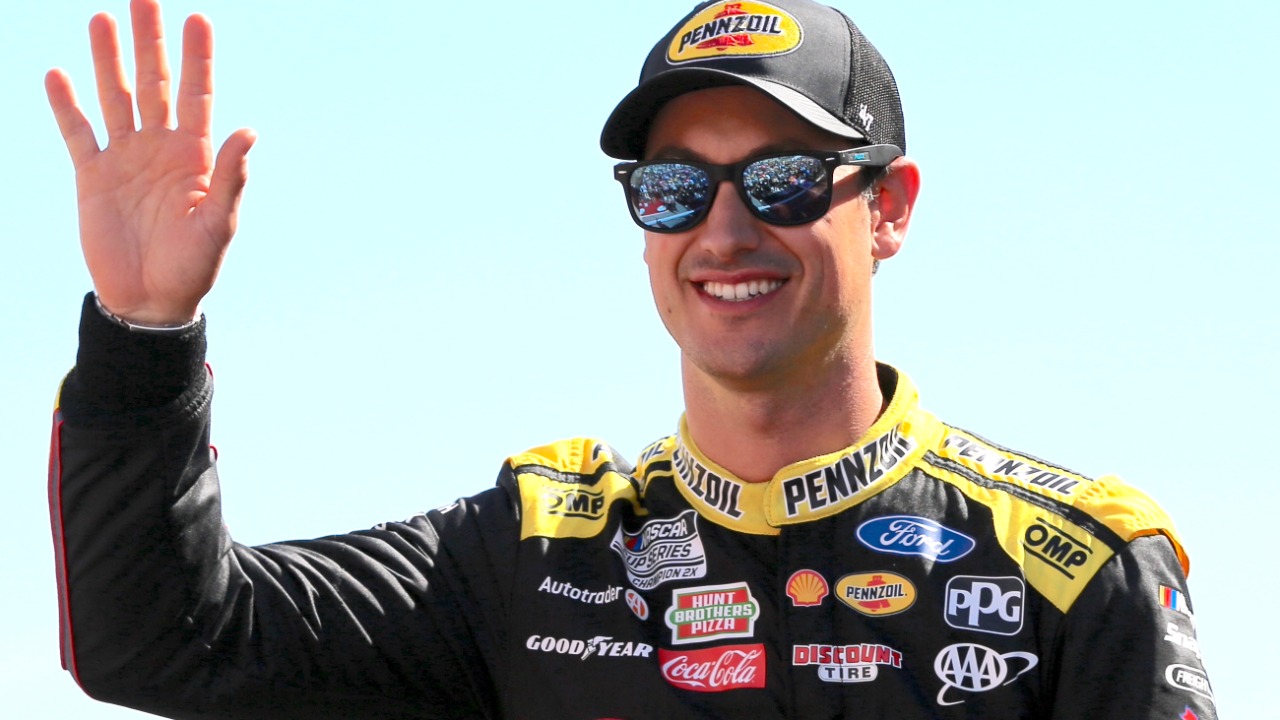
Joey Logano walked out of the Phoenix infield care center with a battered car, a bruised points day, and a clear message about the restart crash that sent Ross Chastain spinning in front of the field. He blamed no one but himself for the violent chain reaction that reshaped the Straight Talk Wireless 500 and lit up the NASCAR garage.
On a late restart with just under 100 laps to go, Logano’s misjudged push turned Chastain, triggering a multicar pileup, and left several contenders seething over a wreck that many saw coming long before the green flag.
How the restart unraveled
The flashpoint came with under 100 laps remaining in Sunday’s NASCAR Cup Series race at Phoenix, when the field stacked up on a restart and Logano lined up behind Chastain. Restarts at the flat, one-mile oval are always chaotic, and the run into Turn 1 compresses the pack into a tight funnel.
When the green flew, Logano got to the rear bumper of the Trackhouse driver and stayed there. Contact off the launch sent Chastain sideways, his car snapping up the racetrack into traffic and sparking a multicar crash that left cars scattered and tempers hot.
From the grandstands that wrap around Phoenix Raceway, it looked like a textbook case of bump drafting gone wrong in a corner where there is almost no margin for error. Inside the cockpit, it unfolded even faster, with drivers behind reacting only to clouds of smoke and sudden brake lights.
Logano owns the mistake
Joey Logano on the Lap 217 crash:
— Frontstretch (@Frontstretch) March 8, 2026
“I hate that I got into Ross… I had a good run to try to slip him. He anticipated it, went down to the bottom, we got into each other, and it ended up spinning us.”#NASCAR
Presenting Partner: @MyPlaceHotels pic.twitter.com/BdG6nRf5Hq
In the aftermath, Joey Logano did not hide behind the usual explanations about accordion effects or unpredictable stacks. He told reporters that on the restart with just under 100 laps to go, he simply misjudged the hit and turned Chastain, setting off the carnage that followed.
For a driver with Logano’s reputation for aggression, the admission carried weight. He has built a career on taking tight gaps and forcing the issue late in races, and Phoenix was no exception, but this time he acknowledged that the line between hard racing and costly contact had been crossed.
The accountability did little to ease the frustration in the garage, especially from teams that saw potential top ten runs destroyed in someone else’s mistake. Even so, it framed the conversation less as a feud between Logano and Chastain and more as a case study in how razor-thin the margins are on modern restarts.
The chain reaction and the hardest hits
Once Chastain’s car snapped around, the middle of the pack had nowhere to go. The spinning Chevrolet became a moving pick, and cars behind checked up or darted low, only to find the apron clogged as well.
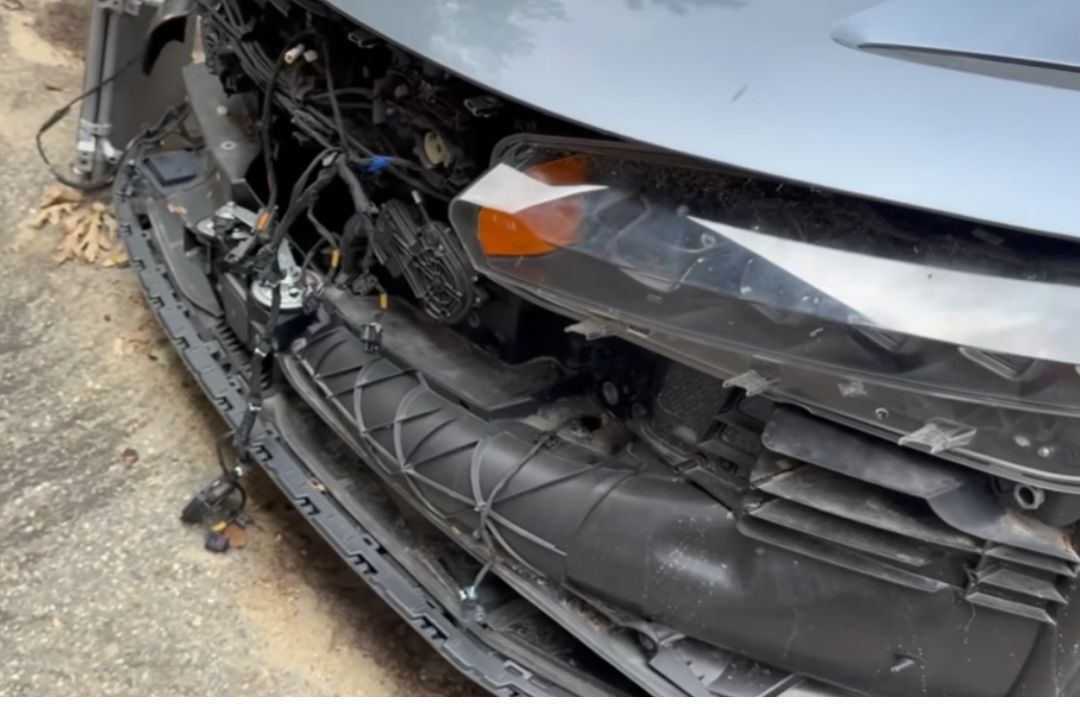
Among those caught in the wreck were Anthony Alfredo and Austin Cindric, who both took hard shots after arriving on the scene with little warning. Their involvement turned what might have been a two- or three-car incident into a highlight-reel crash that drew gasps from fans and immediate concern from spotters.
Earlier coverage of the event described how a wreck initiated by Logano at Phoenix led to a particularly violent impact for Cindric, who pounded the outside wall after being collected. The description of a “scary hit for Cindric” captured how suddenly a routine restart can become a safety test when one misjudged push sends a car across the groove.
For Alfredo, the day went from opportunity to survival exercise in a heartbeat. The driver, who has fought for every Cup start he can get, ended up as collateral damage in a battle that had little to do with his own race until the moment Chastain’s car slid into his lane.
Spotlight on Alfredo and Cindric
The crash spotlighted two drivers whose seasons already carried different kinds of pressure. Anthony Alfredo continues to juggle limited opportunities with the need to impress sponsors and team owners, and a torn-up car at Phoenix only adds to that uphill climb.
Austin Cindric, a past Daytona 500 winner, has been working to reestablish himself as a weekly threat, and another race ending in the wall cuts into that momentum. For both, the Phoenix crash was less about personal error and more about being in the wrong place when the front of the line got it wrong.
Safety-wise, the fact that both climbed from their cars after such heavy hits underlined how far the Cup Series has come with the current chassis and soft walls. Even so, the in-car replays and the way Cindric’s car snapped into the barrier will likely feed ongoing discussions about impact angles and energy absorption.
Restart aggression and the Phoenix factor
Restarts at Phoenix have become some of the wildest on the schedule, with drivers fanning out across the dogleg and using every inch of pavement. The track’s configuration invites risk, and the temptation to move a rival out of the way is strong when track position is everything.
Logano is far from the only driver willing to use the bumper, but his role in this incident sharpened the focus on how aggressive the front rows have become. The Straight Talk Wireless 500 label hinted at the kind of blunt, elbows-out racing fans expect, and the contact between Joey Logano and Ross Chastain delivered that in the most literal way.
Insiders later highlighted what they saw as a double standard in how similar incidents are judged, especially when a high-profile name initiates the contact. Some pointed to past penalties for other drivers and questioned whether the response to Logano’s mistake would match that history.
Logano’s rough Phoenix story
The restart crash did not happen in isolation. Earlier in the day, a separate incident involving Logano and A.J. Allmendinger had already complicated his race at Phoenix. The No. 22 Team Penske Ford driver spun up the track into Turn 1 and collected Wood Brothers Racing’s Josh Berry, among others.
That earlier trouble meant Logano was already fighting back from adversity when he lined up near Chastain on the fateful restart. What had started as a strong outing, with Logano as the polesitter at Phoenix Raceway, turned into a grind through the middle of the pack, where chaos is always more likely.
That context helps explain why he was pressing so hard. A day that once looked like a chance to bank stage points and a podium had already slipped away, and the restart with Chastain represented one of the last real windows to salvage track position.
Winners, losers, and the Blaney contrast
While Logano’s race imploded, his teammate Ryan Blaney capitalized and went on to celebrate a Phoenix victory. The contrast was stark: as one Team Penske driver posed in victory lane, the other was left wondering what might have been after triggering a crash that damaged his own No. 22 Ford along with others.
Analysts later grouped Logano among the “down” drivers leaving Phoenix, citing how a polesitting car that led laps ended up deep in the results sheet. The incident with Chastain and the subsequent pileup were central to that assessment, turning a potential statement race into a cautionary tale about restart risk.
For Blaney, the win reinforced his growing comfort at shorter, flatter tracks. For Logano, the day reinforced how quickly a strong car can become a storyline for all the wrong reasons.
Legacy, scrutiny, and what comes next
Joey Logano has long been one of NASCAR’s most polarizing stars, and Phoenix will only add layers to that reputation. His willingness to accept blame for the Chastain crash may cool some criticism, but it will not erase the frustration of those who left the desert with wrecked equipment.
At the same time, the incident will feed ongoing debates about restart etiquette, especially at tracks like Phoenix, where the dogleg and tight corners invite contact. Drivers know that a small miscalculation can wipe out a quarter of the field, yet the incentive structure still rewards the ones who push hardest.
More from Fast Lane Only