China has quietly crossed a psychological threshold in the global auto business: its leading carmakers now depend more on foreign buyers than on drivers at home. The country that once soaked up virtually every vehicle it built is increasingly shipping its output abroad, turning domestic showrooms into a secondary market.
The shift reflects a powerful combination of industrial scale, an aggressive push into electric vehicles, and a cooling home economy that can no longer absorb everything rolling off Chinese assembly lines.
Exports surge as home demand cools
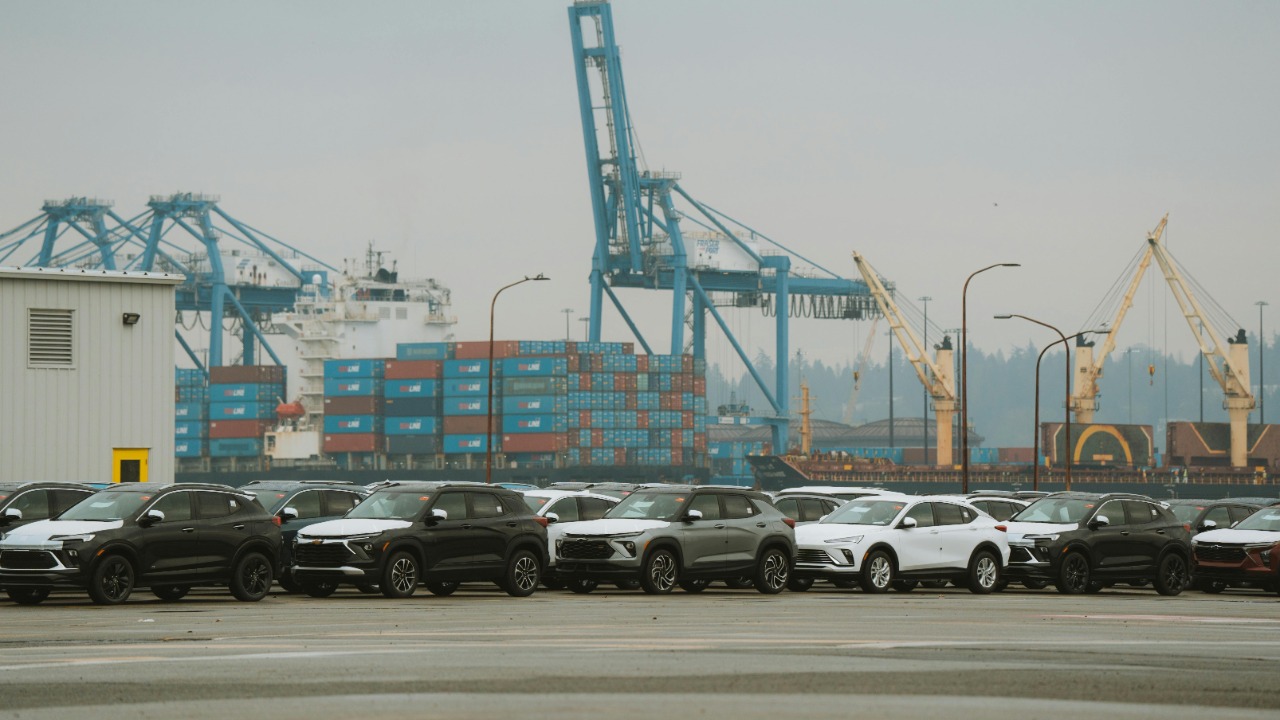
China has rapidly become the world’s largest car exporter, helped by a wave of battery models that are winning market share in Europe, Latin America, and the Middle East, according to China’s drive. That rise has turned ports into vast staging grounds for outbound vehicles, while domestic lots look noticeably less crowded with customers.
Domestic sales momentum is fading at the same time. Analysts expect China’s car sales to stagnate in 2026 after a weak finish to 2025, when the sales share of new energy vehicles hit a striking 59% in December, but overall demand softened as subsidies and tax breaks were scaled back.
From workshop of the world to an exporter first
China has spent two decades building the capacity to dominate global vehicle production, and that investment is now visible in export statistics. One industry assessment notes that Chinese automakers are projected to move around 27 million vehicles globally in 2025, while Japanese brands are expected to sell about 23 million. The gap signals a decisive change in who sets the pace in global car sales.
Inside China, however, growth looks far more modest. Official targets envisage only a small increase in domestic volumes, with China Sets a 2025 Car Sales Target to Rise 3%, even after China Car Sales Fall 3.2% in January highlighted how fragile local demand has become.
Consultancy work on the sector describes how China produced a dominant share of the vehicles made worldwide in 2024 and 2025, with factories running well above what the home market alone can justify, according to Jan State of Auto Market, written by Bill Russo, Founder and Chief Executive of Automobility Ltd. That structural overcapacity leaves export channels as the pressure valve.
Record production, sluggish showrooms
China set fresh records in 2025, with Production reaching 34.531 m vehicles, up 10.4 per cent year on year. Sales climbed to 34.4 m units, confirming the country as the world’s largest auto market by volume.
Yet those headline numbers mask a split personality. Sales of China-made vehicles in the home market rose only 4.5% in 2024, and the domestic market remains sluggish despite a second-half upturn, according to the Sales of China-made vehicles data. Growth is increasingly coming from ships, not showrooms.
Electric vehicles lead the outward push
New energy vehicles sit at the heart of this export-first model. Through May 2024, shipment volumes from Chinese plants were up 8.3%, with NEV growth roughly 33% higher than the previous year, according to Jun 2024 YEAR TO DATE HIGHLIGHTS on Shipment and NEV trends. The same analysis notes that a growing share of these vehicles is being sold in other markets rather than at home.
By late 2025, new energy vehicles were no longer a niche segment inside China. The 59% share in December signaled that the transition to electrified powertrains had reached the mainstream, yet the most aggressive growth in unit sales was already happening overseas as domestic buyers became more selective and price sensitive.
Top brands chase foreign margins
The strategic pivot is most visible among leading Chinese brands. Commentators on enthusiast forums point out that the top Chinese Carmakers, with companies like BYD and SAIC, rely on export programs to keep plants fully utilized.
For these manufacturers, foreign markets offer not only volume but also better pricing power. European buyers of compact electric crossovers, for example, are paying more per vehicle than heavily discounted customers in second and third-tier Chinese cities, where domestic demand has been cooled by weaker income growth and patchy consumer confidence.
Government policy and global tension
Beijing has encouraged this export wave as part of a broader industrial strategy. Tax incentives, cheap credit, and support for charging infrastructure helped create a dense ecosystem of suppliers that can churn out batteries, motors, and electronic controls at scale, according to Discovered analysis linked from the State of China Auto Market Automobility.
The same scale advantage is now provoking political friction. Trade partners in Europe and North America argue that subsidized Chinese EVs threaten local jobs and are weighing tariffs and other barriers, as documented in further Discovered reporting connected to the State of China Auto Market Automobility.
What a foreign-first China means for everyone else
For global consumers, the immediate effect is more choice and lower prices. A family in Spain shopping for a compact electric hatchback, or a ride-hailing driver in Brazil looking at a budget sedan, now faces Chinese-built options that undercut established brands while offering long-range batteries and large touchscreens.
For rival automakers, the picture is less comfortable. Foreign joint ventures inside China are struggling to compete with domestic NEV specialists, according to analysis cited by Discovered State of China Auto Market Automobility, while their home plants now face a flood of imports.
More from Fast Lane Only