Kyle Larson and Christopher Bell have spent the past decade turning dirt tracks into a shared proving ground, and their latest return to the Chili Bowl stage promises to turn a long-running tension into a fresh flashpoint. Their rivalry has evolved from quiet pride in each other’s talent into a very public contest of ego, execution, and legacy that now shadows every major race they enter together. As they prepare to share the spotlight again, the question is no longer whether there is a rivalry, but how far each is willing to push it.
From dirt prodigies to NASCAR headliners
The roots of this feud run through the same clay. Long before they were Cup Series regulars, Kyle Larson and Christopher Bell were the kids everyone in the pits circled on entry lists, the ones who could take a midget or sprint car and make it look untouchable. Their paths converged most sharply at the Chili Bowl Nationals in Bell’s home state of Oklahoma, where the indoor midget classic became the unofficial championship of their early careers and the stage on which their competitive friction hardened into something more personal. For most of those seasons, the Chili Bowl Nationals in Oklahoma was the one race that truly brought their parallel trajectories into direct conflict, with Larson chasing the same crown Bell had already turned into a calling card.
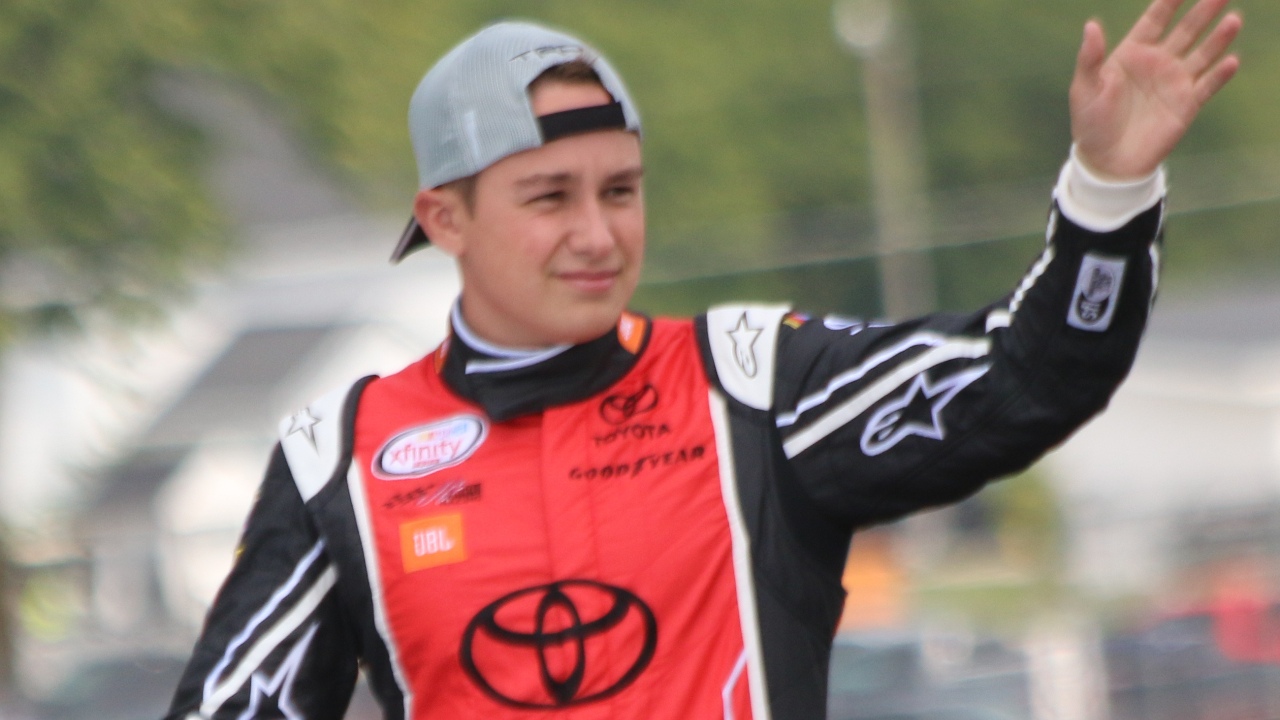
Bell’s résumé in those years explains why Larson treated that event as unfinished business. Christopher Bell built his reputation in open-wheel dirt cars, stacking wins in marquee events such as the Turkey Night Grand Prix and turning himself into the standard that others, including Larson, had to measure against. Reporting on Bell’s background notes that he began his racing career in dirt machinery and rose through the midget and sprint car ranks before becoming a full-time NASCAR driver, with images of Bell at Las Vegas underscoring how far that dirt foundation has carried him. When both drivers later arrived in the NASCAR Cup Series, they did so not as anonymous rookies but as established dirt stars whose rivalry was already baked into the expectations of fans who had watched them trade blows indoors every winter.
Chili Bowl Nationals: the rivalry’s pressure cooker
The Chili Bowl has always been more than another date on the calendar for these two, and that is where their tension is most visible. For years, the event in Oklahoma functioned as the one place where Larson and Bell could settle scores without the noise of stock car politics, just raw talent in tiny, twitchy midgets on a tight indoor oval. Coverage of their careers notes that for much of their rise, the Chili Bowl Nationals in Bell’s home state was the only race that truly mattered to both of them in the same way, a single week where bragging rights on dirt could outweigh anything that happened on asphalt. That shared obsession turned every heat race, every restart, into a referendum on who really owned the dirt crown.
By the time both were established NASCAR names, the Chili Bowl had become a recurring chapter in a longer story rather than a one-off showdown. Reports on their rivalry describe how Larson and Bell kept bringing their Cup Series star power back to the Lucas Oil Chili Bowl Nationals, using the event to renew a battle that had started long before they were household names. One detailed look at their dynamic framed the question directly, asking whether the Christopher Bell and Kyle Larson rivalry was real as they prepared to bring it back to the Lucas Oil Chili Bowl Nationals, and pointed out that prior to the 2021 racing season, Larson had already used the event to claim his second straight win. That kind of streak, achieved in the same arena where Bell had once been the dominant force, only intensified the sense that each Chili Bowl appearance was another chance to tilt the balance of power.
Public jabs and private pride
What once felt like a quiet, almost respectful competition has become more openly sharp, especially when microphones are nearby. When Kyle Larson returned to the Chili Bowl after a three-year absence and won his third Golden Driller, he did not treat it as just another trophy. Reporting on that victory notes that Larson, after taking the win, made pointed comments about the level of competition and the significance of his return, remarks that were widely interpreted as a message aimed squarely at Christopher Bell. The tone was not outright hostile, but it carried the edge of a driver who believed he had reclaimed something that had been his all along.
Christopher Bell did not let those comments pass without response. In the same coverage, Bell’s reaction was framed as a clear rebuttal, with the Joe Gibbs Racing driver pushing back on Larson’s narrative and emphasizing his own path through the field from deeper in the pack, including a charge from 12th place. That exchange crystallized what many in the dirt and NASCAR communities had sensed for years: this is not just a friendly rivalry built on mutual admiration, it is a contest of pride where each driver is acutely aware of how the other is perceived. When Larson and Bell both speak so directly about their performances at the same event, they are not only talking to fans, they are talking to each other.
NASCAR spotlight, dirt-track stakes
Their rivalry has only grown more layered as both have become central figures in the NASCAR Cup Series. The stock car schedule may be the main stage, but for Larson and Bell, the racing season never really ends, it just shifts surfaces. One recent look at their off-season habits noted that even after The NASCAR Cup Series season wrapped, Larson and Bell were already focused on the next Chili Bowl run, treating the indoor midget race as a continuation of the same competitive arc. That continuity means every Cup race, every playoff battle, is now colored by what happens when they strap back into midgets on dirt, and vice versa.
The cross-pollination between disciplines is part of what makes this rivalry so compelling. Reports on their upcoming schedules highlight that Kyle Larson and Christopher Bell are leading the list of NASCAR names committed to the 2026 Chili Bowl Nationals, reinforcing that neither is backing away from the dirt arena that helped define them. One preview of the event emphasized that Larson and Bell headline a field of 68 entries, a detail that underscores how their presence elevates the entire week. When two of NASCAR’s most versatile drivers keep returning to the same dirt battleground, it signals that the stakes there are not secondary at all. For them, the Chili Bowl is as much a measure of greatness as any Cup Series trophy.
Why the next chapter matters
As they head toward another Chili Bowl showdown, the rivalry between Larson and Bell feels less like a side story and more like one of the defining threads of modern American motorsport. Both have already proven they can win at the highest levels, yet each new race together still carries the weight of unfinished business. Coverage of their recent Chili Bowl clash, where Kyle Larson won his third title after a three-year absence and Christopher Bell responded from deeper in the field, shows how even a single night indoors can reset the narrative. Every time one of them leaves Tulsa with the Golden Driller, the other is left to answer on the next track, whether that is a dirt bullring or a 1.5-mile NASCAR oval.
From my vantage point, what makes this rivalry so potent is that it is built on overlapping ambitions rather than opposing styles. Both Larson and Bell want to be known as the most complete driver of their generation, the one who can win in anything, anywhere. Their shared history at the Chili Bowl Nationals in Oklahoma, their parallel climbs through dirt ranks into the NASCAR Cup Series, and their recent public back-and-forth after Larson’s third Chili Bowl win all point to a contest that is far from settled. With Kyle Larson and Christopher Bell again leading the NASCAR contingent into the 2026 Chili Bowl Nationals and continuing to anchor top-tier Cup rides, every lap they run against each other will feel like another piece of evidence in a debate that shows no sign of cooling.