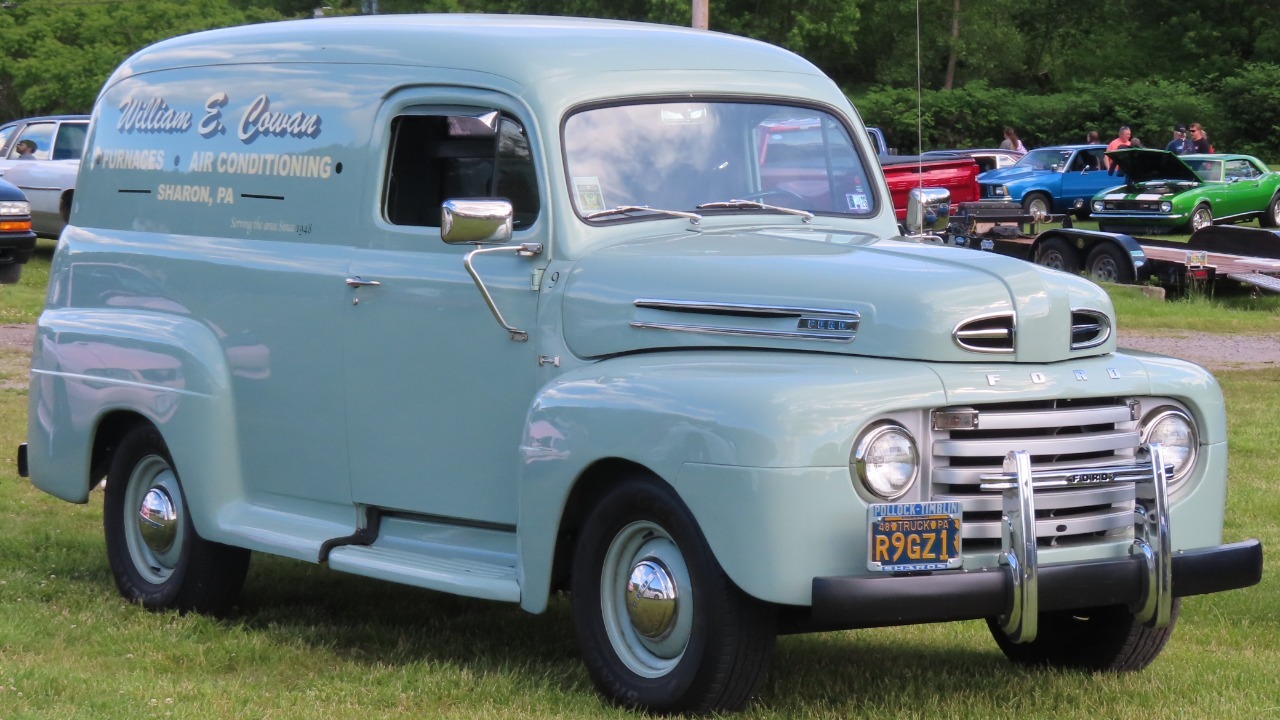
Some of the biggest moments in automotive history come from a single decision that reshapes an entire industry. For Ford, that moment arrived in 1948 with the introduction of the F-Series. Instead of adapting passenger cars into work trucks, Ford created a pickup lineup engineered specifically for hauling, towing, and commercial use. That decision established a new standard and permanently changed the pickup market.
Building a Truck From the Ground Up
Before the late 1940s, many pickups shared significant components with passenger cars, limiting their capability and durability. Ford recognized that truck buyers had different priorities than car owners. Farmers, contractors, and businesses needed vehicles designed to carry heavy loads and withstand demanding conditions every day.
The answer was the 1948 Ford F-Series, known as the “Bonus-Built” lineup. Rather than producing a one-size-fits-all truck, Ford introduced multiple models with varying payload capacities, stronger frames, improved suspensions, and purpose-built engineering tailored to different jobs.
This marked a major shift in truck development. Ford treated pickups as dedicated work vehicles instead of modified automobiles.
That decision laid the foundation for the modern pickup truck.
Giving Buyers More Choices
Another revolutionary aspect of the F-Series was its broad range of configurations. Customers could choose models suited for light-duty transportation, commercial hauling, or heavy industrial work. This flexibility allowed businesses and individuals to purchase trucks that closely matched their specific needs.
Ford also continued improving comfort alongside capability. Larger cabs, better seating, improved visibility, and more refined controls made the trucks easier to operate during long workdays. Drivers no longer had to sacrifice comfort to gain durability.
This customer-focused strategy expanded the appeal of pickup trucks beyond farms and construction sites. More families and small business owners began considering pickups for everyday transportation.
Competitors soon realized they needed to offer similar variety to remain competitive.
Continuous Innovation Kept Ford Ahead
Ford never treated the F-Series as a finished product. Over the decades, the company introduced stronger engines, improved automatic transmissions, better towing technology, and more advanced safety features. Innovations such as Twin I-Beam suspension, aluminum body construction on later generations, and advanced towing assistance kept the F-Series at the forefront of the market.
Each improvement reflected Ford’s commitment to understanding how customers actually used their trucks. Whether towing trailers, transporting equipment, or serving as daily transportation, the F-Series continued evolving to meet changing expectations.
This consistent investment helped Ford build long-term customer loyalty. Buyers came to trust the F-Series for both reliability and capability.
The company’s willingness to innovate ensured that its trucks remained competitive through changing markets and technologies.
A Decision That Still Shapes the Pickup Industry
Ford’s decision to develop the F-Series as a purpose-built truck family did more than create a successful product—it redefined the entire pickup segment. Competitors eventually adopted similar strategies, offering specialized models, expanded cab configurations, and increasingly capable work trucks inspired by changing customer demands.
Today, pickup trucks are among the most versatile vehicles on the road, serving as work machines, family vehicles, and recreational haulers. Much of that evolution can be traced back to Ford’s decision to build trucks specifically for truck buyers rather than adapting passenger cars.
The F-Series has remained one of the best-selling vehicle lineups for decades because it continues following the philosophy established in 1948.
That single decision transformed the pickup market forever, setting a standard that continues to influence every major truck manufacturer today.
More from Fast Lane Only
- Unboxing the WWII Jeep in a Crate
- 15 rare Chevys collectors are quietly buying
- 10 underrated V8s still worth hunting down
- Police notice this before you even roll window down
*Research for this article included AI assistance, with all final content reviewed by human editors