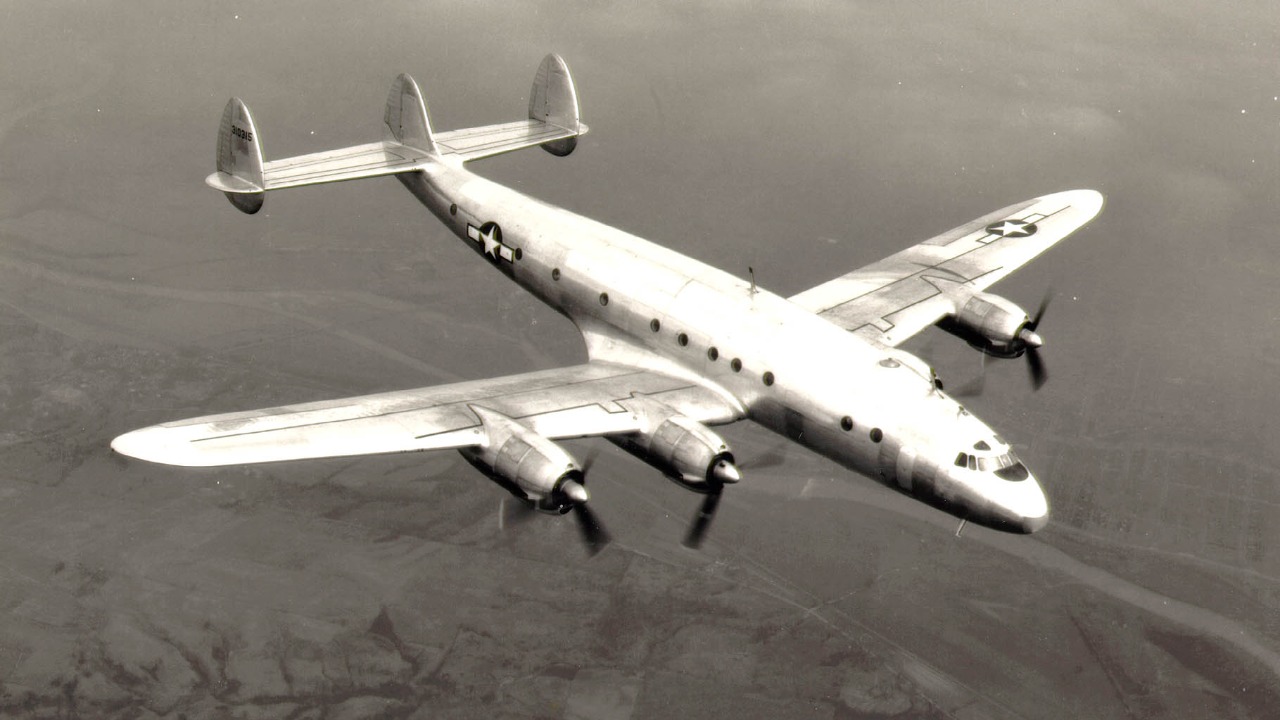
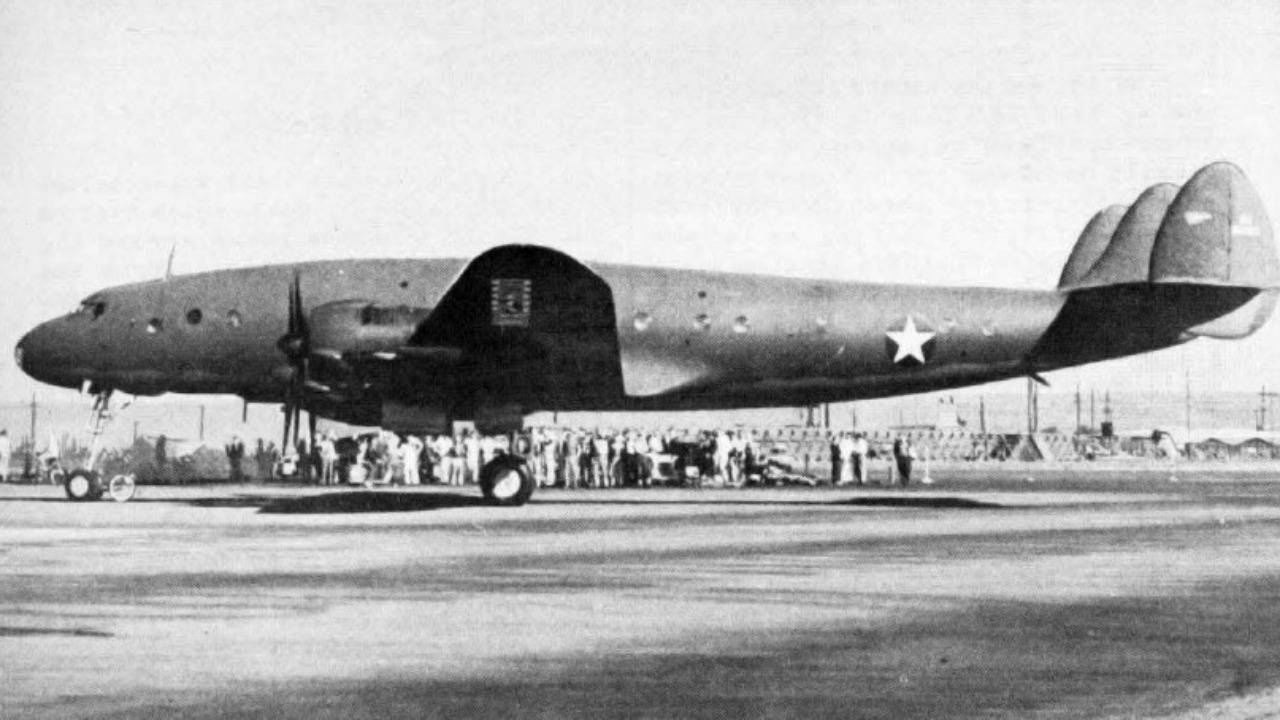
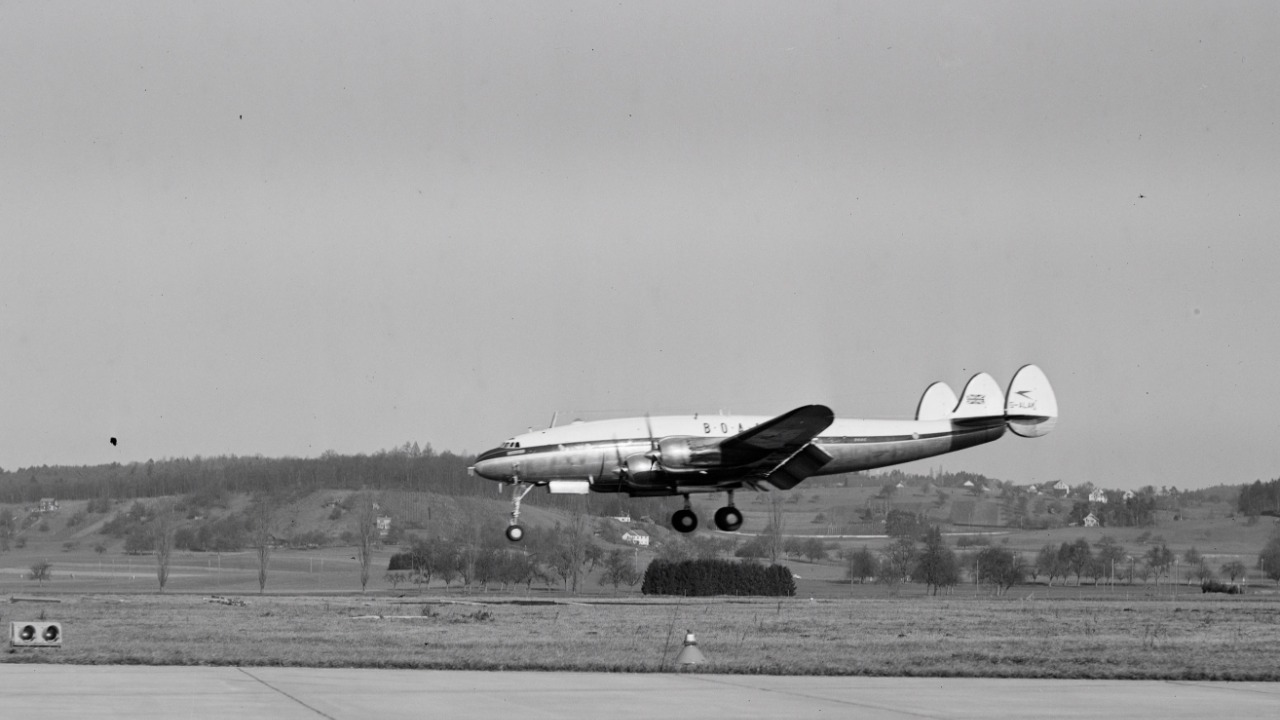
The Lockheed Constellation, often affectionately dubbed the “Queen of the Skies,” is an aircraft that left an indelible mark on aviation history. Known for its distinctive triple-tail design and dolphin-shaped fuselage, the Constellation was not just a technological marvel of its time but also a symbol of luxury and innovation in air travel. Its story is a fascinating journey through the design, operational history, and lasting legacy that continues to inspire aviation enthusiasts today.
The Birth of a Legend
Image Credit: SDASM Archives – Public domain/Wiki Commons
Design and Development
The design and development of the Lockheed Constellation were shaped by a combination of visionary engineering and the influential presence of Howard Hughes. Lockheed’s engineers, led by the renowned Clarence “Kelly” Johnson, embarked on crafting an aircraft that would revolutionize air travel. Hughes, as a major investor in TWA, played a crucial role in pushing for an aircraft that prioritized speed, range, and passenger comfort. The Constellation’s sleek design, characterized by its triple-tail and dolphin-shaped fuselage, was a product of advanced aerodynamic principles and cutting-edge technology.
Initially conceived as a military transport, the Constellation quickly transitioned into a civilian airliner that set new standards in the aviation industry. Its development was marked by rigorous testing and innovation, resulting in a design that was not only functional but also aesthetically pleasing. The collaborative efforts of Lockheed and Hughes ensured that the Constellation would be a formidable presence in the skies.
First Flight and Early Models
The maiden flight of the Lockheed Constellation took place on January 9, 1943, marking the beginning of an illustrious journey for the aircraft. Early models, including the L-049, were introduced into commercial service shortly after World War II. These initial versions were equipped with state-of-the-art features that made them appealing to airlines eager to offer passengers a new level of comfort and efficiency.
The first commercial flight occurred in 1945, and airlines like TWA and Pan Am quickly adopted the Constellation for transcontinental and transatlantic routes. Its ability to fly higher and faster than its contemporaries made it a game-changer in the industry. The Constellation’s entry into service marked a new era in air travel, where speed and luxury became accessible to a broader audience.
Technological Innovations
Image Credit: Aldo Bidini – GFDL 1.2/Wiki Commons
Advanced Aerodynamics
The Lockheed Constellation’s design was a testament to advanced aerodynamics and engineering prowess. Its distinctive triple-tail configuration was not just an aesthetic choice; it provided improved stability and control, allowing the aircraft to navigate through varying weather conditions with ease. The pressurized cabin, a novel feature at the time, enabled the Constellation to fly at higher altitudes, offering passengers a smoother and more comfortable journey.
This pressurization was a significant technological leap that set the Constellation apart from its competitors. It allowed the aircraft to maintain cabin pressure equivalent to 8,000 feet, even when cruising at altitudes above 20,000 feet, reducing the effects of altitude sickness and making long-haul flights more bearable for passengers.
Propulsion and Performance
At the heart of the Constellation’s performance were the Wright R-3350 engines, which powered it to achieve unprecedented speed and range for its era. These radial engines were designed to provide the necessary thrust to cover long distances efficiently, making the Constellation one of the fastest propeller-driven airliners of its time. The aircraft’s ability to cross the Atlantic non-stop was a remarkable achievement that expanded the possibilities of global air travel.
The combination of aerodynamic design and powerful propulsion allowed the Constellation to set numerous speed records and become a preferred choice for airlines looking to offer swift and reliable service. Its performance capabilities were a key factor in its widespread adoption and enduring legacy in the aviation industry.
The Constellation in Commercial Aviation
Image Credit: USAF – Public domain/Wiki Commons
Luxury and Comfort
The Lockheed Constellation redefined standards of luxury and comfort in commercial aviation. Airlines outfitted these aircraft with plush interiors, complete with spacious seating and elegant finishes. The Constellation’s cabin design was focused on passenger comfort, offering amenities that were considered opulent at the time. Features such as reclining seats, gourmet meals, and attentive service made flying in a Constellation an experience to remember.
Passengers enjoyed a level of comfort that was previously reserved for ocean liners, and the aircraft quickly became a favorite among those who could afford the premium service. The Constellation set a benchmark for in-flight luxury that influenced the design of future airliners and elevated the expectations of travelers around the world.
Global Reach and Impact
The introduction of the Constellation into commercial service had a profound impact on global air travel routes. Airlines were able to expand their networks and offer non-stop flights to distant destinations, bringing the world closer together. The aircraft’s range and performance capabilities allowed airlines to establish new routes that were previously considered impractical, opening up new markets and opportunities for international travel.
The Constellation played a pivotal role in the golden age of aviation, when air travel became increasingly accessible and popular. Its influence on the airline industry was significant, shaping the way airlines operated and setting the stage for the modern era of commercial aviation.
Military Contributions
Image Credit: USN – Public domain/Wiki Commons
Role in World War II
During World War II, the Lockheed Constellation was adapted for military use, serving as a transport aircraft under the designation C-69. Its spacious interior and robust performance made it ideal for transporting troops and cargo across long distances. The Constellation’s role in wartime logistics was crucial, providing the Allies with a reliable means of moving personnel and supplies.
The aircraft’s military adaptations demonstrated its versatility and capability, and its contributions during the war were a testament to its engineering excellence. The experience gained from its military service informed subsequent civilian models, enhancing their design and functionality.
Cold War Era and Beyond
In the years following World War II, the Constellation continued to serve in various military capacities. The EC-121 Warning Star, a military variant of the Constellation, played a strategic role during the Cold War. Equipped with advanced radar and electronic surveillance equipment, the EC-121 was used for reconnaissance missions and early-warning detection, underscoring the aircraft’s adaptability and importance in military operations.
The continued use of military variants of the Constellation into the Cold War era highlighted its enduring value and technological adaptability. Its service across different military roles cemented its status as a reliable and versatile aircraft, capable of meeting the demands of both commercial and military aviation.
Legacy and Influence
Image Credit: Swissair, Fotograf – CC BY-SA 4.0/Wiki Commons
Preserving the Queen
Efforts to preserve the Lockheed Constellation have been undertaken by aviation museums and enthusiasts around the world. Several surviving aircraft have been restored and are on display as museum pieces, allowing new generations to appreciate their historical significance. Organizations and individuals dedicated to aviation history have worked tirelessly to maintain these aircraft as flying exhibits, celebrating the Constellation’s enduring legacy.
The preservation of the Constellation is a tribute to its impact on aviation and its role in shaping the industry’s evolution. These efforts ensure that the “Queen of the Skies” continues to inspire and educate those who are passionate about aviation history and innovation.
Impact on Future Aircraft Design
The influence of the Lockheed Constellation on subsequent generations of aircraft design is undeniable. Its innovations in aerodynamics, cabin pressurization, and performance set new benchmarks for the industry. Future airliners incorporated many of the Constellation’s groundbreaking features, building upon its legacy of innovation and excellence.
The Constellation’s enduring legacy as a symbol of aviation innovation is reflected in the design principles of modern airliners. Its contributions to the development of commercial aviation continue to be recognized and celebrated, ensuring its place in the annals of aviation history.
Cultural and Historical Significance
Image Credit: Midway Airport (Pat B.) – CC BY 2.0/Wiki Commons
Iconic Status in Media and Pop Culture
The Lockheed Constellation has achieved iconic status in media and pop culture, appearing in numerous films, literature, and historical accounts. Its distinctive design and association with the golden age of aviation have made it a favorite subject for filmmakers and authors alike. The Constellation’s presence in popular culture underscores its significance as a cultural icon and a symbol of the aspirational spirit of air travel.
From its appearances in classic films to its portrayal in aviation literature, the Constellation continues to captivate audiences and inspire a sense of wonder and nostalgia for an era when air travel was a luxurious and exciting experience.
Remembering the Pioneers
The legacy of the Lockheed Constellation is also a tribute to the pilots, engineers, and airlines that contributed to its storied past. These pioneers of aviation played a crucial role in the development and success of the Constellation, pushing the boundaries of what was possible and setting new standards for the industry.
By remembering and honoring their contributions, we celebrate the spirit of innovation and determination that defined the era of the Constellation. Their achievements continue to inspire future generations of aviators and engineers, ensuring that the “Queen of the Skies” will always hold a special place in the history of aviation.
Bobby Clark is the founder and editor of Fast Lane Only, covering performance cars, automotive news, recalls, classic vehicles, consumer automotive topics, and enthusiast culture. His work focuses on making automotive news engaging, accessible, and informative for both enthusiasts and everyday drivers.
Welcome!
Welcome to Fast Lane Only—We are an independent automotive publication covering performance cars, automotive news, recalls, classic vehicles, industry trends, and enthusiast culture.
From the rarest collector’s cars to the high-performance machines turning heads today, we bring you stories, specs, and insider looks at the rides that matter. If it’s fast, legendary, or owned by someone famous, you’ll find it here. Buckle up and stay in the fast lane!