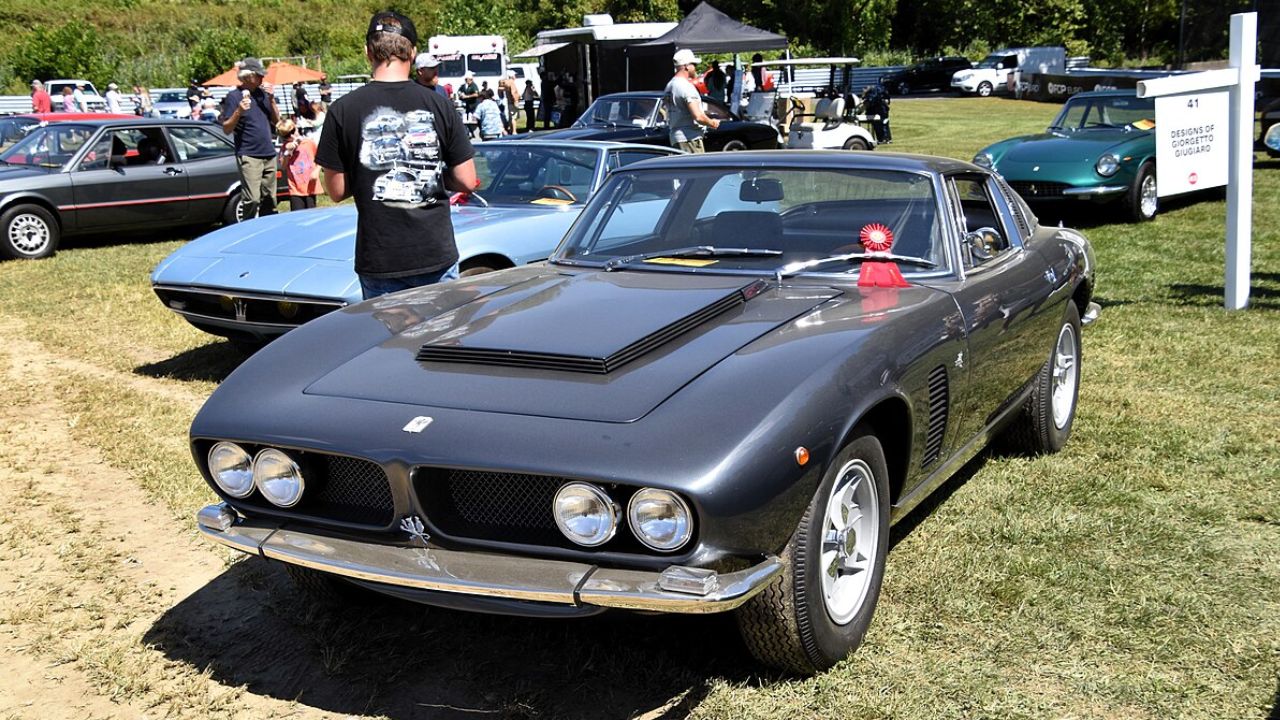
Restoring a 1970 Iso Grifo is rarely a simple “order parts and bolt them on” job. Even though the car uses a widely supported American V8, many of the pieces that make it an Iso—its Italian bodywork, trim, interior hardware, and low-volume running gear—can take real detective work to source or reproduce. Owners and shops tend to spend as much time researching as wrenching, especially if they’re aiming for a period-correct finish.
Why the Grifo is a parts puzzle in the first place
Iso built the Grifo in limited numbers, and production details evolved over the model’s run. That means two cars that look similar at a glance can have meaningful differences in fittings, trim, lighting, and interior components depending on build date and specification. When you add decades of prior repairs—often done with whatever could be made to fit—it’s common to discover a mix of original parts and improvised substitutes.
The Grifo’s international DNA also complicates things. The drivetrain is often familiar to American-car specialists, while the body and cabin reflect Italian coachbuilding practices of the era, with suppliers and part families that don’t always map neatly onto modern catalogs. The result is a restoration that rewards careful documentation, photos, and a willingness to compare what’s on the car to period references.
Body and exterior trim: low-volume meets hand-finished
Exterior trim is one of the first areas where parts challenges show up. Brightwork, badges, and specific moldings were produced in small batches, and surviving pieces may be pitted, bent, or previously reworked. Rechroming is often possible, but missing components can require fabrication based on an original sample or detailed measurements.
Body panels bring their own hurdles. The Grifo’s styling and construction methods weren’t designed around easy panel interchangeability, and prior accident repairs can hide under thick filler or old paint. Restorers often spend significant time aligning gaps, repairing corrosion where it appears, and ensuring that replacements or repairs match the car’s original contours rather than a “close enough” approximation.
Glass, seals, and weatherstripping: the quiet time sink
Even when the glass itself is serviceable, the rubber and felt that seal a Grifo against wind and water are usually long past their prime. Getting the right profiles for door seals, window channels, and trunk weatherstripping can be more difficult than expected, since universal seals may not fit the openings correctly or may change how the windows sit in their frames. Small deviations here can lead to noisy rides, water leaks, or stubborn doors that won’t close cleanly.
Many restorations end up involving careful test-fitting and trimming of seal material, sometimes with help from specialists who can match cross-sections to original-style profiles. It’s not glamorous work, but it can make the difference between a car that looks finished and one that feels finished on the road.
Interior components: beautiful, specific, and hard to replace
The Grifo’s cabin is one of its signature features, but it’s also where originality can be hardest to preserve. Items like switchgear, knobs, interior handles, vents, and small hardware can be difficult to source in correct form, especially if earlier owners swapped parts during routine repairs. Even when similar components exist across other Italian cars of the period, the exact finish or detailing may differ.
Upholstery and trim work adds another layer. Leather, stitching patterns, and seat shapes can often be reconstructed by a skilled trimmer, but only if there’s enough reference to avoid “generic Italian GT” results. When the original materials are missing or badly modified, restorers may lean on period photos, surviving untouched examples, and marque specialists to get the interior’s look and feel back to where it belongs.
Mechanical parts: the V8 is the easy part—until it isn’t
One reason enthusiasts are drawn to Iso is the use of an American V8, which generally means strong parts availability for core engine components compared with many all-Italian exotics. That said, a restoration doesn’t stop at pistons and gaskets. The car’s cooling system layout, accessory brackets, mounts, and exhaust routing can involve Iso-specific pieces that aren’t sitting on a shelf at the local parts store.
On top of that, cars that have been driven and serviced for decades may have accumulated non-original carburetion, ignition, or accessory setups. Sorting out what’s correct, what’s reliable, and what integrates cleanly with the rest of the car can take time—especially when you’re trying to balance period authenticity with modern drivability. The best restorations document these decisions so a future caretaker understands exactly what was changed and why.
Strategies restorers use: documentation, networks, and careful reproduction
Successful Grifo restorations usually start with obsessive documentation: photos of every bracket and fastener, notes on finishes, and a plan for what can be restored versus what must be remade. Owners also benefit from connecting with marque clubs, specialist workshops, and other Grifo caretakers, since shared knowledge often reveals interchange options, correct details, or reliable sources for hard-to-find pieces. It’s the kind of project where a single clear reference photo can save weeks of trial and error.
When parts truly can’t be found, careful reproduction is often the most honest route. That can mean machining small hardware, rebuilding assemblies using refurbishable cores, or fabricating trim while matching original dimensions and finishes as closely as possible. Done well, these solutions keep the car coherent—preserving the Grifo’s character while making it usable, maintainable, and ready for another generation of enthusiasts.