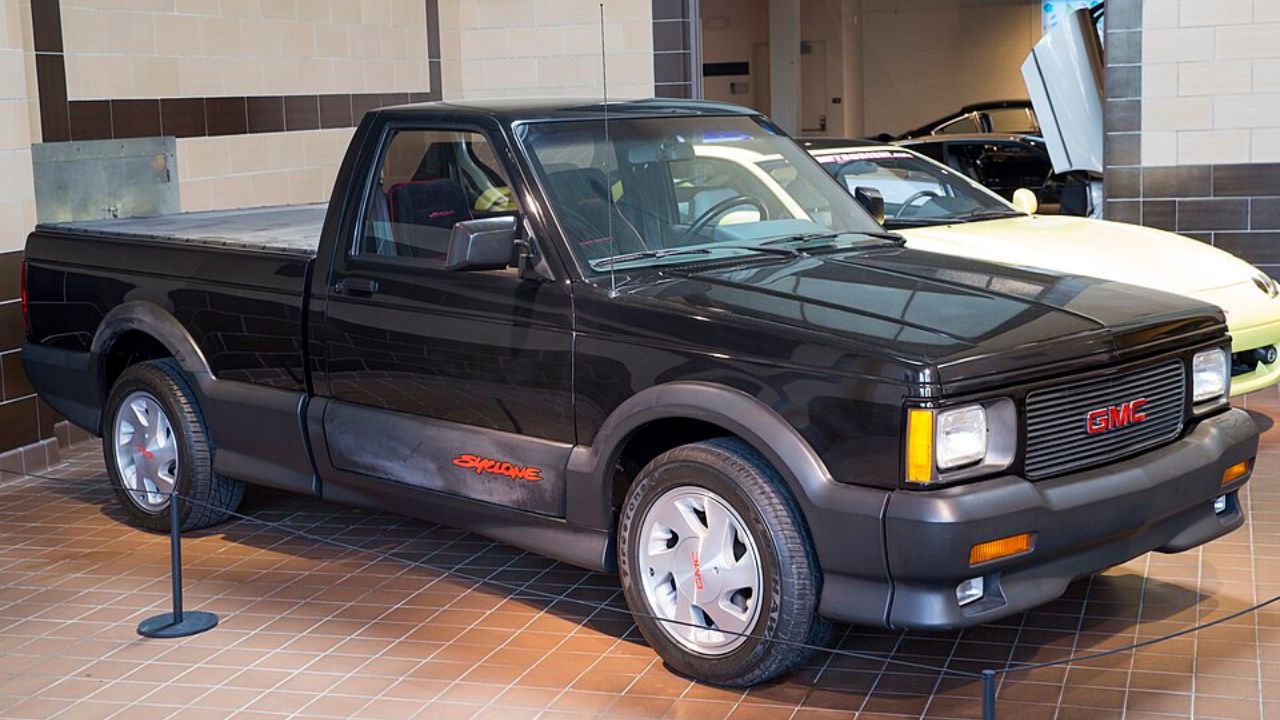
Back when the GMC Syclone was just a quirky, fast little pickup, most owners treated it like a blank canvas. A turbo V6 and all-wheel drive practically begged for more boost, a freer-flowing exhaust, and a few hard launches at the local strip. Decades later, plenty of 1991 Syclone owners have realized something surprising: the parts they removed, modified, or “improved” can matter as much as the truck itself when it comes time to value it.
Why the Syclone’s factory recipe matters so much
The Syclone arrived as a limited-production performance truck built around a very specific combination: a turbocharged 4.3-liter V6, a 4L60 automatic, and a full-time AWD system derived from the S-10 Blazer/Jimmy family. What made it special wasn’t any single component—it was how GMC and its partners tuned the whole package to work together. When a vehicle is famous for being unusually quick in stock form, collectors tend to care a lot about whether it still behaves like the truck people read about in the early ’90s.
There’s also the reality that many of these trucks were driven hard early on. Stock examples that still feel tight—factory-like shifts, predictable boost behavior, no odd driveline noises—stand out because so many have been altered or stressed. Originality becomes a shortcut for “unmessed-with,” and that perception can carry real weight in enthusiast circles.
The mod culture that made sense in the ’90s
Period-correct modifications were almost inevitable. The Syclone shared plenty of DNA with other GM turbo and TBI-era platforms, and the aftermarket quickly offered chips, boost controllers, intercoolers, fuel system tweaks, and exhaust parts. For owners in the ’90s and early 2000s, it was normal to chase quicker quarter-mile times, especially because the truck already had a reputation for embarrassing muscle cars from a stoplight.
Some of the most common changes were also the easiest to justify: increasing boost, adjusting fueling, improving intake and exhaust flow, and upgrading tires for traction. Those upgrades often delivered results, but they also blurred the line between “tasteful” and “hard to undo.” The deeper the changes went—wiring, engine management, nonstock turbo setups—the harder it became to return the truck to the way it left the factory.
What “original” actually means to buyers now
Originality isn’t just an unmodified engine bay, and it isn’t always an all-or-nothing scorecard. Many buyers look for factory paint in correct colors, stock body panels, original VIN tags and labels, and an interior that still matches the truck’s era. They also notice details like correct wheels, correct ride height, and whether the bed and tailgate show signs of having been swapped or repainted.
Documentation can matter as much as parts. A paper trail—window sticker, dealer paperwork, service records, and a clear ownership history—helps support the idea that the truck hasn’t been through a string of quick flips and half-finished projects. Even when tasteful modifications are present, having the original parts included (or at least knowing what was changed) can reduce buyer anxiety.
How upgrades can accidentally reduce long-term value
Performance mods can be a red flag when they suggest the truck has lived a hard life. A higher-boost setup and aggressive tuning may be fun, but they can also imply added stress on the transmission, transfer case, and AWD components—parts that aren’t always cheap or easy to source in correct form. Even if everything is healthy today, a buyer may price in the risk of unknown tuning decisions made years ago.
Cosmetic changes can have the same effect. Repaints in non-original colors, shaved trim, custom interiors, or aftermarket gauges might be well executed, but they can erase the period feel that collectors want. And once the factory stuff is gone, the cost and effort to bring it back—correct decals, correct finishes, correct small hardware—adds up quickly.
Smart ways owners are balancing preservation and enjoyment
Some owners have shifted to “reversible” modifications, keeping the truck fun without burning bridges for the future. That might mean bolt-on parts that don’t require cutting or permanent wiring changes, and storing original components carefully. A well-kept folder of receipts, a list of changes, and photos of the truck before work was done can also make a modified Syclone feel far less risky to the next caretaker.
Maintenance choices have become part of the originality conversation, too. Using correct-style hoses, clamps, and replacement parts where feasible helps preserve the stock look, even if some components have been refreshed. Enthusiasts also tend to respect upgrades that improve safety or reliability without changing the character—things like quality tires, careful brake maintenance, and fixing aging rubber and fluids before chasing more power.
What to check if you’re shopping for one today
When you’re evaluating a Syclone, it helps to separate “modified” from “modified well.” Look for a clean, coherent engine bay with tidy routing, consistent hardware, and no hacked wiring. Ask what tuning is on the truck, who did it, and whether it was set up with supporting fuel and cooling considerations rather than just cranking up boost.
Also pay attention to the pieces that are easy to overlook: interior condition, correct-looking exterior trim, and whether the truck retains the overall stance and vibe it’s known for. If the seller has original parts, that’s a meaningful plus—even if the truck isn’t 100% stock today. Above all, the best examples usually tell a consistent story, where the condition, documentation, and modifications (if any) all line up.
The Syclone is one of those vehicles that feels like it was built for tinkering, yet age has turned it into something collectors want to experience as close to factory as possible. That doesn’t mean upgrades are “wrong,” but it does mean the market often rewards trucks that still look, drive, and present like the early ’90s icon people remember. For many owners, the new challenge isn’t making it faster—it’s deciding how much of its original personality is worth preserving.