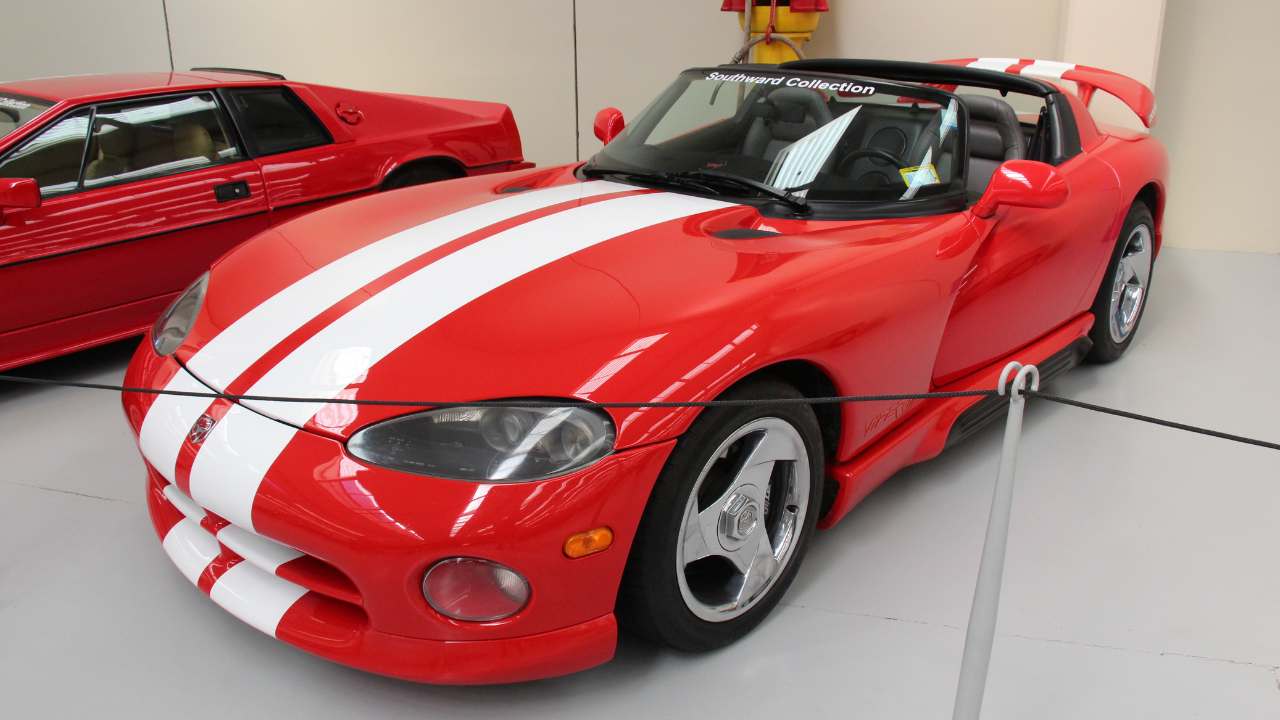
The earliest Dodge Vipers have a reputation for being as raw and straightforward as a modern production car gets. That factory simplicity is a big part of the appeal, but it also sets expectations that can surprise first-time owners. The 1992 model year in particular delivers an unforgettable driving experience, yet it does so by leaving out a lot of the comfort, refinement, and even some convenience features people subconsciously assume will be there.
What “factory simplicity” really meant in 1992
The original Viper RT/10 was intentionally engineered to feel like a modern take on a big-displacement roadster, not a luxury sports car. It launched with a massive V10, a manual transmission, and a minimalistic cockpit focused on the basics. Early cars are widely known for having side curtains instead of roll-down windows and a removable soft top that’s more about occasional use than grand-touring practicality.
That pared-back approach reduced weight and complexity, but it also made everyday tasks feel different. Even getting in and out can be an adjustment, thanks to the wide sills and the way the car’s structure is packaged around the drivetrain. Owners tend to love the honesty of it all—right up until weather, heat, or errands show up.
The comfort trade-offs owners notice first
The most immediate compromises are the ones you feel on a normal drive: heat, noise, and exposure. Early Vipers are commonly documented as running hot in and around the cabin, and the side-exit exhaust layout contributes to the sensation—especially near the sills. Add the open-roadster layout, and you get a car that can feel intense even at moderate speeds.
The soft top and side curtains are also part of the learning curve. They can work, but they’re not as quick or as sealing as a conventional convertible roof and glass windows. Many owners quickly decide there’s “Viper weather” and “everything else,” planning drives around conditions instead of expecting the car to adapt.
Driving dynamics: thrilling, but not forgiving
The early Viper’s character comes from big torque, a manual gearbox, and limited electronic intervention. On a 1992 car you’re not leaning on the kinds of stability systems that became common later, so smooth inputs and respect for traction matter. That’s part of why the car feels so alive, but it’s also why owners often describe a period of acclimation before they’re truly comfortable pushing it.
Steering, brakes, and chassis feedback are central to the experience, and they can feel very different from modern performance cars. The Viper will tell you what it’s doing, but it expects you to listen and respond. For enthusiasts that’s the point; for someone expecting modern safety nets, it can be a surprise that “simple” also means “all on you.”
Build-era quirks and the realities of early-production ownership
First-year models of any performance car tend to come with small quirks, and the 1992 Viper is no exception. Owners commonly talk about the realities of low-volume, early-run assembly: minor fit-and-finish inconsistencies, components that feel more hand-built than mass-produced, and occasional idiosyncrasies that aren’t dealbreakers but do require patience. None of that is unique to Dodge—it’s typical of halo cars launched with urgency and enthusiasm.
Another practical aspect is parts and service knowledge. Many technicians are familiar with the Viper name, but not all shops are comfortable with the specifics of an early RT/10, so owners often gravitate toward specialty Viper technicians and communities. The upside is that the enthusiast network is strong, and shared experience fills in gaps that a generic service counter might not cover.
Living with the design choices: what owners do about it
Because the compromises are baked into the original formula, owners typically adapt in predictable ways. Some keep the car largely stock and simply use it as intended: fair-weather drives, weekend events, and short bursts where the rawness is a feature. Others make reversible changes that don’t rewrite the car’s identity but improve livability, like updating tires to modern equivalents, refreshing weather sealing, or addressing known heat-management nuisances with careful maintenance.
There’s also a mindset shift that happens when people buy an early Viper for the right reasons. Instead of evaluating it like a contemporary sports car, they treat it like a street-legal throwback with a warranty-era build date. When you frame it that way, the simplicity stops looking like “missing features” and starts looking like the whole point—provided you’re honest about the trade-offs.
For many 1992 Viper owners, the real lesson isn’t that the car is flawed—it’s that it’s focused. The same decisions that make it feel special also make it inconvenient, loud, and occasionally challenging. If you want a sports car that behaves like an appliance, this isn’t it; if you want a machine that feels mechanical and direct every time you turn the key, the compromises start to make a strange kind of sense.