Maryland is moving to put a hard cap on how fast some drivers can go, tying the right to get back on the road to technology that physically prevents extreme speeding. Instead of relying only on fines and suspensions, state lawmakers approved a measure that would require certain repeat offenders to install speed-limiting devices before they can legally drive again.
The policy drops into a national debate over how far governments should go in using in-car technology to change driver behavior. It targets a relatively small group of drivers who rack up serious violations, while also testing how much control the state can exert over privately owned vehicles in the name of safety.
What happened
Maryland lawmakers passed a bill that requires drivers with specific serious speeding histories to equip their vehicles with speed-limiting devices as a condition of license reinstatement. According to state-focused reporting, the measure applies to repeat offenders who have had their licenses suspended for driving far above posted limits, and it ties their return to the road to proof that a limiter has been installed on any vehicle they operate. Coverage of the law explains that the device would cap the maximum speed the car can reach, effectively preventing the type of triple-digit driving that often precedes catastrophic crashes, and that the mandate is triggered only after a defined pattern of violations is on record, not for a single ticket.
Under the new framework, a driver who has already lost a license for high-speed violations would not simply wait out a suspension and then resume driving as before. Reinstatement would instead come with conditions set by the Motor Vehicle Administration. Those conditions include a requirement that the driver pay for installation of an approved speed-limiting device, keep it active for a specified period, and comply with any verification or inspection process the state uses to confirm the limiter remains in place. Reporting on the measure notes that the device requirement targets those who have shown a pattern of ignoring speed limits and that the state intends to enforce it through both paperwork and potential spot checks.
Local coverage has framed the measure as part of a broader push to address aggressive driving in Maryland. The same reporting that describes the limiter mandate also points to a pattern of high-speed crashes on major corridors, including routes that cut through Baltimore and the Washington suburbs, where drivers have been clocked at speeds far exceeding 100 miles per hour. In that context, the bill’s sponsors argued that traditional penalties have not been enough to change behavior among a small but dangerous group of motorists, and that tying reinstatement to a physical cap on speed is a way to reduce the risk they pose to everyone else on the road. The law, as described in that reporting, passed with enough support to reach the governor’s desk and is positioned to take effect after an implementation period that will allow agencies to set technical rules.
Maryland’s move does not come out of nowhere. Other states have been exploring similar tools, often after high-profile crashes involving so-called super speeders. In Illinois, legislators have considered a proposal that would require drivers convicted of driving at least 26 miles per hour over the limit on two separate occasions within a two-year window to install speed-limiting devices on their vehicles. That Illinois measure, described in detail in coverage of repeat speeders, would bar reinstatement of a suspended license until the driver proves that a limiter has been installed and certified, with the cap set at a specific threshold above posted limits.
Broader industry and policy reporting shows that multiple states have looked at using speed limiters to rein in what they call super speeders, a term generally used for drivers who exceed limits by large margins. Coverage that surveys these efforts notes that some proposals focus on passenger vehicles, like the Maryland and Illinois approaches, while others center on commercial trucks. One such overview of state speed limiter explains that lawmakers in several jurisdictions have floated bills that would cap speeds for certain categories of drivers or vehicles, often linking the requirement to prior violations.
Maryland’s specific law, described in local reporting on new speed-limiting devices, focuses on repeat offenders with suspensions on their record. The reporting states that drivers who meet the criteria would be notified that reinstatement depends on installing a limiter, and that failure to comply could result in further penalties or an inability to regain legal driving status. The same coverage notes that the devices would be tamper resistant and that any attempt to bypass or remove them could itself be treated as a violation.
Why it matters
The Maryland policy lands at the intersection of traffic safety, technology, and personal freedom. At its core is a simple idea: a driver who has repeatedly treated speed limits as optional should no longer have the mechanical ability to reach the extreme speeds that put others at risk. The state’s approach shifts part of the enforcement burden from police officers and courts to the vehicle itself, which becomes a gatekeeper that physically prevents certain behavior.
Supporters argue that this shift is overdue. Traditional penalties like fines, points, and even temporary suspensions have not stopped a subset of drivers from returning to the road and repeating the same behavior. In the Illinois proposal, for example, lawmakers highlighted cases where drivers were cited for going more than 35 miles per hour over the limit, lost their licenses, then were later caught speeding at similar levels again. By tying reinstatement to a limiter that caps speed, they aim to cut off the possibility of that repeat pattern. Maryland’s law, as described in local reporting, follows the same logic for drivers who have already demonstrated a willingness to drive at extreme speeds.
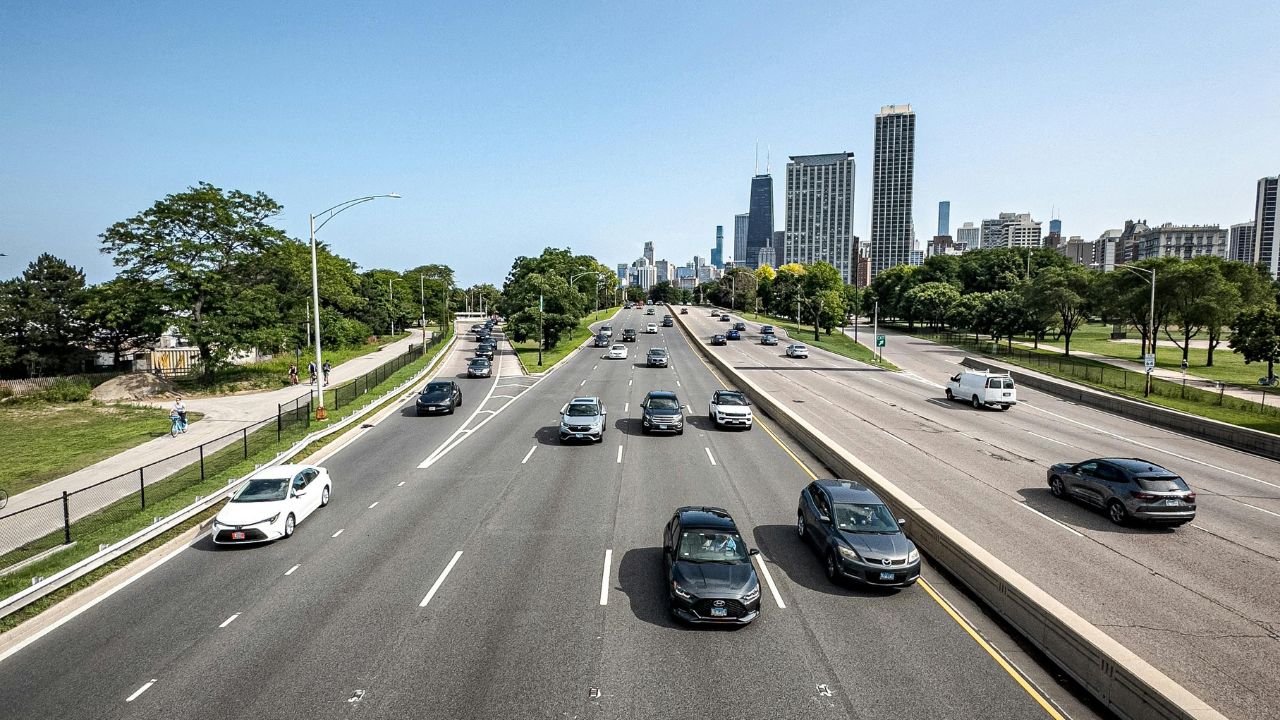
There is also a broader safety context. National crash data has consistently shown that speed is a major factor in fatal collisions. Although the Maryland reporting referenced here does not list specific statewide death counts, policymakers have repeatedly cited the link between high speeds and severe outcomes. On urban interstates and suburban arterials, where posted limits already run high, a driver who pushes 20 or 30 miles per hour beyond that can turn a survivable crash into a deadly one. By physically capping maximum speed for those with the worst records, the state is betting that even if these drivers still make mistakes, the consequences will be less severe because the kinetic energy involved will be lower.
At the same time, the policy raises questions about privacy and autonomy. A speed-limiting device does not just cap speed. Depending on the model and configuration, it can also log driving data, record attempts to exceed the cap, and transmit information for compliance checks. While the Maryland reporting focuses on the limiter function itself, experience with similar devices in other contexts, like ignition interlocks for DUI offenders, shows that data handling and oversight can become contentious. Drivers who must install the devices may worry about who can access their data and how long it is stored, even if the law does not explicitly require continuous monitoring.
The measure also touches on equity. Traffic enforcement in the United States has long displayed racial and geographic disparities, with Black and Latino drivers more likely to be stopped and cited for traffic offenses in many jurisdictions. If those same patterns hold in Maryland, the pool of drivers forced to install speed limiters could skew toward communities that already face heavier policing. The law itself is neutral on its face, applying to anyone who meets the violation criteria, but how those violations are recorded in practice will shape who ends up under the limiter mandate. Advocates for civil rights and traffic justice will likely press for data transparency to see whether the new requirement falls disproportionately on particular groups.
There is also a technical and economic angle. Installing a speed limiter is not free. Depending on the system, costs can include the hardware, professional installation, periodic inspections, and eventual removal. For a driver already struggling with fines, lost work time during a suspension, and higher insurance premiums, the added cost of a limiter could be significant. Maryland’s law, as described in local reporting, places that burden on the offender rather than on taxpayers. Supporters frame this as a fair consequence of dangerous behavior, but critics may argue that it risks pushing low-income drivers deeper into financial distress, which in turn can lead to unlicensed driving if they cannot afford compliance.
Automakers and technology companies are also watching. Many new vehicles already include advanced driver assistance systems that can read speed limit signs and warn drivers when they exceed posted limits. Some European models go further, using intelligent speed assistance that can automatically limit speed unless the driver deliberately overrides it. Maryland’s policy moves in a similar direction for a narrow group of drivers, but it could contribute to a broader shift in expectations about how cars should behave. If states begin to see speed limiters as a standard safety tool, pressure may grow on manufacturers to make such systems easier to activate or to integrate them with state enforcement programs.
From a legal perspective, the policy will test the boundaries of what states can require as a condition of driving. Courts have generally upheld ignition interlocks for DUI offenders, framing them as a reasonable safety measure tied to a privilege rather than a right. Speed limiters for repeat speeders fit a similar mold. However, challenges could arise over how the devices are calibrated, how errors are handled, and whether the state provides adequate due process for drivers who dispute the requirement. If a limiter malfunctions and prevents a driver from accelerating to avoid a hazard, for example, questions about liability and design standards will likely follow.
Maryland’s move also feeds into a national policy conversation about using targeted technology mandates instead of broad-based restrictions. Rather than lowering speed limits for everyone or deploying more automated cameras across entire regions, the state is aiming at a small group of high-risk drivers. Proponents see this as a more tailored and politically palatable approach. Opponents may worry that once the infrastructure for mandated limiters exists, it could expand to cover more categories of drivers or become a default requirement for certain vehicle types.
What to watch next
The next phase in Maryland will be implementation. Agencies must define which violations trigger the limiter requirement, how far above posted limits a driver must go, how many offenses count as repeat behavior, and over what time period those offenses are measured. The specific thresholds will determine how many drivers fall under the mandate and how targeted the policy really is. Observers will be looking for detailed guidance from the Motor Vehicle Administration and any accompanying regulations that spell out the technical standards for approved devices.
More from Fast Lane Only