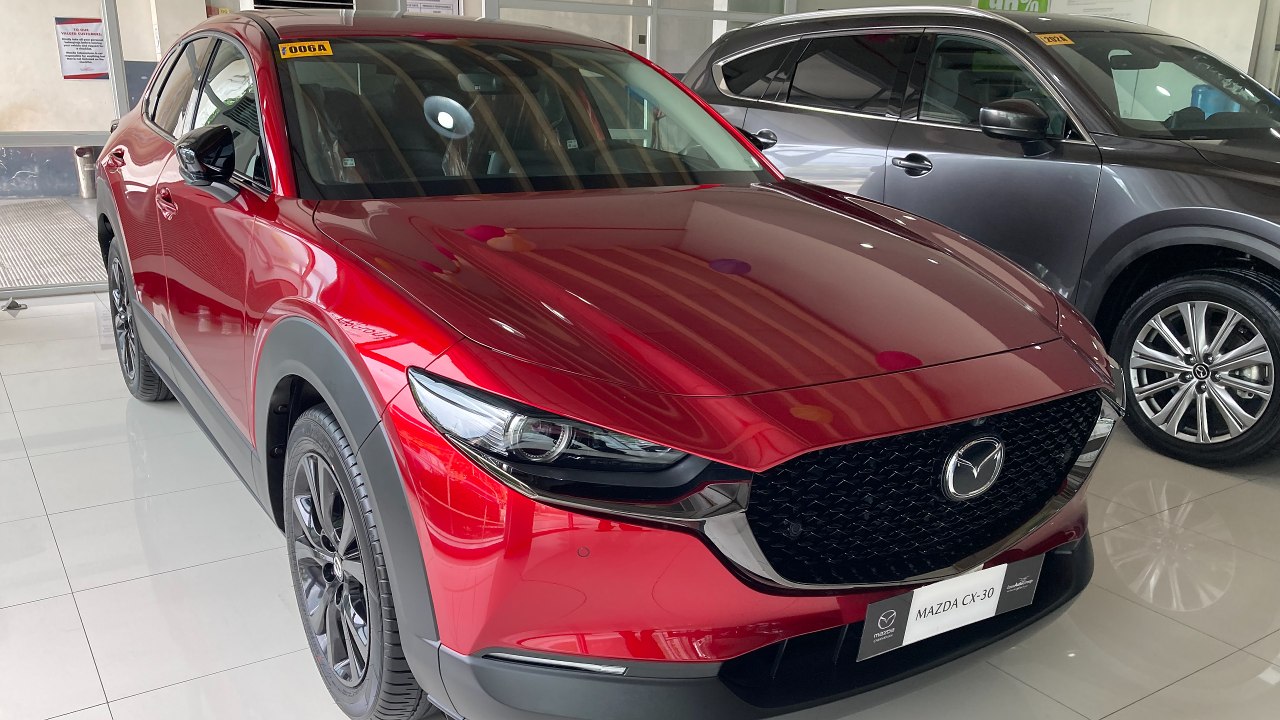
Mazda has quietly pushed back the launch of its next-generation electric vehicles, delaying its first in-house battery platform until at least 2028. The move stretches an already cautious timetable and leaves the brand relying on partnerships, hybrids, and stopgap models while rivals race to fill showrooms with dedicated EVs. I see this as a calculated gamble that Mazda can afford to arrive late, provided it arrives with the right technology and a sustainable business model.
A flagship EV platform that keeps slipping away
The core of Mazda’s delay is its long-planned dedicated electric architecture, officially called the Mazda EV-scalable architecture. The company had previously targeted the middle of the decade for the first model on this platform, then shifted expectations toward the second half of the 2020s, and has now postponed the debut again to 2028. In practical terms, that means the first truly ground-up Mazda EV, designed around batteries rather than adapted from combustion hardware, will not reach customers for at least another two full product cycles in some segments, a significant pause in a market that is moving quickly.
Executives have framed this decision as a response to fast-changing battery and software technology combined with limited internal resources. Instead of rushing an expensive platform that could be outdated within a few years, Mazda is choosing to wait, refine its Mazda EV architecture, and lean more heavily on existing alliances in the interim. Reporting on the latest postponement makes clear that the company is not abandoning its electric ambitions, but rather stretching the timeline for its own scalable base while it reassesses how to balance cost, performance, and flexibility in a segment that is becoming more complex and more expensive to engineer.
Bridging the gap with partners and stopgap EVs
In the years before its in-house platform is ready, Mazda is turning to partners to keep an electric presence in key markets. The company is already working with Changan in China, using that partner’s existing electric underpinnings to field models more quickly and at lower cost than it could manage alone. Reporting on the latest strategy shift notes that Mazda will lean more heavily on Changan platforms as it moves toward an electric future, a sign that the brand sees shared architectures as a practical bridge while it conserves capital for its own Mazda EV program.
That partnership approach extends beyond China. Mazda has signaled that it will continue to leverage broader industry collaborations for components, software, and even full vehicle programs where it makes sense, rather than trying to build every piece of the EV puzzle internally. The company has already been spotted testing a new mid-size crossover EV that is planned for a 2028 release in the United States, a model that will likely rely on existing technology rather than the delayed in-house architecture. The Japanese automaker Mazda is effectively using these interim products to maintain relevance with EV shoppers while it buys time to develop a more ambitious, scalable platform of its own.
Lean Asset Strategy and the cost of going electric
Behind the delay sits a hard financial reality that Mazda has been unusually explicit about. Under its “Lean Asset Strategy,” the company has committed to a total electrification investment of 1.5 trillion yen by 2030, a figure that sounds large until it is stacked against the budgets of much bigger global rivals. By emphasizing “lean” assets, Mazda is signaling that it will prioritize efficiency, collaboration, and careful sequencing of projects rather than a rapid, all-in EV push that could strain its balance sheet. I read the latest postponement of the Mazda EV-scalable architecture as a direct expression of that philosophy.
That caution has been reinforced by macroeconomic pressure. In statements from TOKYO, Mazda Motor has acknowledged that inflation threatens to drive up the cost of its electrification program, and has responded by pledging to keep its investment envelope steady instead of chasing rising prices with even more spending. Japanese executives have described this as a cost-saving effort, with Mazda Motor reiterating on a Tuesday in Mar that it would hold the line on its electrification budget despite those inflationary headwinds. The combination of a fixed 1.5 trillion yen commitment and rising development costs makes it easier to understand why a resource-intensive, clean-sheet EV platform has been pushed further into the future.
Hybrids, SUVs, and what Mazda thinks drivers want now
While the dedicated EV platform recedes into the distance, Mazda is not standing still in its product planning. The company is expanding its electrified SUV lineup, betting that customers in the second half of the decade will still want familiar body styles with a mix of hybrid and plug-in powertrains. In its Future Plans Reveal What It Thinks Drivers Actually Want Next, Mazda has outlined a path that includes more crossovers with electrified options, as well as a halo sports car concept that blends performance with some form of electric assistance. I interpret this as a belief that many buyers are more comfortable stepping into hybrids and plug-in hybrids before committing to full battery-electric vehicles.
That strategy is supported by external research that Mazda has been watching closely. A survey highlighted in reporting on the company’s future product mix points to rising acquisition interest heading into 2026, along with evolving views on valuation and trust across different brands. Mazda appears to be reading those signals as validation for a diversified lineup that includes efficient combustion engines, hybrids, and a limited number of EVs, rather than a rapid pivot to all-electric. By focusing on SUVs and crossovers, the company is also aligning its electrified offerings with the segments where demand and margins are strongest, which is a logical move for a manufacturer that cannot afford many missteps.
Risks of arriving late, and the bet Mazda is really making
Delaying a next-generation EV lineup until at least 2028 carries obvious risks. Competitors are already on their second or third generation of dedicated electric platforms, and by the time Mazda’s scalable architecture reaches showrooms, customer expectations for range, charging speed, software, and driver assistance will have moved on again. There is also a reputational cost: enthusiasts and early adopters have noticed the repeated postponements, with discussions among Mazda fans and EV advocates reflecting frustration that the brand keeps pushing its first in-house EV platform further out. For a company that trades heavily on engineering credibility, that perception gap could become a problem if the eventual products do not clearly leapfrog what is on sale in the late 2020s.
Yet Mazda is making a different kind of bet, one that prioritizes financial resilience and technical relevance over being first. By leaning on partners such as Changan, holding its electrification investment to 1.5 trillion yen under the Lean Asset Strategy, and filling the interim years with hybrids, plug-in models, and a handful of crossover EVs, the company is trying to thread a narrow path between overextension and obsolescence. If battery costs, charging infrastructure, and consumer demand evolve in the way Mazda’s planners expect, arriving in 2028 with a flexible, thoroughly modern Mazda EV platform could look like prudent timing rather than chronic hesitation. If the market moves faster than that, however, the brand may find that even a well-executed late entry struggles to catch up with rivals that treated electrification as a race rather than a marathon.
More from Fast Lane Only: