Buy a Challenger Hellcat with a supercharged V8 and a big price, and you expect every part of it to feel special. So it stings when a small screen inside quits on a car that has barely been driven.
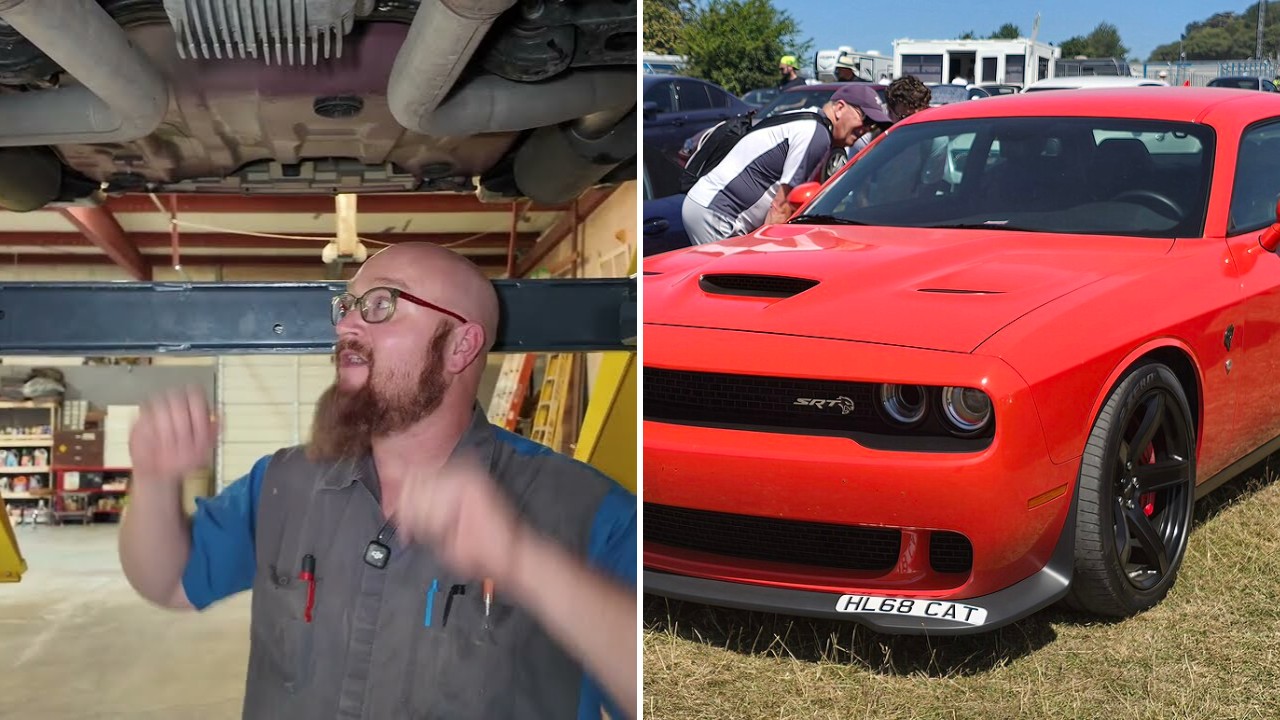
That is the situation a New Mexico mechanic who posts as @CarWizard walked through when a customer brought in a 2018 Dodge Challenger Hellcat. The car had just over 10,000 miles and looked new. Its touchscreen, though, was peeling apart.
“When your $65,000 Hellcat Challenger has the same radio as a base level bottom text Dodge Dart.”
That’s how he opened the video, and then the rest of it explains what he meant.
A Garage-Kept Challenger Hellcat With One Problem
The Car Wizard and his wife, who helps review the cars on camera, gave the Challenger the full tour. It is a dark metallic red with stripes and the Hellcat’s supercharged engine, which he describes as a 6.2-liter making 707 horsepower. The odometer read 10,071 miles. The owner had even laid towels over the seats to keep them clean.
“This only has 10,000 mi on it. That’s it.”
Meanwhile, on the lift, he found nothing to worry about. No leaks, brakes at 90% or better, no worn suspension parts, and paint marks from the factory still visible. He called the eight-speed automatic his favorite transmission ever made. Only the radio screen was a problem.
“It’s literally peeling away from itself and it’s not working very well.”
The Same Screen In 14 Models
In this case, the screen is the 8.4-inch touchscreen, and the Car Wizard says the delamination has become common on Dodge, Jeep and Chrysler models from 2017 to 2022. He read the list off a replacement screen listing: the Dodge Dart, Grand Caravan, Journey, Charger and Durango; the Jeep Gladiator, Wrangler, Grand Cherokee, Cherokee, Compass and Renegade; and the Chrysler 300 and Pacifica. In all, that makes 14 models.
Still, he understands why a carmaker would do it, since sharing one part across many vehicles saves money. But he admits it hurts a bit when a car this special shares its radio with a Jeep Compass.
How The Swap Works
Getting the radio out of the dash meant removing trim pieces carefully on a car with such low mileage, without breaking clips or scratching anything. Once the unit was on the bench, he showed the rest:
- Pry off the thin metal bezel around the screen with a small flat screwdriver.
- Remove the six long screws on the back of the radio.
- Lift the old screen out without tearing the small ground wire.
- Flip up the tabs and release the two ribbon cables, then reverse the steps with the new screen.
Before starting, he warned about a sticky, gooey residue inside every one of these units and recommends wearing gloves. Then he answered viewers who worry about buying a replacement made overseas by pointing to the old screen’s label, which says it was made in China.
“You already have Chinese parts.”
What Owners Can Take From It
- Low mileage doesn’t protect electronics. Age and heat matter too.
- Shared parts mean shared problems. If your vehicle uses the same unit as many others, search for known failures before paying for a full radio.
- Replacing just the screen can cost far less than replacing the whole head unit, if you are comfortable doing careful interior work.
- Take your time with trim clips. Broken clips can rattle long after the repair.
Where Things Stand
With the new screen installed and the radio back in the dash, the Car Wizard expects the owner to get many more years out of it. The car itself, he says, is in about as good a shape as any 2018 Hellcat could be.
More from Fast Lane Only