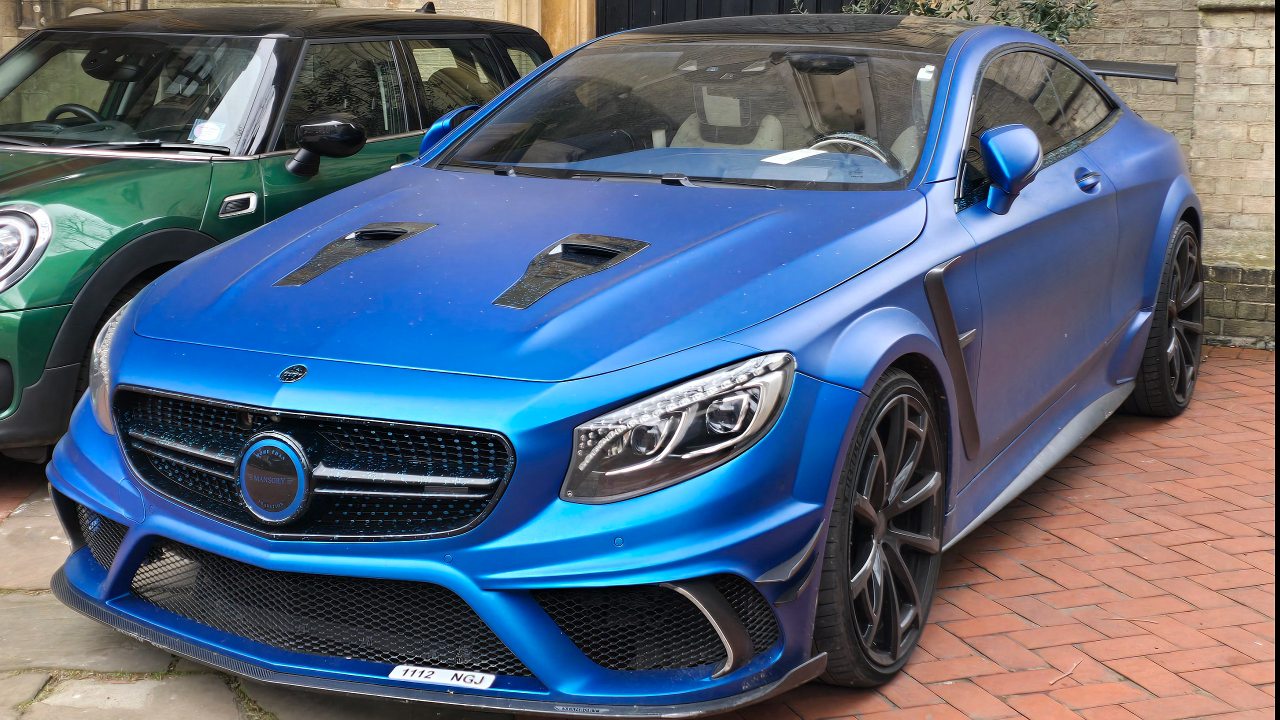
The flagship Mercedes S-Class is about to undergo what company leaders are calling the most extensive rethink in its modern history, with a reveal set for January 29. Far from a routine facelift, the upcoming update is being framed as a deep structural and mechanical overhaul that quietly rewrites much of the car beneath its familiar silhouette. For a model that has long defined the luxury sedan benchmark, the scale of change signals how aggressively Mercedes intends to defend that position.
A “biggest refresh” that goes far beyond cosmetics
Mercedes is positioning the next S-Class update as a watershed moment, describing it internally as “the biggest refresh” the nameplate has seen. That language is not marketing hyperbole so much as a reflection of how much of the car has been reworked beneath the surface. Rather than a light mid-cycle tidy-up, engineers have treated this as a chance to rethink core hardware and software, with the goal of extending the life of the current generation while keeping pace with rapid advances in powertrains and digital technology. The result is a car that looks like an evolution from the outside but has been substantially reengineered where it counts.
Reporting on the project indicates that Mercedes has quietly rebuilt more than half of the S-Class for the 2026 model year, touching major structural components as well as key systems that define how the car drives and feels. That level of intervention is unusual for a mid-cycle update and helps explain why internal voices are comfortable calling it the largest refresh yet. The company has already begun teasing the facelifted W223 generation, confirming that the updated Class will formally debut on January 29 as the centerpiece of what executives describe as a comprehensive rethink rather than a simple styling exercise.
January 29 reveal and what it signals for the W223
The decision to stage a dedicated reveal on January 29 underlines how central this project is to Mercedes’ broader strategy. Instead of folding the S-Class into a crowded auto show schedule, the brand is carving out its own moment to spotlight the changes and frame the narrative around long-term leadership in the luxury segment. The W223 facelift is officially described as a mid-cycle update, yet the timing and the rhetoric around it suggest that Mercedes sees this as a reset point for the current generation, one that will carry the car well into the second half of the decade.
Behind the scenes, the company has been clear that “Everything Will Be Revealed Soon,” a phrase that hints at both the breadth of the changes and the desire to control expectations ahead of the event. The reveal will not only showcase revised styling and cabin updates but also detail the underlying engineering work that has gone into reworking more than half of the car’s components. With the facelift already teased and the date locked in, the January presentation becomes less about unveiling a surprise and more about explaining how such a deep reengineering can coexist with the familiar silhouette of the existing Class.
Engineering overhaul: more than half the car reworked
At the heart of the story is the sheer scale of the engineering program. Mercedes has effectively treated the S-Class as a rolling laboratory, using the facelift window to introduce a new wave of hardware that would typically be reserved for a full generational change. Reports describe how more than half of the car has been reengineered, from structural elements to key chassis and drivetrain components. That kind of intervention suggests that the company is not content to rely on software updates and minor tweaks to keep its flagship competitive, but instead is willing to invest in substantial mechanical change midstream.
This approach reflects a broader shift in how premium manufacturers manage product cycles. Rather than waiting seven or eight years for a clean-sheet successor, Mercedes is using the W223 facelift to inject a level of innovation that blurs the line between a refresh and a new generation. The updated S-Class is said to incorporate a significant number of new or revised components, with some accounts referencing more than 75 individual changes, depending on how one counts the parts and subsystems involved. By reengineering so much of the car at once, the company can integrate new powertrain options, updated safety systems, and more advanced electronics in a coordinated way, rather than layering them piecemeal over time.
New V8 and the powertrain message
One of the most closely watched elements of the overhaul is what happens under the hood. While official technical specifications remain under wraps ahead of the reveal, informed reporting points to a new V8 as the biggest surprise in the updated S-Class lineup. In an era when many luxury brands are retreating from large displacement engines in favor of downsized or fully electric alternatives, the decision to introduce a fresh eight-cylinder unit sends a clear signal about how Mercedes views the role of the S-Class. The flagship sedan is expected to continue offering a traditional sense of effortless power and refinement, even as the broader range moves toward electrification.
The presence of a new V8 also helps explain why engineers have gone so deep into the car’s structure and systems. Integrating a different engine architecture often requires changes to cooling, exhaust routing, and even crash structures, which in turn can trigger revisions to suspension tuning and electronic controls. By aligning the powertrain update with the broader reengineering program, Mercedes can ensure that the new V8 feels fully integrated rather than retrofitted. Executives have hinted that, while not explicitly highlighted in early teasers, this engine will be a centerpiece of the technical story once Everything Will Be Revealed Soon, underscoring how central performance and refinement remain to the S-Class identity.
Design, technology, and the stakes for the luxury benchmark
Although the most dramatic work has taken place beneath the surface, the facelifted S-Class will still need to communicate its changes visually and experientially to buyers who may not pore over engineering diagrams. The W223 update is expected to bring a sharpened exterior, with revised front and rear treatments that align the car more closely with the latest Mercedes design language while preserving the understated presence that has long defined the model. Inside, the focus is likely to fall on upgraded materials, more sophisticated ambient lighting, and an evolution of the brand’s digital interface, all aimed at reinforcing the sense that the car is both familiar and newly advanced.
Technology will be a critical part of that message. The S-Class has historically served as the launchpad for Mercedes’ most ambitious driver assistance and infotainment systems, and the scale of the current reengineering suggests that pattern will continue. By rebuilding more than half of the car and integrating a significant number of new components, the company can roll out updated sensors, processors, and software that support more capable semi-autonomous features and richer in-car experiences. With the facelift already teased and the January 29 debut set, the stakes are clear: the refreshed Class must demonstrate that a deeply reworked combustion-based flagship can still set the pace in a market increasingly defined by electric and software-centric rivals. If Mercedes has indeed delivered the biggest refresh in the S-Class story, the coming reveal will show whether that ambition translates into a new benchmark for the segment.
More from Fast Lane Only