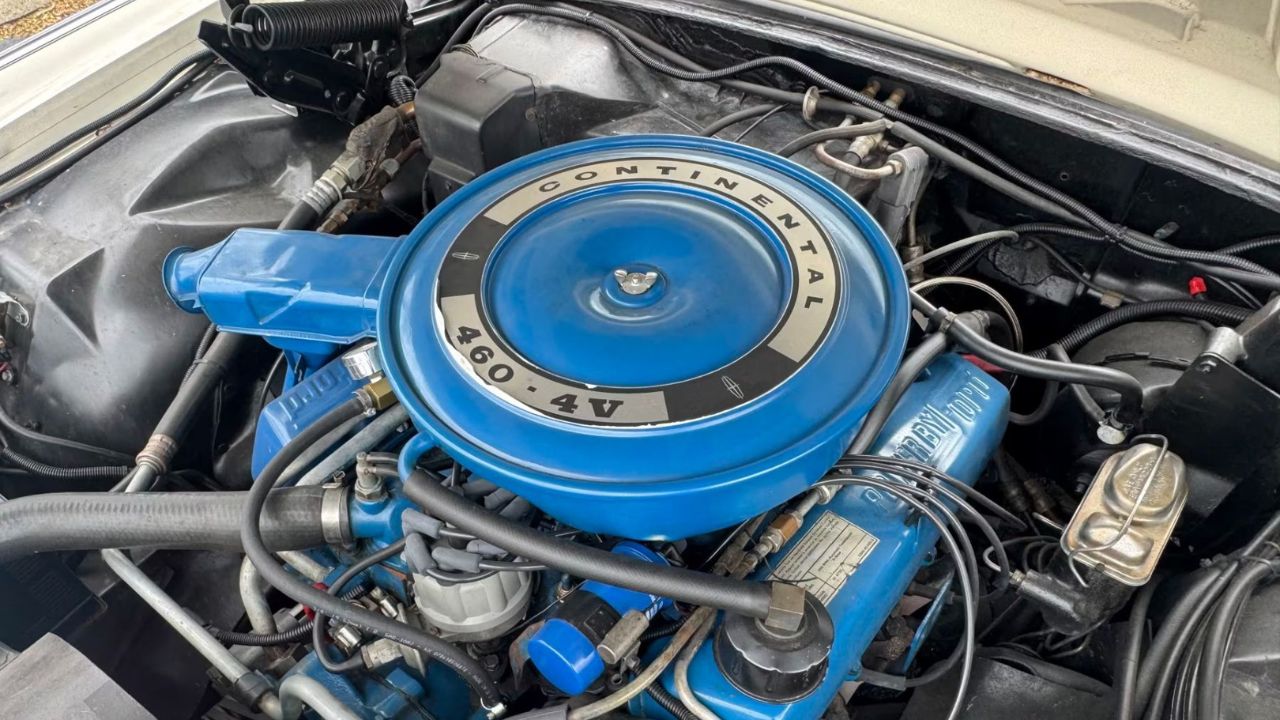
Ford has built some of the most celebrated V8s in American history, yet one of its longest-running big blocks quietly carried the load while others grabbed the glory. The 460 cubic inch V8 arrived in an era obsessed with displacement, then survived fuel crises, emissions crackdowns, and changing buyer tastes, all while delivering far more real-world muscle than its reputation suggests. For enthusiasts who look beyond brochure numbers, the 460 has become a classic example of an underrated workhorse that, in the right car and tune, could punch far above expectations.
Now, as collectors revisit forgotten sleeper cars and late-model Fords that never quite found their audience, the 460 is gaining fresh attention. Its blend of brute torque, surprising durability, and hidden performance potential is reshaping how people talk about Ford power in the 1970s and beyond.
What happened
The Ford 460 V8 debuted as part of the 385-series big block family, positioned as a torque-rich engine for full-size cars and heavy-duty trucks. Over time it became Ford’s longest-running big block, serving across multiple platforms and generations. While smaller-displacement engines and later modular V8s tend to dominate enthusiast conversations, the 460 quietly powered everything from luxury sedans to workhorse pickups, often with very different personalities depending on compression, camshaft, and carburetion.
In its early years, the 460 appeared in large personal luxury coupes and full-size sedans that masked its performance potential under layers of chrome and plush interiors. Its reputation was shaped by the shift from the late muscle era into the mid-1970s, when tightening emissions rules and insurance pressures forced Detroit to dial back advertised horsepower. On paper, the 460’s output dropped sharply, and that spec-sheet decline helped cement a narrative that the engine had become a tired relic of the pre-regulation age.
That story misses what was happening under the hood. Even as published horsepower ratings fell, the 460 retained abundant low-end torque and a stout bottom end. In heavy cars that prioritized comfort and quiet cruising, the engine delivered effortless acceleration that rarely matched its modest numbers. In trucks and vans, the same basic architecture was tuned for towing and hauling, where drivers cared more about pulling power than peak horsepower figures.
This disconnect between ratings and reality becomes clear in period sleeper cars that hid serious performance behind conservative styling. One 1970 model, described as a forgotten factory sleeper, combined big-block power with unassuming looks and comfort-focused marketing, yet delivered performance that rivaled contemporary supercars. That car’s secret weapon was a big V8 tuned for real-world acceleration rather than headline-grabbing numbers, a formula that mirrors how the 460 would later be perceived by enthusiasts who drove the cars rather than just reading the brochures. The story of that sleeper, highlighted in coverage of a 1970 sleeper car, helps explain how Ford’s big engines could be far stronger than their reputations.
As the 1970s gave way to the 1980s, the 460 shifted more decisively into trucks and commercial vehicles, where it became a staple for owners who needed serious torque. The engine’s long production run meant that Ford refined it for reliability and serviceability, and a wide ecosystem of parts and knowledge grew around it. By the time the 460 left production, it had earned a quiet respect among tow rig owners and hot rodders who recognized how much power could be unlocked with relatively simple modifications.
Recent analysis of the engine’s history has reinforced this view. Detailed retrospectives describe the 460 as Ford’s longest-running big block and highlight how it remained one of the company’s most underrated V8s despite its widespread use. These accounts point to its generous displacement, strong block, and forgiving design as reasons why it became a favorite for torque-heavy builds and engine swaps, even if it never achieved the celebrity status of Ford’s 427 or 428 performance icons. One such look back at the 460 big block emphasizes how the engine’s long service life and hidden potential have only recently started to receive broader recognition.
Why it matters
The 460’s story matters because it challenges how enthusiasts judge engines. For decades, the conversation around classic Ford powerplants has centered on peak horsepower, limited-run performance packages, and high-revving small blocks. The 460 represents a different philosophy. It was built to move weight, soak up abuse, and deliver torque where drivers actually use it, particularly in everyday street driving and heavy-duty work. That focus on usable power rather than headline numbers is increasingly relevant as collectors and builders look for engines that make their cars enjoyable on real roads, not just at the drag strip.
Underrated engines also tend to create value opportunities. Because the 460 lived in large sedans, wagons, and trucks that fell out of fashion, many of the vehicles it powered were scrapped or ignored for years. As a result, the engine never developed the same aura as more glamorous big blocks. For budget-minded enthusiasts, that lack of hype can be an advantage. A 460-powered project often costs less to acquire than a factory muscle car with a more famous engine, yet the aftermarket support and displacement give builders a strong foundation for serious power.
The sleeper angle is part of the appeal. Cars that use big, understressed V8s but wear conservative styling are gaining appreciation as enthusiasts look for something different from the usual muscle car icons. The 1970 sleeper example, which delivered supercar-level performance while looking almost anonymous in traffic, shows how underrated Ford V8s could transform a seemingly ordinary car into a genuine performance threat. That same formula applies to many 460-equipped vehicles, especially when paired with mild upgrades like improved ignition, modern carburetion or fuel injection, and freer-flowing exhaust systems.
The engine’s influence stretches into how people reassess later Ford products as well. The last-generation Ford Thunderbird, for instance, has become a case study in how design and perception can overshadow solid fundamentals. While the retro-styled Thunderbird did not use the 460, its reception and later reappraisal echo the way enthusiasts have come to view underrated Ford hardware. At launch, the car struggled to find a clear identity, caught between nostalgia and modern expectations. Over time, however, designers and enthusiasts have revisited the car’s proportions, detailing, and road manners, arguing that its approach to design is exactly the kind of confident, distinctive thinking that is missing from many current models. A detailed look at the last-generation Thunderbird frames it as a car that deserved better, much like the 460 deserved more respect.
That parallel underscores a broader point about how automotive history gets written. Engines and cars that fit a simple narrative, such as high-horsepower muscle machines or limited-run halo models, tend to dominate enthusiast memory. Workhorse engines like the 460, or design experiments like the final Thunderbird, often get pushed aside because they do not fit neatly into those stories. Yet as the collector market matures, there is growing interest in vehicles that offer a different mix of comfort, character, and performance, even if they were not poster cars when new.
The 460’s technical qualities support that shift. Its large displacement provides an easy path to strong torque without demanding extreme tuning. The engine’s block is known for its strength, which makes it attractive for high-power builds where reliability is a priority. In truck and tow rig applications, owners value the 460 for its ability to handle sustained load and heat, qualities that are just as important in performance builds that will see regular use. These traits help explain why the engine has become a favorite for engine swaps into classic Ford trucks, big coupes, and even boats.
Reassessment of the 460 also reflects changes in how enthusiasts use their vehicles. Modern traffic, higher highway speeds, and the realities of long-distance cruising favor engines that deliver relaxed power rather than peaky, high-strung performance. A big, understressed V8 that can loaf along at low rpm while still providing strong acceleration suits that environment well. Owners who build 460-powered cars for street use often report that the driving experience feels effortless, with abundant torque available at any speed, which can be more satisfying than chasing top-end horsepower figures that are rarely used.
From a historical perspective, the 460 helps fill in the gap between the classic muscle era and the modern performance renaissance. It bridged the period when emissions controls and fuel economy concerns reshaped the industry, yet it remained in production long enough to benefit from improved fuel and tuning technology. That longevity gave engineers and tuners time to learn how to work with the engine’s strengths, and it gave owners a durable platform that could evolve with changing tastes and regulations.
What to watch next
Looking ahead, the 460’s reputation is likely to keep rising as several trends converge. First, the supply of blue-chip muscle cars with legendary engines is finite and increasingly expensive. Enthusiasts who want V8 power without paying premium prices are already turning to less celebrated platforms, and the 460 sits at the center of that shift. Full-size Fords, Mercury models, and classic trucks that once felt too large or thirsty are being reconsidered as comfortable, characterful cruisers that can be modernized with better gearing, fuel systems, and brakes.
Second, the aftermarket continues to support and expand what is possible with the 460. Cylinder heads, intake manifolds, camshafts, and modern ignition systems give builders more options than ever to tailor the engine’s character. Some choose to keep the focus on low-end torque for towing or highway cruising, while others pursue high-horsepower builds that exploit the block’s strength. Either path reinforces the idea that the engine’s original ratings significantly understate its potential.
Third, there is a cultural shift toward appreciating sleeper builds and underdog stories. Social media, video channels, and online communities have made it easier for owners of unusual or overlooked cars to share their projects. A 460-swapped wagon or a period-correct big coupe with a warmed-over big block now has an audience that values originality and personal taste as much as auction-ready pedigree. That environment is ideal for engines like the 460, which reward creativity and hands-on tuning.
There is also a growing interest in how classic V8s can coexist with modern expectations around drivability and, in some cases, efficiency. Builders are experimenting with electronic fuel injection conversions for the 460, as well as overdrive transmissions that let the engine cruise at lower rpm on the highway. These upgrades can transform a once-thirsty big block into a more livable powerplant without sacrificing the torque and sound that define its character. As these solutions become more common, they lower the barrier for enthusiasts who might otherwise hesitate to take on a big-block project.
For collectors and historians, the next few years will likely bring a clearer picture of which 460-powered vehicles emerge as standouts. Early high-compression versions, rare option combinations, and well-preserved original trucks are already drawing attention. At the same time, thoughtfully modified builds that showcase the engine’s strengths without erasing period charm are starting to gain respect at shows and in enthusiast media. That mix of originality and personalization mirrors the broader direction of the classic car hobby, where authenticity and usability often carry as much weight as matching-numbers perfection.
More from Fast Lane Only