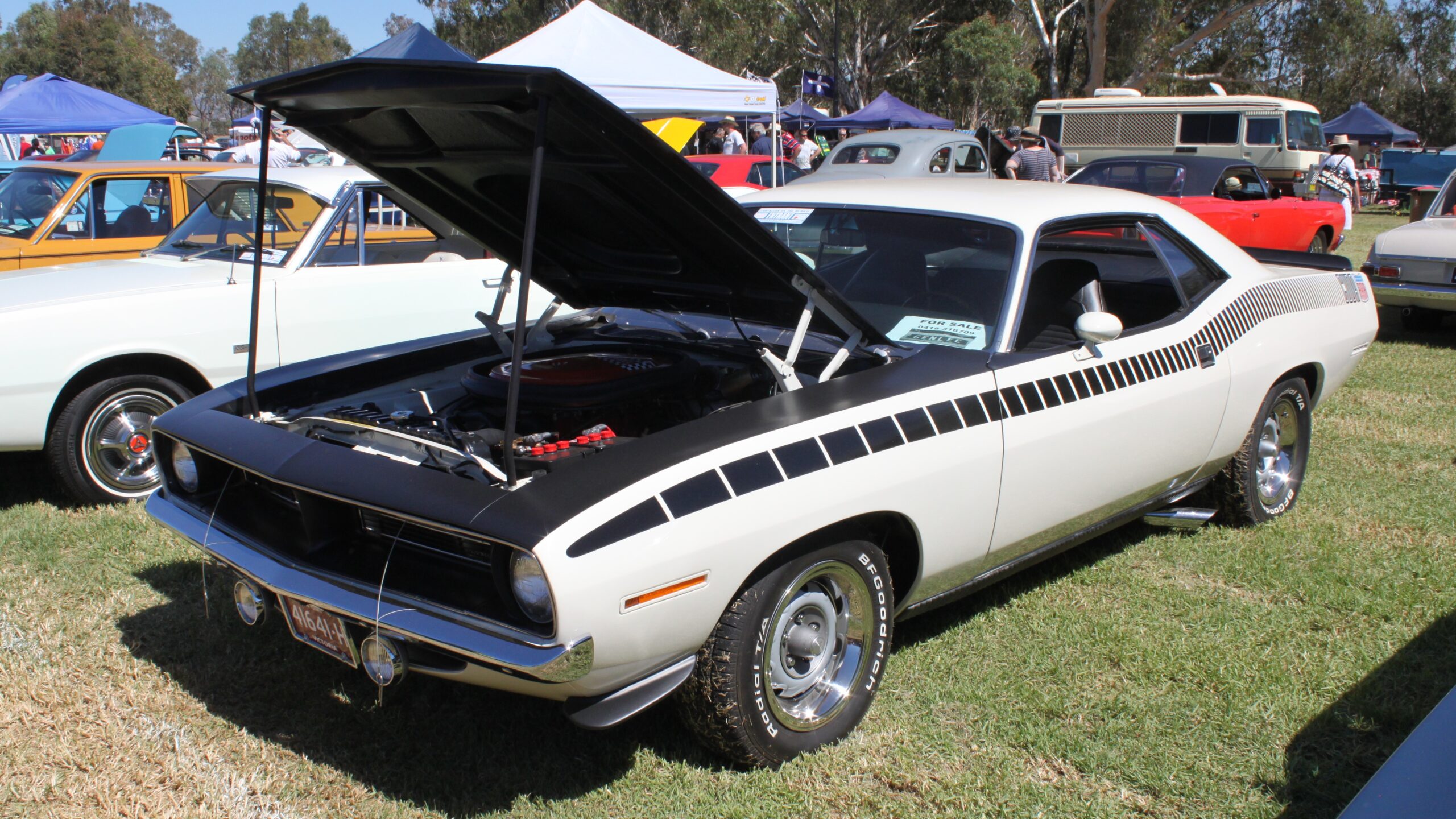
A handful of Chrysler’s wildest ideas slipped out of engineering offices and onto American streets, and those limited-run Mopar muscle cars have been haunting auction blocks and drag strips ever since. Built in tiny numbers, often for racing first and retail second, they turned loopholes and option sheets into legends that still define what “factory hot rod” means. Their stories trace how Detroit’s horsepower wars escalated, then vanished almost as quickly as they arrived.
What happened
Detroit’s muscle era did not start with Mopar, but Chrysler’s brands quickly became the ones that pushed the rules hardest. As the horsepower race heated up in the mid 1960s, manufacturers piled big engines into midsize bodies, then into compacts, in a progression that a detailed muscle car timeline tracks from early performance packages to full-blown street terrors. Within that broader surge, Dodge and Plymouth began slipping out cars that were barely disguised race machines.
Some of these cars were not even official models in the usual sense. They were combinations of fleet-only body shells, obscure option codes, and parts-bin wizardry that dealers could order if they knew the language. A small group of factory drag packages, for example, arrived with stripped interiors, lightweight body panels, and powertrains that were never intended for daily commuting. Chrysler engineers treated the showroom as a technicality. If sanctioning bodies demanded a roadgoing version, they would build just enough to get the paperwork signed, then let racers and hardcore customers do the rest.
One clear pattern runs through these legends: the engines came first. Chrysler’s big-block 426 Hemi V8 and later high-output small-blocks were developed with competition in mind, then slipped into increasingly unlikely platforms. That is how a handful of compact A-body cars received engines usually reserved for full-size models, and how certain intermediates ended up with drag-strip gearing and heavy-duty driveline parts right from the factory. These combinations were never meant for mass production, so they appeared in extremely low volumes and often only for a single model year.
Corporate caution played a role as well. Insurance companies and regulators were already eyeing the muscle market, and Chrysler’s leadership knew that overtly marketing some of these cars as mainstream products would invite trouble. Instead, performance managers worked with select dealers to move the most extreme builds quietly. Order guides carried cryptic codes, and advertising tended to highlight milder versions while the real weapons circulated through enthusiast channels and racing communities.
Over time, the scarcity of these cars became part of their identity. Built in such limited numbers, many were raced hard, wrecked, or modified beyond recognition. Survivors turned into mythic sightings at local tracks and cruise nights. When collectors later started chasing documented examples, they discovered just how few had made it out of the factories in original specification, which only amplified their status.
Modern coverage of Mopar history often singles out a short list of these factory outliers as benchmarks for the breed. A recent overview of legendary Mopar cars that were never meant for mass appeal highlights how many of them were conceived for racing or image-building, not for the average commuter. They were halo cars in the purest sense, designed to win trophies and headlines rather than satisfy accountants.
Why it matters
The story of these low-volume Mopar machines explains why the muscle car era still casts such a long shadow. On paper, they were minor footnotes in Chrysler’s production totals. In practice, they reshaped how enthusiasts think about factory performance and what an automaker is willing to do for competition glory.
To start, they show how homolgation rules and racing ambitions can warp a product plan. Sanctioning bodies often required that a minimum number of street-legal cars be sold with the same core hardware as the race versions. Chrysler responded by creating borderline impractical street cars that existed primarily to keep its teams legal. That approach turned the showroom into an extension of the pit lane and gave ordinary buyers access to technology that would otherwise have remained track-only.
They also highlight the tension between regulation, insurance pressures, and enthusiast demand. As performance climbed, so did scrutiny. Rising insurance premiums and looming emissions and safety rules pushed Detroit away from overt horsepower by the early 1970s. The most extreme Mopar packages arrived right before that curtain fell, which makes them feel like the last word in unfiltered factory muscle. Their limited production was not just a marketing choice, it was a response to a tightening environment that was about to shut the door on such experiments.
Third, their rarity has had a long-term effect on the collector market. Because so few were built and fewer survived intact, documented examples command towering prices compared with more common muscle cars from the same period. That price gap reflects more than scarcity. It reflects the perception that these were the “purest” expressions of Mopar performance, the cars where engineers were given the most freedom and where compromises were minimized.
The legend around these models has also shaped how modern manufacturers approach special editions. Contemporary performance divisions pay close attention to how short-run 1960s and early 1970s cars are valued and discussed. Limited-production packages, numbered series, and track-focused variants all borrow from the playbook that Chrysler and its rivals wrote during the original muscle boom. Automakers understand that a small batch of highly focused cars can generate far more brand loyalty and media attention than a broad but bland lineup.
For Mopar enthusiasts, these outliers serve as touchstones of identity. They represent a period when Dodge and Plymouth were willing to take risks to outgun rivals on the strip and on the street. The cars became proof that the company could innovate under pressure and that it understood the desires of its most hardcore customers. That legacy still echoes in modern branding that leans heavily on heritage cues, from retro graphics to revived model names.
There is also a cultural dimension. These cars helped cement the idea that the American muscle car was not just about straight-line speed, but about attitude and audacity. Factory-built drag specials, wild aero packages, and over-engined compacts told young drivers that the rules were negotiable if they knew where to look. That sense of transgression, sanctioned by the manufacturer itself, fed into broader car culture, from street racing scenes to custom shops that saw factory extremism as a starting point rather than an endpoint.
Finally, their stories provide a lens on how quickly automotive technology and regulation can shift. Within a few model years, the industry went from escalating horsepower and compression ratios to detuned engines and focus on fuel economy. The handful of Mopar legends that slipped out just before that turn mark the boundary between two eras. They are rolling evidence of what was technically and politically possible at a specific moment in American history, and they remind modern readers that product cycles are always shaped by forces beyond the showroom.
What to watch next
Interest in these limited-run Mopar cars is unlikely to fade, but the way enthusiasts interact with them is changing. As values rise, more owners treat surviving examples as investment-grade artifacts rather than weekend toys. That shift affects everything from restoration practices to how often the cars appear at local events. Concours shows and high-profile auctions increasingly favor meticulously documented, numbers-matching cars, which can pull them away from the grassroots scenes that originally kept their legends alive.
Meanwhile, digital communities are broadening access to their stories. Detailed build sheets, period photos, and old race records are being scanned and shared, helping historians piece together production counts and option combinations that were once obscure. That archival work can clarify which specific variants were built in the smallest numbers, which in turn influences both market values and which cars receive the most attention in modern coverage.
Another development to watch is how modern Mopar-branded performance cars reference these ancestors. Recent high-horsepower sedans and coupes have leaned heavily on retro cues, from bold graphics to resurrected engine names. Limited editions that celebrate drag racing heritage or specific historical models are likely to continue, particularly as automakers search for ways to keep internal-combustion products emotionally compelling in an era of tightening emissions rules and growing electrification.
Regulation will play a major role in what comes next. As emissions and fuel economy standards become stricter, the traditional formula of a large-displacement, naturally aspirated V8 in a relatively light body becomes harder to justify. Manufacturers may respond by shifting performance efforts into hybrid or fully electric platforms, which could create a new generation of “factory freaks” that echo the intent of the original Mopar legends while using entirely different technology.
Collectors and historians will also be watching how younger enthusiasts engage with these cars. For drivers who grew up with digital dashboards and driver-assistance systems, a carbureted, analog muscle car can feel both exotic and intimidating. Some will be drawn to that rawness and simplicity, while others may experience these machines primarily through media, replicas, or restomods that blend classic looks with modern drivetrains and electronics.
Restomod builders, in particular, occupy an interesting middle ground. By installing contemporary engines, transmissions, and suspension components into vintage Mopar shells, they create cars that capture the visual drama of the originals while offering modern reliability and performance. Purists sometimes bristle at the idea of modifying rare examples, but the trend also keeps the design language and presence of these cars visible on the road rather than locked away in climate-controlled garages.
On the research front, expect more granular documentation of production figures and factory options. As more original paperwork surfaces and is cross-referenced, some long-held assumptions about which variants are rarest may be revised. That process can elevate previously overlooked configurations or specific option combinations into the spotlight, reshaping which cars are most sought after.
There is also a growing effort to preserve the human stories around these machines. Oral histories from retired engineers, line workers, racers, and early owners help fill in gaps that production numbers alone cannot explain. Those accounts reveal how internal debates at Chrysler shaped what was approved, what was canceled, and how certain projects slipped through. Capturing those memories before they are lost will be essential for anyone who wants to understand not just what these cars were, but why they existed at all.
Finally, the broader market for classic performance cars is closely tied to economic cycles. When confidence and disposable income rise, demand for rare muscle cars often spikes, driving auction results higher and encouraging more high-end restorations. In leaner times, trading slows, but truly exceptional examples tend to hold their value better than more common models. Watching how the rarest Mopar legends behave across different market conditions offers insight into how deeply embedded they are in automotive culture.
More from Fast Lane Only