New-car showrooms are starting to look less like a middle‑class necessity and more like a luxury boutique. Prices, financing costs, and income trends are converging in a way that is quietly locking typical households out of the market, even as affluent buyers keep spending freely. The result is a split auto economy in which the family sedan or crossover, once a staple of middle‑income life, is drifting out of reach.
That shift is already visible in the sales data and in the monthly budgets of would‑be buyers. Industry forecasts point to weakening demand for new vehicles, not because Americans no longer need cars, but because the numbers on the window sticker and the loan contract no longer line up with what a median paycheck can support. I see a market that is still humming at the top, yet increasingly inhospitable to the people who used to define it.
The new-car market is shrinking from the middle out
The most telling sign of stress is that overall new‑vehicle sales are expected to slip even as the broader economy continues to grow. Analysts now project that U.S. auto sales will fall to 15.8 m vehicles this year, a retreat that coincides with persistent sticker shock on dealer lots. That pullback is not being driven by a collapse in demand among wealthy shoppers; instead, it reflects middle‑income households deciding that the math on a new purchase no longer works, a trend that industry Analysts have been flagging as a structural risk rather than a passing mood.
What I find striking is how concentrated the slowdown is in the heart of the market. Reporting on new‑vehicle trends describes a landscape where entry‑level and mid‑priced models are moving more slowly, while higher‑end trims and premium brands continue to find buyers. The projected 15.8 m sales figure comes alongside warnings that the traditional middle‑class customer, once the backbone of volume for mass‑market brands, is stepping back from the new‑car lot altogether. That retreat is already reshaping how automakers allocate production and incentives, and it hints at a future in which the “average” new‑car buyer is significantly wealthier than the average American.
Sticker prices and wages are moving in opposite directions
At the center of this squeeze is a simple imbalance: vehicle prices have raced ahead while incomes have struggled to keep up. The average new car now costs nearly $50,000, a level that would have sounded outlandish not long ago for mainstream models like a Honda CR‑V or a Ford Escape. Guidance on what that means for a household budget shows that, even with solid credit, a buyer is staring at a hefty monthly payment once taxes, fees, and interest are layered on. When I compare that figure with typical middle‑class earnings, it is clear that the cost of a new vehicle is consuming a far larger share of take‑home pay than it did a decade ago.
That erosion of affordability is not just a feeling, it is measurable. Analyses of long‑term trends note that the price of the average new car has climbed much faster than wages, leaving buyers dedicating a growing slice of their income to transportation if they insist on buying new. One review of the past ten years of pricing and pay data concludes that the industry has “weathered huge changes” while the cost of the average new car has outpaced what many workers bring home. Separate research on New Vehicle Costs Are Tempering finds that, even as some pandemic‑era spikes have eased, new‑car prices still Remain High Relative to Income, and that Buying a new vehicle has become “much more expensive” when measured against household earnings. For the middle class, that gap is the difference between stretching for a new model and settling for a used one, or no car at all.
Financing is turning cars into quasi-luxury commitments
Price alone does not tell the whole story; the way cars are financed is amplifying the strain. As transaction prices climbed, lenders and dealers leaned on longer loan terms and higher monthly payments to make deals work on paper. Recent data show a record share of new‑car buyers now signing up for monthly payments of $1,000 or more, a threshold that would once have been associated almost exclusively with luxury models. A widely circulated industry newsletter, pitched with the promise to OUTSMART THE CAR MARKET in five MINUTES a week and trusted by 55,000 car dealers, highlights how common these four‑figure payments have become, even as interest rates begin to edge down from their peaks.
For a middle‑income household juggling rent or a mortgage, child care, and other debts, committing to a $1,000‑plus car payment is simply unrealistic. Guidance on what a typical buyer would pay each month for a vehicle near $50,000 shows that, even with a sizable down payment and decent credit, the resulting obligation can rival a second housing payment. Consumer finance experts who walk through “Here’s how much you’d pay per month” scenarios emphasize that the combination of high principal, elevated interest, and longer terms is pushing many families to the brink. When I look at those numbers, it is not surprising that a growing share of middle‑class shoppers are either stretching their existing vehicles longer or retreating to the used market rather than taking on what feels like a quasi‑luxury commitment.
Luxury buyers are thriving while mainstream shoppers retreat
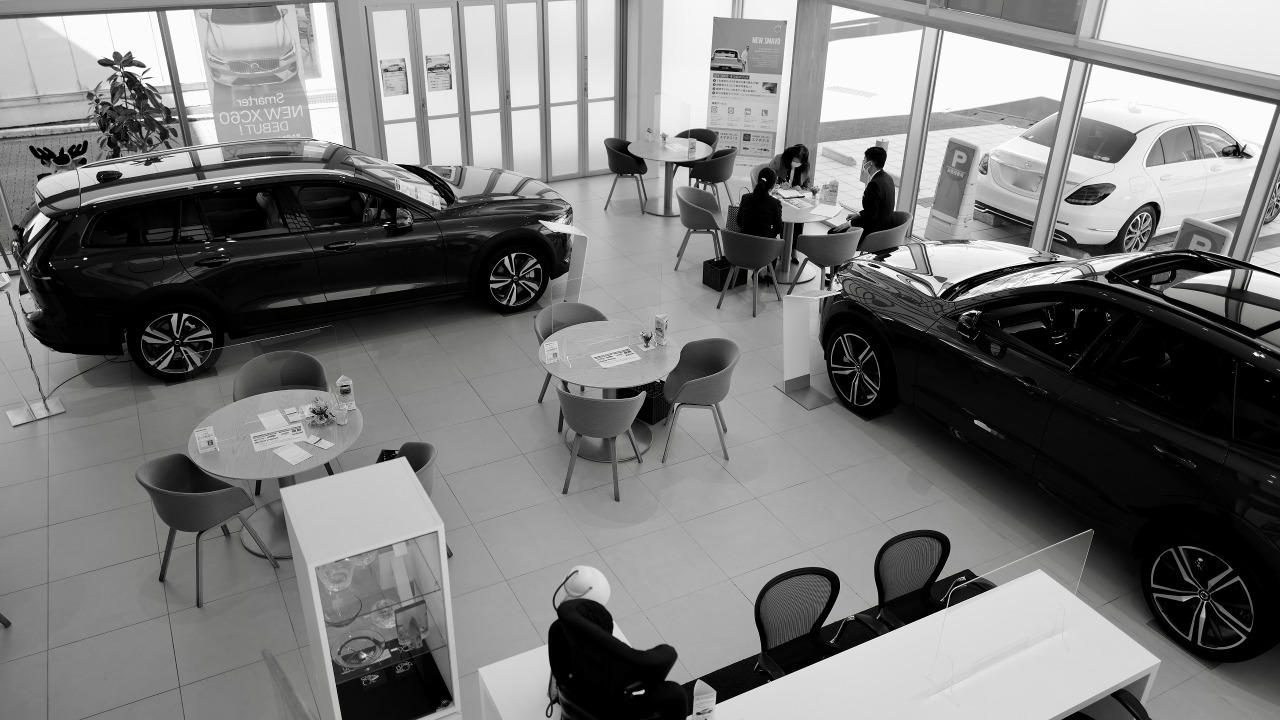
The divergence between affluent and middle‑income buyers is becoming more pronounced with each model year. Reporting on Luxury vehicle trends describes a segment where sales are surging, even as mid‑market volumes slow. Dealers and automakers in that space say their customers are still willing to pay for high‑end SUVs, performance sedans, and fully loaded electric vehicles, and that they expect Car Sales in the premium tier to remain strong. In that context, the new‑car market starts to look less like a broad consumer staple and more like a two‑track system, with a robust high‑end and a struggling middle.
At the same time, coverage framed under NEWS about the broader auto landscape notes that middle‑class buyers are exiting the new‑vehicle arena even as the top of the market thrives. Analysts observing this split argue that the composition of who is buying cars is itself pushing average prices higher, since a larger share of sales now comes from well‑heeled customers choosing expensive models and trims. One detailed look at pricing trends points out that a “major factor” behind elevated averages has been the shift in the buyer mix, with fewer cost‑conscious households in the showroom and more affluent shoppers driving demand for high‑margin vehicles. When I connect those dots, the picture that emerges is of a market that is being pulled upward by luxury demand while the traditional middle quietly slips away.
Middle-class households are changing how, and whether, they buy
For the families caught in the middle, the response has been pragmatic rather than dramatic. Reporting on how Middle Americans are coping describes people who once treated a new car as a predictable, if painful, expense now confronting the possibility that they may not be able to afford a vehicle at all. Some are holding on to aging sedans and crossovers well past the point when they would previously have traded in, gambling that repair bills will still be cheaper than a new‑car payment. Others are shifting decisively into the used market, where prices remain elevated but are still more manageable than the new‑vehicle averages.
Financial advisers who field questions about “What’s Going on With the Car Market” warn that the squeeze is particularly acute for households already carrying credit‑card balances or student loans. They note that lenders are tightening standards for less‑than‑perfect borrowers, which means that even those willing to stretch may not qualify for the financing they need. Broader analyses of affordability echo that concern, with one overview of New Vehicle Costs Are Tempering stressing that, despite some moderation in prices, new cars still Remain High Relative to Income and that Buying one has become “much more expensive” in real terms. When I listen to these stories and compare them with the data on projected sales declines and the rise of four‑figure payments, it is hard to escape the conclusion that the middle‑income shopper is being systematically nudged out of the new‑car market, not by preference, but by arithmetic.
More from Fast Lane Only: