Minibike sales peaked in 1973 at 140,000 units, and machines like the Honda Dax were a big part of the craze. From the mid-1960s into the 1970s, more than a hundred companies tried to sell these little bikes. Many used off-the-shelf Briggs & Stratton or Tecumseh engines, and nobody held a patent on the basic design.
Then the bubble burst. By 1976, fewer than ten makers were still building minibikes, and most of the names vanished with them. Meanwhile, the big motorcycle makers kept building clever small bikes of their own.
These are our picks, seven minibikes we think deserve a second look. Some fold up to fit in a car trunk, some were built for errands, and one is a real trail bike in miniature. Every one of them is easy to overlook today, and every one has a story worth knowing.
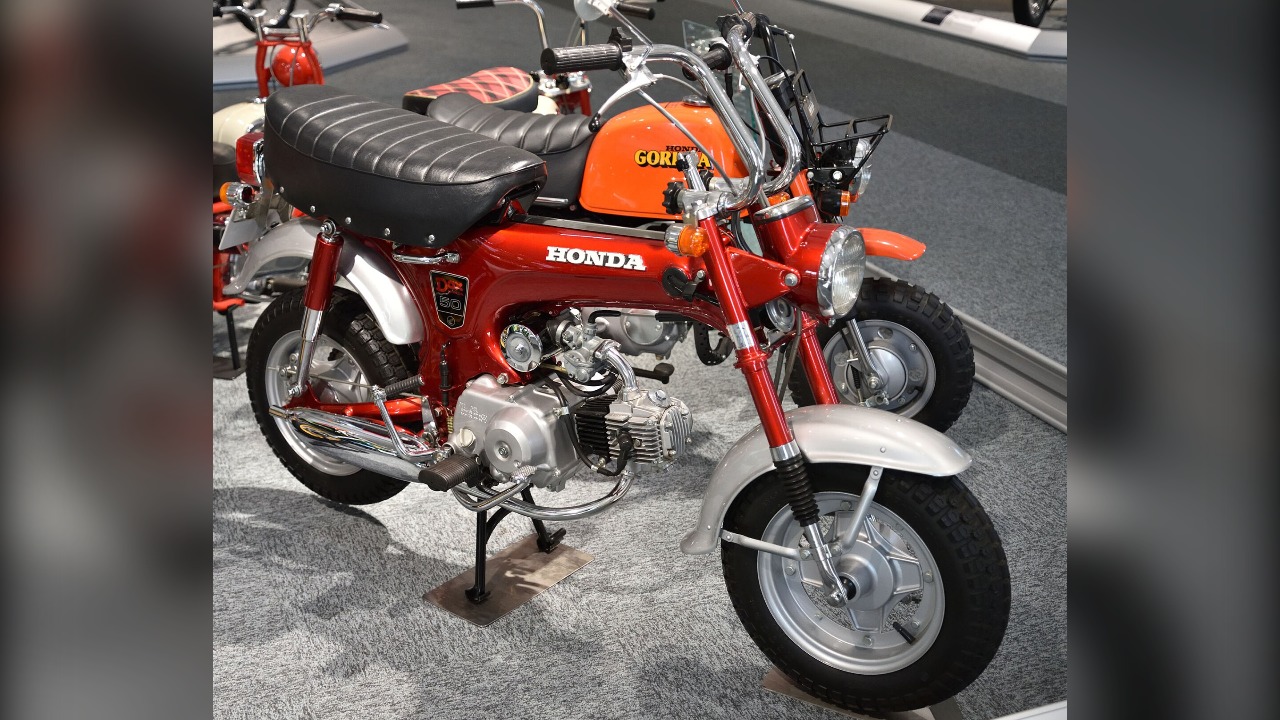
1. 1974 Honda Dax ST70
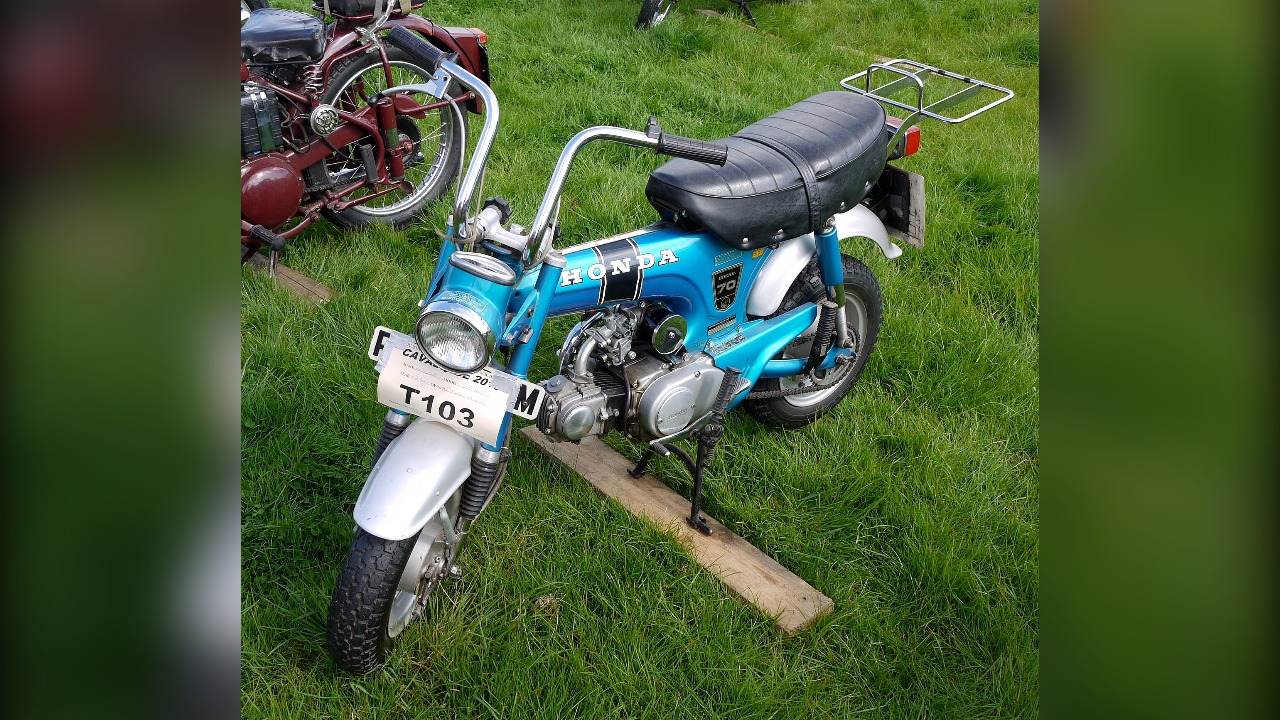
Honda introduced the ST50, ST70 and CT70 in August 1969 and built them through 1981. In Japan and Europe, the family went by Dax. North American buyers knew the ST70 as the CT70, or simply the Trail 70. Its signature part is a pressed-steel “T-bone” frame, and the fuel tank hides inside it.
According to Classic Trader, the Dax name came from “dachshund,” a nod to that long, low body. The 70 cc engine was Honda’s 50 cc overhead-cam single, bored from 39 to 47 mm. It drove through a three-speed foot shift with an automatic centrifugal clutch, so there was no clutch lever to learn. Better yet, rubber toggles held the handlebars, which folded down so the bike could ride in a car trunk.
Our take: the Honda Dax is the minibike that grown-ups secretly wanted. It is small enough to toss in a car, yet it has a real motorcycle engine. If you find a 1970s ST70, the folding bars and original frame are the details worth checking first.
2. Honda Gorilla
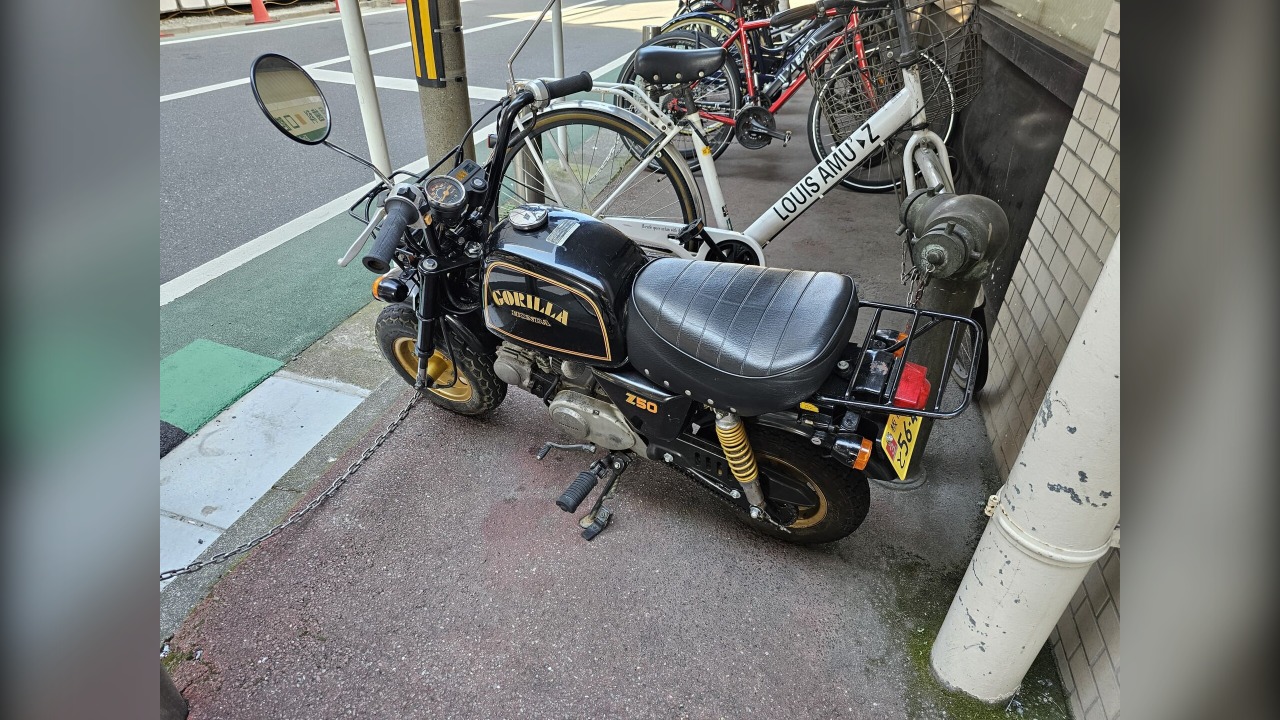
The Gorilla grew from Honda’s Z-series family, which began in a surprising place. The first version, the 1961 Z100, started life as a children’s ride at the Tama Tech amusement park in Japan. Later, the series reached mass production as the Monkey. By 1974, the Z50J had arrived with rear suspension, and its 49 cc four-stroke single kept things simple.
Honda launched the Gorilla in 1978, at the same time as a revamped Monkey. In its Monkey history pages, Honda calls the Gorilla “a leisure bike based on the Monkey.” The biggest difference was a larger fuel tank, since the Monkey carried just 5 liters. That extra range turned a pit-bike toy into something you could actually explore on.
In our view, the Gorilla is the smart sibling in the Z50J family. It keeps the Monkey’s charm but adds the one thing small-bike riders always want, which is more fuel. As a result, a clean, unmodified example makes a fun weekend runabout. For more of the brand’s small-bike story, see our list of Honda motorcycles we admire.
3. Yamaha Chappy 80
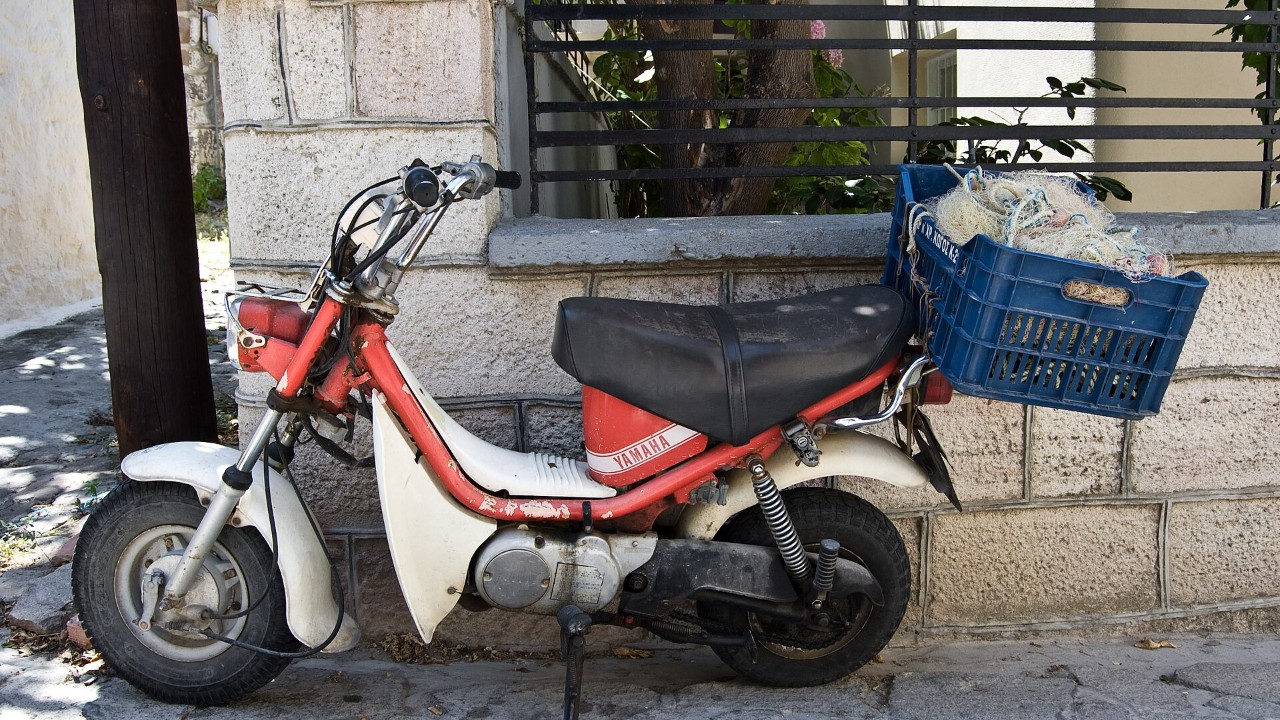
Yamaha built the Chappy for riders who wanted no fuss at all. The LB80 used a 72 cc air-cooled two-stroke single with a reed valve. Yamaha’s own Chappy brochure lists 4.5 PS for the 80 and a dry weight of 71 kg. Furthermore, the seat sat only about 68 cm off the ground, and an underbone frame made it easy to step aboard.
Buyers could choose how involved they wanted to be. The automatic models used a two-stage gearbox that needed no shifting at all. By contrast, the H models had a hand clutch and a four-speed rotary gearbox for sportier riding. Yamaha also claimed 85 km per liter at a steady 30 km/h.
Our view: the Chappy is the friendliest bike on this list. It was a single-seater built for shopping and easy touring, with a carrier for your bags. However, its chunky little tires and bright colors give it far more personality than a typical commuter. It’s a minibike for grown-ups who don’t want to work hard.
4. Honda Chaly CF70
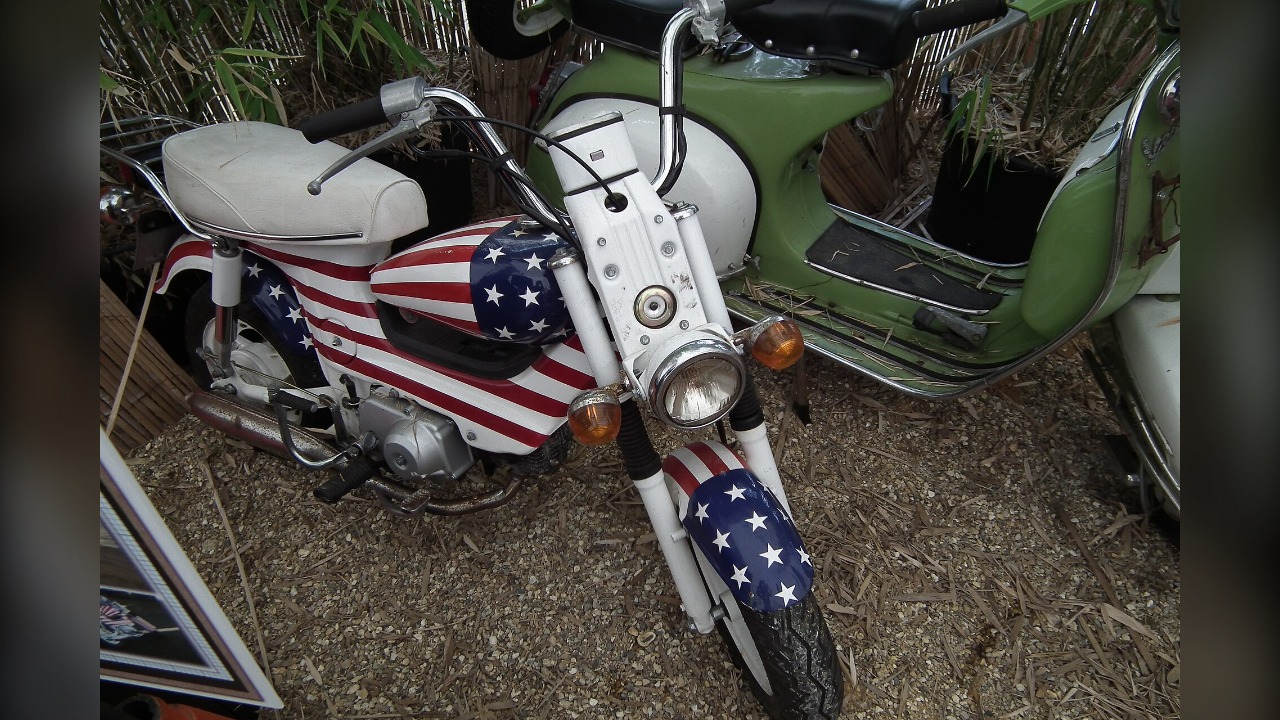
Honda’s July 18, 1972 announcement called the Chaly a “home bike” for the whole family. Sales began two days later in three versions, and the 72 cc CF70 topped the range at ¥78,000. Honda planned to build 7,000 Chalys a month. It also aimed the bike squarely at beginners, older riders and women heading to the shops or to work.
Every detail served that goal. A deep cutout in the frame left a step-over height of just 40 cm, so riders could mount it easily, even in light clothing. The seat sat 70 cm high, and an automatic centrifugal clutch removed the clutch lever entirely. In addition, the CF70 could carry two people, while a lockable helmet holder and a storage box under the seat added everyday sense. On the base CF50-I, both brakes even worked from hand levers, just like a bicycle.
We think the Chaly deserves more credit than it gets. Honda kept building it until 2000, so the idea clearly worked. Today, its practical V-shaped frame and tiny wheels make it a charming alternative to the far more common Honda Dax and Monkey.
5. 1981 Yamaha Pocke Midnight QA50LTD
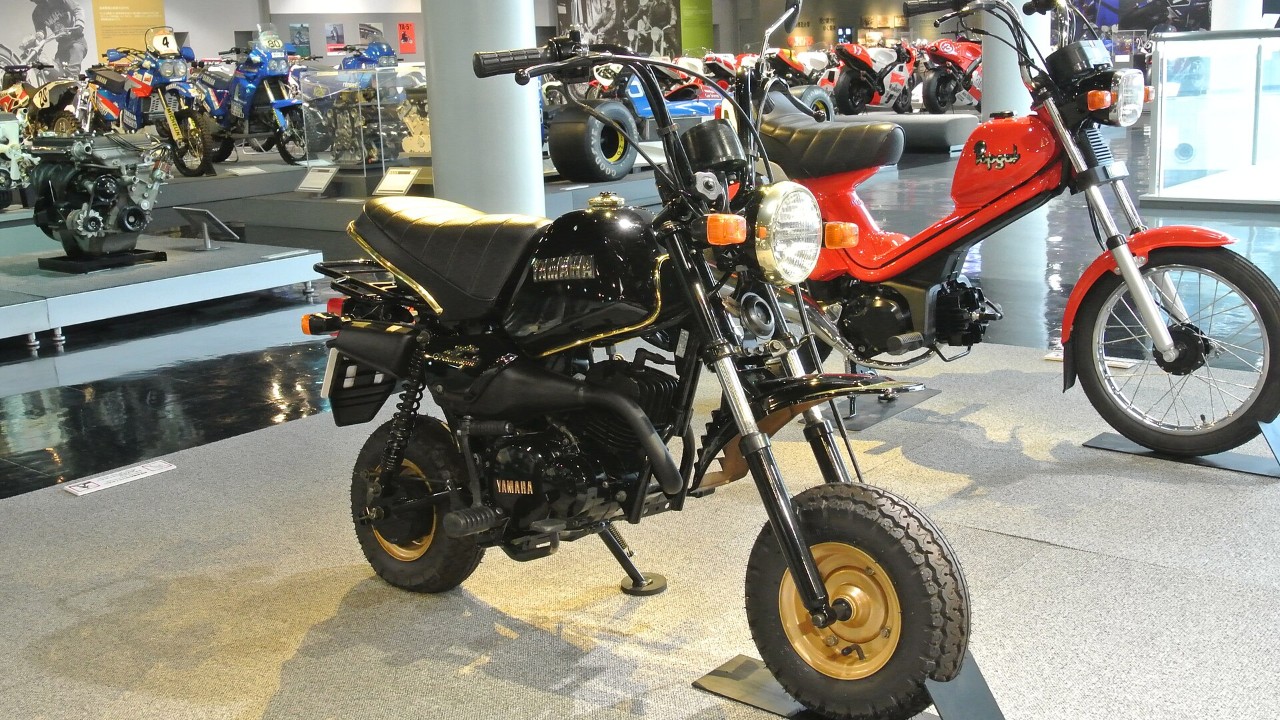
Yamaha released the Pocke in 1980, then added a limited black-and-gold “Midnight Special” version for 1981. This is that bike, the QA50LTD. Yamaha’s Communication Plaza collection says it “was popular among bike-loving adults” for its stable triangle styling and spirited performance. It rolled on 6-inch wheels front and rear, and the whole bike measured just 1,280 mm long.
Underneath the minimalist chassis sat parts from a more serious machine. Yamaha borrowed the GT50’s 49 cc two-stroke single and its four-speed gearbox. As a result, the Pocke made 3.0 PS while weighing just 52 kg. It wasn’t cheap, though, at ¥115,000 when new, which tells you Yamaha aimed it at adults.
In our opinion, the Midnight is the most stylish bike here. Its black-and-gold paint looks like a tiny version of a big-bike special edition. Even better, the Pocke’s shift lever means you actually ride it, rather than just twist and go. That makes it a genuine small motorcycle and not simply a toy.
6. 1972 Indian MM-5A
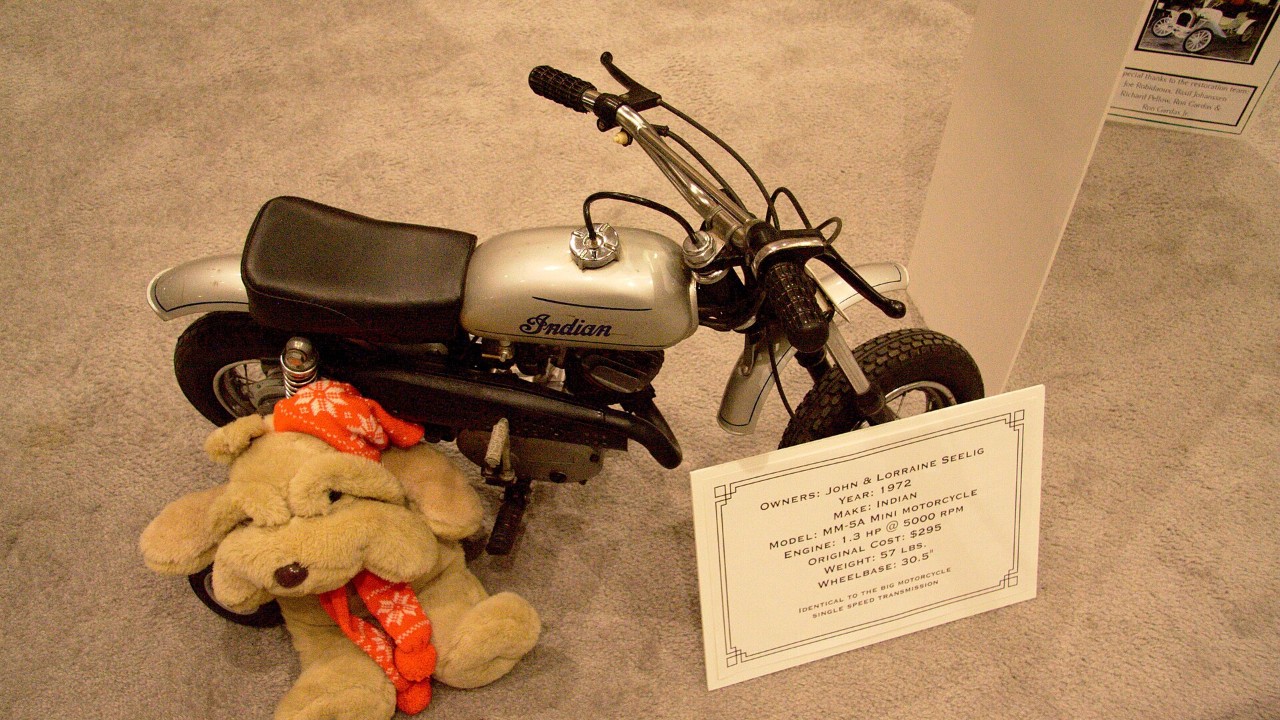
Yes, Indian sold minibikes. In the 1960s, Floyd Clymer used the Indian name on imported machines, and he had Italjet’s Leopoldo Tartarini build 50 cc minibikes for it. After Clymer died in 1970, his widow sold the trademark to attorney Alan Newman. Newman kept importing Italjet minicycles, and he later moved production to a plant in Taiwan. Those bikes ranged from 50 cc to 175 cc, and most used two-stroke engines from Italjet or Franco Morini.
The MM-5A was a rebadged Italjet Mini Mini Bambino. According to Silodrome, it was the smallest motorcycle ever to wear an Indian badge. It used a 50 cc air-cooled single with a centrifugal clutch and chain drive, but no gearbox. Surprisingly, it also had telescopic forks and hydraulic rear shocks. Optional training wheels still allowed up to 25 degrees of lean, and the price was $249 new.
We love the MM-5A as a curiosity. It wears one of America’s most famous motorcycle names, yet it came from Italy. Sadly, the Newman-era company went bankrupt in January 1977. Today, these little bikes remind us how far the Indian badge traveled.
7. 1972 Yamaha GT50
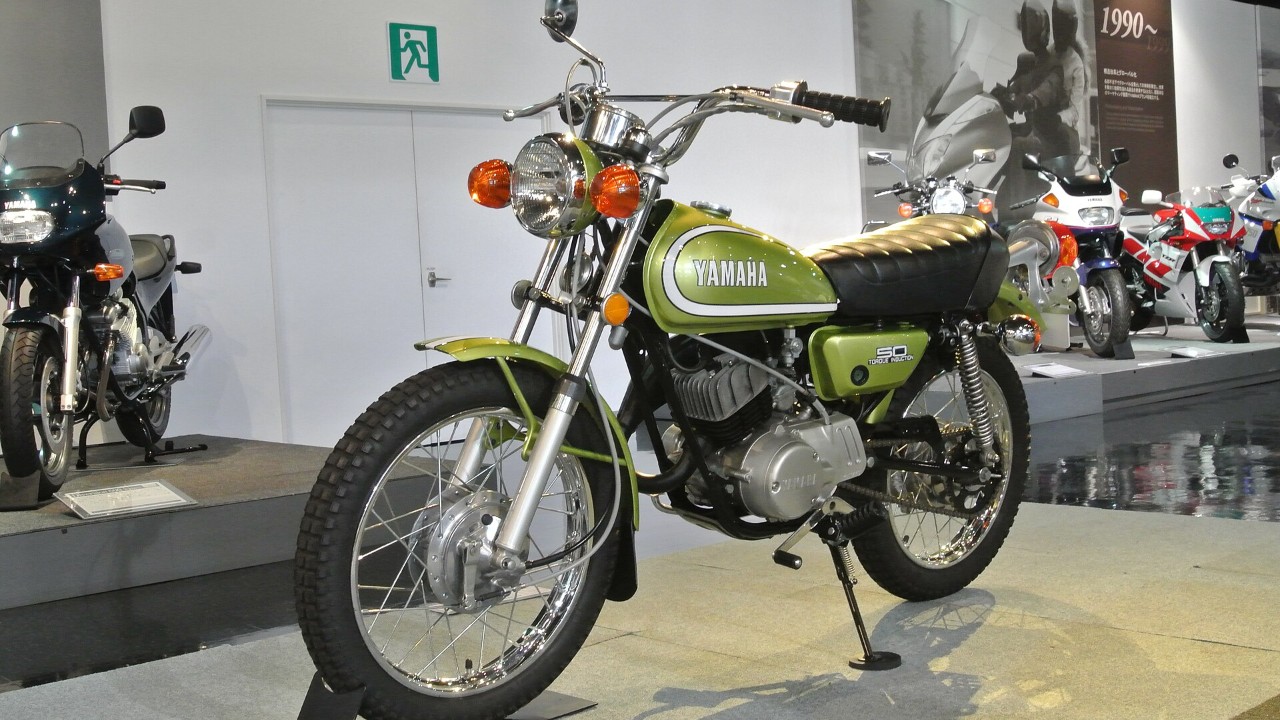
The GT50 followed Yamaha’s FT-1 mini trail bike, which had helped spark grassroots off-road riding. Yamaha’s GT50 collection page lists a 49 cc air-cooled two-stroke single with Yamaha’s seven-port Torque Induction system. That engine made 4.0 PS at 7,500 rpm, while peak torque of 4.4 Nm arrived at 5,000 rpm. Meanwhile, a full double-cradle frame gave it the bones of a proper dirt bike.
That frame mattered. Yamaha says the compact chassis “offered a smoother and more enjoyable ride,” and the whole bike weighed just 62 kg. It measured 1,610 mm long and cost ¥74,000 when new. In other words, it was a real trail bike shrunk to minibike size.
Our take: the GT50 is the minibike that grew up fastest. In our view, a double-cradle frame and a lively two-stroke made it far more serious than its size suggests. That is a lot of bike for 50 cc. If you’re curious about the riskier side of the minibike boom, read our list of minibikes that feel too dangerous today.
More from Fast Lane Only