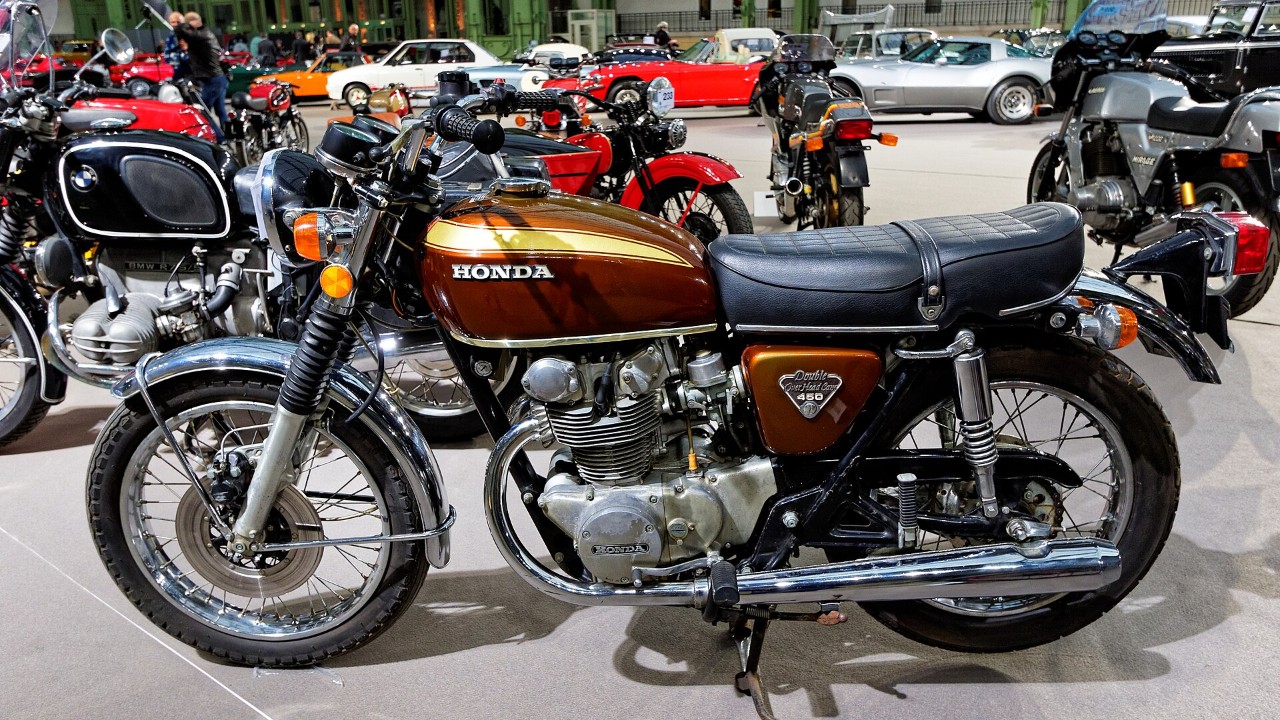
Honda built its name on small, reliable bikes, but a run of bolder Honda machines gave the badge its edge. Some had six cylinders. Others had oval pistons, a turbocharger or a two-stroke engine from a company that had long avoided them.
Not every one sold in big numbers, and a few were expensive gambles. Still, each showed what Honda engineers would try when someone let them off the leash. A few are easy to find today, while others rarely leave museum floors. Either way, we would happily give any of them garage space.
These are our picks: ten Honda motorcycles we admire for the ideas they carried, from a 1960s twin to a 1990s exotic. Each item names the exact bike in our photo, along with the facts that earned it a place and our take on why it matters.
1. 1966 Honda CB450
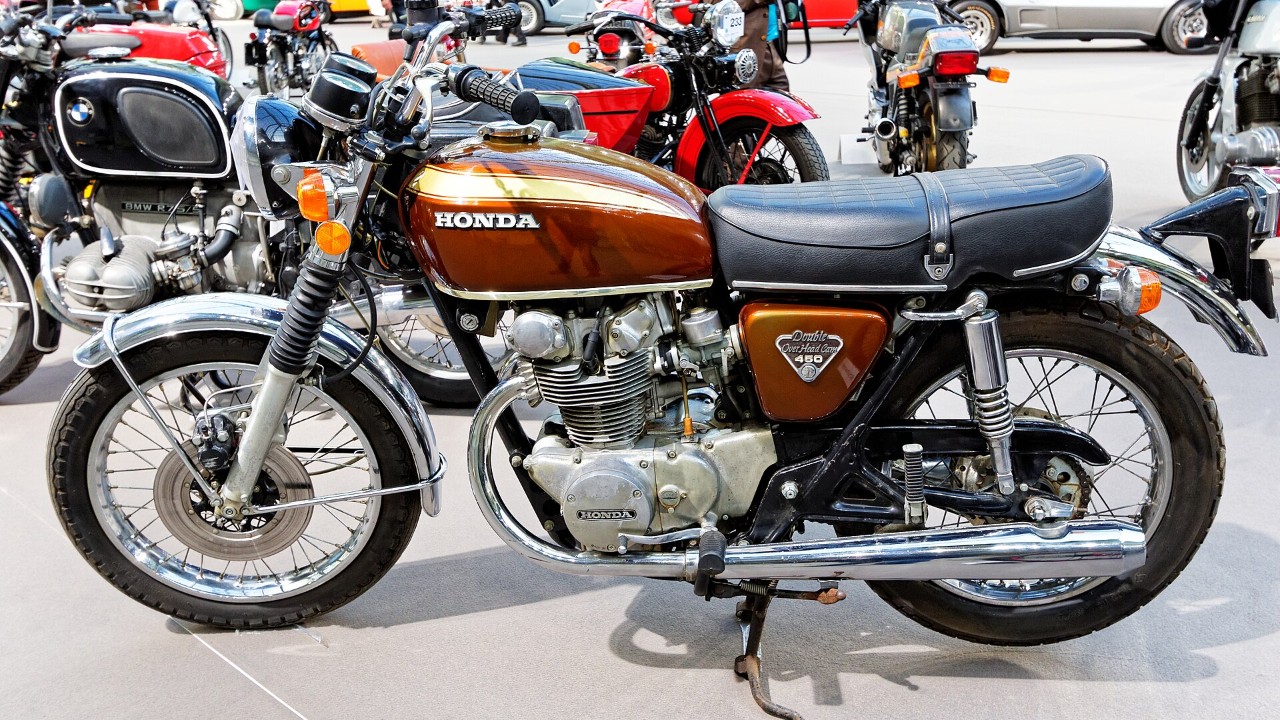
The CB450 was Honda’s first real swing at the big-bike market. Honda says it designed this model primarily for American riders. Its own history of the Dream CB450 describes a high-revving 450cc DOHC engine and performance that matched 650cc European twins.
That was a bold claim in 1965. In fact, Honda backed it with real hardware, because the CB450 was the flagship of its range at launch. Production ran from 1965 to 1974, and the twin made a quoted 45 bhp. If you shop for one, we would look for an early bike, because the first years show Honda’s original idea at its purest.
Our take: the CB450 never got the fame of the CB750 that followed. However, it was the bike that told the world Honda wanted more than the commuter market. We admire it because it took a real risk. The bike in our photo is a 1966 example, an early version of the model that set up everything after it.
2. 1979 Honda CBX
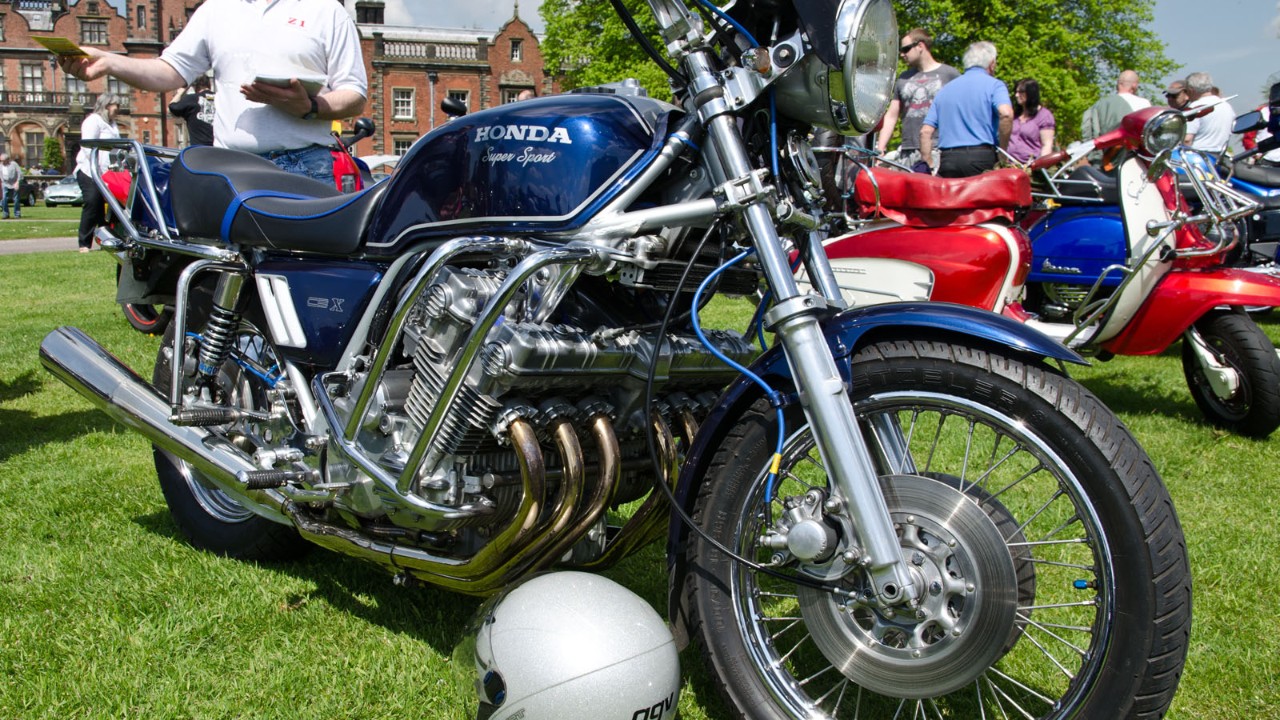
Six cylinders in a row, hung across the frame like a piece of sculpture. That is the CBX, and it draws a crowd at any bike night. According to Motorcycle Classics, the 1,047cc DOHC six made a claimed 103 hp at 9,000 rpm. It breathed through six 28mm Keihin carburetors.
The same report gives the 1979 price as $3,988. It also puts the wet weight at 600 lb, so this was no lightweight. Even so, the CBX ran the quarter mile in 11.66 seconds at 117.6 mph. Those were serious numbers for a road bike of its day. By comparison, the magazine says the CBX weighed about 50 lb more than Benelli’s six-cylinder Sei, but its extra 28 hp more than made up for it.
Here is the catch. The magazine says the CBX was not a sales success, and production ended after 1982. We admire it anyway, because nobody needed a six-cylinder sport bike. Honda built one because it could. The 1979 bike in our photo shows the debut look, with the silver Comstar wheels the first year wore.
3. 1964 Honda CB77 Super Hawk
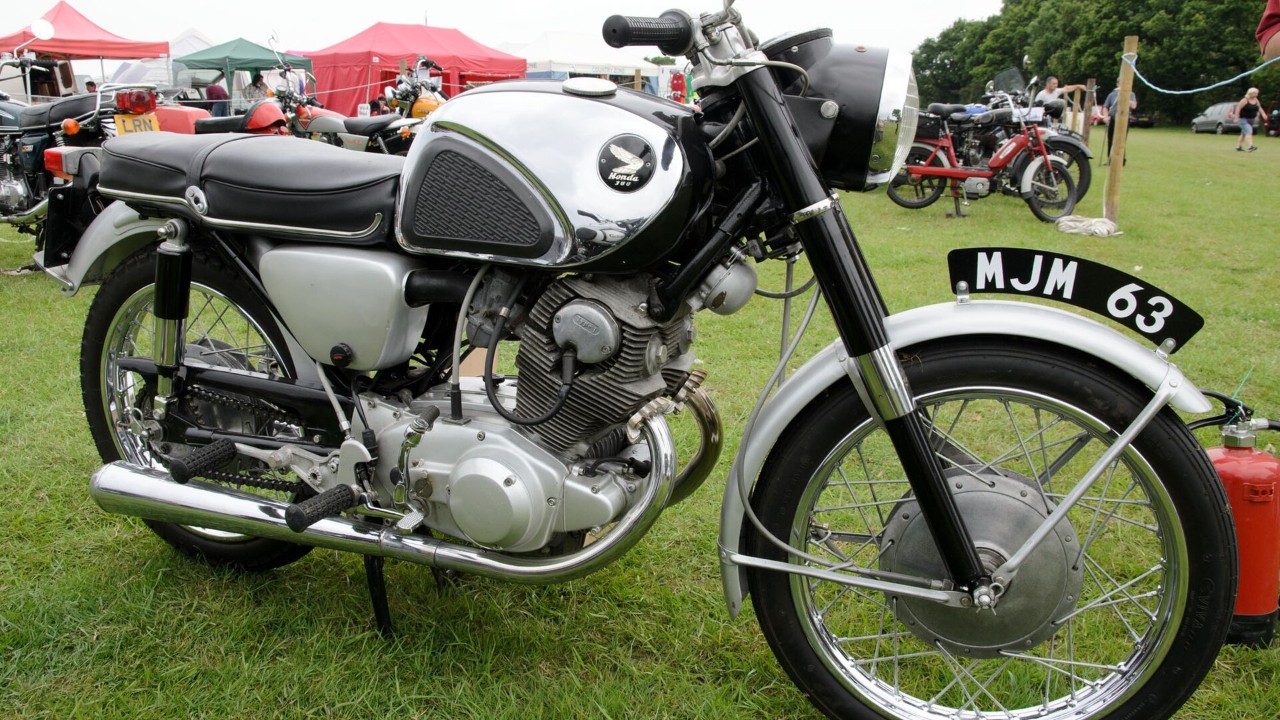
The Super Hawk proved that a 305cc twin could keep up with much bigger bikes. Honda built it from 1961 to 1967. Its twin used crankpins spaced 180 degrees apart, which helped it stay smooth at high revs.
Cycle World’s period road test recorded an average two-way top speed of 104.6 mph. That same test logged a 16.8-second quarter mile. Unlike earlier Hondas with pressed-steel frames, the CB77 used a steel-tube frame with no downtube. As a result, it rode and handled more like a European sporting bike than a scooter-maker’s product.
There is also a literary footnote. Robert M. Pirsig rode a 1966 CB77 on a two-month trip from St. Paul, Minnesota, to Petaluma, California, in 1968. That trip became the basis for Zen and the Art of Motorcycle Maintenance, though the 1974 book never names the bike. If you want one, budget patience rather than cash, because good original parts take time to find. Our take: the CB77 is the ideal entry to vintage Honda, small enough to enjoy and fast enough to surprise. The bike in our photo is a 1964.
4. Honda VFR750R RC30
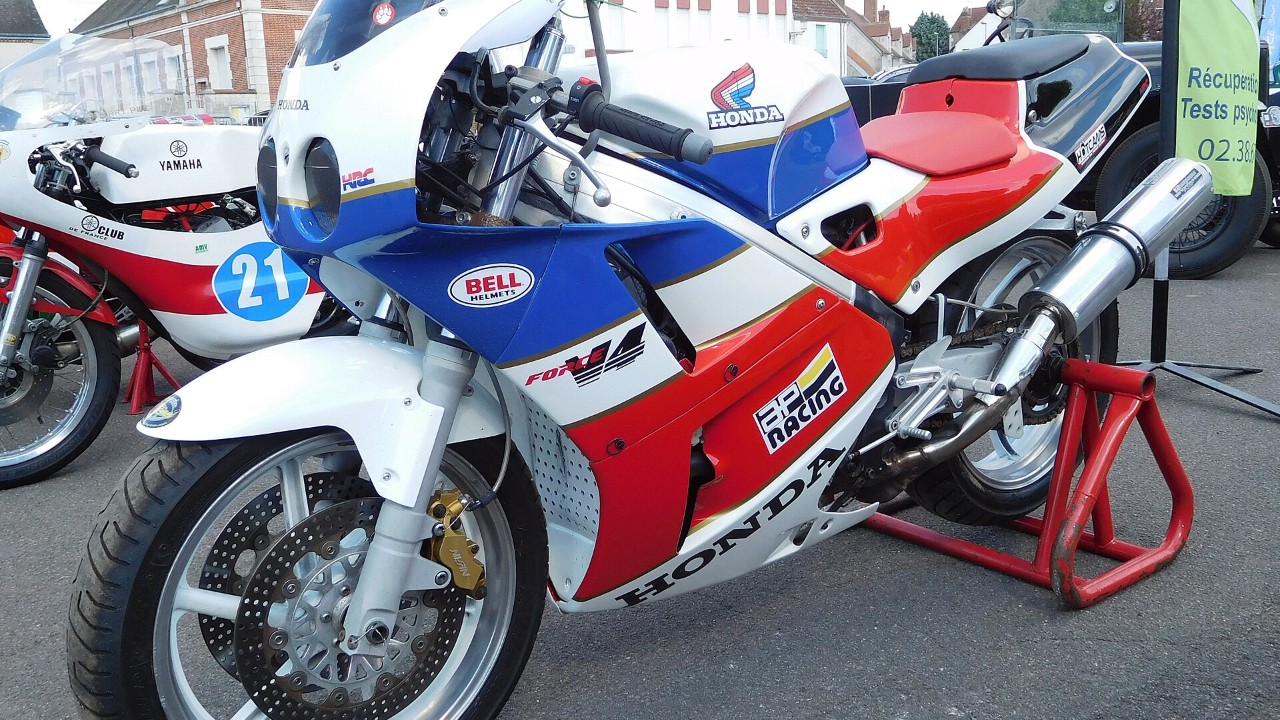
The RC30 is a homologation special, a road bike built so Honda could go racing in production-based classes. Honda launched it in Japan in 1987, then in Europe in 1988 and in the US in 1990. Only about 3,000 were made, and the US price at launch was $15,000.
That figure looked steep for a production bike at the time. Nevertheless, buyers got a 748cc liquid-cooled V4 with 16 valves and DOHC heads, derived from the VFR750F. Outside Japan it made a quoted 118 hp at 11,000 rpm. Japanese-market bikes ran a restricted tune.
The racing payoff came fast. Fred Merkel won the World Superbike riders’ and manufacturers’ titles on the RC30 in 1988 and again in 1989. Meanwhile, Robert Dunlop won the Macau Grand Prix on one in 1989, and Steve Hislop won it in 1990. Our take: few bikes look this purposeful standing still, and the racing record backs up the looks. Because so few exist, an RC30 is a bike most riders admire from a distance, and that suits it.
5. 1992 Honda NR
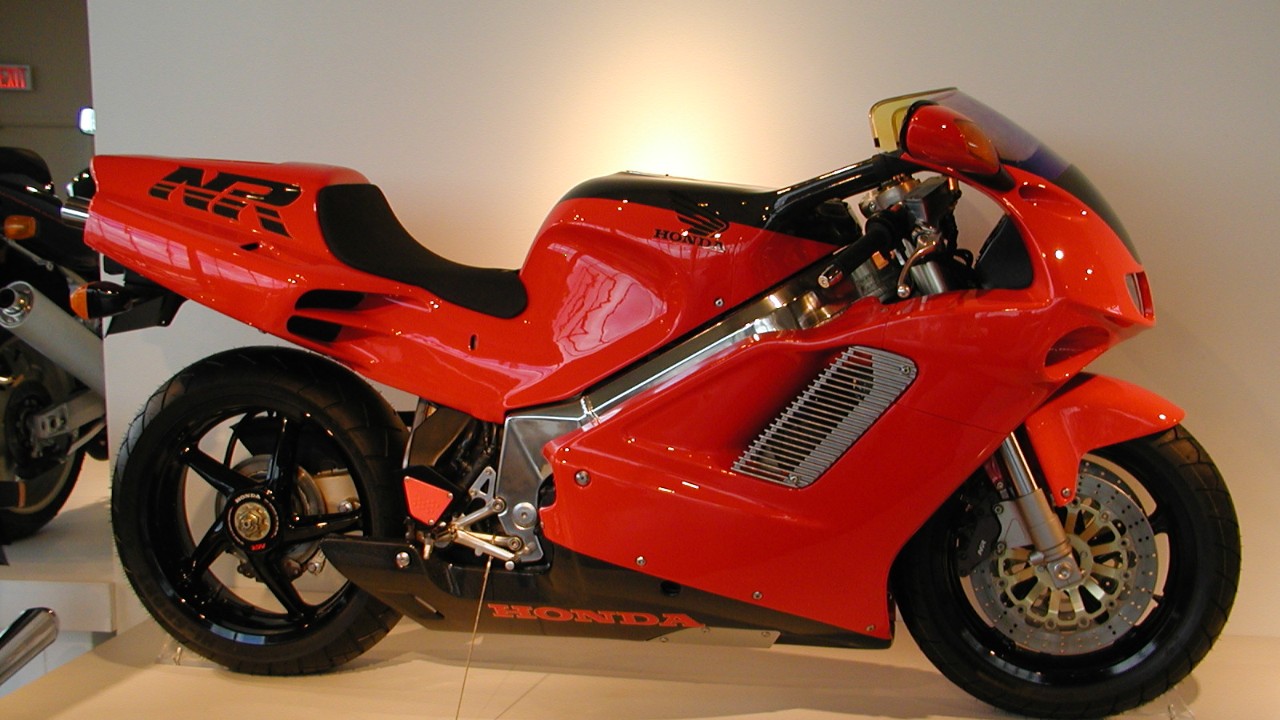
The NR is the strangest road bike Honda ever sold, and we mean that as praise. Its story starts with the NR500 Grand Prix racer of 1979. That bike used oval pistons and eight valves per cylinder to chase four-stroke power in a two-stroke world. Some journalists nicknamed it “Never Ready,” and it rarely won. The final NR500 made about 130 bhp at over 20,000 rpm, yet Honda soon switched its Grand Prix effort to the NS500 two-stroke.
Honda never gave up on the idea, though. You can read more in our look at why Honda gave the NR500 oval pistons. The 1992 road bike carried the concept into a 750cc V4 with eight valves per cylinder and pistons shaped like a squashed oval. In standard form it made about 130 PS at 14,000 rpm.
About 300 reached customers, and the price was $50,000, which made it the most expensive production bike of its day. Our take: the NR was never a sensible purchase. Instead, it was a rolling engineering thesis, and that is exactly why we admire it. The bike in our photo is a 1992 NR750.
6. 1975 Honda GL1000 Gold Wing
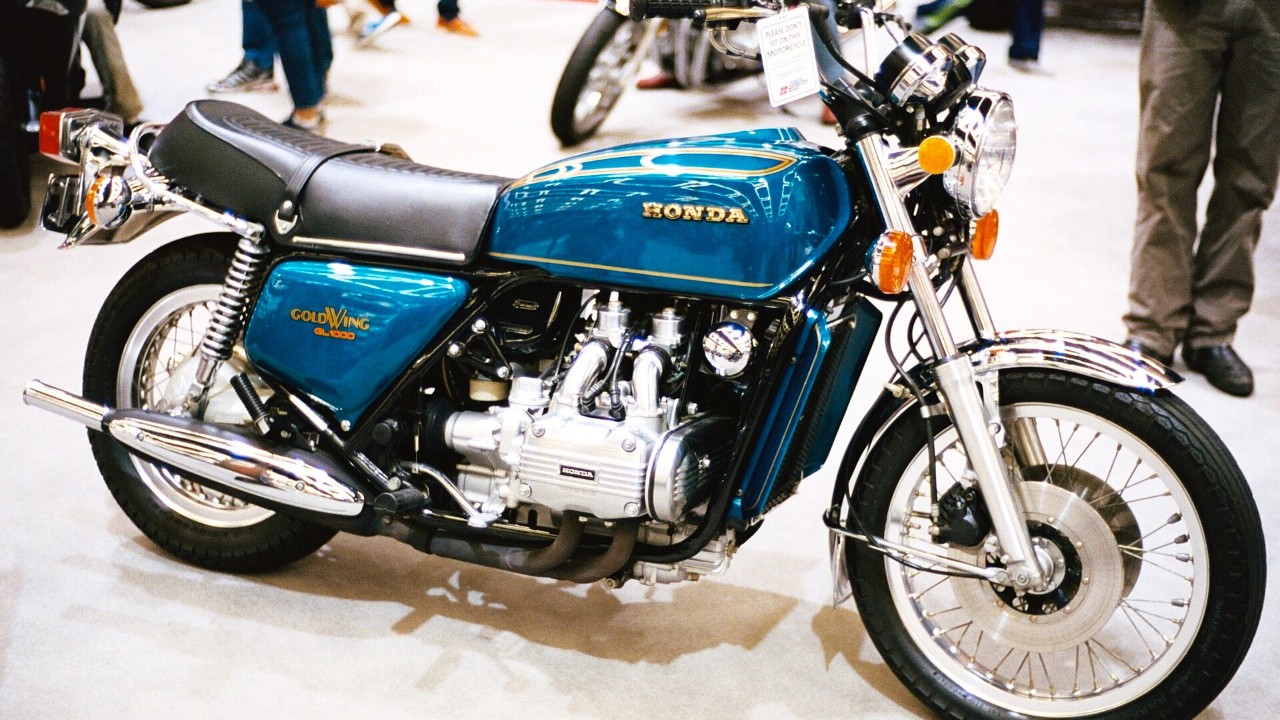
Before the Gold Wing, long-distance touring in America meant a big V-twin or a European flat twin. Then Honda showed the GL1000 to its dealers in Las Vegas in September 1974. A month later, the public saw it at the Cologne show, and sales began in 1975.
The engine was a 999cc liquid-cooled flat-four with shaft drive. Honda also moved the real fuel tank under the seat to keep weight low. The “tank” on top was a dummy that held the radiator overflow, the electrics, the air filter and a backup kick-start lever.
The idea caught on quickly. Honda sold about 13,000 in the US in 1975 and more than 97,000 there from 1975 to 1979. Later Wings grew into a flat-six in 1988 and even gained a reverse gear. We covered how the early Wing held up in our touring motorcycles feature. Our take: the first Gold Wing came without a factory fairing, which only arrived on the 1980 GL1100 Interstate. Even so, it laid the base for every Wing since. The 1975 bike in our photo shows that clean original form.
7. 1985 Honda NS400R
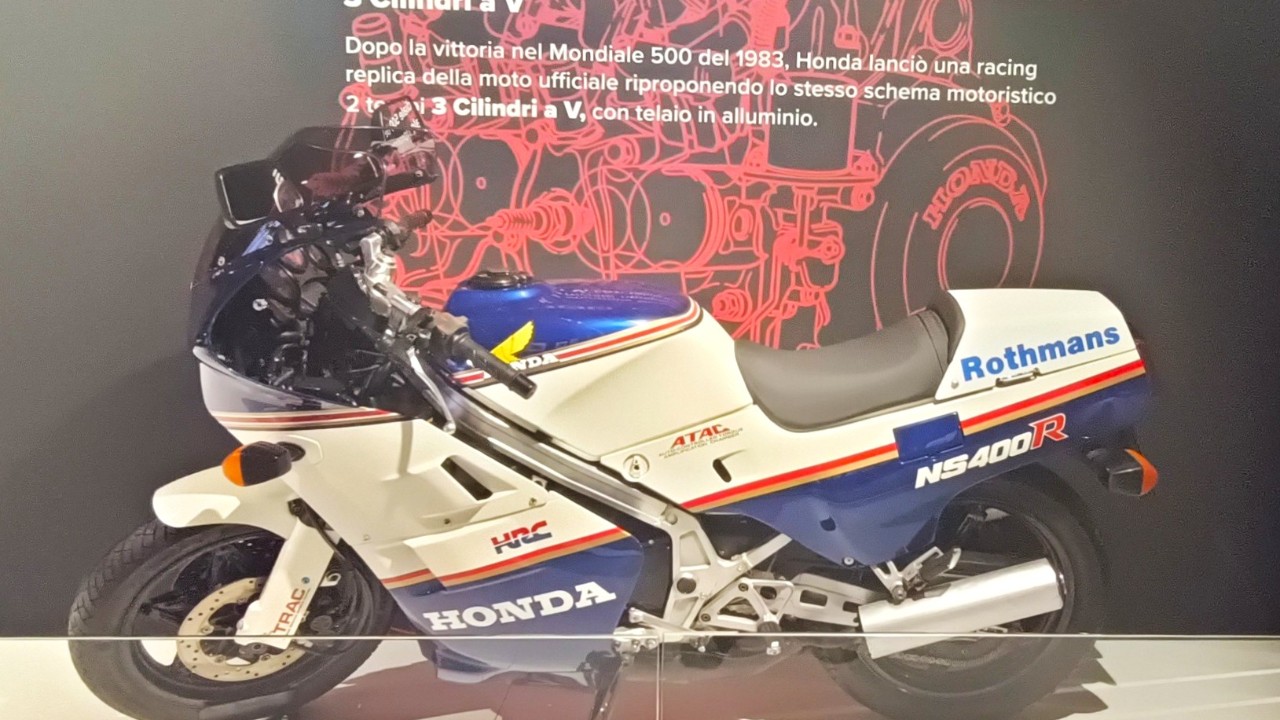
For a short window in the mid-1980s, you could buy a street bike shaped like a world champion’s racer. The NS400R was Honda’s road-going echo of the NS500 V3 that Freddie Spencer rode to the 1983 500cc world title. Spencer was 21 that year, the youngest champion in the class at the time.
So the road bike kept the three-cylinder layout. Its 387cc liquid-cooled two-stroke V3 used oil injection and made a quoted 72 hp in export trim. Japanese-market bikes had a lower tune. Up front, Honda fitted a fork with its TRAC anti-dive system, a period trick to keep the nose flat under hard braking.
Our take: the NS400R gets less attention than the bigger race replicas of its era. However, it has its own charm. The V3 sounds unlike anything else from that era, and the bike is light and lively on a good road. We admire it because Honda, a four-stroke company at heart, built a two-stroke road bike this focused. The bike in our photo is a 1985 model, from the first year of sales.
8. Honda CR250M Elsinore
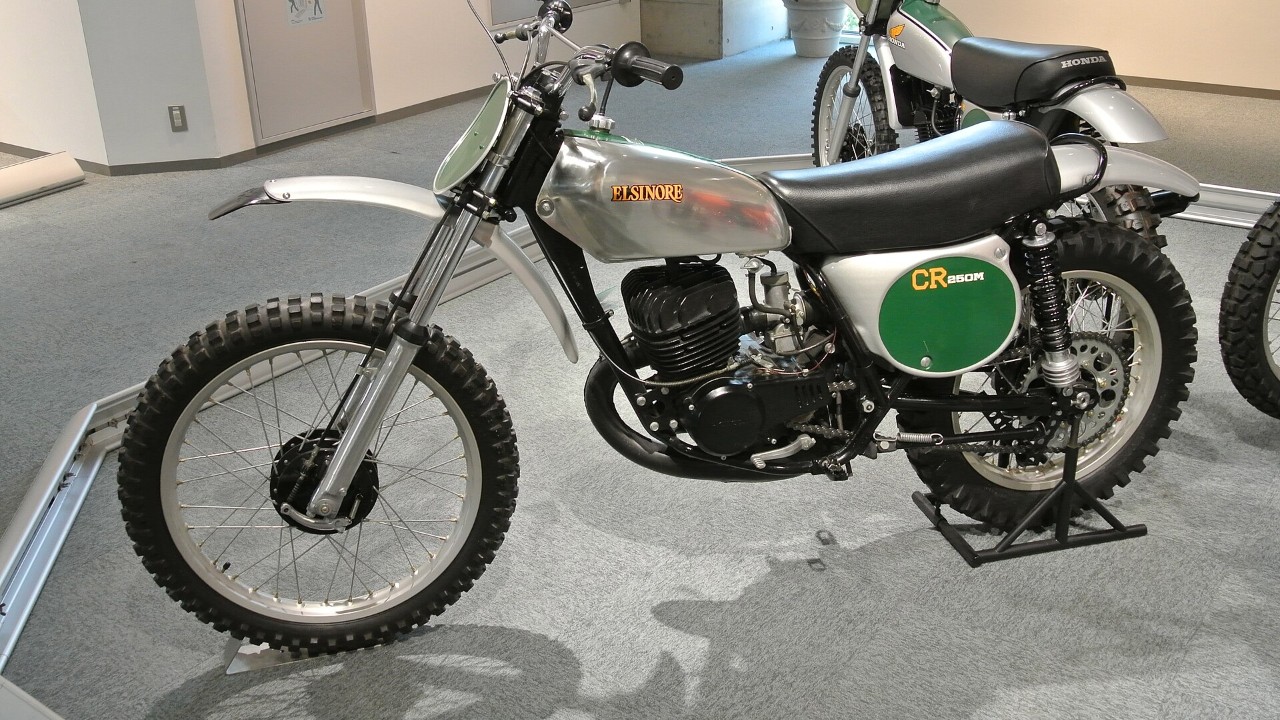
Soichiro Honda did not like two-stroke engines. Yet his company’s first two-stroke turned out to be a hit. According to Motocross Action, the 1973 CR250M Elsinore was Honda’s first two-stroke and its first production motocrosser. The name came from the Elsinore Grand Prix, a famous desert race in California.
The magazine says the Elsinore listed for $1,145 in 1973, close to what the European bikes cost. Meanwhile, Honda’s R&D team had pushed the founder to approve the project. Don Jones helped develop the bike, and his son Gary Jones won the 1973 AMA 250cc National Championship on it.
Our take: the Elsinore changed what riders expected from an off-the-shelf race bike. Motocross Action credits it with better ergonomics, carburetion and durability than the European bikes of the day. Its plastic parts and satin-finished aluminum and magnesium cases became the new standard. The magazine even calls it the lightest production motocrosser in the world at the time. Our photo shows one in the Honda Collection Hall, which tells you how Honda itself rates it.
9. Honda VF1000R

The VF1000R is the forgotten big brother of the V4 sport bikes. Honda introduced it in Europe in March 1984 as a racer-replica with full bodywork. Its 998cc V4 shared a block with the VF1000F, but the R used gear-driven camshafts instead of chains.
Nine gears linked the crankshaft to all four cams. That setup added weight, but it kept the valve timing precise at high revs. Honda also used spring-loaded scissor gears to quiet the gear train, which shows how far the engineers went. Output was about 122 hp in most markets and 125 hp in the US. Briefly, the VF1000R held the title of fastest production motorcycle at 150 mph. Then the Kawasaki GPZ900R arrived and took it away.
There was a downside, too. With half a tank of fuel, the VF1000R weighed roughly 600 lb, and it rarely raced well. Our take: it is a heavy, complex bike, and that is part of its appeal. Few factory sport bikes ever carried this much engineering for its own sake. Production ended in 1988, and the bike in our photo wears the full-fairing racer look that defined it.
10. 1981 Honda CX500 Turbo
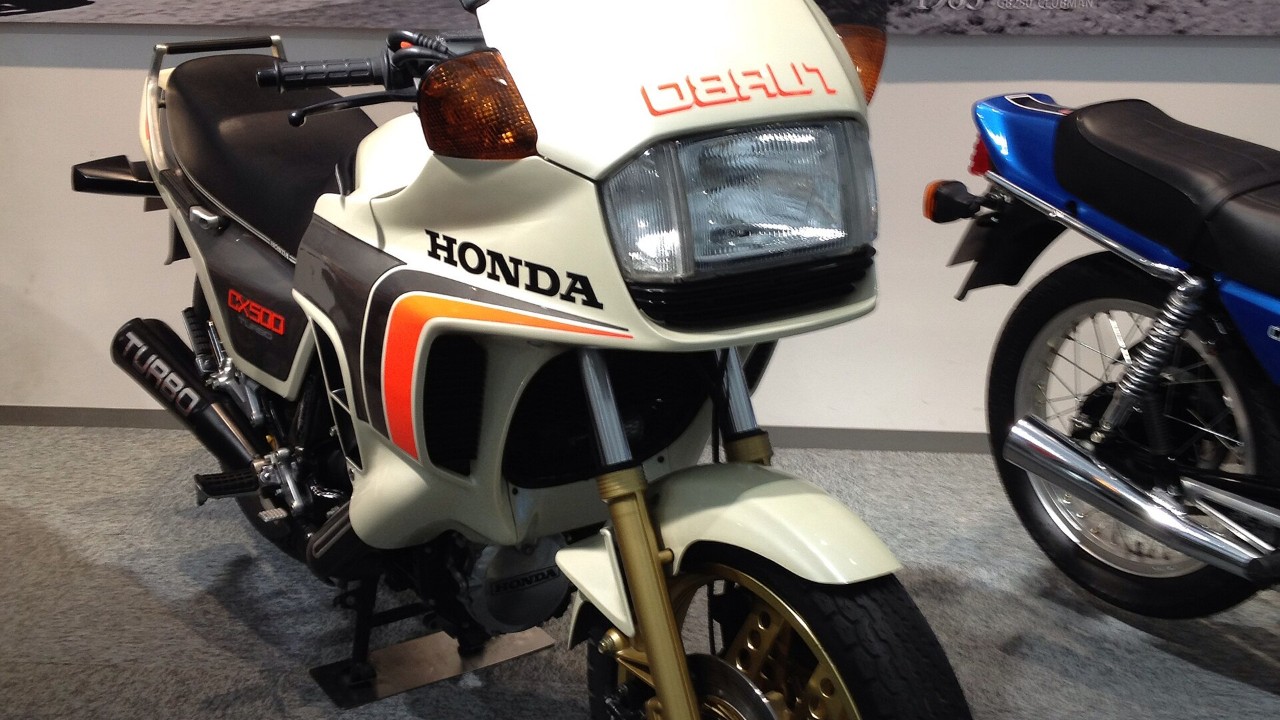
Turbos were the hot idea of the early 1980s, and Honda got there first. Hagerty UK calls the CX500 Turbo the first turbocharged production motorcycle. It was also the first Honda bike with programmed fuel injection. Power jumped from 48 hp on the standard V-twin to 80 hp with the turbo, according to Hagerty.
Cycle World tested the bike in its October 1981 issue, when Honda said showroom bikes would follow in mid-1982. That test quoted a claimed 77 bhp and 19 psi of boost. It also described a turbocharger designed to spin at about 100,000 rpm. A digital computer read seven sensors to manage the injection. Then, a year later, the CX650 Turbo replaced it with 99 bhp.
Our take: the CX500 Turbo is a fascinating dead end. It was smooth and docile, but heavy and complex. Hagerty notes that the CX500 and CX650 Turbos sold for just two years between them. We admire it because Honda proved the idea worked on two wheels. Hagerty UK estimates that only about 350 Turbos reached Britain, and that around fifty CX500s remain there today.
More from Fast Lane Only