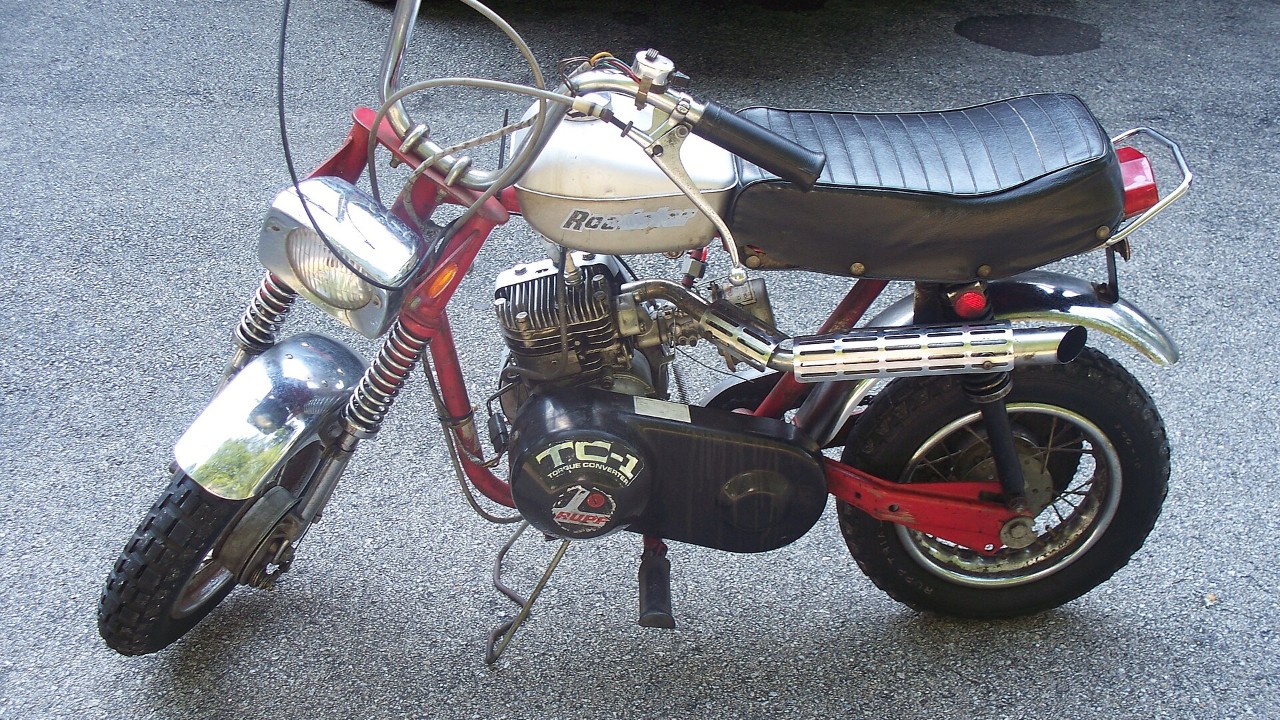
A 1970 Rupp Roadster ran a small Tecumseh engine of the kind more often found on yard equipment. Riders perched on tiny wheels with drum brakes and nothing around them. Back then, that was normal. Minibikes took off in the 1960s and 1970s, and more than a hundred makers jumped into the business during the boom.
At first, most of those little machines were built for backyards, campgrounds and dirt lots. A few wore lights and license plate brackets, so riders took them farther than anyone should have. By 1979, minibikes could no longer be ridden on public roads in the U.S. Today, a busy street full of tall SUVs makes a 10-inch wheel look even smaller.
These are our picks for eight minibikes that feel too dangerous to ride today. The verdict is our opinion, based on how they were built: small wheels, simple brakes and almost no protection. However, the years, engines and specs come from museum records, club histories and the makers’ own archives.
1. 1970 Rupp Roadster
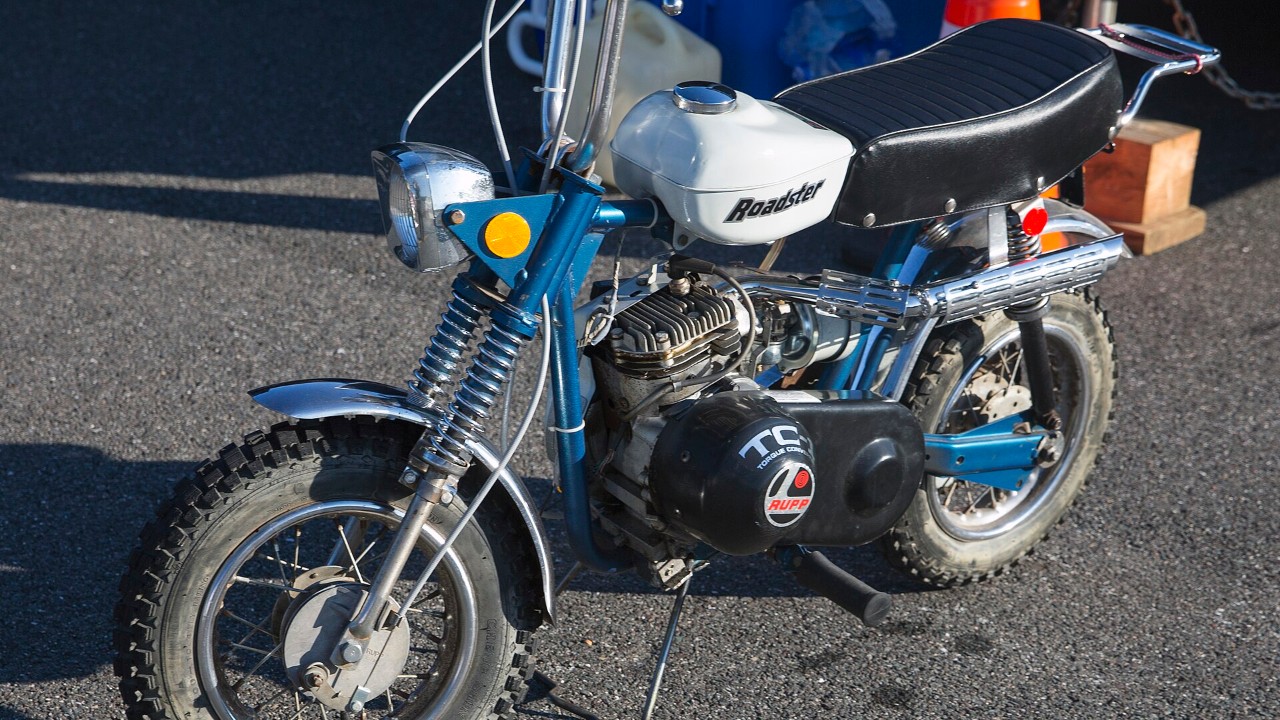
Mickey Rupp started his company in Mansfield, Ohio, in 1959, with eight employees in a 3,000-square-foot shop. The Rupp Roadster arrived in 1969, and the company then built a modified version for 1970. According to the Rupp owners’ history site, that 1970 Rupp Roadster used a Tecumseh 4-horsepower engine, 10-inch wire wheels and drum brakes. It also came in bright colors such as Rally Red, Grabber Orange and Lightning Blue.
The 1970 model was the only year Rupp used 10-inch spoke rims. It also had front fork springs and lights front and rear. In other words, it looked like a real motorcycle that had shrunk in the wash. Power went through a torque converter, so there was no clutch to learn. As a result, a young rider could twist the throttle and go almost at once.
Our take: the Rupp Roadster is a wonderful piece of 1970s design, and the colors alone make collectors smile. Still, we would not point one into modern traffic. The rider sits low and exposed, and the brakes were built for a dirt lot. Rupp sold a controlling interest in 1973, and the company went under in 1978. That makes a clean survivor worth keeping as a display piece, not a commuter.
2. 1972 Harley-Davidson MC-65 Shortster
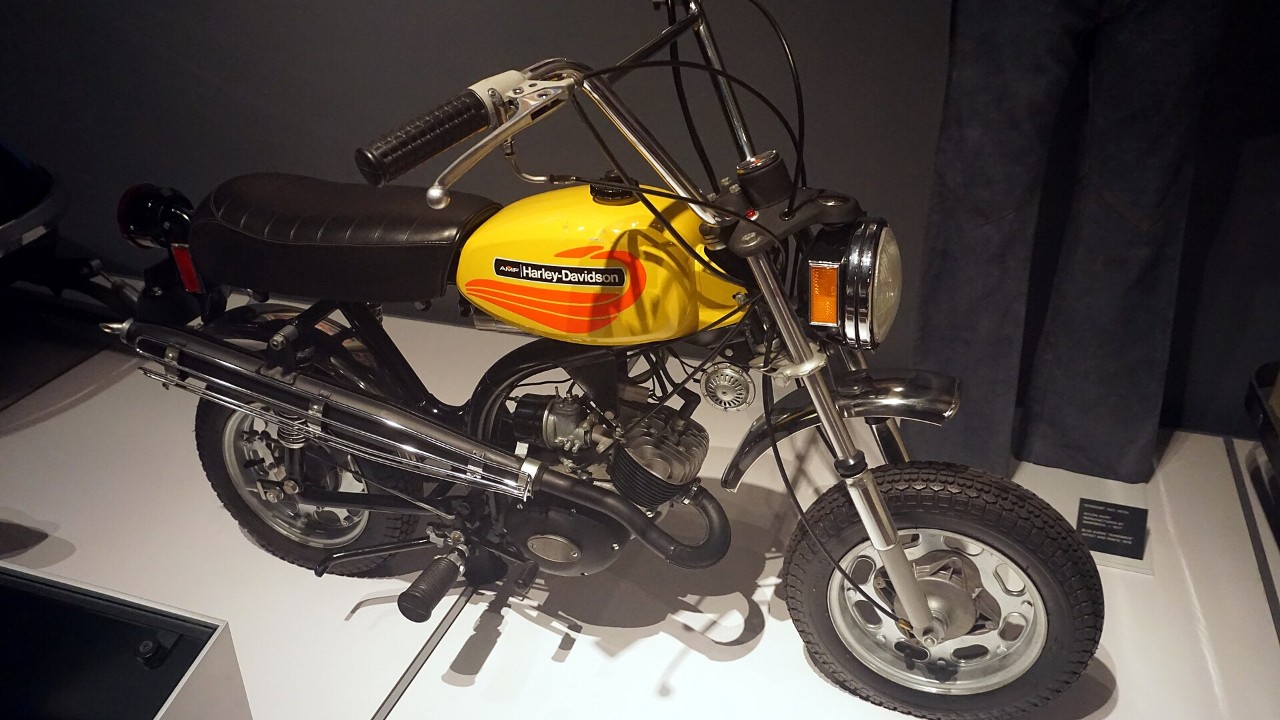
Harley-Davidson held a 50% stake in the Italian maker Aermacchi from 1960 and owned it outright by 1974. Out of that partnership came the MC-65 Shortster, a one-year-only model for 1972. For 1973, the same chassis got a 90cc engine and a new name, X-90. The National Motorcycle Museum lists a 63.8cc two-stroke single that ran on a 25:1 fuel and oil premix.
Unlike most minibikes, the Shortster had a three-speed foot shift and a hand clutch, so it felt like a real motorcycle. It also rode on 3.00 x 10 tires with drum brakes at both ends. The wheelbase was only 39.2 inches. Meanwhile, Harley fitted street-legal lighting, a license plate mount and gauges, so the Shortster was ready for public streets.
Our take: the Harley badge makes this one tempting, and the polished stainless fenders look great. However, a two-stroke on 10-inch wheels with a hand clutch asks a lot of a young rider. We would rather see one parked at a show than weaving through a parking lot. If you buy one, treat it as a rare piece of Harley history first.
3. 1970 Honda QA50
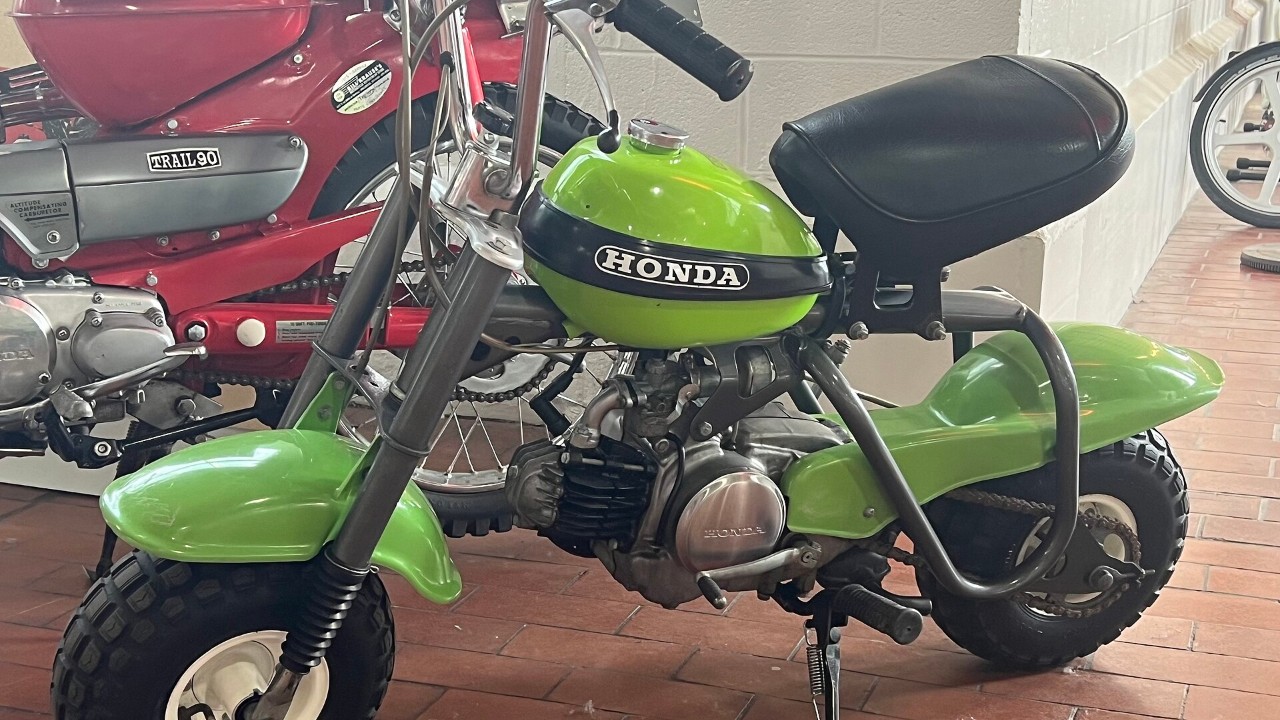
Honda built the QA50 from 1970 to 1974 as a gentle starter bike for young baby boomers. The Lane Motor Museum in Nashville owns a 1970 example. The museum calls it “an excellent beginner’s bike” and lists a 49cc overhead-valve single with a two-speed automatic transmission. Top speed was about 30 mph.
Over roughly four years, Honda made four versions. The first, the K0, came with fenders and a fuel tank in gypsy yellow, sprout green or scarlet red. In fact, the museum says its power was similar to the Z50. The automatic gearbox meant a child only had to steer, brake and twist the grip. At the time, Honda’s slogan, “You meet the nicest people on a Honda,” was busy making motorcycling look friendly to everyone. That simplicity was the whole point.
Our take: the QA50 is one of the friendliest minibikes ever built, and we love its toy-like look. That is also the problem today. A 30 mph bike that small disappears behind any pickup truck. We would keep a QA50 for a private driveway or a vintage show, where its bright paint can do the talking.
4. Honda ST70 Dax
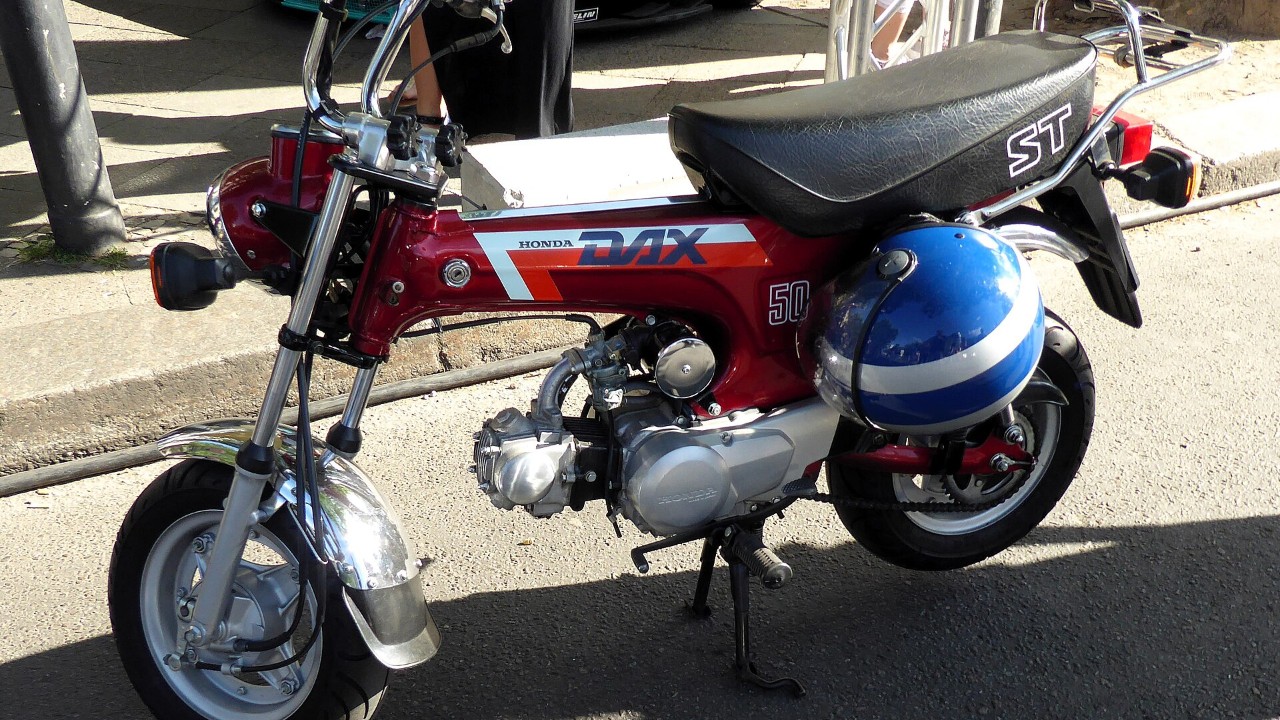
Honda introduced its ST-series minibikes in August 1969. Europe and Japan knew the ST70 as the Dax, while North America got a close cousin called the CT70, or Trail 70. What set the Dax apart was its pressed-steel “T-bone” frame. According to Classic Trader’s history of the Dax and Monkey, Honda made the 70cc engine by boring the 50cc unit from 39 to 47 mm.
Besides, the Dax was clever. Its handlebar halves folded down in an instant, so the bike could be stowed in a car. The small fuel tank hid under the seat, much like the Super Cub’s. In Germany, the ST70 counted as a full motorbike. Buyers there had to be 18 or older with a motorcycle license.
Our take: that license rule tells you plenty. Even in the 1970s, regulators did not treat the ST70 as a toy. Today, the folding bars that made it so handy also give it a light, fragile feel. We would enjoy one on a quiet campground road. Riding the Dax in rush hour, however, is a hard pass for us. For bikes better suited to new riders, see our list of 10 motorcycles that continue inspiring new riders.
5. Yamaha Chappy LB50
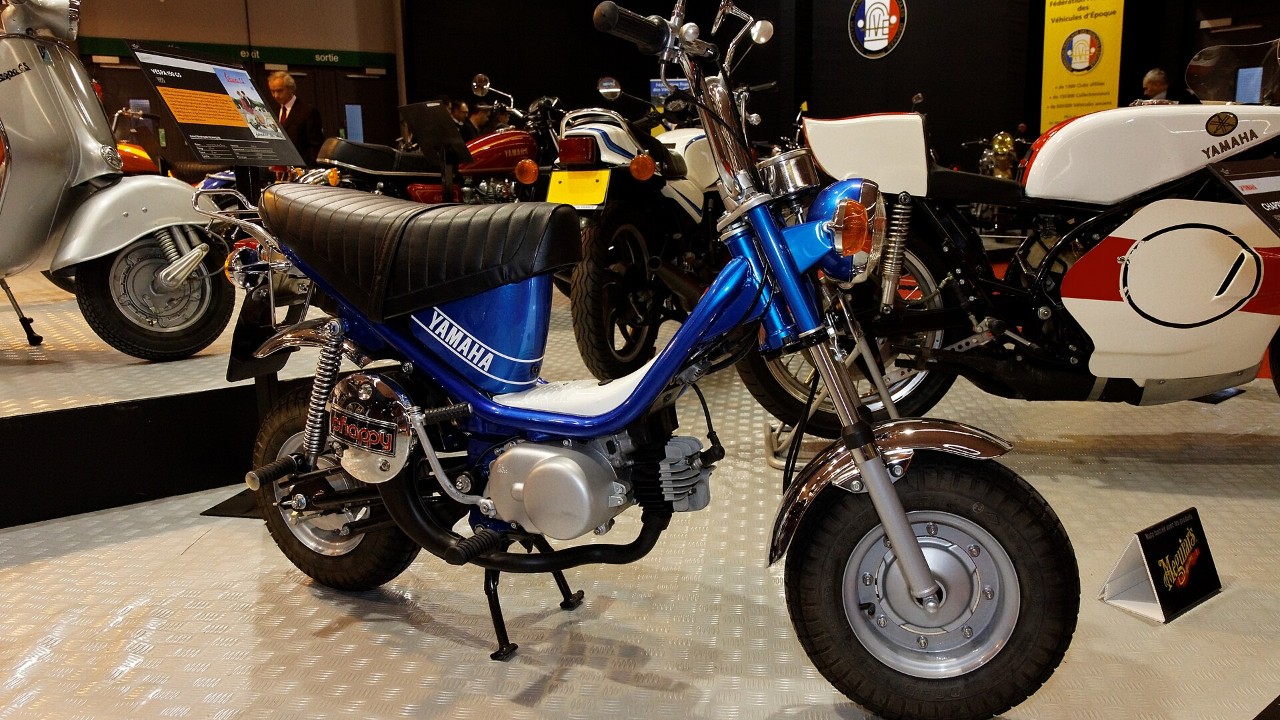
Yamaha’s Chappy went on sale in 1973 as a city runabout. According to Yamaha’s own collection archive, the company developed it “primarily for women in Japan’s cities.” The idea was a mini-bike anyone could ride around town. The original LB50II used a 49cc air-cooled two-stroke single rated at 3.5 PS.
Meanwhile, it had a simple two-speed automatic transmission and small 8-inch tires. Yamaha chose those tires so smaller riders could climb aboard easily. The first model weighed 71 kg and cost ¥82,000. Later versions added a four-speed with a hand clutch and a three-speed with a centrifugal clutch. Detail changes also made it easier to use. As a result, the Chappy stayed on sale for a long time.
Our take: the Chappy is charming and easy to love. Its fat little body and short seat make it feel friendly. Even so, 8-inch tires on a modern road leave very little margin for a pothole or a storm drain. We would happily park one in a garage as a conversation piece. We would not trust one in today’s traffic, no matter how cute it looks.
6. Garelli Bonanza
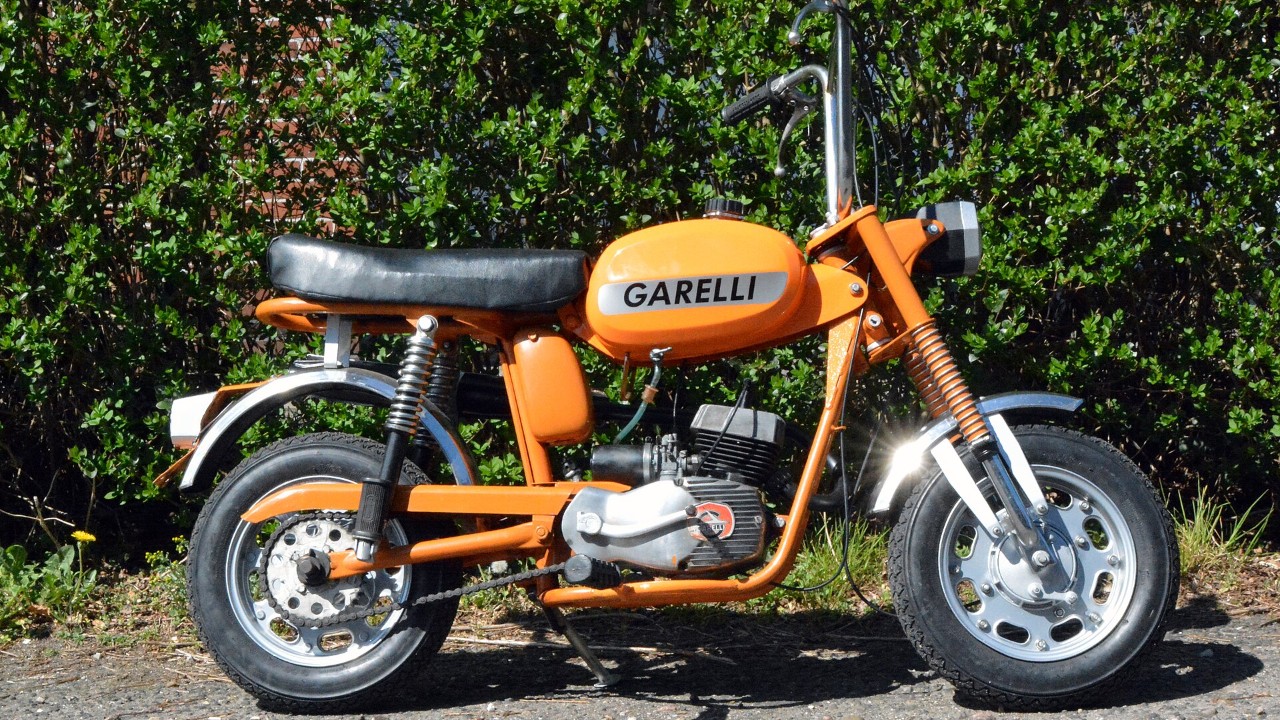
Garelli built motorcycles in Italy from 1919 to 1991, and in the 1970s it chased the same young buyers as everyone else. The Bonanza was its compact youth bike. One 1973 example sold through Classic Trader’s Villach Collection auction in March 2026 for €950 including fees. The listing described a 49cc two-stroke single, air-cooled and rated at 3 hp.
Similarly, the same listing shows a three-speed gearbox and chain drive. That made the Bonanza a real little motorcycle, not a scooter. It also called the bike a “youth moped from the 1970s generation,” which sums up the idea. In other words, it was built for teenagers who wanted gears and a bit of style.
Our take: the Bonanza has great 1970s Italian flair, and the price of that auction bike shows you can buy one without much money. Yet it has the same weak points as its rivals: small size, simple brakes and no protection. We would restore one for the look. However, three gears and a chain are a lot of machine for a beginner, and we would not ride it beside modern traffic.
7. Honda Z50A K2
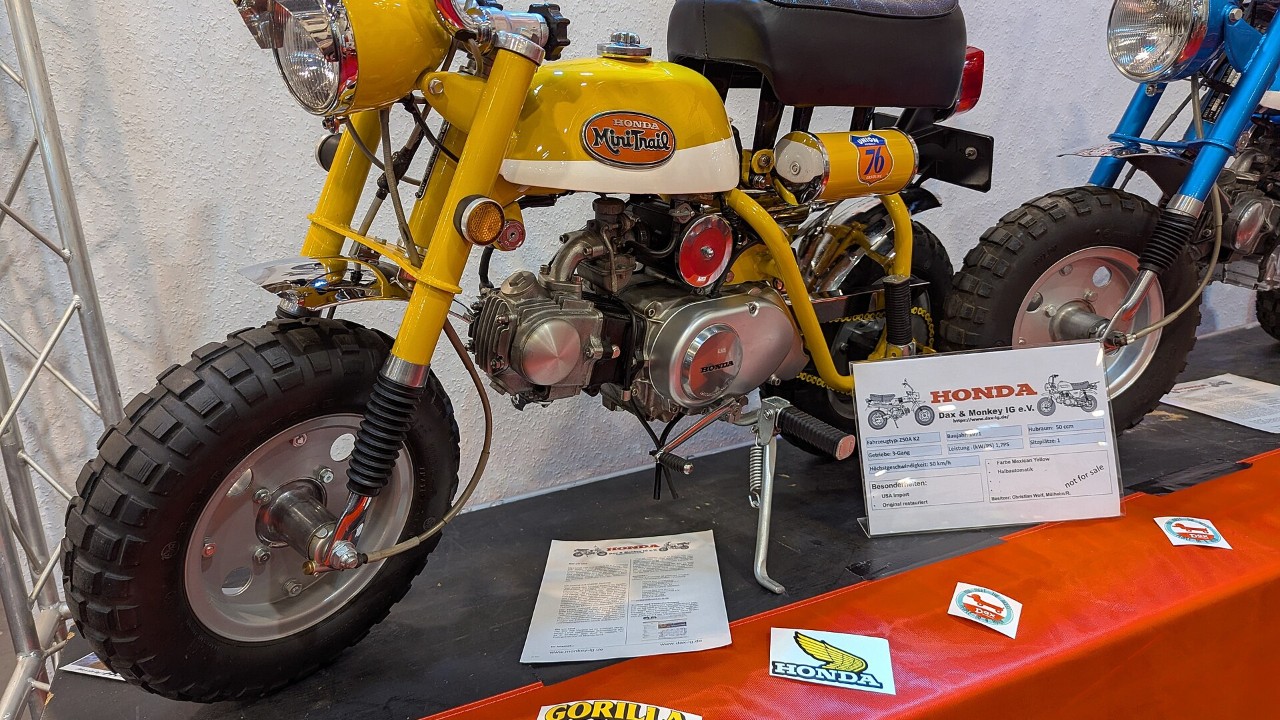
Honda’s Monkey line started with the 1961 Z100, a children’s ride at the Tama Tech amusement park in Japan. The Z50A Mini Trail followed in 1968. According to Motorcycle Classics, it used a 49cc single taken from the C100 Cub and a three-speed semi-automatic gearbox. It sold for $239 new.
Later, the K2, known as the “long tail,” came in 1970 and 1971 with lower handlebars. Like the early Z50s, it had no rear suspension. In fact, reports of frame breakage led Honda to add a swinging-arm rear for 1972, when the bike became the Z50J. Until then, the rider’s spine did all the work over every bump. Motorcycle Classics’ tester also found the gearshift hard to get right, because the clutch disengaged every time the lever moved.
Our take: the Z50A K2 taught a generation to ride, and that matters. However, a hardtail minibike with drum brakes feels very old next to a modern youth bike. We would buy one for nostalgia and ride it slowly on grass. For more small machines with big personalities, see our 20 vintage motorcycles that were faster than anyone admitted.
8. Suzuki RV50 VanVan
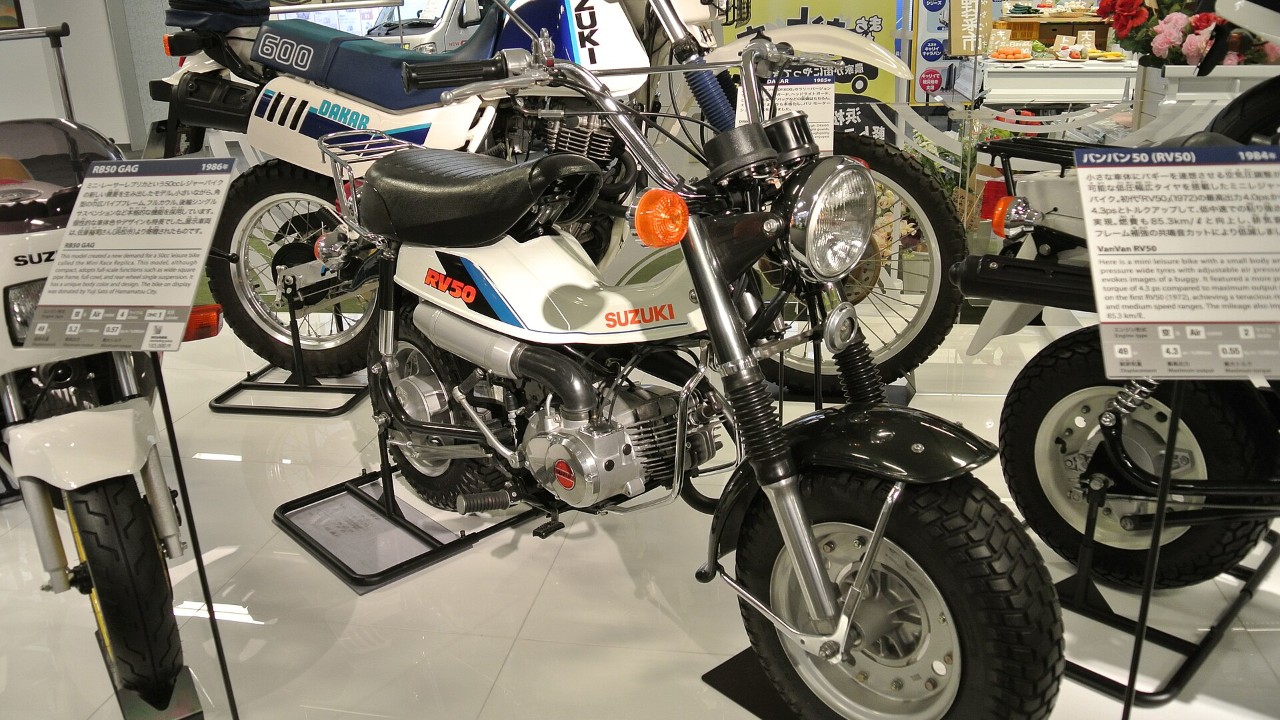
Suzuki built the RV50 from 1972 to 1982, and in Japan every RV model wore the VanVan name. The Suzuki Cycles archive lists a 49cc air-cooled two-stroke single rated at 4 hp at 6,000 rpm. It also had a four-speed gearbox and a wheelbase of 1,095 mm.
The VanVan’s calling card was its fat balloon tires. French specialist 50factory lists 5.4 x 10-inch tires and 110 mm drum brakes front and rear. Then there is the weight, about 79 kg dry. That made the RV50 heavier than its tiny size suggests. The same spec sheet lists a seat height of just 660 mm and a 3.5-liter fuel tank.
Our take: the VanVan is the most fun-looking bike on this list. Those huge tires make it look unstoppable on a beach. On pavement, though, small drum brakes have to stop a surprising amount of bike. It is the kind of machine that makes adults grin and parents nervous, and we understand both reactions. We would ride one on a beach or a farm track only. Suzuki ended the RV50 run in 1982, according to that same archive.
More from Fast Lane Only