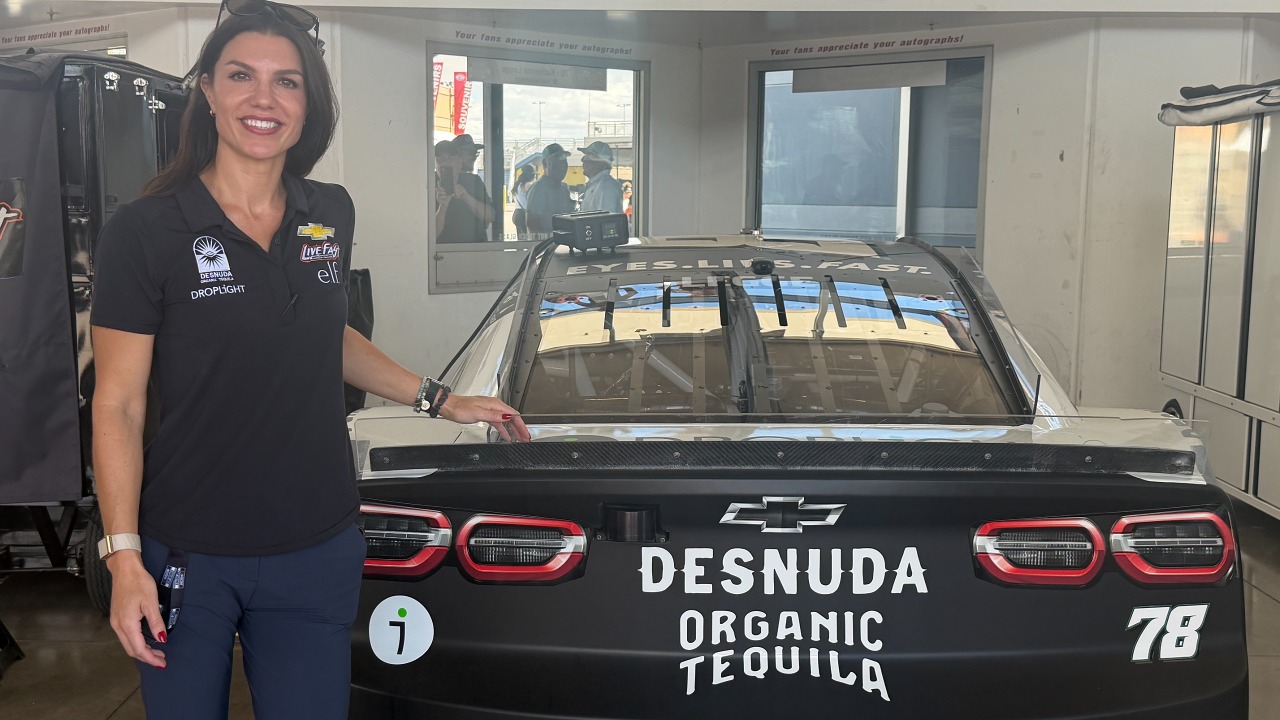
NASCAR’s latest Daytona storyline is not about a dominant team or a surprise sponsor, but about a woman driver whose return to the high banks has become a lightning rod. As critics question whether she deserves a place in the field, a vocal segment of the fan base has stepped in, turning social media into a running referendum on talent, opportunity, and respect. The clash has exposed how deeply personal the sport has become for supporters who see attacks on one driver as an attack on every woman who has ever tried to race at this level.
A Daytona comeback that lit up social media
The spark for the current debate came from a simple family moment. In a heartfelt Instagram video, Natalie Decker appeared with her young son Levi as her husband, Derek Lemke, surprised her with the news that she would return to Daytona with backing from O’Reilly Auto Parts. The clip was framed as a private celebration made public, a driver learning in real time that she would again chase speed at one of NASCAR’s most unforgiving tracks, and it instantly reframed her as both competitor and parent in the eyes of viewers.
That dual identity, mother and racer, became the focal point for the reaction that followed. Supporters highlighted Decker’s prior strength at Daytona, pointing to earlier runs that showed she could manage the draft and survive the chaos that defines the superspeedway. Critics, however, seized on her family life and past results to argue that the entry should have gone to someone else, treating the surprise announcement as evidence that marketing and sentiment were being valued over merit. The tension between those two readings of the same video set the stage for a broader fight over who gets to decide when a driver has “earned” a Daytona shot.
Fans push back as trolls dissect a woman’s résumé
As negative comments piled up, a different current emerged from within the NASCAR community. Longtime fans began to push back against what they saw as a familiar pattern, in which a woman’s presence in the field is treated as a problem to be solved rather than a fact of modern racing. They argued that Decker’s Daytona opportunity should be judged on the same terms as any other driver’s, centered on her ability to handle the car and the draft, not on whether her path to the seat looked unconventional or emotional.
The backlash to the trolls drew on a deeper history. Supporters pointed to Shawna Robinson, who had two children in the late 1990s before competing in 21 races across NASCAR’s three national divisions, as proof that motherhood and high-level racing are not mutually exclusive. Robinson’s career, which included starts in the Cup, Xfinity, and Truck Series, has become a touchstone for fans who see the current criticism as a recycled argument that was already disproven on track. By invoking Robinson’s record, they framed the attacks on Decker as part of a longer effort to discount women’s achievements by moving the goalposts whenever they succeed.
Katherine Legge and the “earned it” double standard
The debate around Decker’s Daytona bid has also revived scrutiny of how another veteran, Katherine Legge, has been treated. Katherine Anne Legge, a British professional auto racing driver whose surname is pronounced LEG, has built a career that spans open-wheel, sports cars, and stock cars, yet she has repeatedly found herself portrayed as a convenient target whenever results fall short of expectations. Over the summer, NASCAR followers were confronted with what some described as an inconvenient truth: Legge’s opportunities have often been limited not by lack of skill, but by the scarcity of competitive seats and the financial realities that shape who gets to race.
Legge’s recent experience in the Xfinity Series underscored how quickly criticism can turn personal. After she moved off the pace in a race and was sent spinning when William Sawalich made contact with the rear of her car, online commentary shifted from analyzing the incident to questioning whether she belonged in the field at all. Some detractors framed her presence as a diversity hire who did not really earn her spot, language that Legge publicly described as unacceptable. The episode highlighted how the “earned it” standard is often applied more harshly to women, even when the on-track circumstances, such as being hit from behind, are clear.
History shows women balancing family and speed
For many fans defending Decker, the most frustrating aspect of the current backlash is how thoroughly it ignores precedent. Shawna Robinson’s path, which included raising two children before logging 21 national-series starts, is one example of a driver who managed both family responsibilities and the demands of NASCAR competition. Her story is frequently cited by supporters as evidence that the sport has already proven that women can return to elite racing after major life changes without needing to re-litigate their legitimacy every time they strap in.
Legge’s career offers another counterpoint to the notion that women are handed opportunities they did not earn. As a British driver who has competed in multiple disciplines, she has had to navigate the same sponsorship pressures and performance expectations as her male peers, often with fewer chances to show what she can do in top-tier equipment. When fans reference her long résumé, they are not arguing that every result has been flawless, but that the body of work demonstrates persistence and capability that should command respect. In that context, the criticism aimed at Decker’s Daytona entry looks less like a sober assessment of form and more like a reflexive skepticism reserved for women who dare to take up space on NASCAR’s biggest stages.
What the Daytona fight reveals about NASCAR’s future
The uproar around Decker’s return has become a proxy for a larger conversation about where NASCAR is headed. On one side are those who view every entry as a zero-sum battle for scarce seats and who see any perceived accommodation, whether it is a surprise announcement or a sponsor-driven deal, as a threat to competitive purity. On the other are fans who accept that modern motorsports are shaped by storytelling, marketing, and personal narratives, and who believe that as long as a driver meets the same licensing and safety standards as everyone else, their path to the grid should not be policed more harshly because they are a woman or a parent.
In practical terms, the way supporters have rallied around Decker, and invoked examples like Shawna Robinson and Katherine Legge, suggests that the culture of the fan base is shifting, even if slowly. The loudest voices are no longer only those questioning whether women belong, but also those insisting that talent, experience, and resilience be weighed fairly, without the extra scrutiny that has historically followed female drivers. As Daytona approaches, the real test will not be whether Decker avoids the inevitable superspeedway wrecks, but whether the sport’s followers are willing to judge her performance with the same lens they apply to any other driver chasing a dream at 200 miles per hour.
More from Fast Lane Only