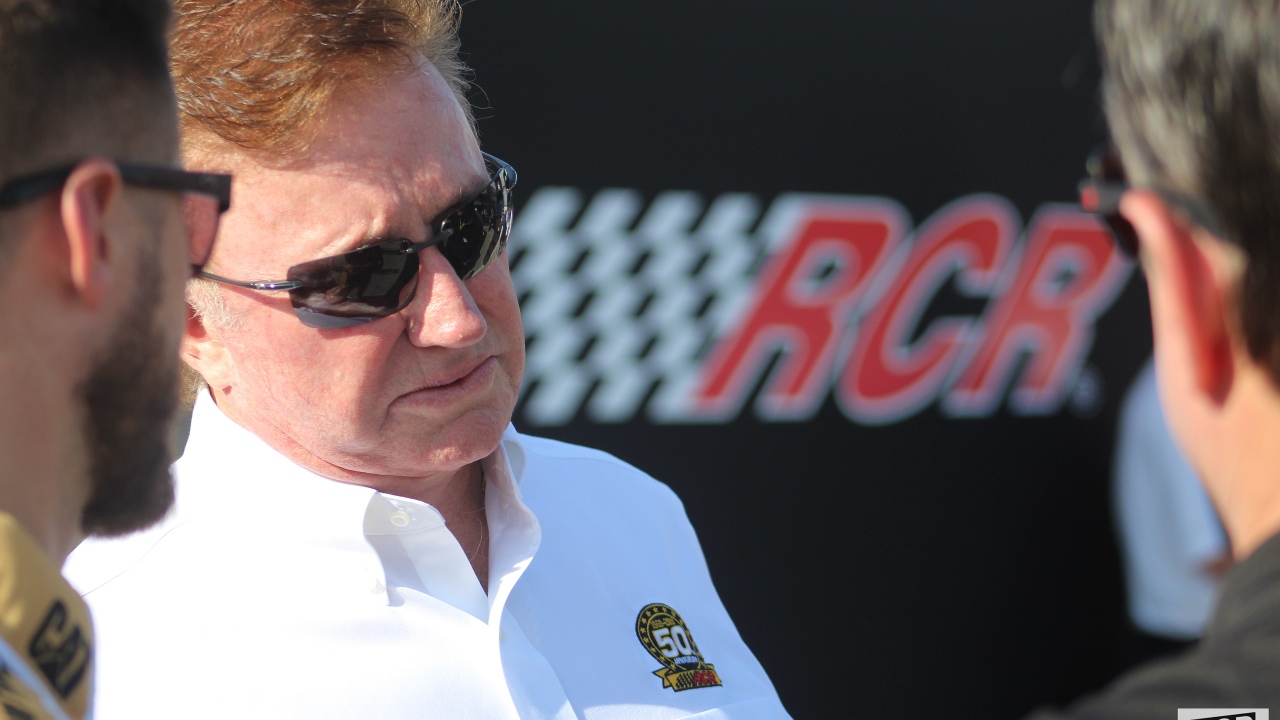
NASCAR has rarely seen a succession move as pointed as the one now unfolding at Richard Childress Racing. Team owner Richard Childress has elevated his son-in-law, Mike Dillon, into a formal heir-apparent role, reshaping the leadership chart of one of stock car racing’s most storied organizations just as the sport enters a new competitive cycle. The decision signals not only a personal vote of confidence but also a strategic bet that family continuity can coexist with the increasingly corporate, data driven reality of the modern NASCAR garage.
By placing Dillon at the center of the team’s future, Childress is effectively locking in the next chapter of RCR’s identity while he is still firmly in control. It is a shock move only in the sense of timing and clarity, because it removes any ambiguity about who will ultimately run the operation and how power will be shared in the near term. For rivals and partners alike, the message is that RCR intends to manage succession on its own terms rather than wait for circumstances to force the issue.
Inside Richard Childress’s Succession Gamble
I see Childress’s decision as a calculated attempt to solve two problems at once: preserving his legacy and keeping RCR nimble in a changing NASCAR ecosystem. Reporting on the internal reshuffle makes clear that he has promoted Mike Dillon as his direct successor, giving his son-in-law major authority over the organization’s direction while Childress remains the figurehead and ultimate owner. By defining Dillon as the eventual leader now, rather than leaving the question open, Childress is trying to avoid the kind of power vacuum that has destabilized other long running racing operations when their founders step back.
The move is framed within RCR as a “bold organizational leadership shift” ahead of the upcoming Cup Series season, with Dillon stepping into a role that goes beyond his previous responsibilities in competition and management. The team has described this as a significant update to its leadership structure, positioning Dillon as the person who will carry forward Childress’s philosophy while also adapting to new commercial and technical pressures in NASCAR. That framing underscores how much of a gamble this is: Childress is not simply rewarding family loyalty, he is entrusting Dillon with the task of steering a legacy brand through an era defined by manufacturer alliances, analytics heavy decision making, and escalating costs.
Why Mike Dillon, and Why Now
From my vantage point, the choice of Mike Dillon is less about sentiment and more about continuity of culture. Dillon is not an outsider parachuted in from another sport or a sponsor’s boardroom, he is a long time insider who has worked across the RCR structure and understands how Childress wants the team to operate. The reporting identifies him explicitly as Childress’s son-in-law and notes that he has been promoted as the direct successor in a formal way, which suggests this is the culmination of a long internal apprenticeship rather than a sudden elevation based solely on family ties.
The timing, just ahead of a new Cup Series campaign, is equally telling. RCR is entering a season in which competitive margins are thin and organizational clarity matters as much as raw speed. By announcing Dillon’s expanded authority before the first green flag, Childress gives sponsors, drivers, and employees a clear sense of who will be making the big calls in the years ahead. The team has presented this as part of a broader offseason reshuffle, which indicates that Dillon’s promotion is meant to dovetail with other structural tweaks designed to sharpen RCR’s on track performance and off track stability.
Family Legacy in a Corporate NASCAR Era
I read this succession plan as a statement that family run teams still believe they can thrive in a sport that has become increasingly corporate and data driven. The characterization of Childress as someone who has “never been shy about making hard calls” fits neatly with the decision to formalize Dillon as his heir in a landscape where many organizations are leaning on outside executives and complex ownership groups. By keeping the leadership baton within the family, RCR is asserting that its identity as a heritage operation is an asset rather than a liability.
At the same time, the language around the leadership shift acknowledges the competitive pressures that are bearing down on every NASCAR organization. The description of RCR’s update as significant, and the emphasis on Dillon’s role in navigating those pressures, highlight how much the team understands the need to blend tradition with modern management. In practical terms, that means Dillon will be expected to honor the ethos that made RCR a championship contender while also embracing the tools and partnerships that define contemporary NASCAR, from simulation heavy development to manufacturer aligned engineering programs.
What the Power Move Signals to Rivals and Stakeholders
For other teams, I believe Childress’s move sends a clear signal about how seriously RCR is treating long term planning. By publicly naming Dillon as the successor, the organization is telling sponsors and technical partners that there will be no uncertainty about leadership if and when Childress reduces his day to day involvement. That kind of clarity can be a competitive advantage in negotiations, because it reassures stakeholders that the person they are dealing with today will still be in the room tomorrow, armed with the authority to honor commitments and chart strategy.
Inside the garage, the decision also raises the bar for how other legacy owners handle their own transitions. The description of Dillon’s promotion as a bold update and a major power handoff underscores that RCR is not waiting for a crisis to address succession. Instead, it is using a moment of relative stability to lock in its future chain of command. Rivals who have delayed similar conversations may now feel pressure to define their own plans, especially as NASCAR’s business model continues to evolve and as younger executives and family members push for clearer roles within established teams.
The Stakes for RCR’s Next Chapter
Ultimately, I see the elevation of Mike Dillon as a test of whether a carefully managed family succession can keep pace with the sport’s rapid evolution. The reporting portrays this as a major power transfer within RCR, with Dillon positioned as the central figure in the team’s next era. If he can translate his familiarity with Childress’s methods into sharper competitive execution, the move will look prescient, a case study in how to modernize without losing the core identity that fans and partners associate with the RCR name.
The risk, of course, is that continuity becomes complacency if Dillon cannot push the organization to adapt as quickly as its rivals. NASCAR’s current environment, described as increasingly corporate and data driven, rewards teams that can marry heritage with innovation rather than leaning too heavily on either. By naming his son-in-law as the heir now, Richard Childress has made his bet on who can strike that balance. The coming seasons will reveal whether this shock power move cements RCR’s place near the front of the field or simply marks the start of a more complicated transition.
More from Fast Lane Only