NASCAR has removed Craftsman Truck Series driver Daniel Dye from competition after he used a homophobic slur while mocking another racer’s voice during a live stream. You now face a sport trying to convince fans, drivers, and sponsors that it takes inclusion seriously, and this suspension is a test of how far that commitment really goes.
As you follow the fallout, you see more than a single penalty. You see a clash between gaming culture and professional standards, a reminder of NASCAR’s history with exclusion, and a case study in how quickly a driver’s career can be upended when words cross a line.
What NASCAR says happened
According to the official penalty report, NASCAR indefinitely suspended Daniel Dye for using disparaging and homophobic language during an online live stream. You are told that the comments targeted another driver’s perceived sexuality and manner of speaking, which NASCAR classified as a violation of its conduct rules.
Reporting on the stream describes Dye imitating another racer in what he called a “gay voice,” then making further remarks about that driver’s sexuality while other participants listened in real time. The remarks circulated quickly in social media clips, which pushed NASCAR to review the footage and act. You see a pattern that has become familiar across sports: once a clip escapes a closed environment, the league’s response becomes a public statement, not just an internal decision.
NASCAR’s move is labeled “indefinite,” which means you do not yet know how long Dye will be out or what conditions he must meet for reinstatement. The series has used similar language in other disciplinary cases when it wants flexibility to require education, counseling, or other steps before a driver returns.
The target of the mockery: David Malukas
Coverage identifies the driver Dye mocked as IndyCar racer David Malukas, sometimes shortened in reports to David Mal. You see that Malukas was not in the stream himself but became the subject of Dye’s impersonation while others watched.
After the clip spread, Dye issued an apology directly to Malukas, acknowledging that his comments were hurtful and that he had disrespected a fellow driver. For you as a fan or reader, that apology matters, but it did not prevent the suspension. NASCAR treated the harm to Malukas and to LGBTQ fans as bigger than a private dispute between two drivers.
The incident also crosses series lines, since Malukas competes in IndyCar while Dye races trucks. You are reminded that motorsports communities overlap heavily online, and behavior in one corner of racing can quickly affect reputations across the broader paddock.
Who Daniel Dye is, and what is at stake
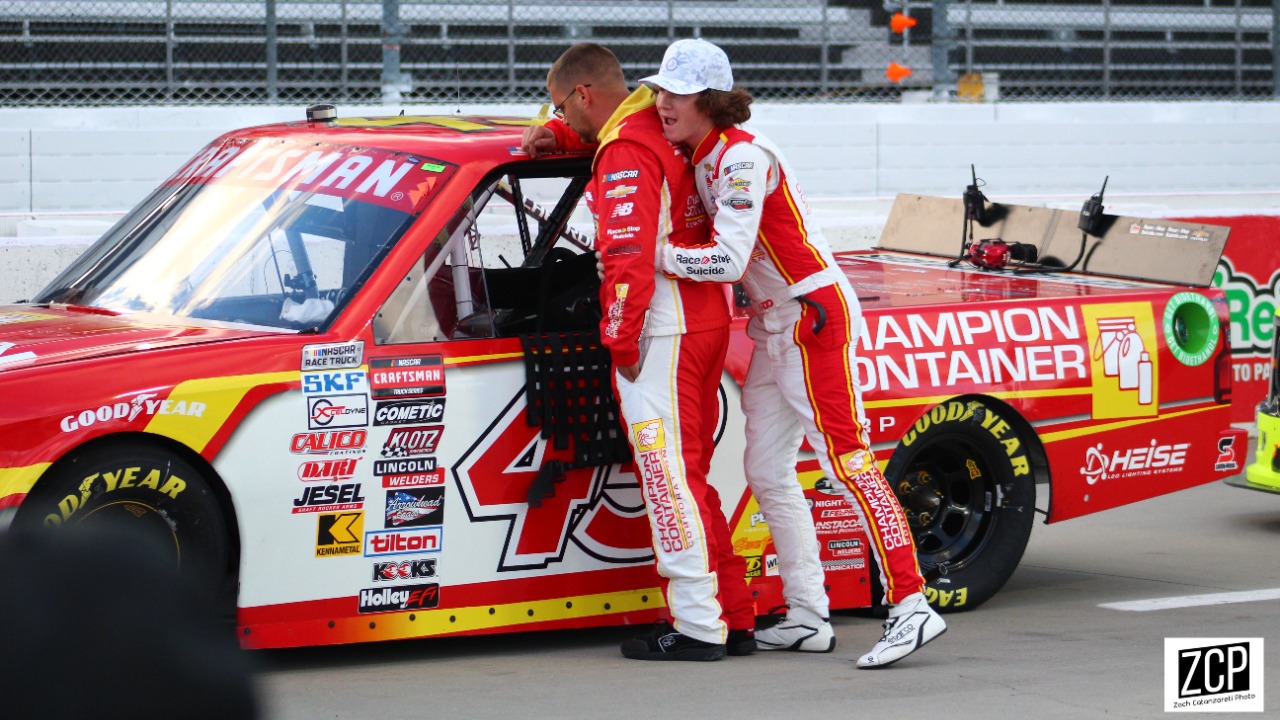
If you have followed the Truck Series, you already know Dye as a young driver with a full-time seat and visible potential. A general profile of Daniel Dye presents him as part of the next generation of NASCAR talent, with backing from established teams and sponsors.
Reports note that he races in the Craftsman Truck Series for Kaulig Racing and that he sat 13th in points after three starts in this young season before the suspension. You see a driver who was not simply hanging onto a ride, but one who had a realistic shot at contending for playoff spots and building a long-term career.
That context is why the language he used is not being treated as a minor slip. For a driver in Dye’s position, every race is a chance to prove value to sponsors and team owners. An indefinite suspension interrupts that momentum, and it tells you that NASCAR is willing to risk sidelining a promising competitor to enforce its code of conduct.
Kaulig Racing’s parallel punishment
NASCAR’s decision did not stand alone. Dye’s team, Kaulig Racing, also removed him from its lineup. Coverage notes that NASCAR and Kaulig both issued indefinite suspensions after reviewing the live stream.
For you, that dual response matters. When the sanction comes only from the sanctioning body, a team can quietly signal that it disagrees or that it values the driver enough to push back. Here, the organization that pays Dye’s salary aligned itself with the league and publicly distanced itself from his comments.
That choice also protects Kaulig’s sponsors, who do not want their brands attached to homophobic language. You can read this as an ethical stance, a business decision, or both. Either way, it raises the bar for other teams that might be tempted to shrug off similar behavior in the future.
Inside the live stream and its culture clash
Accounts of the incident describe a casual gaming or chat environment where drivers and friends talked while cameras and microphones rolled. In that space, Dye shifted into a caricatured voice, referred to it as a “gay voice,” and tied it to David Malukas while others listened. One detailed feature explains that he also made comments about Malukas’s sexuality during the same live stream.
If you spend time on Twitch or Discord, you know how often edgy jokes, slurs, and mockery of identity get passed off as humor. Here, the difference is that Dye is not just another gamer. He is a professional driver who carries the NASCAR and Kaulig Racing names into every public space he enters, whether that is a racetrack, a sponsor appearance, or a streaming channel.
For NASCAR, this is not simply about what you say at home with friends. It is about how a licensed competitor represents the sport in any public forum. Once the clip spread, the league had to choose between treating the stream as private chatter or as part of Dye’s professional footprint. The suspension tells you which side it chose.
NASCAR’s rulebook and its inclusion message
NASCAR’s conduct policy bans discrimination or harassment based on categories that include sexual orientation and what one insider described as any “age, or handicapping condition.” The league framed Dye’s language as homophobic and inconsistent with that standard, and an insider reaction highlighted how seriously officials view slurs tied to protected traits.
You might remember earlier controversies over Confederate flags, driver remarks, and fan behavior that pushed NASCAR to rethink its image. The Dye suspension fits into that broader effort. The league is trying to show LGBTQ fans and employees that they belong at the track, and that homophobic jokes from competitors are not compatible with that promise.
At the same time, you may notice that enforcement has not always been consistent across eras or incidents. That tension fuels debate among fans about whether Dye is being singled out or whether this is simply what modern accountability looks like.
How fans, sponsors, and other drivers are reacting
Reactions inside the racing community have been mixed. Some voices argue that Dye’s comments were “just a joke” and that an indefinite suspension is excessive. Others, including several commentators, point out that mocking a colleague’s sexuality in front of an audience is not harmless and that the penalty sends a needed message.
On social media, you can see LGBTQ fans and allies describing the clip as a reminder of why they have sometimes felt unwelcome in stock car racing. For them, NASCAR’s decision offers a measure of validation, even if it arrived only after public pressure. Sponsors have largely stayed quiet in public, which itself tells you something: companies rarely complain when a league removes a potential public relations liability.
Other drivers, including those in IndyCar, have expressed support for David Malukas and emphasized respect across series lines. Their responses help you gauge how peer pressure inside the garage might shift. When competitors make it clear that homophobic jokes are out of bounds, it becomes harder for anyone to dismiss this as oversensitivity.
What you should watch for next
From here, several threads matter if you care about where NASCAR goes with this. First, you will want to see whether the league outlines a path for Dye’s return. That could include sensitivity training, direct engagement with LGBTQ groups, or other steps that show more than a scripted apology.
More from Fast Lane Only