NASCAR commissioner Steve Phelps has never been shy about defending the Next Gen car, but his latest courtroom comments have sharpened a long‑running divide in the garage. By insisting that the Gen‑7 platform is both a competitive success and the safest machine in motorsports, he has put his own blunt assessment in direct conflict with critics who say the car has damaged teams financially and strained relationships at the top of the sport.
The clash over his remarks now sits at the center of an antitrust fight, a safety debate, and a public feud with one of NASCAR’s most storied owners. Taken together, they show how one car and one executive’s words have become a proxy for deeper questions about who really holds power in stock‑car racing.
Phelps doubles down on the Next Gen’s “success” in court
In recent testimony tied to the antitrust case brought by 23XI Racing and Front Row Motorsports, Phelps framed the Next Gen car as a clear win for the series, even as lawyers pressed him on its costs and consequences. He argued that the Gen‑7 package, introduced as the NextGen in 2022, has delivered on NASCAR’s goal of closer, more competitive racing and insisted that the car’s performance validates the sanctioning body’s direction. According to reporting on his appearance, he went so far as to say that “the racing is better” with the new car, a line that has quickly become a flashpoint for teams who feel the opposite.
That stance did not emerge in a vacuum. Phelps had already been on record defending the platform’s philosophy, telling reporters in earlier seasons that the Next Gen design, with its updated chassis and aero package, was central to NASCAR’s effort to modernize the Cup Series and attract new manufacturers. In those earlier comments he acknowledged “hiccups in development” but maintained that the car’s underlying concept was sound and that the sport needed to push through the growing pains to reap the benefits of a more standardized, cost‑controlled model. His courtroom testimony effectively extended that argument into a legal setting, where every word is now being parsed by rival owners and their attorneys.
“Safest car in all of motorsports” or a risky experiment?
Phelps has not just defended the Next Gen on competition grounds, he has also framed it as a leap forward in driver protection. In remarks highlighted by reporter Adam Stern, he declared that he believes the Next Gen is “the safest car in all of motorsports,” a sweeping claim that underscores how firmly he is tying his legacy to this platform. That line, delivered as part of his broader defense of the car, signals that NASCAR’s leadership sees the Gen‑7 not as a compromise but as a benchmark for safety engineering across racing.
His confidence tracks with earlier public comments in which he stressed that the series would “have the safest car we’ve ever had” even as drivers were taking “bigger hits” with the new design. At the time, Phelps emphasized that NASCAR was constantly refining the car’s safety features and that the organization was listening to driver feedback while still believing in the core structure of the Next Gen. By repeating and amplifying that message in the current legal and public arena, he has effectively challenged critics to prove that the car is fundamentally flawed rather than simply in need of incremental updates.
Teams say the financial model behind Next Gen is broken
Where Phelps sees a successful, safer car, several teams see a business model that has tilted too much power toward NASCAR itself. The antitrust lawsuit from 23XI Racing and Front Row Motorsports accuses the sanctioning body of acting as a monopolist, and Phelps has been forced to answer those charges directly. In an interview with Brian Sullivan of CNBC Sport, he pushed back on the idea that NASCAR is squeezing its partners, arguing instead that the current structure, with NASCAR controlling the car and key commercial rights, ultimately “puts on better racing” for fans and benefits the entire ecosystem.
Inside the courtroom, that philosophical divide has been laid bare. According to a detailed megathread tracking the case, Phelps has testified that teams themselves wanted NASCAR to bear more responsibility for the car, a point he has used to argue that the centralized Next Gen model was not unilaterally imposed. Yet the same reporting shows owners and their lawyers framing the car’s spec nature and the revenue split as evidence that NASCAR has boxed teams into a corner, limiting their ability to innovate and to share fairly in the sport’s growth. The fate of smaller operations, including examples raised in related testimony about teams that could not survive under the current economics, has become a cautionary tale for those who say the Next Gen era has come with hidden costs.
Old promises, new realities: how Phelps’ Next Gen vision evolved
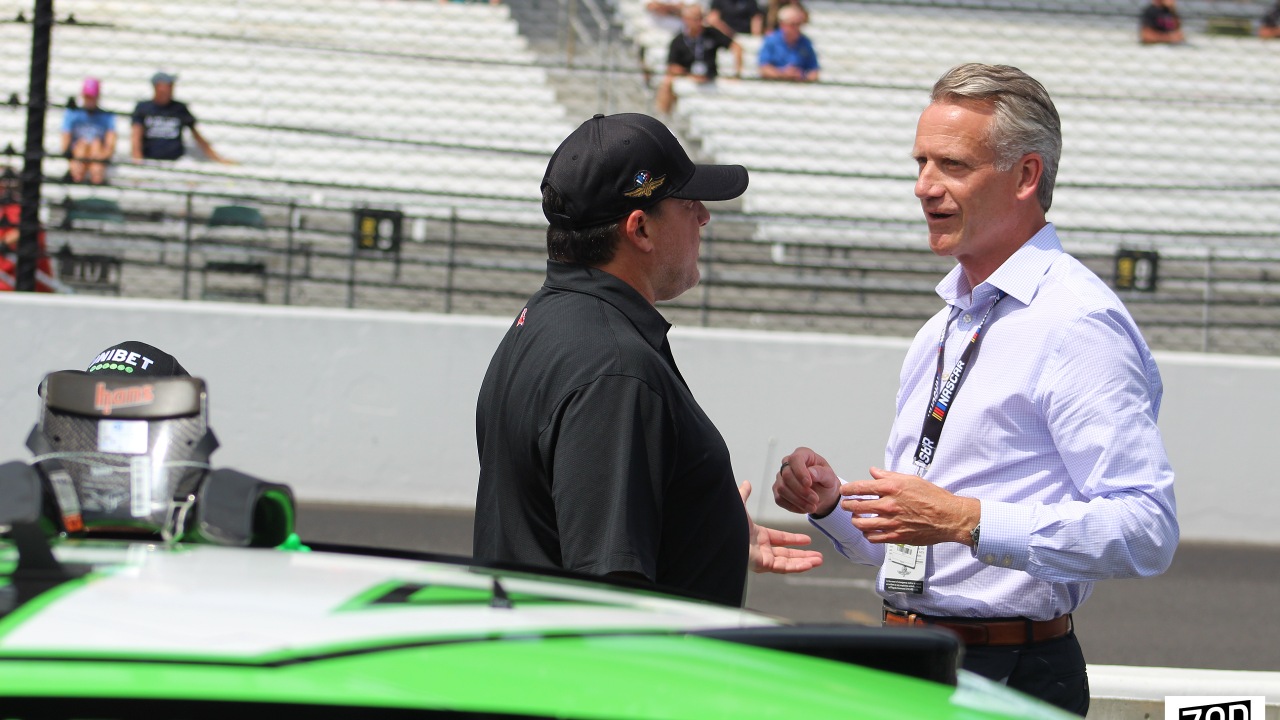
When Phelps first laid out the vision for the Next Gen car, he pitched it as a reset that would lower costs, tighten the field, and open the door for new manufacturers. In an end‑of‑year address before the car’s debut, he spoke about how the Gen‑7 platform and updated aerodynamic rules were designed to make the racing product stronger while also making it more attractive for outside brands to join NASCAR. That early messaging framed the car as a long‑term investment, one that would require patience as teams and engineers adapted but would ultimately stabilize the sport’s business.
Several seasons into the Next Gen era, the reality looks more complicated. While Phelps continues to argue that the car has delivered better racing and improved safety, the antitrust case and public criticism from some owners suggest that the promised financial relief has not materialized evenly across the garage. Reporting on the lawsuit notes that teams have questioned whether the centralized parts model and NASCAR’s control over key revenue streams have actually increased their dependence on the league office. Phelps’ insistence that teams originally wanted NASCAR to take on more of the car’s burden now sits awkwardly alongside owners’ claims that the same structure has left them with less leverage and more risk.
Text messages, “redneck” insults, and a fraying relationship with Richard Childress
The debate over the Next Gen car is not happening in a vacuum, it is unfolding alongside a personal and public rift between Phelps and Hall of Fame owner Richard Childress. Unsealed text messages show Phelps referring to Childress as a “redneck idiot,” language that has inflamed tensions with Richard Childress Racing and raised questions about how NASCAR’s top executive views some of his most important stakeholders. Those messages, described as disturbing in one account, have become part of a broader narrative about strained communication between the league office and team owners.
Childress and his organization have not taken the slight quietly. Richard Childress Racing has publicly blasted NASCAR executives over the leaked comments and has threatened legal action, arguing that the texts reflect a deeper pattern in how certain leaders have historically treated team owners. One report notes that Phelps has already apologized to Richard Childress, but that apology “doesn’t appear to be accepted,” leaving the relationship in limbo. Another account quotes a statement that these comments show how some NASCAR executives have long viewed owners like Childress, and that legal options are being weighed. The fallout has spilled into the ongoing legal disputes, with the texts now cited as evidence of a cultural divide at the top of the sport.
Antitrust pressure and the broader power struggle around Next Gen
The antitrust case brought by 23XI Racing and Front Row Motorsports has turned the Next Gen car into Exhibit A in a larger fight over control of NASCAR’s future. In court, lawyers have pressed Phelps on whether the centralized Gen‑7 model and NASCAR’s commercial structure amount to monopolistic behavior. A transcript excerpt shared in a fan discussion shows an exchange where PHELPS objects to a characterization of NASCAR’s conduct as unfair, only for attorney KESSLER to respond that “we’ll let the jury decide,” underscoring how much of Phelps’ defense now hinges on persuading outsiders that his vision of the sport is not just effective but lawful.
Additional reporting on the case has highlighted how the Next Gen car and NASCAR’s business decisions have affected specific teams and alliances. A detailed breakdown of the lawsuit notes, for example, that Chartwell has been a minority owner of RCR since 2003 and has been trying to exit that position, a situation that has now intersected with the broader scrutiny of NASCAR’s governance. Another report on the trial proceedings describes how the demise of a small team became a topic in court, with lawyers using that story to argue that the current model leaves little room for independent operations to survive. Against that backdrop, Phelps’ unwavering praise for the Next Gen car and his dismissal of monopolist accusations are not just technical opinions, they are central to whether a jury believes NASCAR’s power has gone too far.
Why Phelps’ blunt defense of Next Gen matters for NASCAR’s future
Phelps’ forceful defense of the Next Gen car has clarified where he stands, but it has also raised the stakes for what happens next. By calling the Gen‑7 the safest car in all of motorsports and a competitive success, he has tied his leadership to a single, polarizing project at the very moment when teams are challenging NASCAR’s authority in court and in public. If the antitrust case or continued owner unrest forces major changes to the car or the financial model around it, his words will be remembered as a line in the sand rather than a flexible starting point.
At the same time, the leaked texts about Richard Childress and the threat of legal action from Richard Childress Racing show how personal the conflict has become. The combination of a contentious car, a disputed economic system, and a frayed relationship with one of the sport’s most respected owners has created a volatile mix. Whether Phelps’ blunt approach ultimately stabilizes NASCAR by projecting confidence, or deepens the divide by alienating key partners, will depend on how the Next Gen era evolves from here and how much room he is willing to leave for compromise.