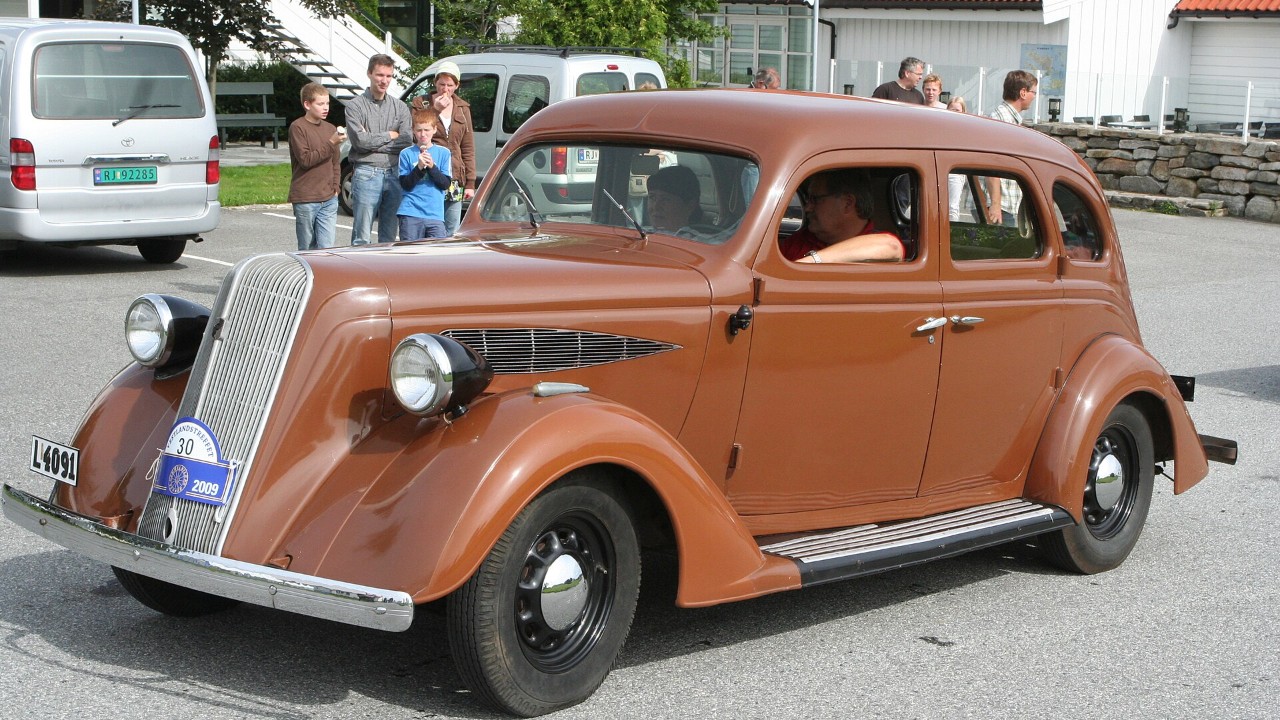
In 1936, Nash gave buyers a reason to skip the motel. Its new Nash bed feature, sold as the Bed-In-A-Car, let two adults sleep inside the sedan. The trick was simple, because the rear seatback folded up and the trunk became the foot of the bed.
Nash then kept selling some version of that idea for two decades. Over time, it went from a folding rear seat in the 1930s to reclining seats that made “Twin Beds” in the 1950s.
So here is where the idea came from, how it worked, and how Nash advertised it as the years went on.
A $2 hotel bill and the Nash bed
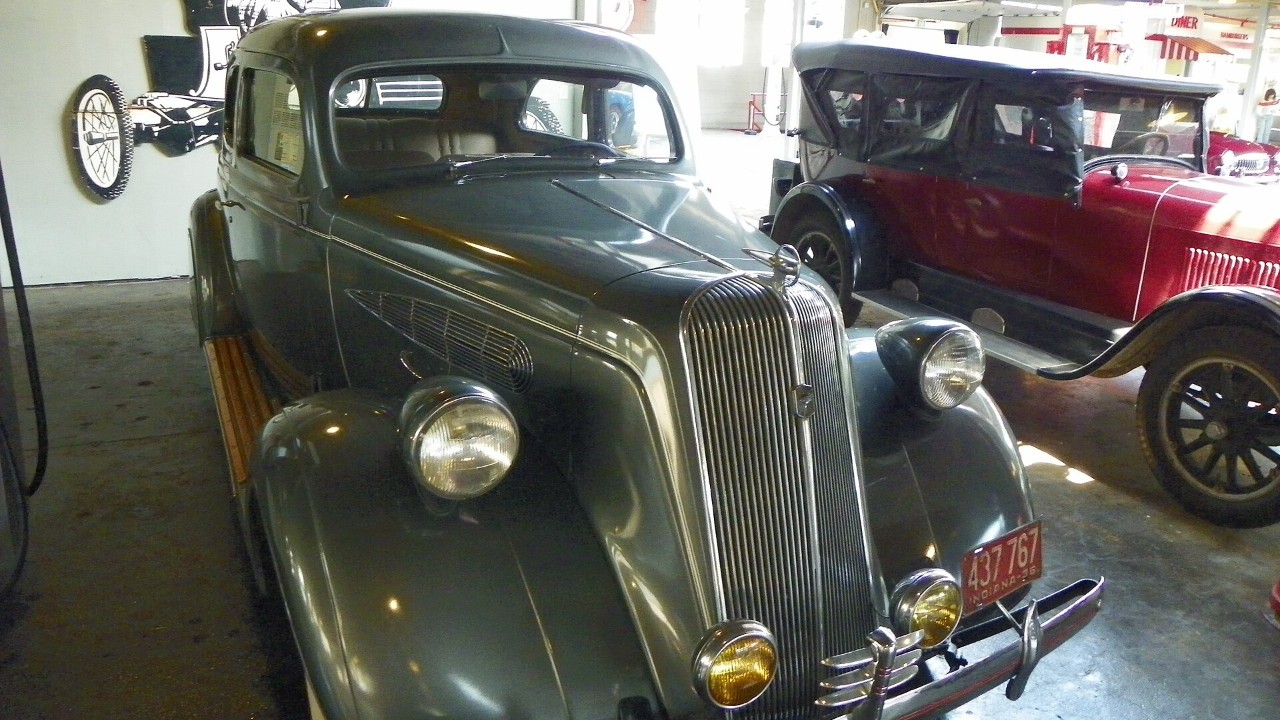
The idea came from the top. Company chairman Charles Nash pushed for the feature after a business trip, according to Classic & Sports Car. On that trip, he had been “outraged at having to pay a whole $2 for a hotel room,” the magazine says.
At the same time, the company could afford to experiment. Nash had come through the crisis of the early 1930s relatively unscathed, the Swiss classic-car magazine Zwischengas notes. In fact, its passenger-car output climbed from 17,696 in 1932 to 53,038 in 1936, according to Old Cars Weekly.
How the Nash bed worked
The conversion used parts already in the car. First, the owner lifted the rear seat’s backrest so the cushion sat level. That opened a passage between the cabin and the trunk, as the vintage-advertising site Printer’s Devil describes it.
With the seatback out of the way, the rear cushion and the trunk floor formed one long space. “Two adults could sleep in the car, with their legs and feet in the trunk,” the site explains. Meanwhile, their heads and shoulders rested on the rear cushions.
Of course, it was not a camper, and nobody would mistake it for one. Still, for a couple on a long drive, it turned a sedan into a room for the night. As a result, the hotel bill that annoyed Charles Nash became optional.
From option list to advertising theme
Nash introduced its 1937 line on October 15, 1936, Old Cars Weekly reports. That year, the optional equipment list included “seats that made into beds.” Meanwhile, the range ran from the LaFayette 400, with a 90-horsepower six, to the Ambassador Eight, rated at 105 horsepower.
By 1939, the bed had become part of the pitch. A June 1939 Nash advertisement in The American Home called the car “A home on the road, with a convertible Bed…with special soundproofing and shock absorbers,” Printer’s Devil records. In addition, the same ad promoted Nash’s Weather Eye conditioned-air system, which had debuted on 1938 models.
The ads kept going into the 1940s. Nash “made a lot of hay from its fold down seats that converted into a bed,” Curbside Classic observes. However, it also notes that the ads and brochure shots from the 1950s showed very chaste scenes.
The Airflyte years
Later, the idea grew with the cars. Nash unveiled its streamlined Airflyte models in late 1948 for the 1949 model year. These cars could turn both front and rear seating into a bed for two, Classic & Sports Car says.
On the Airflyte, the front seat folded fully flat, Curbside Classic explains. That created one continuous surface reaching to the back of the car. Buyers could also order window screens, so they could sleep with fresh air and no mosquitoes.
Nash held exclusive rights to those convertible seats. For that reason, by 1950 it was marketing the car to sportsmen as a hunting rig, according to Curbside Classic. The Airflyte also sold well. In 1949 alone, Nash sold 87,145 of the 600 model and 42,826 Ambassadors.
Reclining seats and Twin Beds
Then the sales pitch changed again. Zwischengas credits Nash with reclining seats that could form a bed at an early stage. For example, a 1950 Nash advertisement, collected by Click Americana, offered “a heavenly-soft Airliner Reclining Seat that’s five-ways adjustable.”
A 1951 ad went further. “Dream away the miles, while another drives, in this Airliner Reclining Seat,” it said. Then it promised that at night, both seats became Twin Beds. Another 1951 ad spoke simply of “spending a comfortable night in the Nash bed.”
The feature lasted well into the decade. A 1956 ad listed “Airliner Reclining Seats (standard in custom models) that make chaise longue, Twin Travel Beds” among the features it said millions wanted in their next car. Twenty years after Charles Nash balked at a $2 hotel room, his company was still selling the bed in the car.
More from Fast Lane Only