Canada’s new trade pact with China has abruptly redrawn the map of North America’s electric vehicle market, creating a low‑tariff corridor that stops at the U.S. border. By sharply cutting duties on Chinese-made EVs while Washington keeps its 100% wall in place, Ottawa has invited a wave of competitively priced models that could spill across the continent through policy, production and politics, even if not through literal cross‑border sales. I see a strategic bet on cleantech colliding with a protectionist turn in U.S. policy, and the outcome will shape where EVs are built, which brands survive and how quickly drivers can afford to go electric.
A deliberate break with Washington’s tariff wall
Canada has not stumbled into this moment; it has chosen to diverge from the United States on one of the most sensitive fronts in industrial policy. While Washington has locked in 100% tariffs on Chinese electric vehicles, Ottawa has agreed to slash its own duties on Chinese models to roughly 6%, a move described in one report as a “massive shift in North American trade policy” under Prime Minister Mark Carn. Another detailed account of the deal specifies that Canada’s levies on Chinese EVs are dropping from 100% to 6.1% for a defined quota, underscoring how sharply the country is stepping away from the U.S. approach. The decision signals that Canada is prepared to absorb political heat in order to secure cheaper EVs and deeper ties with China’s battery and vehicle supply chains.
The structure of the agreement is as important as the headline tariff cut. Under the new arrangement, Canada will allow up to 49,000 Chinese-made EVs per year to enter its market at the reduced rate, a figure that appears consistently across several detailed briefings on the pact. One analysis frames the arrangement as a “Truce, Carefully Measured,” noting that Under the terms of the deal, the quota is designed to expand consumer choice without immediately overwhelming domestic and North American producers. Another report on the broader Canada‑China trade agreement confirms that the lowered levies apply to 49,000 vehicles each year, reinforcing that this is a managed opening rather than a full liberalization. In effect, Ottawa has created a controlled gateway for Chinese EVs, large enough to matter for pricing and competition, but capped to retain leverage in future negotiations.
How a quota of 49,000 EVs can reshape a continent‑wide market
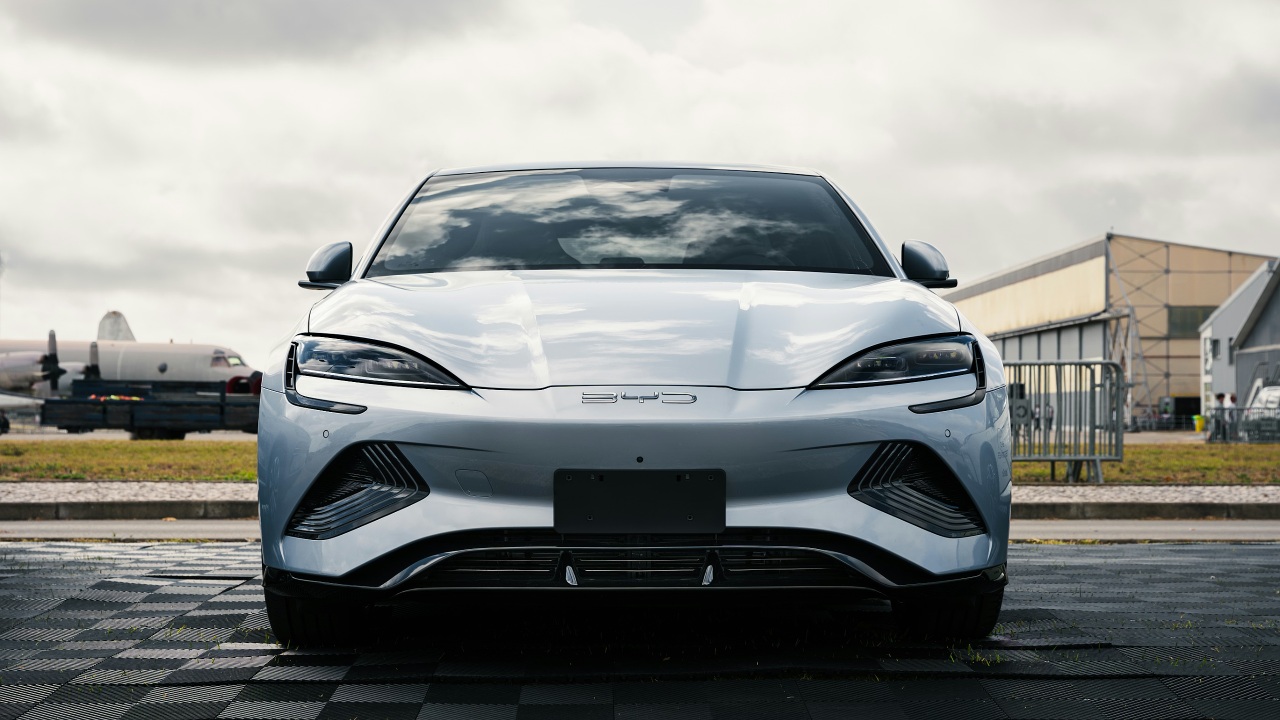
On paper, 49,000 vehicles may sound modest in a North American context, yet I see that number as strategically calibrated to punch above its weight. For a Canadian new vehicle market that is significantly smaller than that of the United States, a pipeline of 49,000 additional EVs a year, all priced without a 100% tariff penalty, is enough to shift showroom dynamics and consumer expectations. Reporting on the deal stresses that Canadian buyers currently face limited choice in affordable electric models, and that the new quota is intended to fill precisely that gap. If Chinese brands can offer compact crossovers or small sedans at prices that undercut established players like the Chevrolet Bolt or the new Nissan Leaf, they will not need to dominate the market to force competitors to respond.
The ripple effects will not stop at the Canadian border. Even if those Chinese vehicles cannot be legally re-exported into the United States without facing Washington’s 100% tariff, their presence in Canada will influence pricing, technology standards and investment decisions across the region. One clean‑technology analysis argues that Canada’s new trade agreement has far‑reaching EV implications, pointing to the way Chinese manufacturers could use their Canadian foothold to test models, software and battery chemistries tailored to North American tastes. Another report warns that “China now has a foothold in the Canadian market and will use it to their full advantage at the expense of Canadian” producers, a line that captures both the opportunity for consumers and the anxiety among domestic automakers. In practice, I expect U.S. companies to benchmark their offerings against the Chinese models landing in Canadian dealerships, even if those cars never cross into U.S. showrooms.
Trump’s tariffs and the opening China was waiting for
The backdrop to Canada’s pivot is the hardening of U.S. trade policy under President Don Trump, whose protectionist tariffs have reshaped the regional landscape. One detailed account notes that Canada is “cozying up to China” as it seeks to loosen its economic dependence on the U.S., a shift explicitly linked to the White House’s tariff strategy. Another report on Trump’s broader trade posture states bluntly that his protectionist policies have allowed China to “swoop in,” with critics warning that “Make no mistake: China now has a foothold in the Canadian market and will use it to their full advantage at the expense of Canadian” interests. By walling off the U.S. market with 100% duties, Washington has effectively pushed Chinese EV makers to look for the nearest open door, and Ottawa has just unlocked it.
U.S. officials are not hiding their displeasure. One account of the American reaction reports that the United States has warned Canada it will “regret” the decision to allow Chinese EVs into its market, a statement tied directly to the deal announced by Canada PM Carn. Another political briefing notes that Eyes are on the White House and Washington as policymakers weigh how the new pact might complicate the upcoming review of the Canada‑United States‑Mexico Agreement, commonly referred to as CUSMA. In my view, this is where the risk of a broader trade confrontation becomes real: if Washington concludes that Canada’s EV opening undermines the spirit of CUSMA, it could seek to tighten rules of origin, adjust auto content requirements or even threaten retaliatory measures that reach beyond the EV sector.
Domestic backlash and the politics of auto jobs
Inside Canada, the pact has already triggered a fierce political response, particularly from regions that depend on traditional auto manufacturing. One detailed report from the Detroit News staff describes how Ontario’s premier has condemned the Canada‑China deal as a threat to auto jobs, warning that allowing 49,000 Chi‑made EVs into the Canadian market will undercut local plants and suppliers. The same account notes that Trump officials have joined the criticism, framing the agreement as a backdoor for Chinese competition into the broader North American auto ecosystem. When I read those reactions, I see a familiar pattern: trade liberalization framed as a consumer win, and opponents mobilizing around the fear of factory closures and lost paycheques.
Ottawa, for its part, is trying to present the pact as part of a broader strategic partnership rather than a narrow concession to Chinese automakers. A formal Statement on the Canada‑China Strategic Partnership, issued from OTTAWA and distributed through CNW Group, casts the agreement as a way to support sectors that “sustain thousands of Canadian workers,” with officials emphasizing that the EV provisions sit alongside measures on canola and other exports. Another report on the same partnership notes that the announcement came on a Fri afternoon, with references to PST and a 34 minute read, details that underscore how carefully choreographed the rollout has been. In my assessment, the federal government is betting that new investment in battery plants, charging infrastructure and related supply chains will offset any job losses in traditional assembly, but that is a wager voters in auto‑heavy provinces will scrutinize closely.
Strategic partnership or Trojan horse for Chinese EV dominance?
More from Fast Lane Only