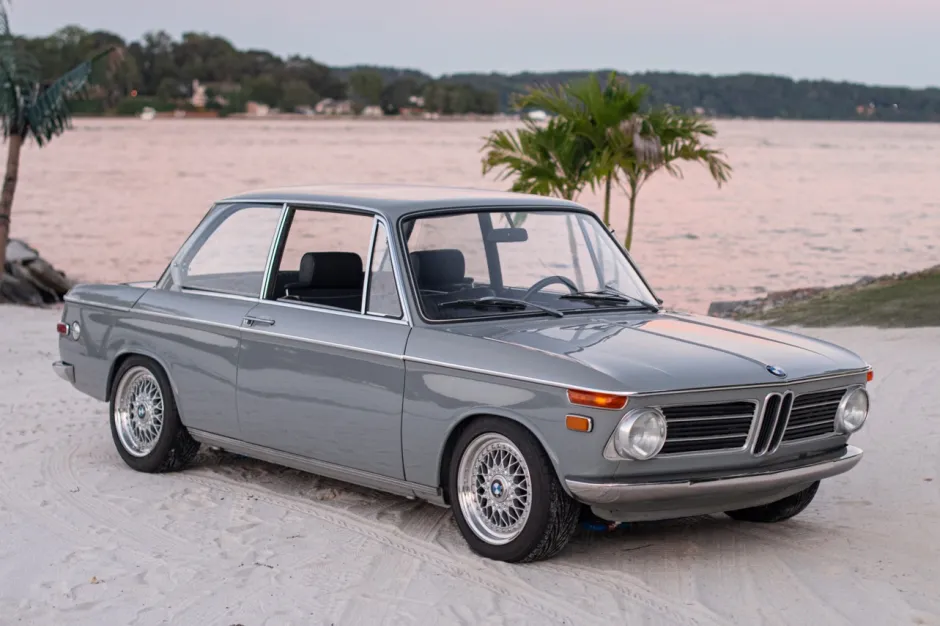
The BMW 2002 did not arrive with the fanfare of a supercar or the prestige of a hand-built grand tourer. Yet by the end of the 1960s, this compact two-door sedan had quietly reset expectations for how an ordinary road car could steer, stop, and change direction. Its blend of light weight, sharp responses, and everyday usability altered driving dynamics for an entire generation of enthusiasts and engineers.
What began as a pragmatic evolution of a small family car ultimately became the template for the modern sport sedan. The 1969 model year, when the 2.0 liter two-door formula reached key markets in volume, marked the point when those changes moved from engineering experiment to cultural force.
The unlikely origins of a driver’s car
The 2002 grew out of the BMW Neue Klasse sedans, which had already given the Bavarian company a reputation for agile handling and tidy proportions. Engineers effectively shortened that formula into the 02 series and then installed a 2.0 liter four cylinder engine in the compact shell. As one detailed history of BMW 2002 variants explains, the car’s name itself reflected this simple logic: 2.0 liters, 02 series, two doors.
Inside BMW, two key figures pushed for this configuration, arguing that the lighter two-door chassis deserved the stronger engine that had already proved itself in larger sedans. Both men had been urging management to put the car into production, and when importer Max Hoffman added his voice and requested the car for the United States, the internal debate ended. According to a period account, Hoffman’s request tipped the scales and the new car was christened as a distinct model rather than a mere option package, a story preserved in an article often referred to as the Whispering Bomb piece.
This origin story matters for driving dynamics because it shows the 2002 was not conceived as a stripped racing special or a luxury flagship. It was a rational product decision that happened to combine a relatively powerful engine, a compact wheelbase, and a carefully tuned suspension. That combination, almost accidental in business terms, produced a car that felt radically different from the softly sprung sedans and understeering compacts that filled European and American roads at the time.
A chassis that made power usable
Plenty of cars in the late 1960s offered more raw power than the 2002. What set the BMW apart was how much of its modest output a driver could actually use on real roads. The basic 2002 carried a 2.0 liter four cylinder with roughly 100 horsepower, and the later 2002 tii version raised that figure with fuel injection to a quoted 130 horsepower. The numbers alone did not shock anyone. The way the car carried that power through corners did.
The 2002’s chassis was relatively light and paired with a rear wheel drive layout that let the front tires focus on steering instead of splitting traction duties. One enthusiast account of the model describes how the lightweight structure and rear drive configuration created an engaging balance that encouraged drivers to explore the edge of grip. A separate discussion within a BMW-focused community notes that the curb weight of a typical street trim car hovered around 2002 pounds, a neat coincidence that owners of The BMW 2002 still like to highlight.
Suspension tuning completed the picture. The car used MacPherson struts at the front and a semi trailing arm rear axle, a combination that provided both stability and adjustability. The steering ratio was quick enough to allow small corrections mid corner, yet not so nervous that the car felt darty on the highway. Period testers and later restorers have consistently praised the way the 2002 communicates weight transfer through the seat and steering wheel, which encouraged drivers to carry speed with confidence rather than rely solely on straight line acceleration.
The “Whispering Bomb” and a new standard for sedans
When the 2002 debuted in 1968, it did not immediately dominate sales charts. It did, however, set new standards for what a small sedan could achieve on a twisty road. A German magazine famously coined the term “Whispering Bomb” to describe the way the car combined subdued styling with explosive pace when pushed. That evocative phrase, preserved in the same Whispering Bomb account, captured something new in the market.
Unlike a traditional sports car, the 2002 had a proper roofline, a usable rear seat, and a trunk that could handle daily errands. Unlike a conventional family sedan, it encouraged late braking and early throttle application. Drivers who experienced the car on winding roads often described a kind of revelation, realizing that a four seat car could behave like a nimble coupe without sacrificing comfort.
That mix of practicality and verve effectively created the modern sports sedan category. Owners could drive to work during the week and then take the same car to a club track day on the weekend. The chassis did not wilt under repeated hard use, and the steering remained accurate even when the tires were howling. For many, the 2002 proved that driving pleasure did not require a compromise in everyday usability.
How a single review amplified the dynamic breakthrough
The 2002 might have remained a cult favorite in Europe if not for a landmark piece of automotive journalism. In the United States, David E. Davis wrote a now legendary review that framed the BMW as a revelation for American drivers used to large, softly sprung domestic cars. An appreciation of that story notes that David E. Davis’s 1968 review of the BMW 2002 is widely regarded as one of the most influential pieces in the history of car writing.
In that review, Davis did more than list specifications. He described the emotional impact of a car that could be steered with fingertips and throttle, that invited late braking into corners, and that remained composed over mid corner bumps. He called on readers to “turn your hymnals to 2002,” a line that has been preserved in a social media post referencing David E. Davis and his famous invocation.
That kind of writing translated technical virtues into cultural significance. The 2002’s steering geometry, weight distribution, and suspension tuning suddenly became part of a larger conversation about what driving should feel like. The car’s dynamics were no longer just a set of numbers. They were a promise to enthusiasts that everyday transportation could be joyful.
Marketing a new kind of performance
BMW’s marketing department recognized that the 2002’s dynamic character could reposition the entire brand. One analysis of how the model was promoted argues that the car became a textbook example of the right product paired with the right message. According to that discussion, The BMW 2002 not only helped save BMW financially, it also shifted public perception of the company from a maker of quirky sedans to a purveyor of serious driver’s cars.
Advertising emphasized agility, braking performance, and steering feel rather than sheer horsepower. Campaigns highlighted the car’s ability to out corner larger, more powerful rivals on real roads. This focus on dynamics over brute force helped define a new kind of performance image, one that later informed slogans about the “ultimate” driving experience.
By centering the 2002’s handling in its marketing, BMW encouraged buyers to value feedback and control as much as top speed. That shift had ripple effects across the industry, nudging competitors to invest in chassis tuning and driver involvement instead of relying solely on straight line numbers.
Inside the cabin: ergonomics that supported spirited driving
The 2002’s impact on driving dynamics was not limited to its suspension and steering. The interior layout also supported confident control. The upright seating position, thin roof pillars, and low cowl provided excellent outward visibility, which made it easier for drivers to place the car accurately on narrow roads. Large, simple gauges sat directly in front of the driver, and the steering wheel was sized for precise inputs rather than lazy cruising.
Contemporary commentary on the legendary compact luxury character of the 2002 notes how its cabin combined simplicity with driver focus. There were no complex electronic aids or adjustable driving modes. Instead, the car relied on clear sightlines, intuitive pedal placement, and a gear lever that moved through short, positive throws. These details reinforced the sense that the driver was directly connected to the mechanical components, which in turn encouraged more precise and confident driving.
By modern standards, the interior appears spartan, yet that simplicity helped the 2002 feel like a tool for driving rather than a rolling lounge. The cabin design taught later generations of engineers that ergonomics and visibility are as important to dynamic confidence as horsepower or tire size.
Evolution into 2002 tii and later years
As the 1970s progressed, BMW refined the 2002 formula without abandoning its core dynamic character. The 2002 tii, with its fuel injected engine, delivered stronger midrange power and a higher redline, which allowed skilled drivers to exploit the chassis even more fully. The aforementioned community discussion of the bmw 2002tii model highlights the 2.0 liter four cylinder that produced 130 horsepower, a figure that helped the car punch above its weight on both road and track.
Later model years, including the 1976 BMW 2002, are often singled out by enthusiasts as some of the most iconic sport sedans ever built. A social media post celebrating the 1976 BMW 2002 describes it as a near perfect blend of simplicity, agility, and driving enjoyment, even as safety and emissions regulations added complexity to many contemporaries.
Throughout these evolutions, the underlying recipe remained consistent: modest weight, rear wheel drive, communicative steering, and suspension tuning that favored balance over softness. The result was a car that aged gracefully in dynamic terms. Even decades later, a well maintained 2002 can feel surprisingly modern in the way it responds to driver input.
Shaping the brand and the wider market
The 2002 did more than delight its owners. It reshaped BMW’s identity and influenced the broader market. A historical overview of The BMW 2002 notes that the car did as much as any model to give the Bavarian marque the image it still trades on today. In 1968 it revolutionized perceptions of what a compact sedan from that company could do, setting the stage for later 3 Series models that would dominate the sport sedan segment.
Other manufacturers took notice. Compact sedans from Italy, France, and Japan increasingly adopted firmer suspensions, quicker steering, and more powerful engines aimed at enthusiasts rather than just commuters. The idea that a family car could also be a driver’s car became mainstream.
In the United States, where muscle cars had long defined performance, the 2002 helped introduce a different kind of speed. Instead of quarter mile times, owners boasted about cornering grip and mountain road pace. That shift in values foreshadowed later enthusiasm for hot hatches and compact performance sedans from multiple brands.
More from Fast Lane Only