Values for old American muscle cars are slipping faster than many owners ever imagined, and the shift is not just a blip on an auction screen. After a decade when V8 icons felt like can’t-miss investments, the market data now show a clear cooling that is catching some collectors off guard and leaving late buyers nursing paper losses.
The change is not uniform, and the very best examples still attract strong money, but the broad trend is unmistakable: prices for a wide swath of classic muscle are softening at the same time that other segments of the collector market are either holding steady or even rising. That divergence is forcing a hard rethink of what these cars are really worth and who will want them next.
The muscle car boom has clearly peaked
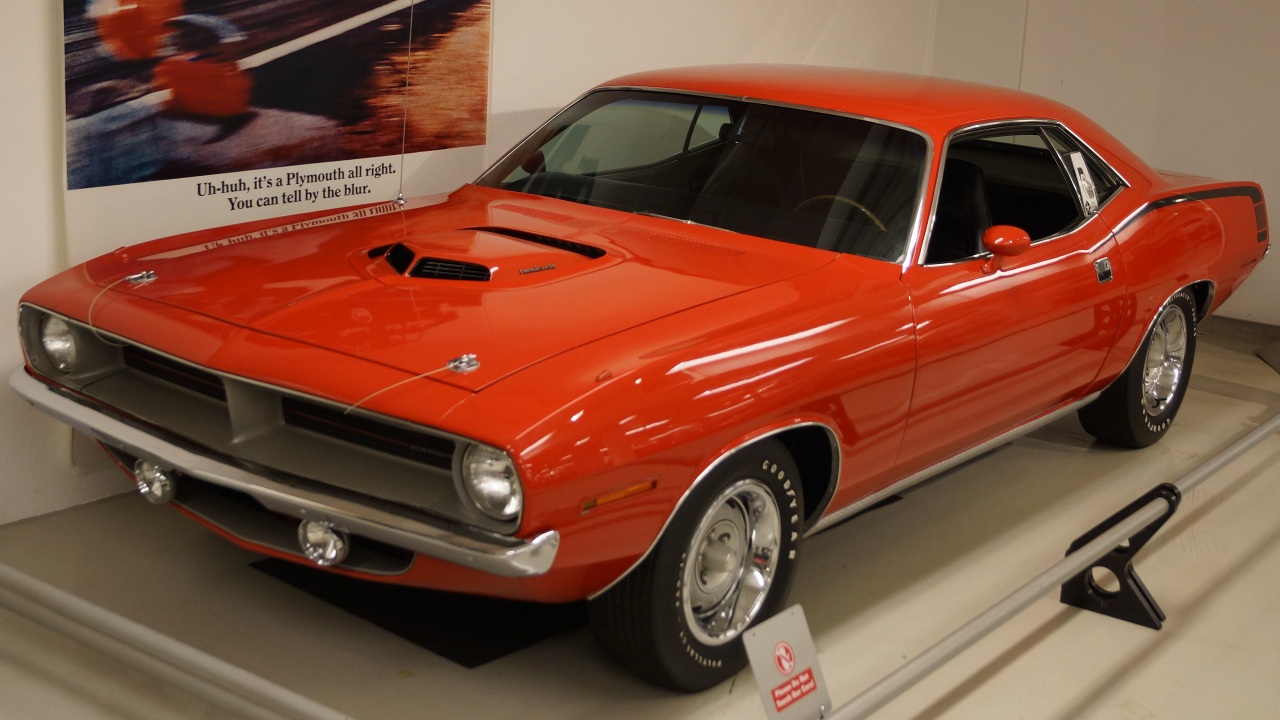
For most of the past two decades, old-school Detroit performance looked unstoppable, with the Current Muscle Car Market shaped by nostalgia buyers who came of age in the 1960s and 1970s. Analysts tracking the segment describe how Golden Age muscle cars really started to cook in the new millennium, then climbed again as cheap money and pandemic-era savings chased a limited pool of Hemi ’Cudas, big-block Chevelles and first-generation Camaros. That run-up created the expectation that anything with stripes and a lumpy idle would keep appreciating.
Fresh data now show that the broader collector market is off its 2022 high, and muscle cars are a big part of that retreat. A set of Charts That Explain the Classic Car Market highlights how prices surged from early 2021 to the middle of 2022, then flattened and slipped as buyers stepped back. A separate deep dive into whether the muscle car market will ever fail notes that, regardless of make, model or year, the classic V8 formula is no longer enough on its own to guarantee rising values, especially for cars that are not rare, perfectly documented or in top condition. Together, those reports confirm what many sellers are now learning the hard way at local auctions and online listings.
Hard numbers show values dropping faster than expected
What feels like a soft patch to some owners is, in the data, a meaningful correction. A recent Classic Car Market Report that looks at What happened in 2024 cites Statistics from Hagerty showing that, in 2024, several traditional segments, including older American performance, moved from steady gains to measurable declines. That shift is echoed by independent finance specialists who see more borrowers underwater on loans secured against cars that were valued at the top of the cycle.
Other market trackers are even more blunt about the scale of the slide. A detailed assessment of the 2025 collector landscape asks Are the recent drops a sign of a crash or a reset, and notes that in the US, a market index tied to classic performance machinery fell sharply, with some categories falling 23% in 2024. When a benchmark tied to enthusiast cars is down by double digits while mainstream equities are flat or higher, it is a clear sign that the old assumption of “they only go up” has broken. That is exactly the environment in which owners of aging muscle cars discover that their pride and joy is worth less than the restoration bill they paid only a few years ago.
Economic pressure is squeezing discretionary toys
Muscle cars live in the same financial bucket as boats, holiday homes and other discretionary toys, and that is where the current economic climate is biting hardest. A detailed analysis of whether owners have lost money on their classics notes that One of the most significant factors affecting the value of older cars is the broader economic backdrop, from higher interest rates to rising living costs. When mortgages, energy bills and everyday expenses climb, the pool of buyers willing to stretch for a weekend-only V8 shrinks quickly, and sellers have to cut asking prices to get deals done.
Inspection specialists who see transactions up close report the same pattern. A review of classic car market trends explains that it has been obvious from their own engineers data that classic car vaues have dropped during 2024, with one of their datapoints showing a clear fall in agreed sale prices versus guide valuations. On the ground, that looks like stalled private sales, more “no reserve” listings and dealers holding more stock for longer. In that environment, older muscle cars that need work or lack standout provenance are often the first to be discounted, because buyers with cash can afford to be choosy.
Demographics and tastes are turning against older muscle
Even if the economy stabilizes, there is a deeper structural issue for old muscle: the next generation of buyers does not necessarily want what their parents did. A widely shared discussion among enthusiasts asks what is causing classic cars to become less valuable and points to aging owners downsizing, moving into smaller homes and simply driving less. That conversation, posted in apr 2023, also raises the uncomfortable possibility that millennials and younger enthusiasts are not as interested in owning big, carbureted coupes when they grew up with turbocharged imports, hot hatches and digital entertainment competing for their money.
Similar concerns surface in a thread from oct 2022 where one poster wonders if the bottom is falling out of the older enthusiast market. The most upvoted reply starts with “likely” and lists several factors, including People being able to travel again and preferring to spend money on a nice holiday, and may be reluctance to take on projects that eat time and cash. Put together, those grassroots observations match what valuation experts are seeing: demand is shifting toward cars that younger buyers actually aspired to, which often means 1990s Japanese performance, 2000s German sports sedans or even modern EVs, not a 1971 big-block coupe that feels alien to their daily lives.
Not every classic is crashing, which makes muscle look weaker
One reason the drop in old muscle values feels so stark is that other corners of the classic world are holding up or even thriving. A specialist who asks if classic cars are still a good investment points to the 80’s Fast Fords at Auction houses, which have certainly seen jaw-dropping bids, with some cars outperforming traditional assets. When eighties hot hatches and homologation specials are setting records while seventies intermediates are being discounted, it underlines that the problem is not “classic cars” as a whole but specific segments that have lost their shine.
Market commentators who focus on the UK and European scenes also stress that the bubble has not burst across the board. A classic car expert, John Mayhead, writing for Money, tackles the question Has the market’s bubble burst and argues that prices will not simply plunge across every category. His view is that the very best, rarest and most culturally significant cars will remain resilient, while more ordinary examples will soften. That is exactly what is now visible in the muscle space: concours-grade, numbers-matching halo models still find buyers, but driver-quality cars and clones are being repriced lower, sometimes sharply.
What this means for current and would-be muscle car owners
For anyone who bought an old muscle car at or near the recent peak, the uncomfortable reality is that some of that paper wealth has evaporated. A long-term look at American performance icons in the Current Muscle Car Market stresses that Golden Age models can still be rewarding to own, but only if buyers treat them as passion purchases rather than guaranteed investments. The same analysis notes that the segment’s earlier surge was fueled by a specific generation’s nostalgia and by cheap credit, both of which are fading tailwinds.
At the same time, broader collector reports for in 2024 and in 2025 argue that the market is not collapsing so much as normalizing after an unsustainable spike. A review that asks Are the recent moves a sign of a crash concludes that some indices are down 11% while others are up 4%, which suggests a sorting process rather than a universal rout. For muscle car owners, that nuance matters. It means that careful maintenance, strong documentation and realistic pricing can still deliver a decent outcome, while speculative flips and half-finished projects are the ones most exposed to further losses.
Looking ahead, I see three practical implications. First, anyone holding a mid-tier muscle car purely as an investment should revisit their assumptions and be honest about current comparables, not memories of 2022 auction highs. Second, buyers who have always wanted a classic V8 may find that the next few years offer a rare chance to step in at more sensible prices, provided they budget for running costs and do not expect quick gains. Third, the segment’s long-term health will depend on whether younger enthusiasts decide that the sound and feel of old-school torque still matter in a world of apps and EVs. The data so far suggest that the easy money era is over, but for those who value the experience more than the spreadsheet, that might be exactly what the market needed.